Silgado-Guzmán Daniel Felipe, Angulo-Aguado Mariana, Morel Adrien, Niño-Orrego María José, Ruiz-Torres Daniel-Armando, Contreras Bravo Nora Constanza, Restrepo Carlos Martin, Ortega-Recalde Oscar, Fonseca-Mendoza Dora Janeth
Department of Molecular Diagnosis, Genética Molecular de Colombia SAS, Bogotá, Colombia.
Center for Research in Genetics and Genomics-CIGGUR, GENIUROS Research Group, School of Medicine and Health Sciences, Universidad Del Rosario, Bogotá, Colombia.
Front Pharmacol. 2022 Jun 30;13:931531. doi: 10.3389/fphar.2022.931531. eCollection 2022.
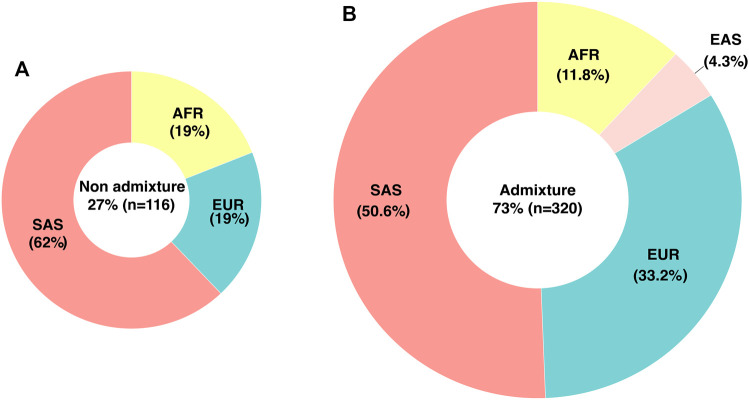
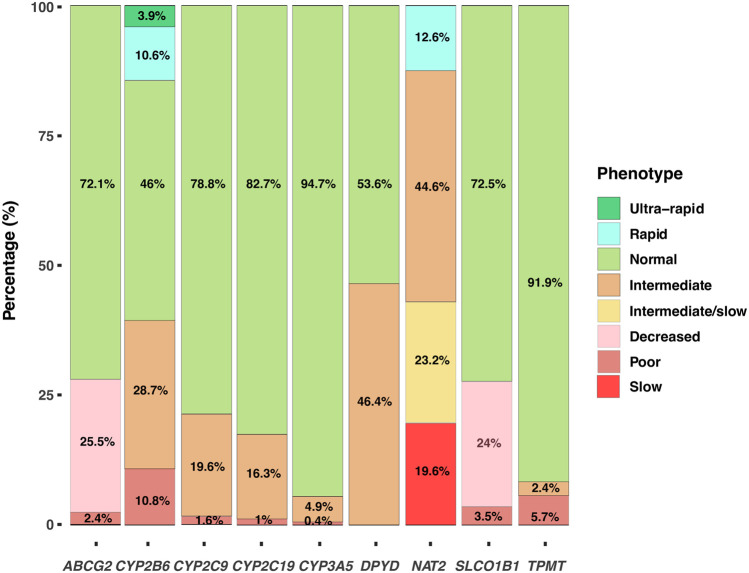
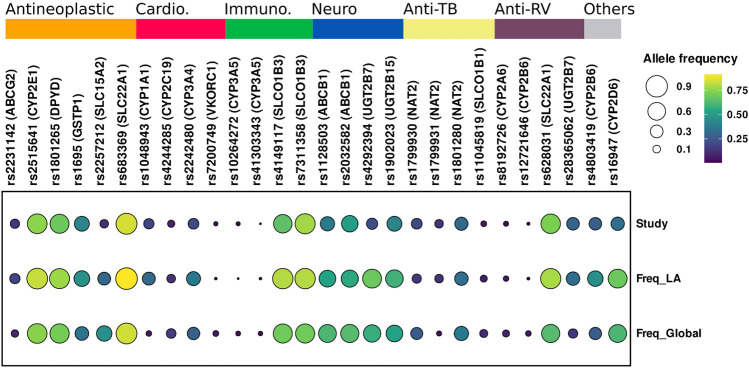
In genes related to drug pharmacokinetics, molecular variations determine interindividual variability in the therapeutic efficacy and adverse drug reactions. The assessment of single-nucleotide variants (SNVs) is used with growing frequency in pharmacogenetic practice, and recently, high-throughput genomic analyses obtained through next-generation sequencing (NGS) have been recognized as powerful tools to identify common, rare and novel variants. These genetic profiles remain underexplored in Latin-American populations, including Colombia. In this study, we investigated the variability of 35 genes included in the ADME core panel (absorption, distribution, metabolism, and excretion) by whole-exome sequencing (WES) of 509 unrelated Colombian individuals with no previous reports of adverse drug reactions. Rare variants were filtered according to the minor allele frequencies (MAF) <1% and potential deleterious consequences. The functional impact of novel and rare missense variants was assessed using an optimized framework for pharmacogenetic variants. Bioinformatic analyses included the identification of clinically validated variants described in PharmGKB and ClinVar databases. Ancestry from WES data was inferred using the R package EthSEQ v2.1.4. Allelic frequencies were compared to other populations reported in the public gnomAD database. Our analysis revealed that rare missense pharmacogenetic variants were 2.1 times more frequent than common variants with 121 variants predicted as potentially deleterious. Rare loss of function (LoF) variants were identified in 65.7% of evaluated genes. Regarding variants with clinical pharmacogenetic effect, our study revealed 89 sequence variations in 28 genes represented by missense (62%), synonymous (22.5%), splice site (11.2%), and indels (3.4%). In this group, , , , , , , , and , are the most polymorphic genes. and metabolizer phenotypes demonstrated the highest variability. Ancestry analysis indicated admixture in 73% of the population. Allelic frequencies exhibit significant differences with other Latin-American populations, highlighting the importance of pharmacogenomic studies in populations of different ethnicities. Altogether, our data revealed that rare variants are an important source of variability in pharmacogenes involved in the pharmacokinetics of drugs and likely account for the unexplained interindividual variability in drug response. These findings provide evidence of the utility of WES for pharmacogenomic testing and into clinical practice.
在与药物药代动力学相关的基因中,分子变异决定了治疗效果和药物不良反应的个体间差异。单核苷酸变异(SNV)的评估在药物遗传学实践中的使用频率越来越高,最近,通过下一代测序(NGS)获得的高通量基因组分析已被视为识别常见、罕见和新型变异的有力工具。在包括哥伦比亚在内的拉丁美洲人群中,这些基因图谱仍未得到充分研究。在本研究中,我们通过对509名无药物不良反应既往报告的无关哥伦比亚个体进行全外显子测序(WES),调查了ADME核心面板(吸收、分布、代谢和排泄)中35个基因的变异性。根据次要等位基因频率(MAF)<1%和潜在有害后果对罕见变异进行筛选。使用针对药物遗传学变异的优化框架评估新型和罕见错义变异的功能影响。生物信息学分析包括识别PharmGKB和ClinVar数据库中描述的经临床验证的变异。使用R包EthSEQ v2.1.4从WES数据推断血统。将等位基因频率与公共gnomAD数据库中报告的其他人群进行比较。我们的分析表明,罕见错义药物遗传学变异的频率是常见变异的2.1倍,有121个变异被预测为潜在有害。在65.7%的评估基因中发现了罕见的功能丧失(LoF)变异。关于具有临床药物遗传学效应的变异,我们的研究在28个基因中发现了89个序列变异,包括错义(62%)、同义(22.5%)、剪接位点(11.2%)和插入缺失(3.4%)。在这一组中, 、 、 、 、 、 、 和 是多态性最高的基因。 和 代谢表型表现出最高的变异性。血统分析表明73%的人群存在混合情况。等位基因频率与其他拉丁美洲人群存在显著差异,突出了药物基因组学研究在不同种族人群中的重要性。总之,我们的数据表明,罕见变异是参与药物药代动力学的药物基因变异的重要来源,可能是药物反应中无法解释的个体间差异的原因。这些发现为WES在药物基因组学检测和临床实践中的应用提供了证据。