School of Medicine and Health Sciences, Center for Research in Genetics and Genomics (CIGGUR), Institute of Translational Medicine (IMT), Universidad Del Rosario, Bogotá D.C., Colombia.
Hospital Universitario Mayor-Méderi-Universidad del Rosario, Bogotá D.C., Colombia.
PLoS One. 2024 Jul 11;19(7):e0306445. doi: 10.1371/journal.pone.0306445. eCollection 2024.
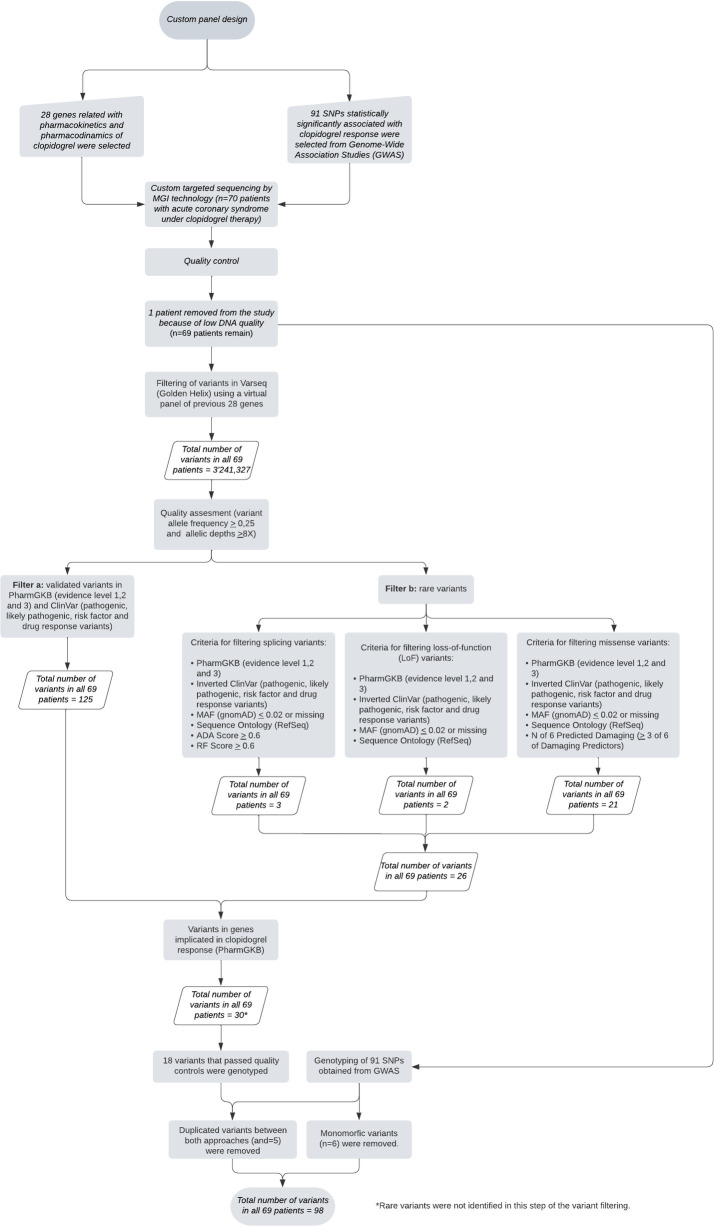
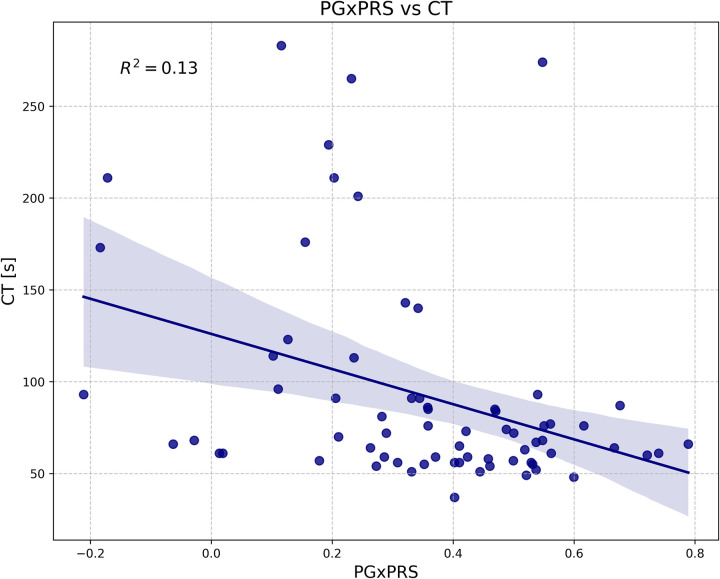
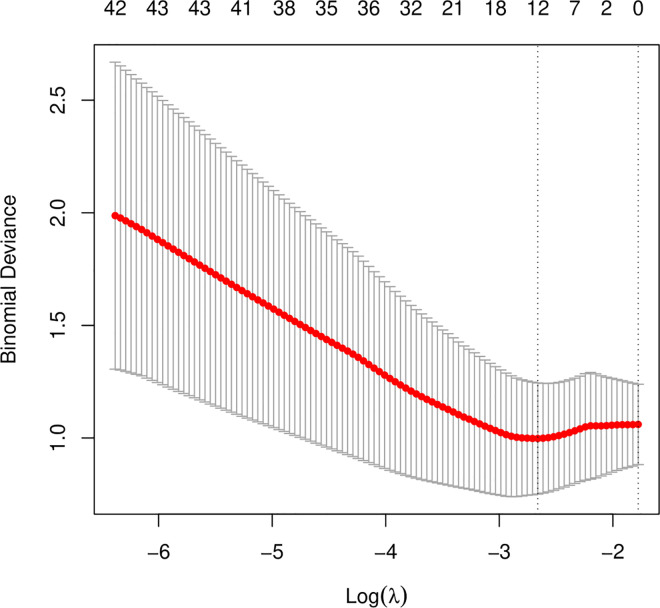
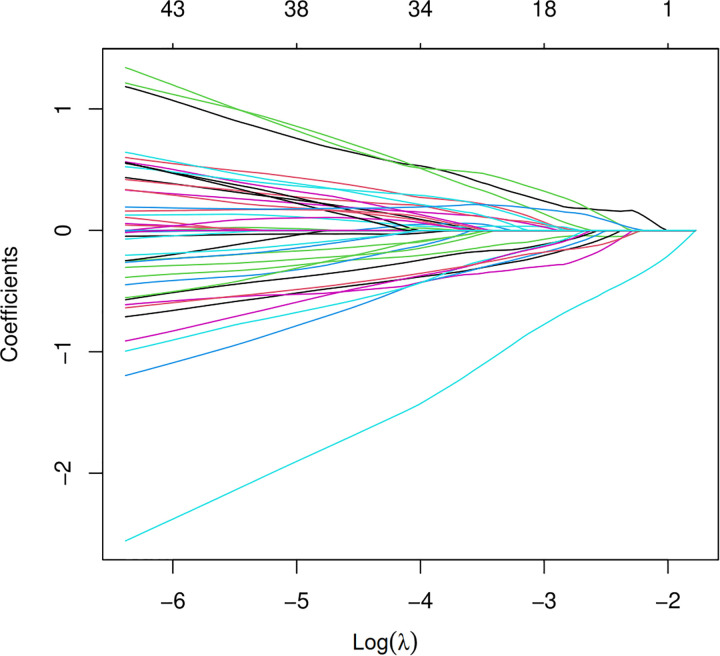
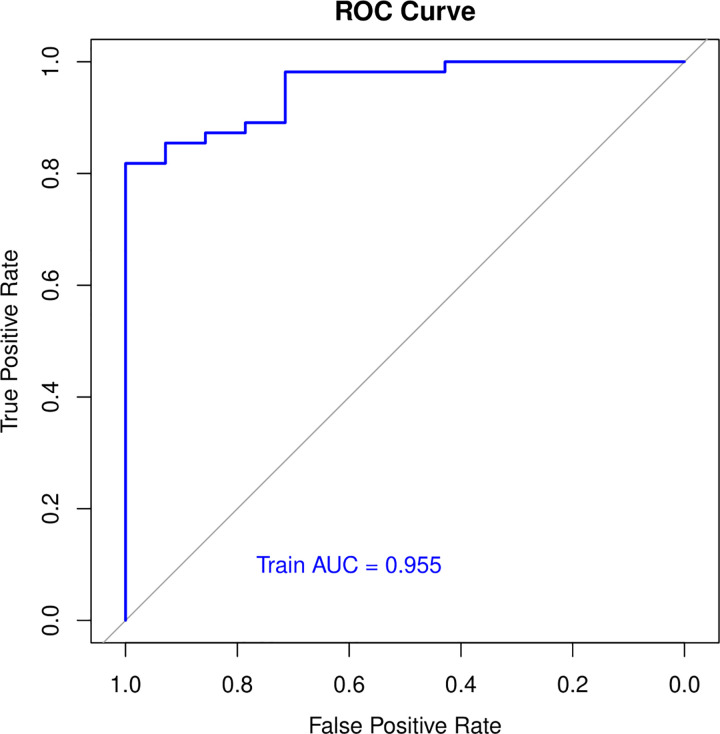
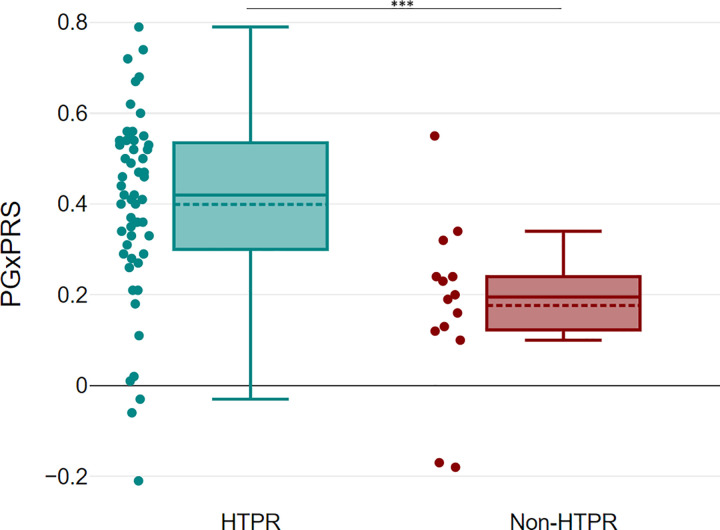
Clopidogrel is widely used worldwide as an antiplatelet therapy in patients with acute coronary disease. Genetic factors influence interindividual variability in response. Some studies have explored the polygenic contributions in the drug response, generating pharmacogenomic risk scores (PgxPRS). Importantly, these factors are less explored in underrepresented populations, such as Latin-American countries. Identifying patients at risk of high-on-treatment platelet reactivity (HTPR) is highly valuable in translational medicine. In this study we used a custom next-generation sequencing (NGS) panel composed of 91 single nucleotide polymorphisms (SNPs) and 28 genes related to clopidogrel metabolism, to analyze 70 patients with platelet reactivity values, assessed through closure time (CT). Our results demonstrated the association of SNPs with HTPR and non-HTPR, revealing the strongest associations with rs2286823 (OR: 5,0; 95% CI: 1,02-24,48; p: 0,03), rs2032582 (OR: 4,41; 95% CI: 1,20-16,12; p: 0,019), and rs1045642 (OR: 3,38; 95% CI: 0,96-11,9; p: 0,05). Bivariate regression analysis demonstrated the significant association of several SNPs with the CT value, a "surrogate" biomarker of clopidogrel response. Exploratory results from the LASSO regression model showed a high discriminatory capacity between HTPR and non-HTPR patients (AUC: 0,955), and the generated PgxPRS demonstrated a significant negative association between the risk score, CT value, and the condition of HTPR and non-HTPR. To our knowledge, our study addresses for the first time the analysis of the polygenic contribution in platelet reactivity using NGS and establishes PgxPRS derived from the LASSO model. Our results demonstrate the polygenic implication of clopidogrel response and offer insights applicable to the translational medicine of antiplatelet therapy in an understudied population.
氯吡格雷在全球范围内被广泛用作急性冠状动脉疾病患者的抗血小板治疗药物。遗传因素会影响个体间的反应差异。一些研究已经探索了药物反应中的多基因贡献,生成了药物基因组风险评分(PGxPRS)。重要的是,这些因素在代表性不足的人群中(如拉丁美洲国家)研究较少。识别高治疗血小板反应性(HTPR)风险的患者在转化医学中具有重要价值。在这项研究中,我们使用了一个由 91 个单核苷酸多态性(SNP)和 28 个与氯吡格雷代谢相关的基因组成的定制下一代测序(NGS)面板,分析了 70 名通过闭合时间(CT)评估血小板反应值的患者。我们的结果表明,SNP 与 HTPR 和非 HTPR 相关,其中 rs2286823(OR:5.0;95%CI:1.02-24.48;p:0.03)、rs2032582(OR:4.41;95%CI:1.20-16.12;p:0.019)和 rs1045642(OR:3.38;95%CI:0.96-11.9;p:0.05)与 HTPR 和非 HTPR 的相关性最强。双变量回归分析表明,几个 SNP 与 CT 值显著相关,CT 值是氯吡格雷反应的“替代”生物标志物。LASSO 回归模型的探索性结果表明,HTPR 和非 HTPR 患者之间具有很高的区分能力(AUC:0.955),生成的 PGxPRS 表明风险评分、CT 值与 HTPR 和非 HTPR 之间存在显著负相关。据我们所知,我们的研究首次使用 NGS 分析血小板反应的多基因贡献,并建立了基于 LASSO 模型的 PGxPRS。我们的结果表明氯吡格雷反应的多基因意义,并为在研究较少的人群中进行抗血小板治疗的转化医学提供了见解。