Center of Molecular Immunology, calle 216 esq 15, apartado 16040, Atabey, Playa, CP 11300, La Habana, Cuba.
Sci Rep. 2022 Jul 18;12(1):12268. doi: 10.1038/s41598-022-16411-z.
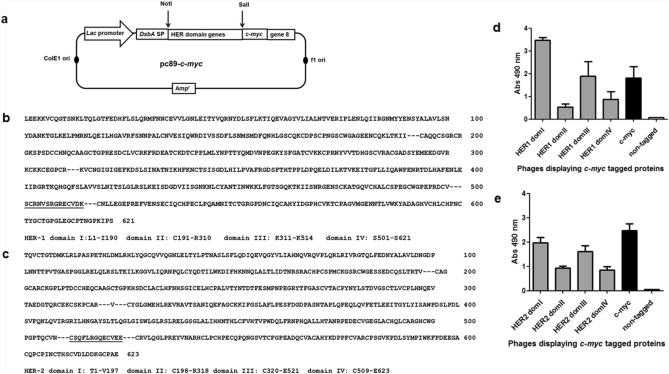
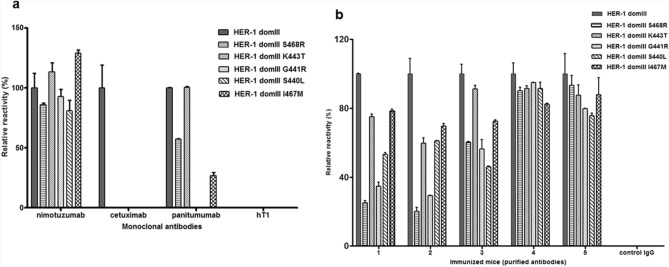
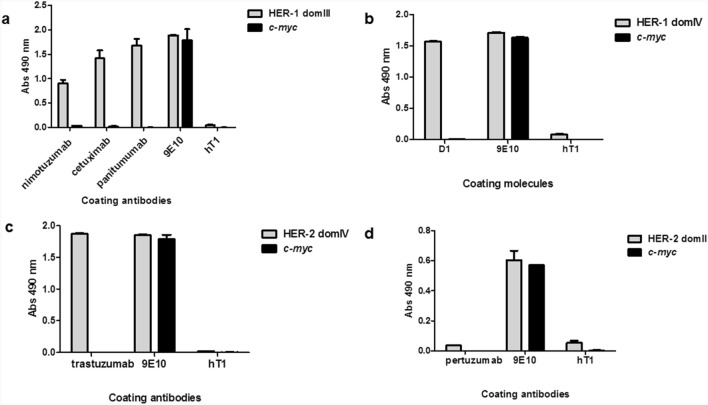
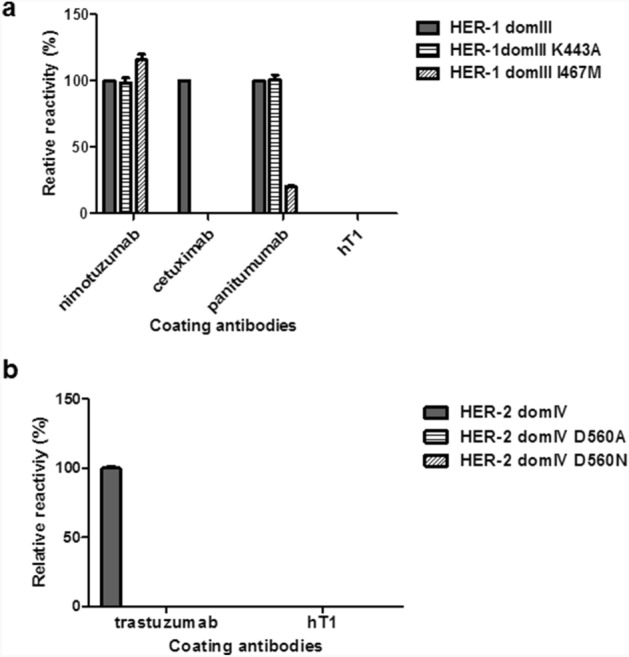
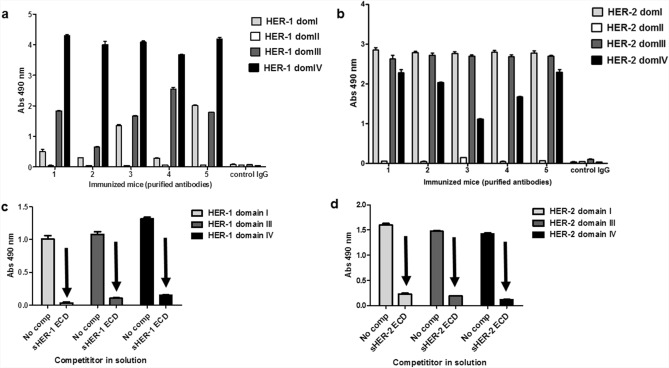
HER-1 and HER-2 are tumor-associated antigens overexpressed in several epithelial tumors, and successfully targeted by therapeutic approaches against cancer. Vaccination with their recombinant extracellular domains has had encouraging results in the pre-clinical setting. As complex humoral responses targeting multiple epitopes within each antigen are the ultimate goal of such active immunotherapy strategies, molecular dissection of the mixture of antibody specificities is required. The current work exploits phage display of antigenic versions of HER-1 and HER-2 domains to accomplish domain-level epitope mapping. Recognition of domains I, III and IV of both antigens by antibodies of immunized mice was shown, indicating diverse responses covering a broad range of antigenic regions. The combination of phage display and site-directed mutagenesis allowed mutational screening of antigen surface, showing polyclonal antibodies' recognition of mutated receptor escape variants known to arise in patients under the selective pressure of the anti-HER-1 antibody cetuximab. Phage-displayed HER domains have thus the potential to contribute to fine specificity characterization of humoral responses during future development of anti-cancer vaccines.
HER-1 和 HER-2 是几种上皮肿瘤中过表达的肿瘤相关抗原,并已成功成为抗癌治疗方法的靶向目标。用它们的重组细胞外结构域进行疫苗接种在临床前研究中取得了令人鼓舞的结果。由于针对每个抗原内多个表位的复杂体液反应是这种主动免疫治疗策略的最终目标,因此需要对抗体特异性的混合物进行分子剖析。目前的工作利用噬菌体展示技术来完成 HER-1 和 HER-2 结构域的抗原版本,以实现结构域水平的表位作图。实验表明,免疫小鼠的抗体能够识别两种抗原的结构域 I、III 和 IV,表明存在多样化的反应,涵盖了广泛的抗原区域。噬菌体展示和定点突变相结合,使抗原表面的突变筛选成为可能,显示出多克隆抗体能够识别在抗 HER-1 抗体西妥昔单抗的选择性压力下,患者中出现的受体逃逸突变体。因此,噬菌体展示的 HER 结构域有可能有助于未来抗癌疫苗开发过程中对体液反应的精细特异性特征进行描述。