Department of Anesthesia, Critical Care and Pain Medicine, the Division of Pediatric Critical Care Medicine, Department of Pediatrics, Respiratory Care Services, the Infection Diseases Division, Department of Medicine, the Division of Thoracic Imaging and Intervention, Department of Radiology, and the Department of Obstetrics, Gynecology and Reproductive Biology, Massachusetts General Hospital, Harvard Medical School, the Division of Maternal Fetal Medicine, Department of Obstetrics and Gynecology, and the Department of Anesthesia, Critical Care and Pain Medicine, Beth Israel Deaconess Medical Center, the Department of Anesthesia, Boston Medical Center, and the Department of Anesthesiology, Cardiac Anesthesia and Critical Care, Tufts Medical Center, Boston, Massachusetts; and the Division of Cardiovascular Disease, Department of Medicine, University of Alabama at Birmingham, Birmingham, Alabama.
Obstet Gynecol. 2022 Aug 1;140(2):195-203. doi: 10.1097/AOG.0000000000004847. Epub 2022 Jul 6.
To evaluate whether the use of inhaled nitric oxide (iNO)200 improves respiratory function.
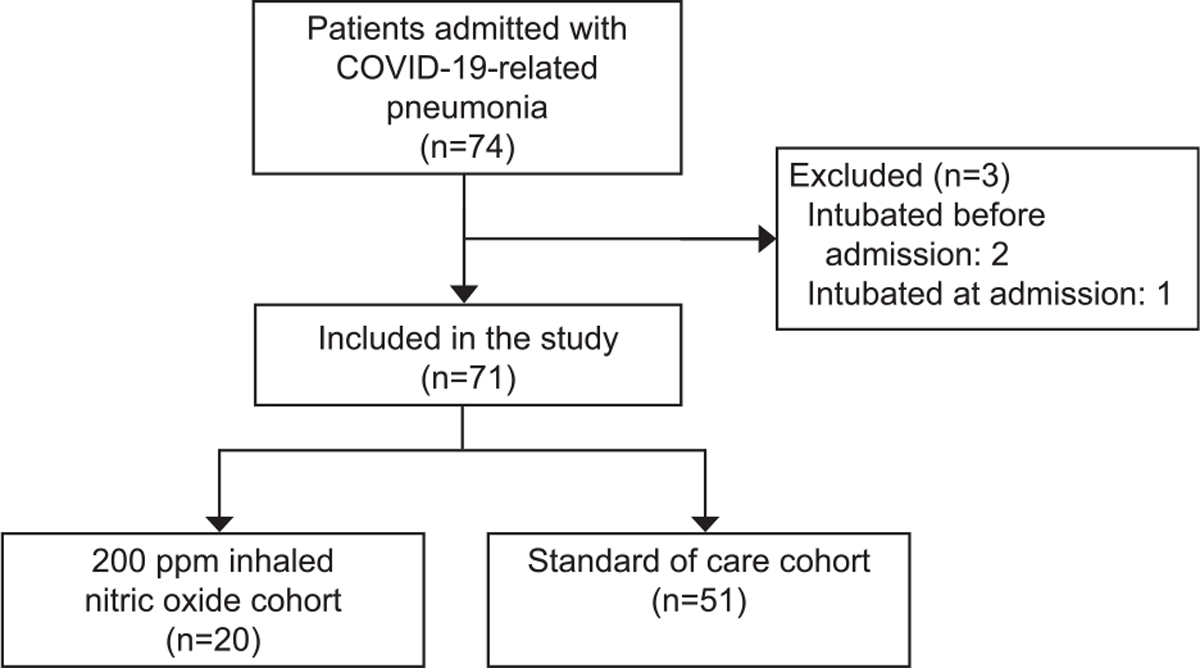
This retrospective cohort study used data from pregnant patients hospitalized with severe bilateral coronavirus disease 2019 (COVID-19) pneumonia at four teaching hospitals between March 2020 and December 2021. Two cohorts were identified: 1) those receiving standard of care alone (SoC cohort) and 2) those receiving iNO200 for 30 minutes twice daily in addition to standard of care alone (iNO200 cohort). Inhaled nitric oxide, as a novel therapy, was offered only at one hospital. The prespecified primary outcome was days free from any oxygen supplementation at 28 days postadmission. Secondary outcomes were hospital length of stay, rate of intubation, and intensive care unit (ICU) length of stay. The multivariable-adjusted regression analyses accounted for age, body mass index, gestational age, use of steroids, remdesivir, and the study center.
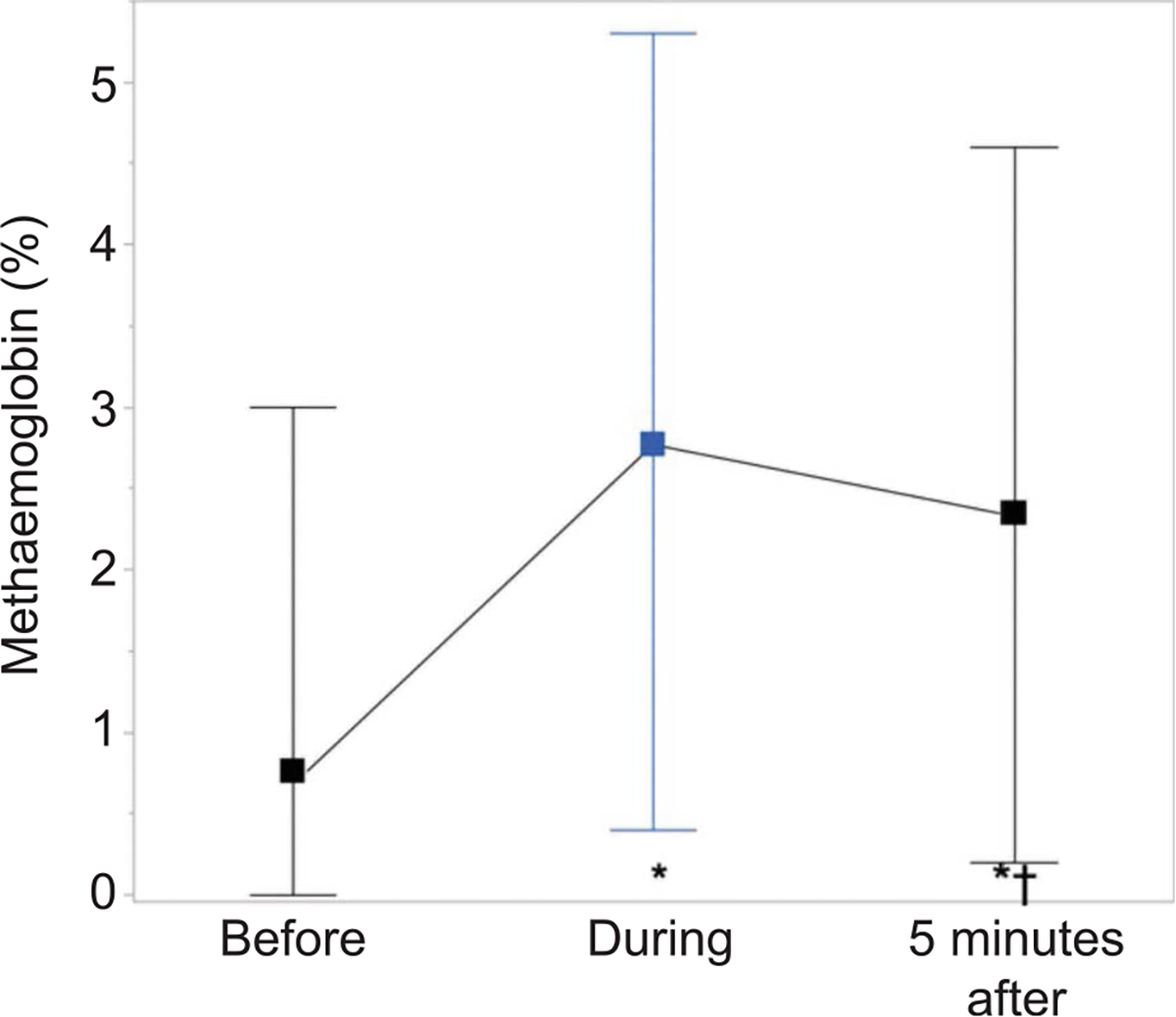
Seventy-one pregnant patients were hospitalized for severe bilateral COVID-19 pneumonia: 51 in the SoC cohort and 20 in the iNO200 cohort. Patients receiving iNO200 had more oxygen supplementation-free days (iNO200: median [interquartile range], 24 [23-26] days vs standard of care alone: 22 [14-24] days, P=.01) compared with patients in the SoC cohort. In the multivariable-adjusted analyses, iNO200 was associated with 63.2% (95% CI 36.2-95.4%; P<.001) more days free from oxygen supplementation, 59.7% (95% CI 56.0-63.2%; P<.001) shorter ICU length of stay, and 63.6% (95% CI 55.1-70.8%; P<.001) shorter hospital length of stay. No iNO200-related adverse events were reported.
In pregnant patients with severe bilateral COVID-19 pneumonia, iNO200 was associated with a reduced need for oxygen supplementation and shorter hospital stay.
评估吸入一氧化氮(iNO)200 是否能改善呼吸功能。
本回顾性队列研究使用了 2020 年 3 月至 2021 年 12 月期间四家教学医院因严重双侧 2019 年冠状病毒病(COVID-19)肺炎住院的孕妇患者的数据。确定了两个队列:1)单独接受标准治疗(SoC 队列);2)除单独接受标准治疗外,每天接受 iNO200 治疗 30 分钟两次(iNO200 队列)。吸入一氧化氮作为一种新疗法仅在一家医院提供。预设的主要结局是入院后 28 天内无需任何氧补充的天数。次要结局为住院时间、插管率和重症监护病房(ICU)住院时间。多变量调整回归分析考虑了年龄、体重指数、孕龄、皮质类固醇、瑞德西韦的使用以及研究中心。
71 名孕妇因严重双侧 COVID-19 肺炎住院:SoC 队列 51 例,iNO200 队列 20 例。接受 iNO200 的患者无需补充氧气的天数更多(iNO200:中位数[四分位间距],24 [23-26] 天 vs 单独接受标准治疗:22 [14-24] 天,P=0.01)。在多变量调整分析中,与 SoC 队列相比,iNO200 与无需吸氧天数增加 63.2%(95%CI 36.2-95.4%;P<.001)、ICU 住院时间缩短 59.7%(95%CI 56.0-63.2%;P<.001)和住院时间缩短 63.6%(95%CI 55.1-70.8%;P<.001)相关。未报告与 iNO200 相关的不良事件。
在患有严重双侧 COVID-19 肺炎的孕妇中,iNO200 与减少对氧补充的需求和缩短住院时间相关。