Department of Botany, Faculty of Life Sciences, University of Okara, Okara, 56130, Pakistan.
School of Natural and Environmental Sciences, Newcastle University, Newcastle upon Tyne, NE1 7RU, UK.
Sci Rep. 2022 Jul 19;12(1):12299. doi: 10.1038/s41598-022-15937-6.
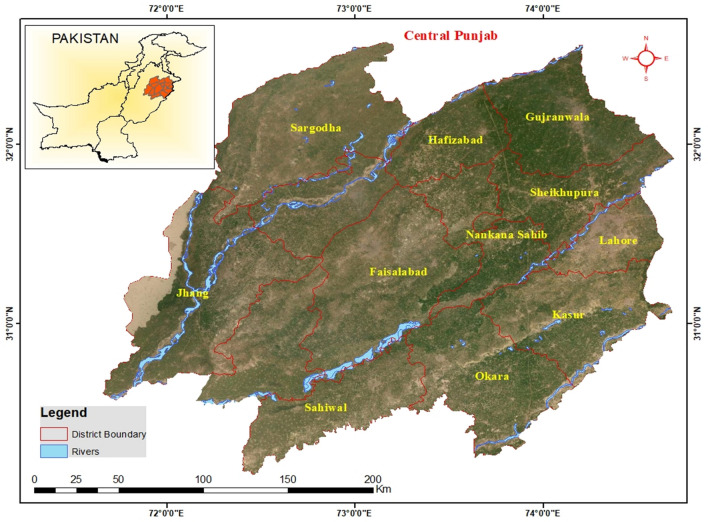
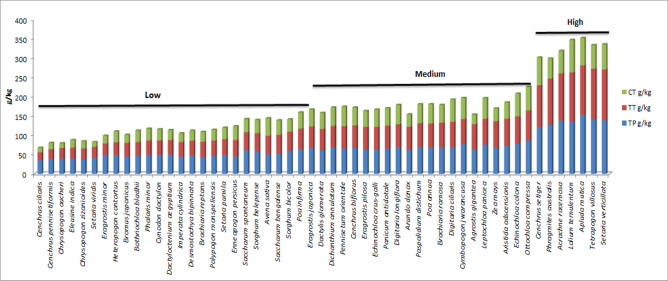
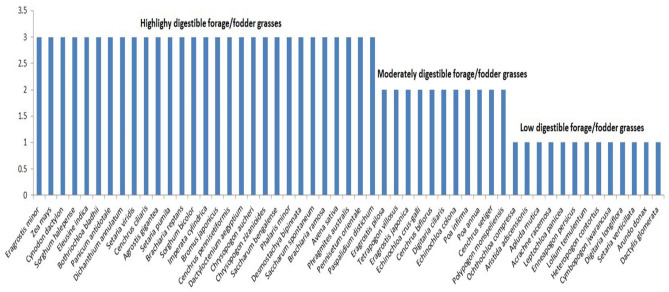
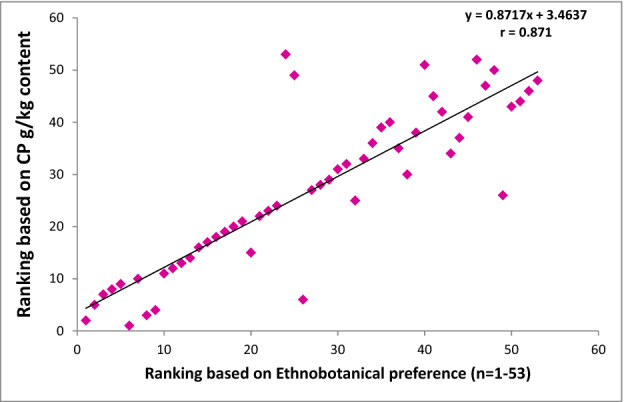
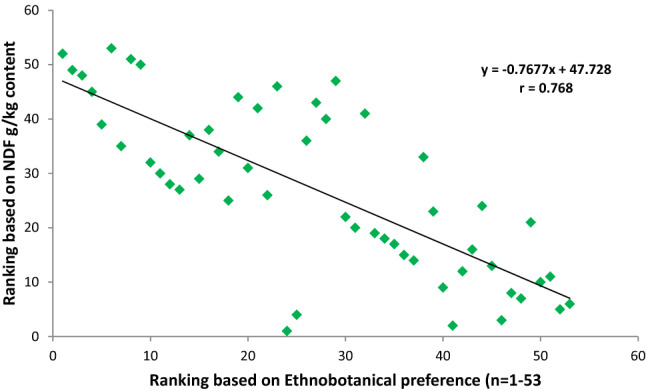
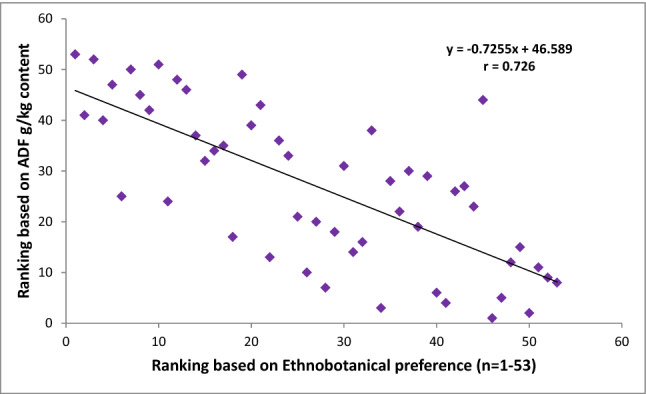
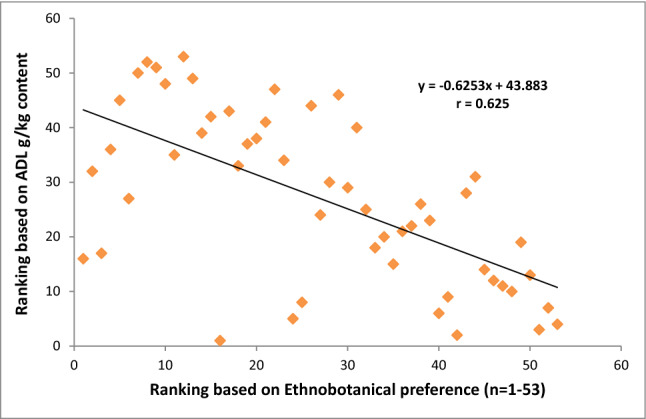
The local farmers of Central Punjab, Pakistan have been using indigenous grasses as vital components of ruminant diets, but little is reported about their nutritional potential. Hence this study investigated nutritive potential of a selection of ethnobotanically important fodder grasses. Multiple nutritional parameters (proximate components, fibre fractions), secondary metabolites (phenolics, tannins) and in vitro digestibility values were determined. Furthermore, the legitimacy of ethnobotanical knowledge of local inhabitants about these grasses was also verified. The results suggested that majority (77%) of these grasses can be regarded as good quality fodders because of their high protein (169 g/kg) and good digestibility (457 g/kg) with moderate fibre (≤ 602 g/kg), lignin (≤ 50 g/kg) and secondary metabolites (total phenols ≤ 87 g/kg, total tannins ≤ 78 g/kg, condensed tannins ≤ 61 g/kg). Pearson correlation between nutritional parameters indicated that in vitro digestibility values were positively correlated with crude proteins (IVDMD, r = + 0.83 and IVOMD, r = + 0.83 respectively) and negatively correlated with fibre (NDF, r = - 0.91), ADF, r = - 0.84 and ADL, r = - 0.82) contents. Moreover, a positive relationship was identified between ethnobotanical knowledge and laboratory findings for studied grasses. Spearman correlation test showed that ranking of grasses based on ethnobotanical preferences were highly correlated (r values) with the laboratory results for CP (0.85), NDF (- 0.76), ADF (- 0.72) and ADL (- 0.62). The resilient complementarities between ethnobotanical preferences and nutritive analysis authenticate farmer's traditional knowledge, which needed to be aligned with the corresponding scientific data. Farmers can use these findings for appropriate fodder selection and development of precise supplements for feeding ruminants within a sustainable and economically viable livestock industry for food security.
巴基斯坦旁遮普中部的当地农民一直将本土草作为反刍动物饮食的重要组成部分,但关于其营养价值的报道却很少。因此,本研究调查了一些具有民族植物学重要意义的饲料草的营养价值。测定了多种营养参数(粗成分、纤维成分)、次生代谢物(酚类、单宁)和体外消化率值。此外,还验证了当地居民对这些草的民族植物学知识的合法性。结果表明,由于这些草的蛋白质含量高(169g/kg),消化率高(457g/kg),纤维含量适中(≤602g/kg)、木质素含量(≤50g/kg)和次生代谢物含量(总酚类≤87g/kg,总单宁≤78g/kg,缩合单宁≤61g/kg),其中 77%的草可以被认为是优质饲料。营养参数之间的皮尔逊相关性表明,体外消化率值与粗蛋白呈正相关(IVDMD,r=+0.83 和 IVOMD,r=+0.83),与纤维(NDF,r=-0.91)、ADF,r=-0.84 和 ADL,r=-0.82)含量呈负相关。此外,在研究的草中,民族植物学知识与实验室发现之间存在正相关关系。斯皮尔曼相关性检验表明,基于民族植物学偏好对草进行的排序与实验室结果(CP,0.85;NDF,-0.76;ADF,-0.72;ADL,-0.62)高度相关。民族植物学偏好与营养分析之间的弹性互补性证实了农民的传统知识,需要将其与相应的科学数据相匹配。农民可以利用这些发现进行适当的饲料选择,并为反刍动物的喂养开发精确的补充剂,以在可持续和经济可行的畜牧业中实现粮食安全。