Nam Seungyoon, Lee Yeeun, Kim Jung Ho
Department of Health Sciences and Technology, Gachon Advanced Institute for Health Sciences and Technology (GAIHST), Gachon University, Incheon, 21999, Korea.
Department of Genome Medicine and Science, AI Convergence Center for Medical Science, Gachon Institute of Genome Medicine and Science, Gachon University Gil Medical Center, Gachon University College of Medicine, Namdong-daero 774 beon-gil 21, Namdong-gu, Incheon, 21565, Korea.
BMC Cancer. 2022 Jul 19;22(1):798. doi: 10.1186/s12885-022-09904-7.
Gastric cancer (GC) is one of the most fatal cancers worldwide and is generally only detected after it has progressed to an advanced stage. Since there is a lack of comprehensive data on RHOA protein expression of patients with GC, this study utilized a systematic review and meta-analysis to address the limitation. The objective of this meta-analysis was to link GC clinical features with RHOA protein high- vs. low-expressing patients with GC.
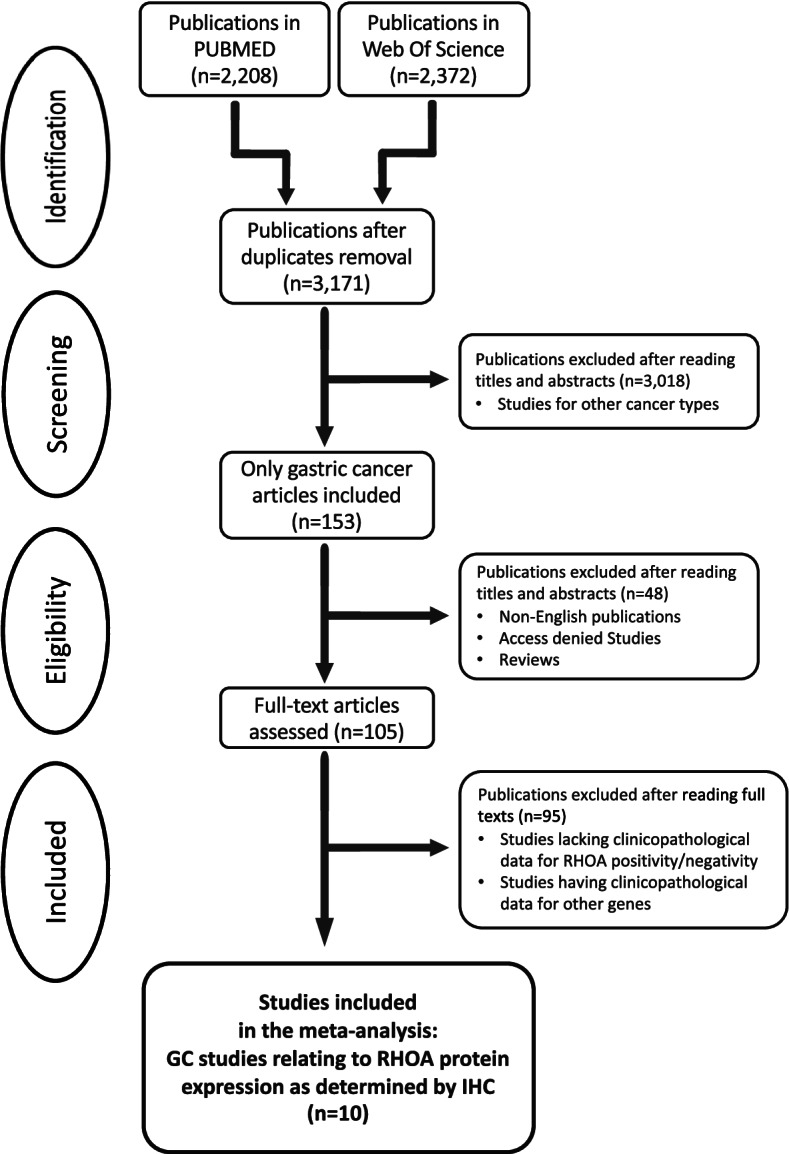
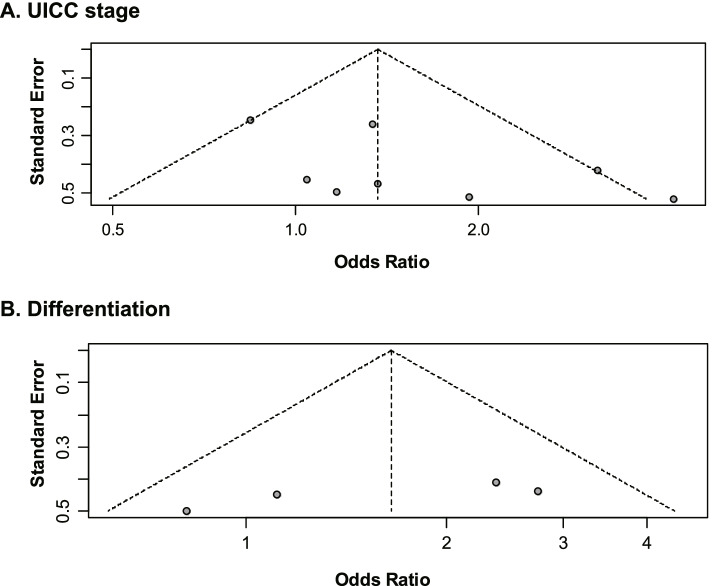
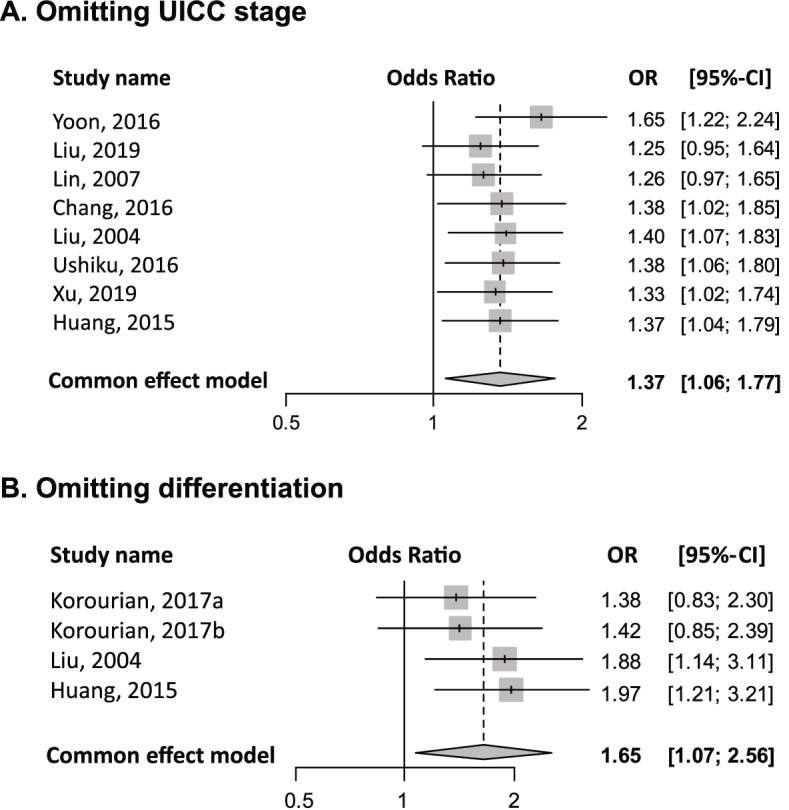
The PubMed and Web of Science were used for a systematic literature review of GC related to RHOA. The included studies were obtained from two literature databases from past to Aug 31, 2021, by searching keywords. This meta-analysis followed the Preferred Reporting Items for Systematic Reviews and Meta-Analysis (PRISMA) guidelines. The odds ratios (ORs) and 95% confidential intervals (CIs) for clinical features were estimated according to the high and low protein expression levels of RhoA. The mean effect sizes of ORs were obtained using the random-effects and fixed-effects models of meta-analysis. Heterogeneity of the studies was assesed by using statistics: τ, I; and Q values. The symmetry of funnel plots were inspected for publication bias.
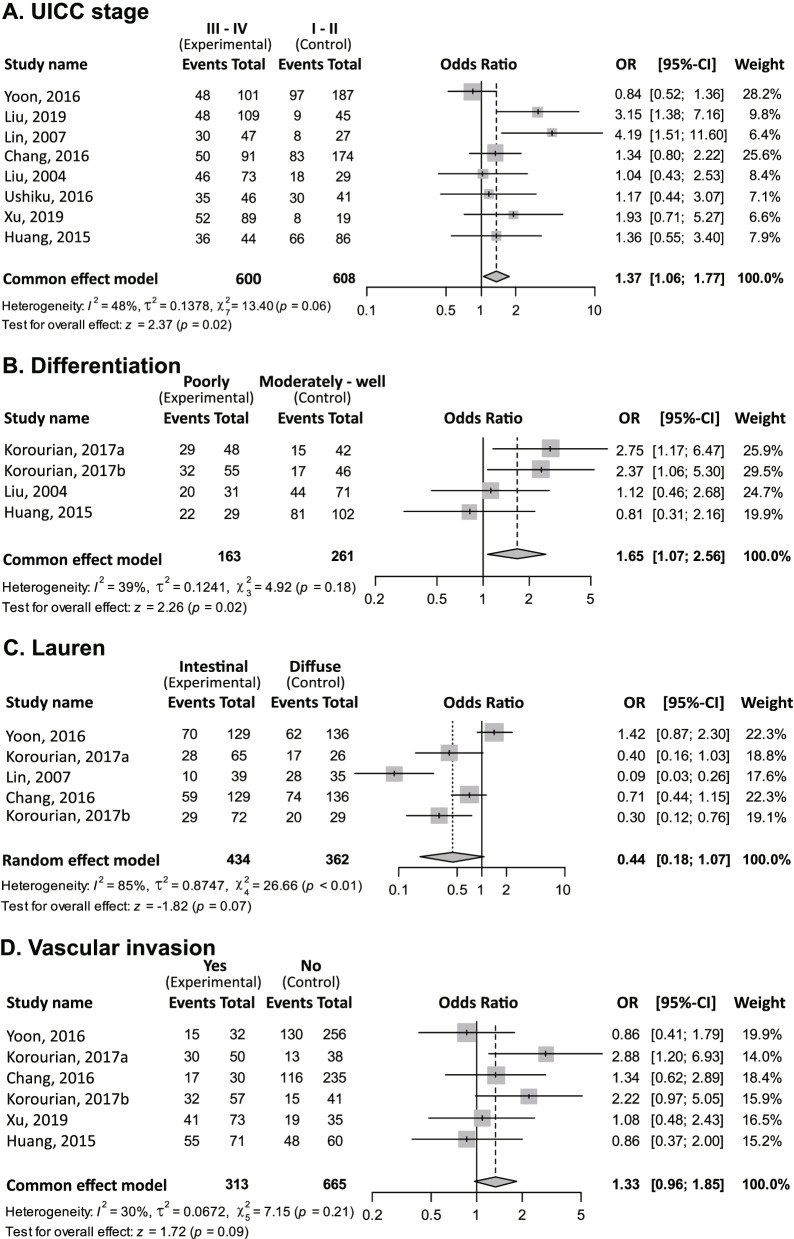
Finally, 10 studies including 1,389 patients with GC (735 RHOA-positive and 654 RHOA-negative) were eligible for our meta-analysis to estimate associations between the protein expression and clinical features (e.g., Union for International Cancer Control [UICC] stage progression, differentiation, Lauren histological classification, and vascular invasion). In our meta-analysis, RHOA positive expression was determined to have a statistically significant association with UICC stage progression (P = 0.02) and poorly differentiated status (P = 0.02). The association between RHOA positivity and Lauren subtypes was not statistically significant (P = 0.07).
This meta-analysis suggested that RhoA protein expression in patients with GC was associated with clinical features: UICC stage progression and poorly differentiated status. Our findings are inconclusive but indicate that high RHOA protein expressing patients with GC could predict advanced UICC stages. A large prospective cohort study is required for validation in future.
胃癌(GC)是全球最致命的癌症之一,通常在进展到晚期后才被发现。由于缺乏关于胃癌患者RHOA蛋白表达的全面数据,本研究采用系统评价和荟萃分析来解决这一局限性。本荟萃分析的目的是将胃癌的临床特征与RHOA蛋白高表达和低表达的胃癌患者联系起来。
使用PubMed和Web of Science对与RHOA相关的胃癌进行系统文献综述。通过搜索关键词,从两个文献数据库中获取截至2021年8月31日的相关研究。本荟萃分析遵循系统评价和荟萃分析的首选报告项目(PRISMA)指南。根据RhoA蛋白表达水平的高低,估计临床特征的优势比(OR)和95%置信区间(CI)。使用荟萃分析的随机效应和固定效应模型获得OR的平均效应大小。通过统计量τ、I²和Q值评估研究的异质性。检查漏斗图的对称性以评估发表偏倚。
最后,10项研究共纳入1389例胃癌患者(735例RHOA阳性和654例RHOA阴性),符合我们的荟萃分析要求,以估计蛋白表达与临床特征(如国际癌症控制联盟[UICC]分期进展、分化程度、Lauren组织学分类和血管侵犯)之间的关联。在我们的荟萃分析中,RHOA阳性表达与UICC分期进展(P = 0.02)和低分化状态(P = 0.02)有统计学意义的关联。RHOA阳性与Lauren亚型之间的关联无统计学意义(P = 0.07)。
本荟萃分析表明,胃癌患者的RhoA蛋白表达与临床特征相关:UICC分期进展和低分化状态。我们的研究结果尚无定论,但表明RHOA蛋白高表达的胃癌患者可能预示着UICC晚期。未来需要进行大规模的前瞻性队列研究来验证。