Villarreal-Silva Eliud Enrique, González-Navarro Alejandro Rafael, Salazar-Ybarra Rodolfo Amador, Quiroga-García Oscar, Cruz-Elizondo Miguel Angel de Jesús, García-García Aracely, Rodríguez-Rocha Humberto, Morales-Gómez Jesús Alberto, Quiroga-Garza Alejandro, Elizondo-Omaña Rodrigo Enrique, de León Ángel Raymundo Martínez-Ponce, Guzmán-López Santos
Neurosurgery and Neuroendovascular Therapy Department, "Dr. José Eleuterio González" University Hospital, Universidad Autónoma de Nuevo León, Madero Av. and Dr. Aguirre Pequeño s/n. Col. Mitras Centro, Monterrey C.P. 64460, Nuevo León, México.
Human Anatomy Department, Universidad Autónoma de Nuevo León, School of Medicine, Nuevo León, México.
Transl Neurosci. 2022 Jul 1;13(1):134-144. doi: 10.1515/tnsci-2022-0221. eCollection 2022 Jan 1.
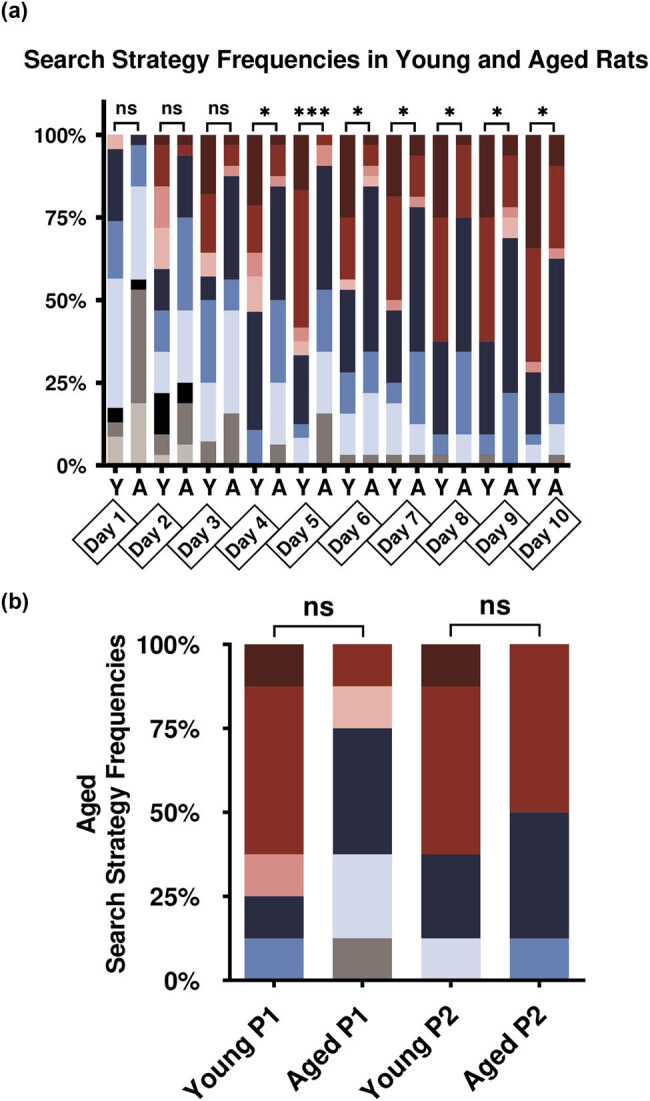
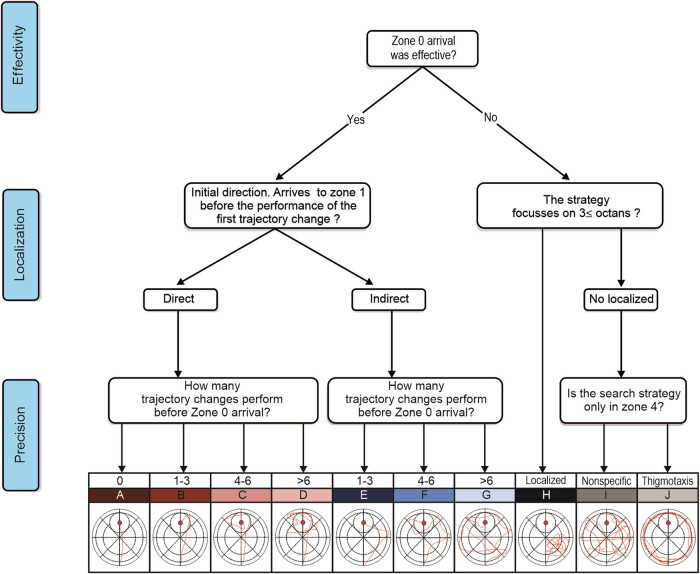
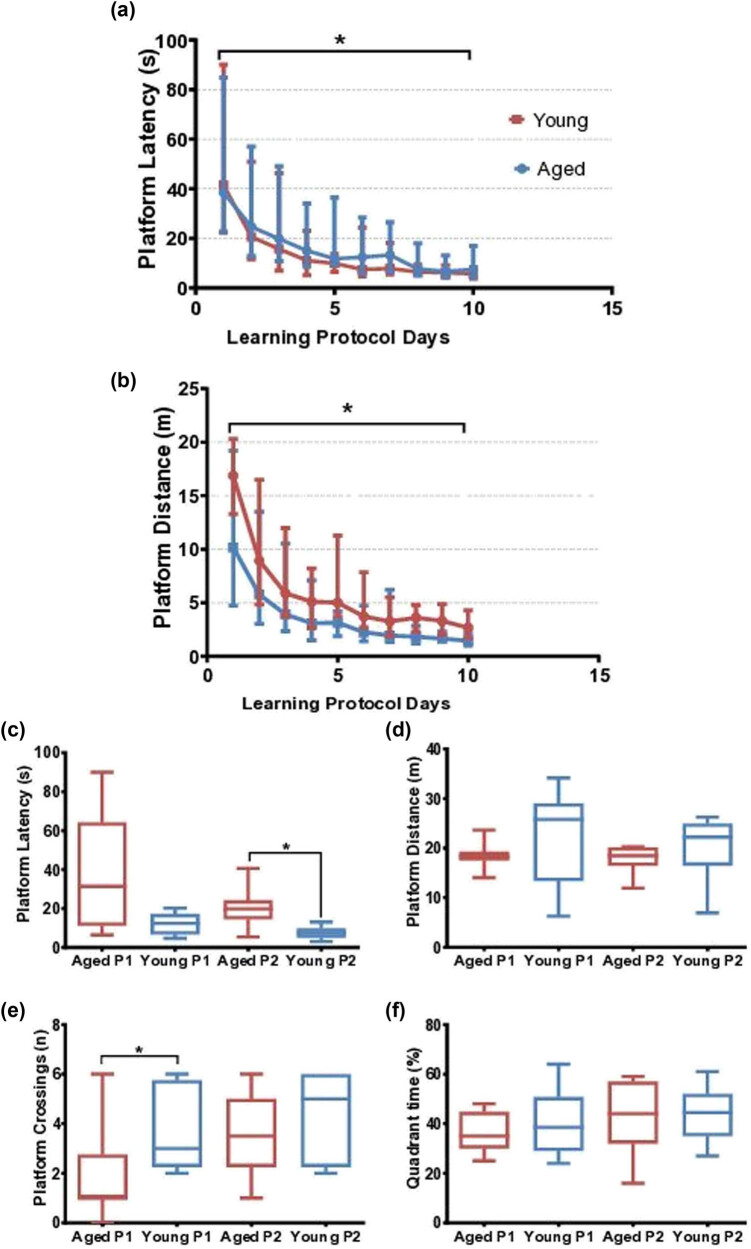
Spatial learning and memory are used by all individuals who need to move in a space. Morris water maze (MWM) is an accepted method for its evaluation in murine models and has many protocols, ranging from the classic parameters of latency, distance, and number of crossings to the platform zone, to other more complex methods involving computerized trajectory analysis. Algorithm-based SS analysis is an alternative that enriches traditional classic parameters. We developed a non-computerized parameter-based Search Strategy Algorithm (SSA), to classify strategies and detect changes in spatial memory and learning. For this, our algorithm was validated using young and aged rats, evaluated by two observers who classified the trajectories of the rats based on the effectiveness, localization, and precision to reach the platform. SSA is classified into 10 categories, classified by effectiveness, initial direction, and precision. Traditional measurements were unable to show significant differences in the learning process. However, significant differences were identified in SSA. Young rats used a direct search strategy (SS), while aged rats preferred indirect ones. The number of platform crossings was the only variable to show the difference in the intermediate probe trial. The parameter-based algorithm represents an alternative to the computerized SS methods to analyze the spatial memory and learning process in young and age rats. We validate the use of SSA as an alternative to computerized SS analysis spatial learning acquisition. We demonstrated that aged rats had the ability to learn spatial memory tasks using different search strategies. The use of SSA resulted in a reliable and reproducible method to analyze MWM protocols.
所有需要在空间中移动的个体都会运用空间学习和记忆。莫里斯水迷宫(MWM)是在小鼠模型中评估空间学习和记忆的一种公认方法,有许多方案,从潜伏期、距离和穿越到平台区域的经典参数,到其他更复杂的涉及计算机化轨迹分析的方法。基于算法的搜索策略(SS)分析是一种丰富传统经典参数的替代方法。我们开发了一种基于非计算机化参数的搜索策略算法(SSA),用于对策略进行分类并检测空间记忆和学习的变化。为此,我们使用年轻和老年大鼠对我们的算法进行了验证,由两名观察者进行评估,他们根据大鼠到达平台的有效性、定位和精度对其轨迹进行分类。SSA分为10类,按有效性、初始方向和精度分类。传统测量方法在学习过程中未能显示出显著差异。然而,在SSA中发现了显著差异。年轻大鼠使用直接搜索策略(SS),而老年大鼠更喜欢间接策略。穿越平台的次数是在中间探针试验中唯一显示出差异的变量。基于参数的算法是计算机化SS方法的一种替代方法,用于分析年轻和老年大鼠的空间记忆和学习过程。我们验证了使用SSA作为计算机化SS分析空间学习习得的替代方法。我们证明老年大鼠有能力使用不同的搜索策略学习空间记忆任务。使用SSA产生了一种可靠且可重复的方法来分析MWM方案。