SVQV, UMR1131, INRAE Centre Grand Est-Colmar, Université Strasbourg, Strasbourg, France.
PHIM Plant Health Institute, Université Montpellier, INRAE, CIRAD, IRD, Institut Agro, Montpellier, France.
Microbiol Spectr. 2022 Aug 31;10(4):e0013622. doi: 10.1128/spectrum.00136-22. Epub 2022 Jul 20.
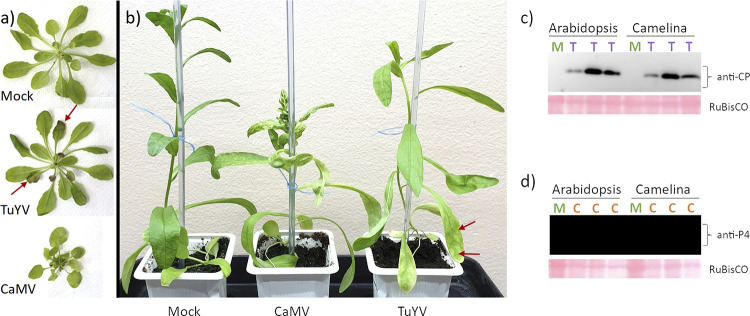
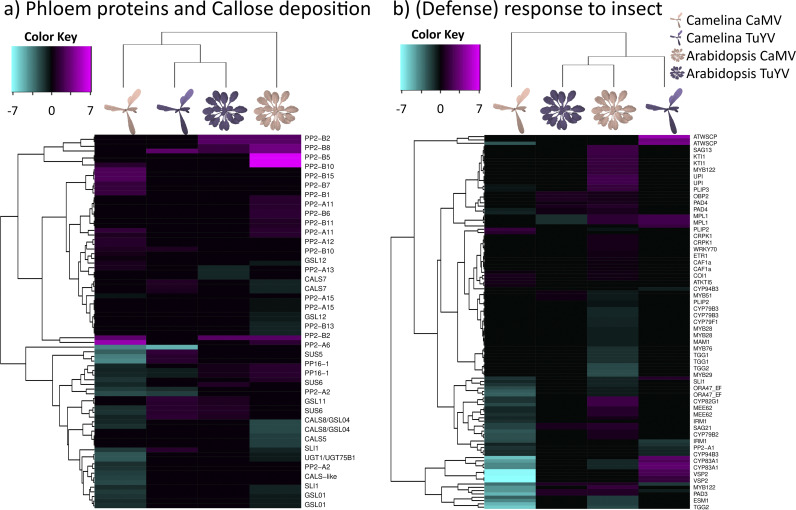
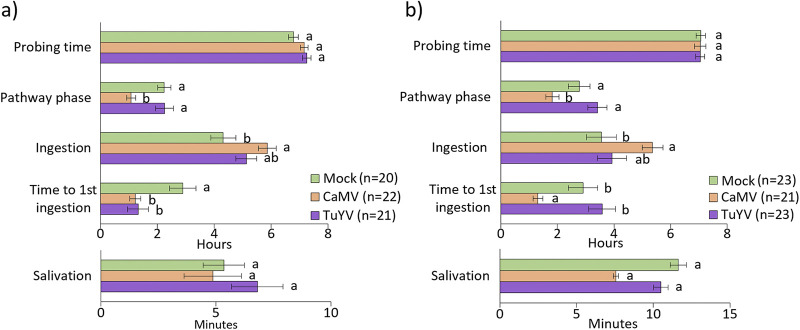
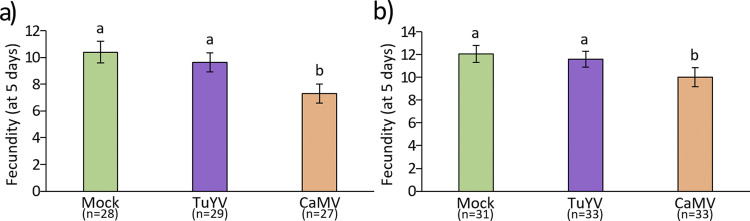
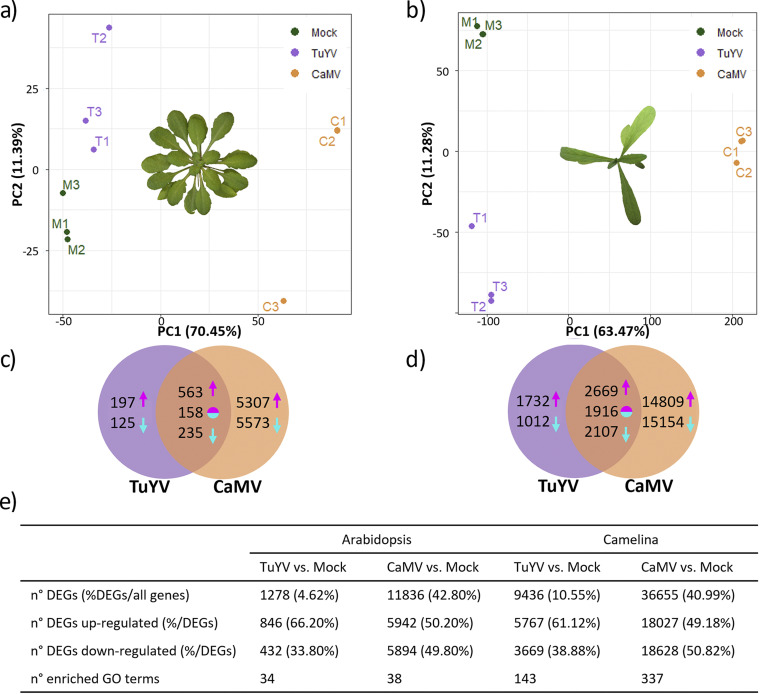
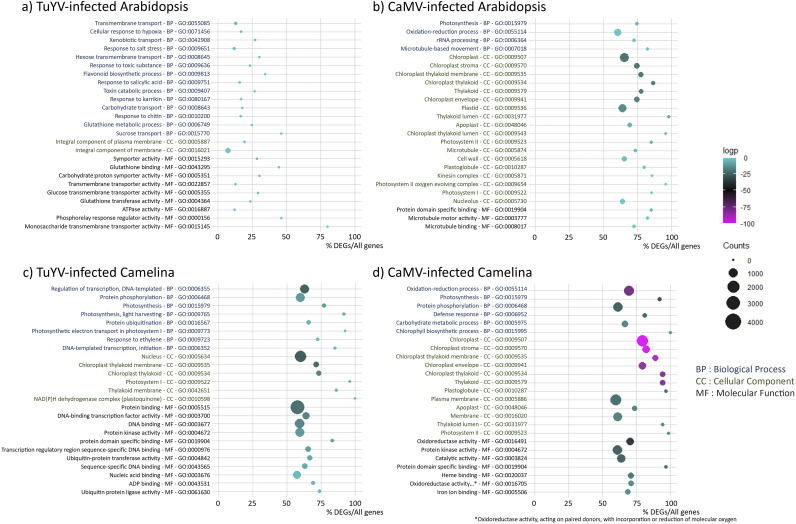
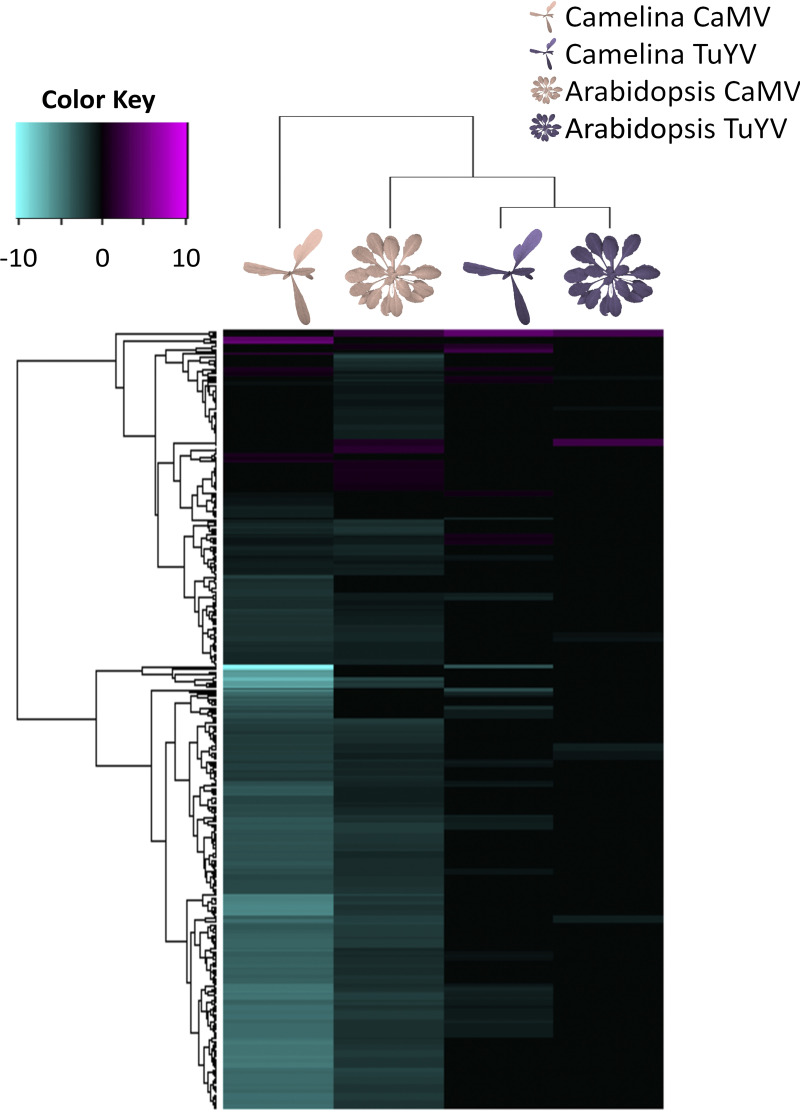
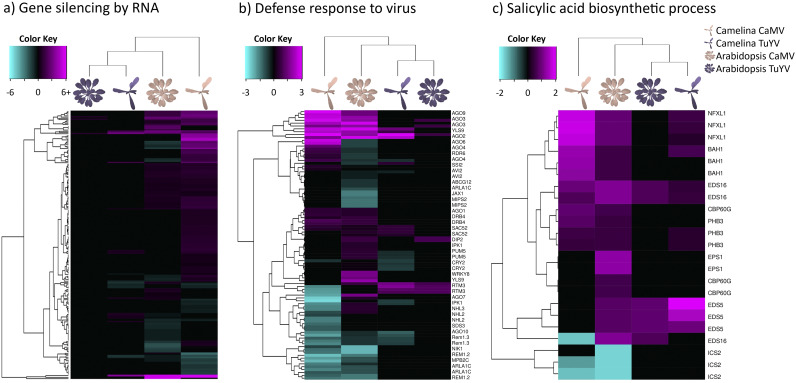
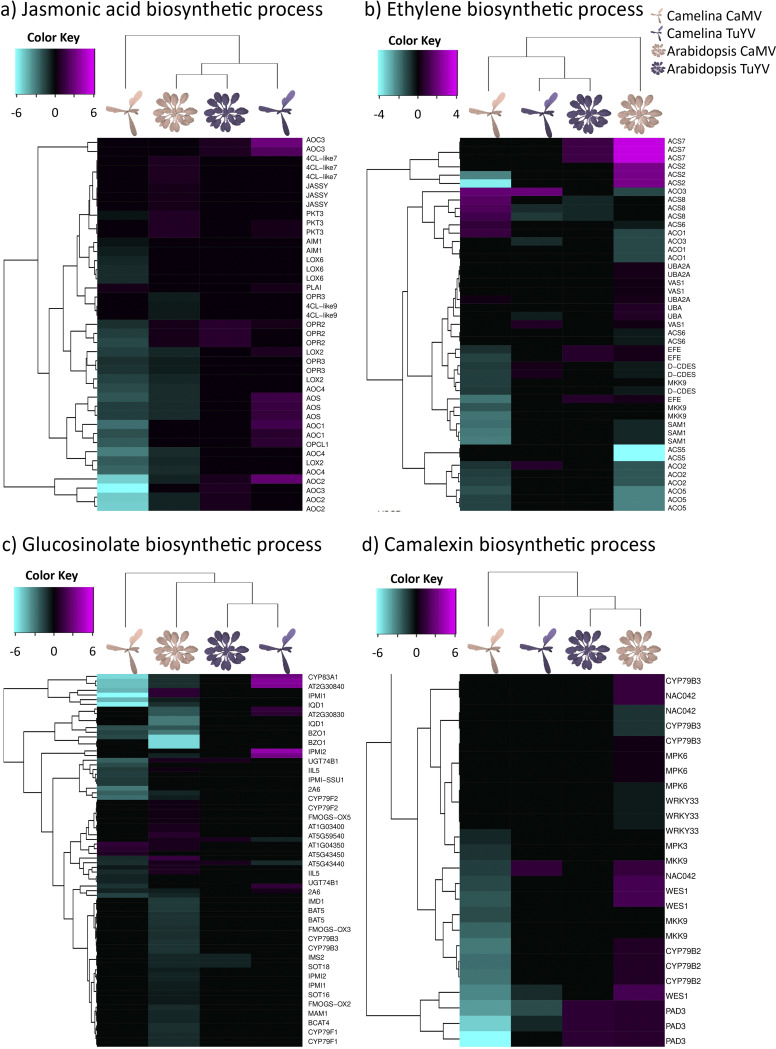
Evidence is accumulating that plant viruses alter host plant traits in ways that modify their insect vectors' behavior. These alterations often enhance virus transmission, which has led to the hypothesis that these effects are manipulations caused by viral adaptation. However, we lack a mechanistic understanding of the genetic basis of these indirect, plant-mediated effects on vectors, their dependence on the plant host, and their relation to the mode of virus transmission. Transcriptome profiling of Arabidopsis thaliana and Camelina sativa plants infected with turnip yellows virus (TuYV) or cauliflower mosaic virus (CaMV) and infested with the common aphid vector Myzus persicae revealed strong virus- and host-specific differences in gene expression patterns. CaMV infection caused more severe effects on the phenotype of both plant hosts than did TuYV infection, and the severity of symptoms correlated strongly with the proportion of differentially expressed genes, especially photosynthesis genes. Accordingly, CaMV infection modified aphid behavior and fecundity more strongly than did infection with TuYV. Overall, infection with CaMV, relying on the noncirculative transmission mode, tends to have effects on metabolic pathways, with strong potential implications for insect vector-plant host interactions (e.g., photosynthesis, jasmonic acid, ethylene, and glucosinolate biosynthetic processes), while TuYV, using the circulative transmission mode, alters these pathways only weakly. These virus-induced deregulations of genes that are related to plant physiology and defense responses might impact both aphid probing and feeding behavior on infected host plants, with potentially distinct effects on virus transmission. Plant viruses change the phenotype of their plant hosts. Some of the changes impact interactions of the plant with insects that feed on the plants and transmit these viruses. These modifications may result in better virus transmission. We examine here the transcriptomes of two plant species infected with two viruses with different transmission modes to work out whether there are plant species-specific and transmission mode-specific transcriptome changes. Our results show that both are the case.
证据表明,植物病毒会改变宿主植物的特性,从而改变其昆虫载体的行为。这些改变通常会增强病毒的传播,这导致了这样一种假设,即这些影响是由病毒适应引起的操纵。然而,我们缺乏对这些间接的、植物介导的对载体的影响的遗传基础的机制理解,它们对植物宿主的依赖性,以及它们与病毒传播方式的关系。拟南芥和荠蓝感染芜菁黄花叶病毒(TuYV)或花椰菜花叶病毒(CaMV)并被普通蚜虫载体桃蚜侵害后,其转录组图谱显示出基因表达模式的强烈病毒和宿主特异性差异。CaMV 感染比 TuYV 感染对两种植物宿主的表型产生更严重的影响,症状的严重程度与差异表达基因的比例密切相关,特别是光合作用基因。因此,CaMV 感染比 TuYV 感染更强烈地改变了蚜虫的行为和繁殖力。总的来说,依赖非循环传播模式的 CaMV 感染往往对代谢途径产生影响,对昆虫载体-植物宿主相互作用具有很强的潜在影响(例如,光合作用、茉莉酸、乙烯和硫代葡萄糖苷生物合成过程),而使用循环传播模式的 TuYV 仅对这些途径产生微弱影响。这些与植物生理和防御反应相关的基因的病毒诱导失调可能会影响受感染宿主植物上蚜虫的探测和取食行为,并对病毒传播产生潜在的不同影响。 植物病毒会改变其宿主植物的表型。一些变化会影响以植物为食并传播这些病毒的昆虫与植物的相互作用。这些修改可能会导致更好的病毒传播。我们在这里研究了两种具有不同传播方式的病毒感染的两种植物物种的转录组,以确定是否存在植物物种特异性和传播方式特异性的转录组变化。我们的结果表明,这两种情况都存在。