Department of Genetics and Genome Sciences, School of Medicine, Case Western Reserve University, Cleveland, OH, USA; Department of Molecular Biology, Institute of Biological Sciences, Maria Curie-Skłodowska University, Lublin, Poland.
Department of Genetics and Genome Sciences, School of Medicine, Case Western Reserve University, Cleveland, OH, USA; Department of Biochemistry, School of Medicine, Case Western Reserve University, Cleveland, OH, USA.
Cell Rep. 2022 Jul 19;40(3):111092. doi: 10.1016/j.celrep.2022.111092.
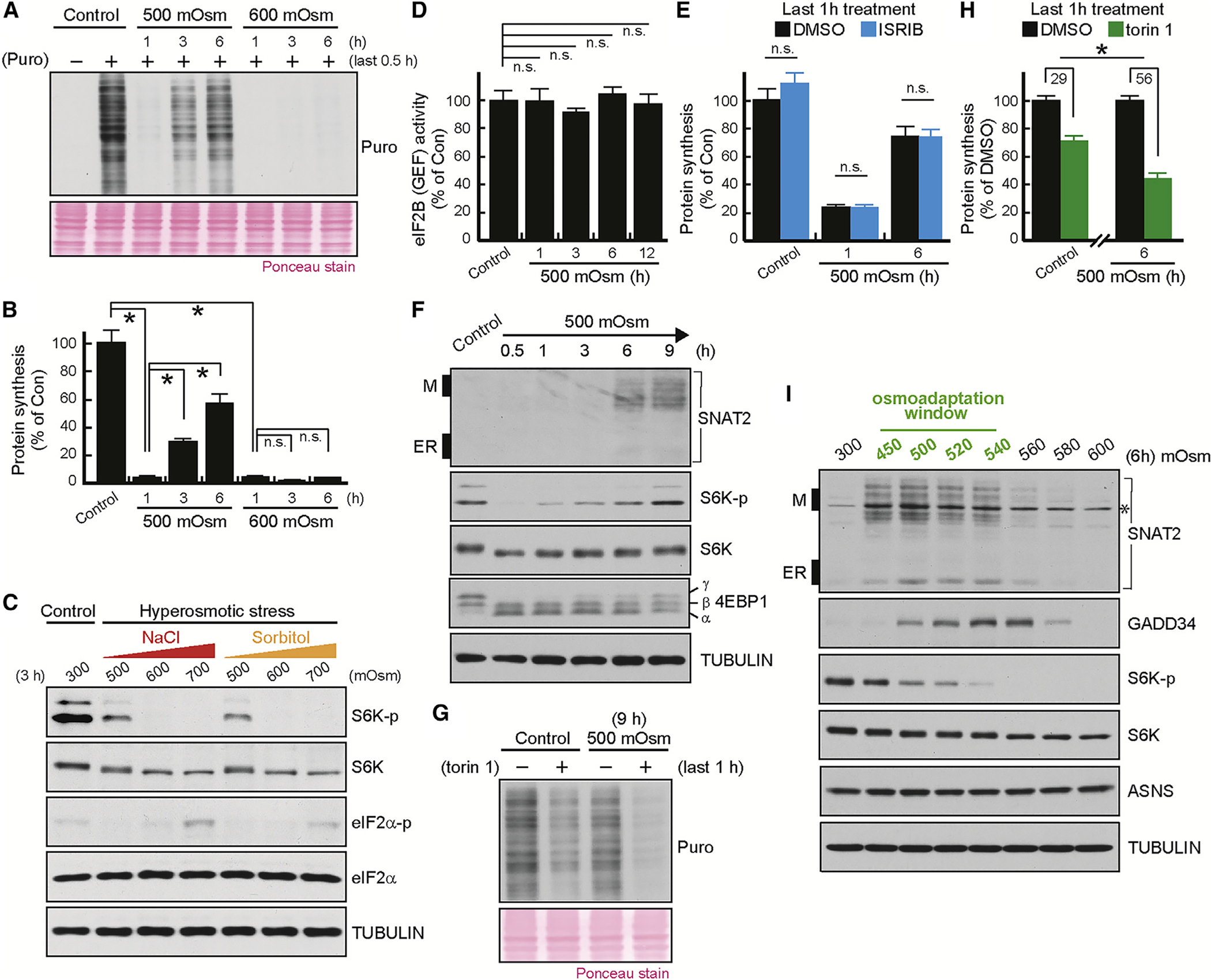
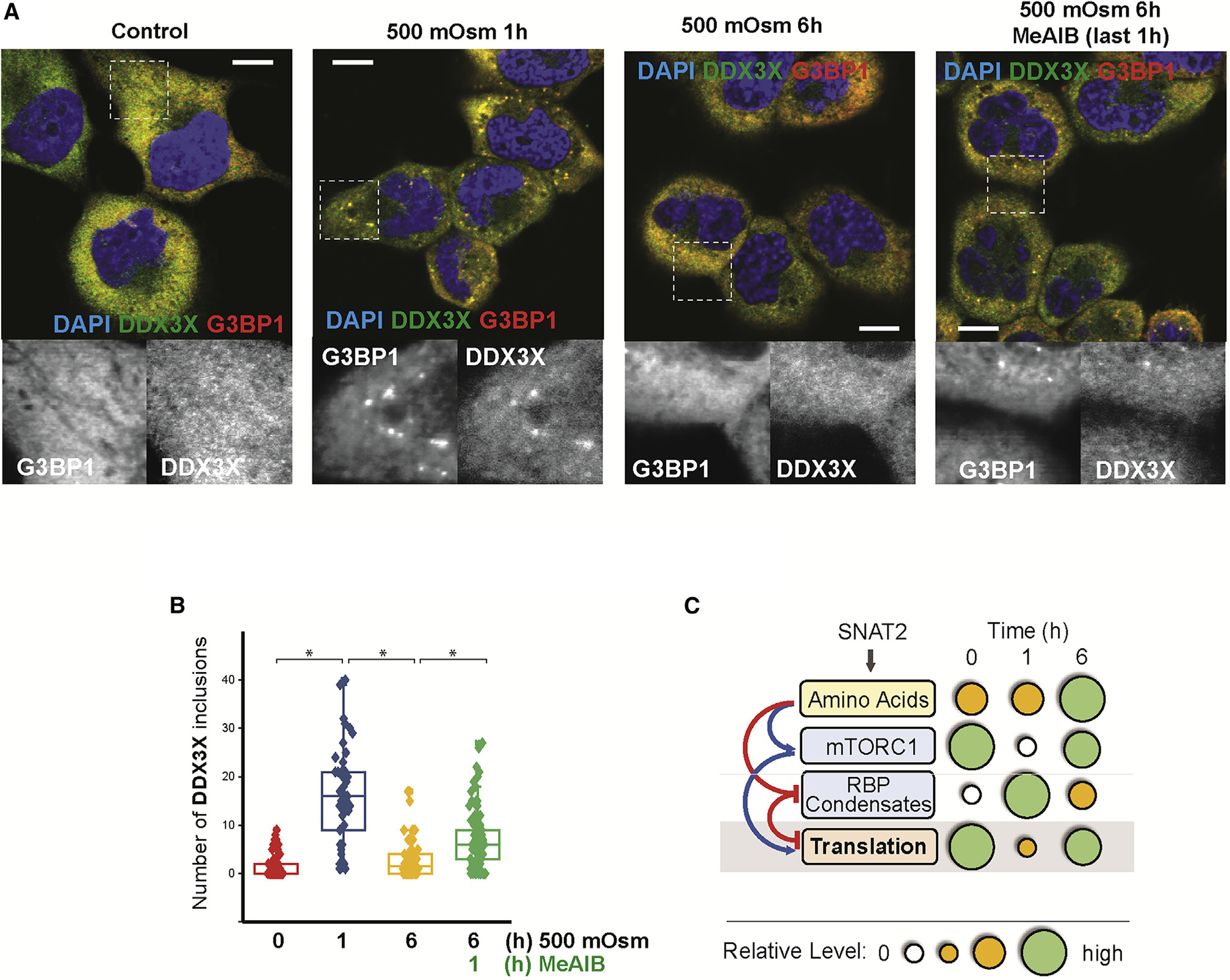
The integrated stress response (ISR) plays a pivotal role in adaptation of translation machinery to cellular stress. Here, we demonstrate an ISR-independent osmoadaptation mechanism involving reprogramming of translation via coordinated but independent actions of mTOR and plasma membrane amino acid transporter SNAT2. This biphasic response entails reduced global protein synthesis and mTOR signaling followed by translation of SNAT2. Induction of SNAT2 leads to accumulation of amino acids and reactivation of mTOR and global protein synthesis, paralleled by partial reversal of the early-phase, stress-induced translatome. We propose SNAT2 functions as a molecular switch between inhibition of protein synthesis and establishment of an osmoadaptive translation program involving the formation of cytoplasmic condensates of SNAT2-regulated RNA-binding proteins DDX3X and FUS. In summary, we define key roles of SNAT2 in osmotolerance.
整合应激反应(ISR)在翻译机制适应细胞应激中起着关键作用。在这里,我们展示了一种不依赖 ISR 的渗透适应机制,该机制涉及通过 mTOR 和质膜氨基酸转运体 SNAT2 的协调但独立的作用来重新编程翻译。这种双相反应需要减少全局蛋白质合成和 mTOR 信号转导,随后是 SNAT2 的翻译。SNAT2 的诱导导致氨基酸的积累和 mTOR 以及全局蛋白质合成的重新激活,同时部分逆转早期应激诱导的翻译组。我们提出 SNAT2 作为抑制蛋白质合成和建立涉及 SNAT2 调节的 RNA 结合蛋白 DDX3X 和 FUS 的细胞质凝聚体的渗透适应翻译程序之间的分子开关。总之,我们定义了 SNAT2 在耐渗中的关键作用。