Yang Jia-Xuan, Wang Hong-Fei, Chen Ji-Zhun, Li Han-Yu, Hu Ji-Chen, Yu An-An, Wen Jun-Jun, Chen Si-Jia, Lai Wei-Dong, Wang Song, Jin Yan, Yu Jie
Fourth School of Clinical Medicine, Zhejiang Chinese Medicine University, Hangzhou, China.
First School of Clinical Medicine, Zhejiang Chinese Medicine University, Hangzhou, China.
Front Pain Res (Lausanne). 2022 Jul 4;3:946846. doi: 10.3389/fpain.2022.946846. eCollection 2022.
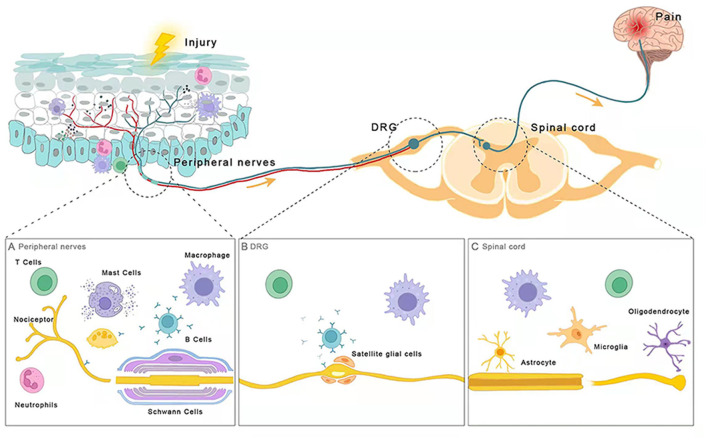
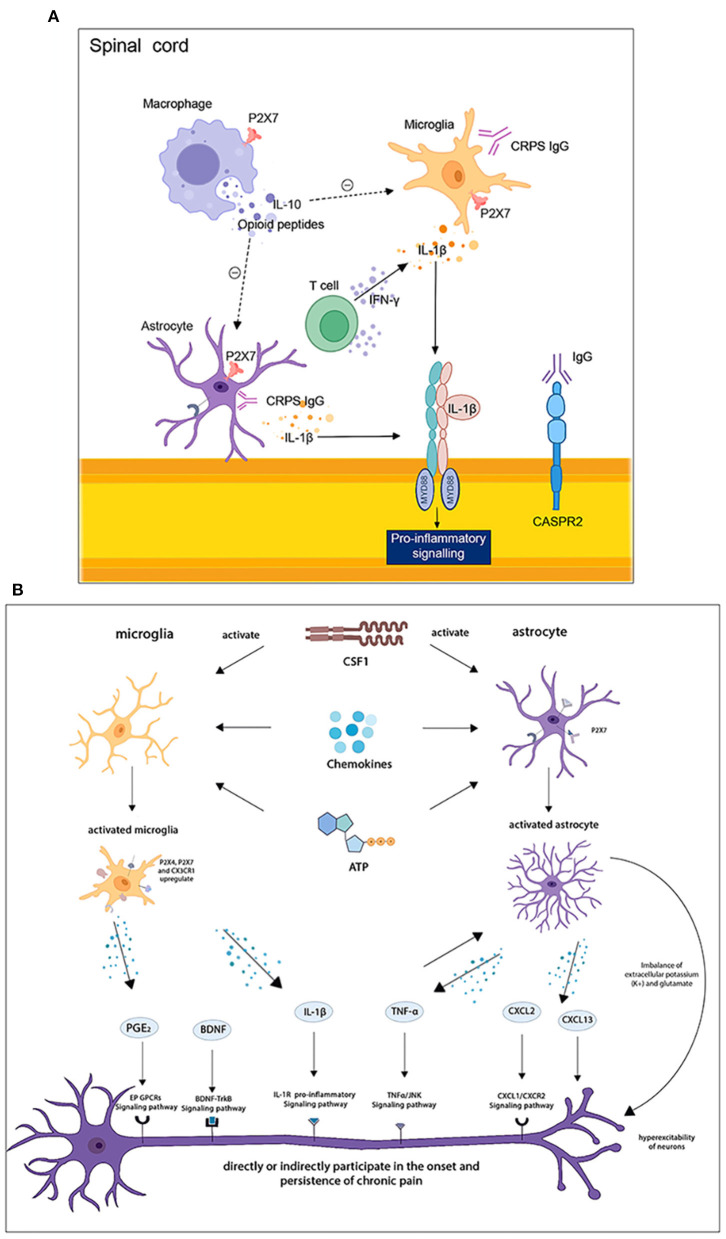
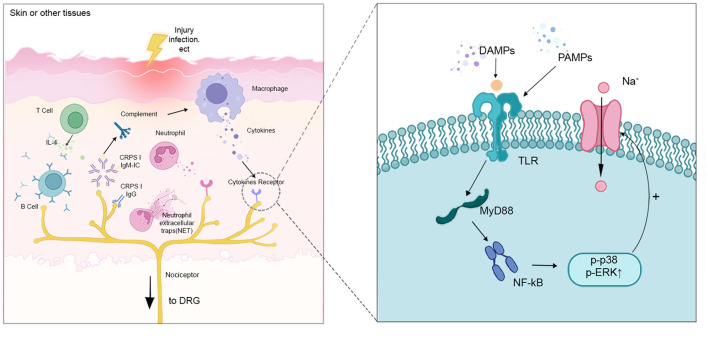
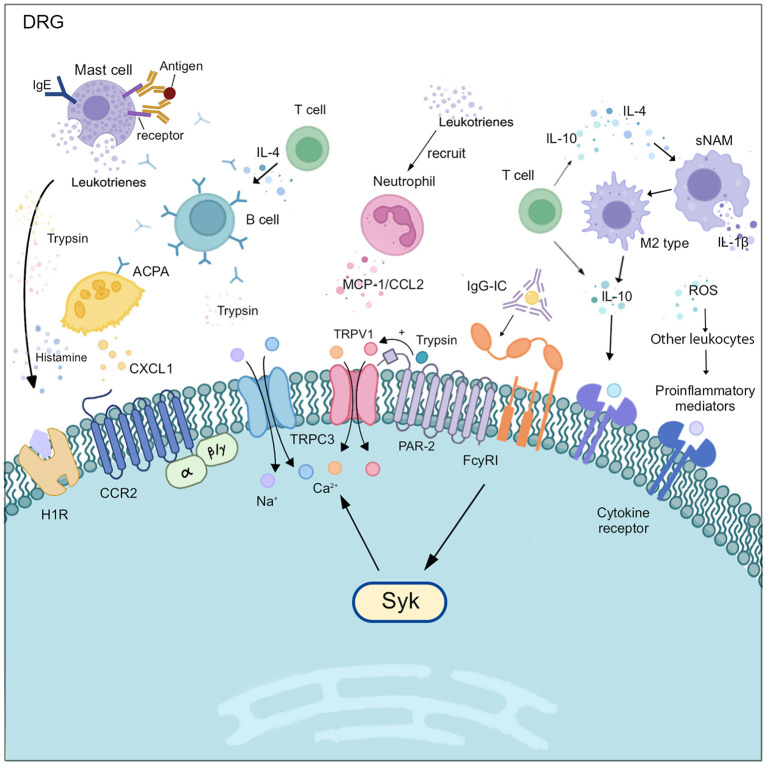
Chronic pain is a long-standing unpleasant sensory and emotional feeling that has a tremendous impact on the physiological functions of the body, manifesting itself as a dysfunction of the nervous system, which can occur with peripheral and central sensitization. Many recent studies have shown that a variety of common immune cells in the immune system are involved in chronic pain by acting on the peripheral or central nervous system, especially in the autoimmune diseases. This article reviews the mechanisms of regulation of the sensory nervous system by neutrophils, macrophages, mast cells, B cells, T cells, and central glial cells. In addition, we discuss in more detail the influence of each immune cell on the initiation, maintenance, and resolution of chronic pain. Neutrophils, macrophages, and mast cells as intrinsic immune cells can induce the transition from acute to chronic pain and its maintenance; B cells and T cells as adaptive immune cells are mainly involved in the initiation of chronic pain, and T cells also contribute to the resolution of it; the role of glial cells in the nervous system can be extended to the beginning and end of chronic pain. This article aims to promote the understanding of the neuroimmune mechanisms of chronic pain, and to provide new therapeutic ideas and strategies for the control of chronic pain at the immune cellular level.
慢性疼痛是一种长期存在的不愉快的感觉和情绪体验,对身体的生理功能有巨大影响,表现为神经系统功能障碍,可伴有外周和中枢敏化。最近许多研究表明,免疫系统中的多种常见免疫细胞通过作用于外周或中枢神经系统参与慢性疼痛,尤其是在自身免疫性疾病中。本文综述了中性粒细胞、巨噬细胞、肥大细胞、B细胞、T细胞和中枢神经胶质细胞对感觉神经系统的调节机制。此外,我们更详细地讨论了每种免疫细胞对慢性疼痛的起始、维持和缓解的影响。中性粒细胞、巨噬细胞和肥大细胞作为固有免疫细胞可诱导急性疼痛向慢性疼痛的转变及其维持;B细胞和T细胞作为适应性免疫细胞主要参与慢性疼痛的起始,T细胞也有助于其缓解;神经胶质细胞在神经系统中的作用可延伸至慢性疼痛的起始和结束阶段。本文旨在促进对慢性疼痛神经免疫机制的理解,并在免疫细胞水平为慢性疼痛的控制提供新的治疗思路和策略。