Department of Pathology, Meizhou People's Hospital, Meizhou, Guangdong, China.
Department of Pelvic Radiotherapy, Meizhou People's Hospital, Meizhou, Guangdong, China.
PeerJ. 2022 Jul 15;10:e13745. doi: 10.7717/peerj.13745. eCollection 2022.
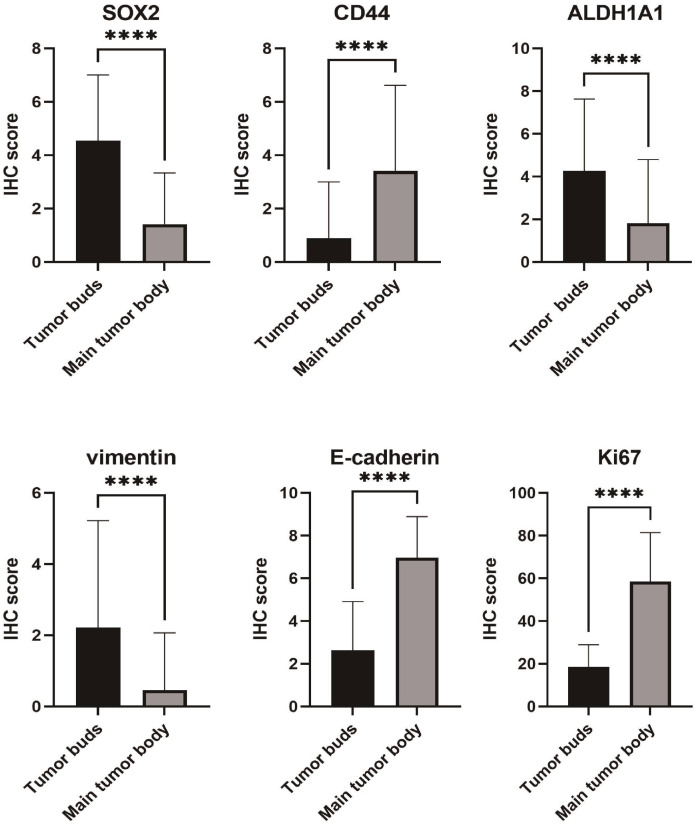
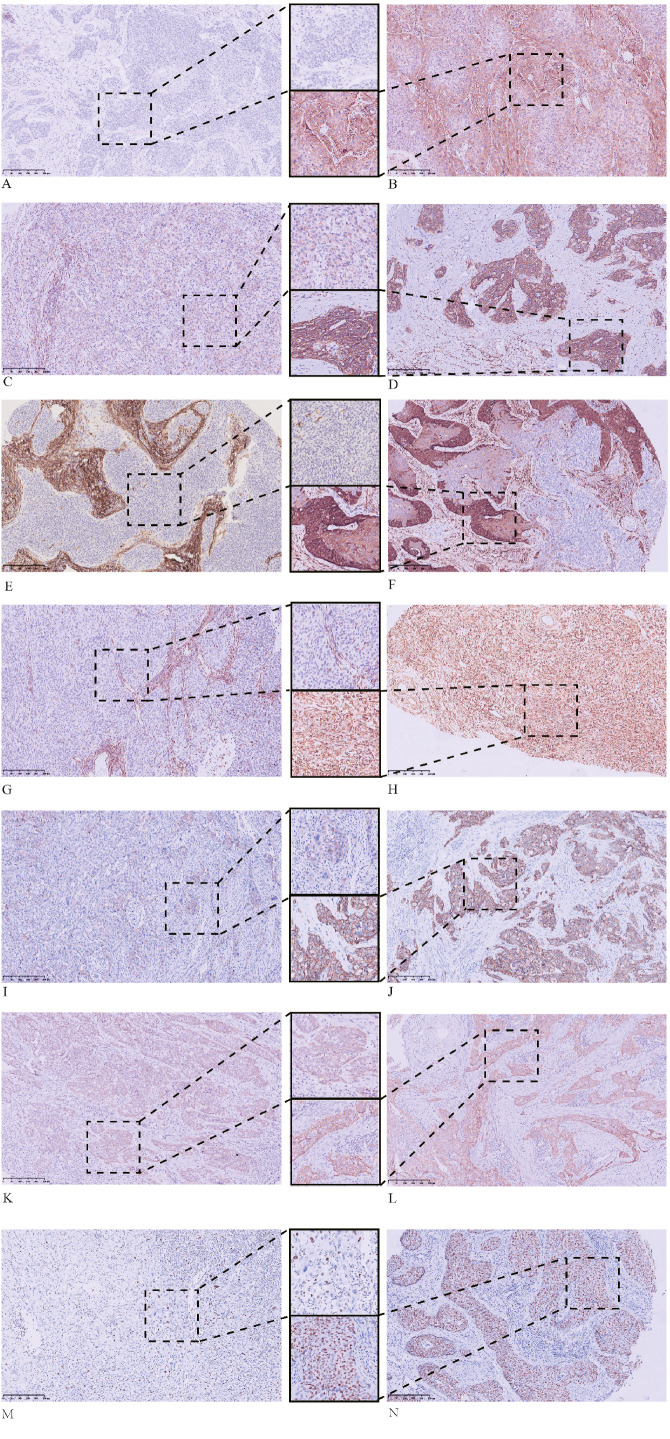
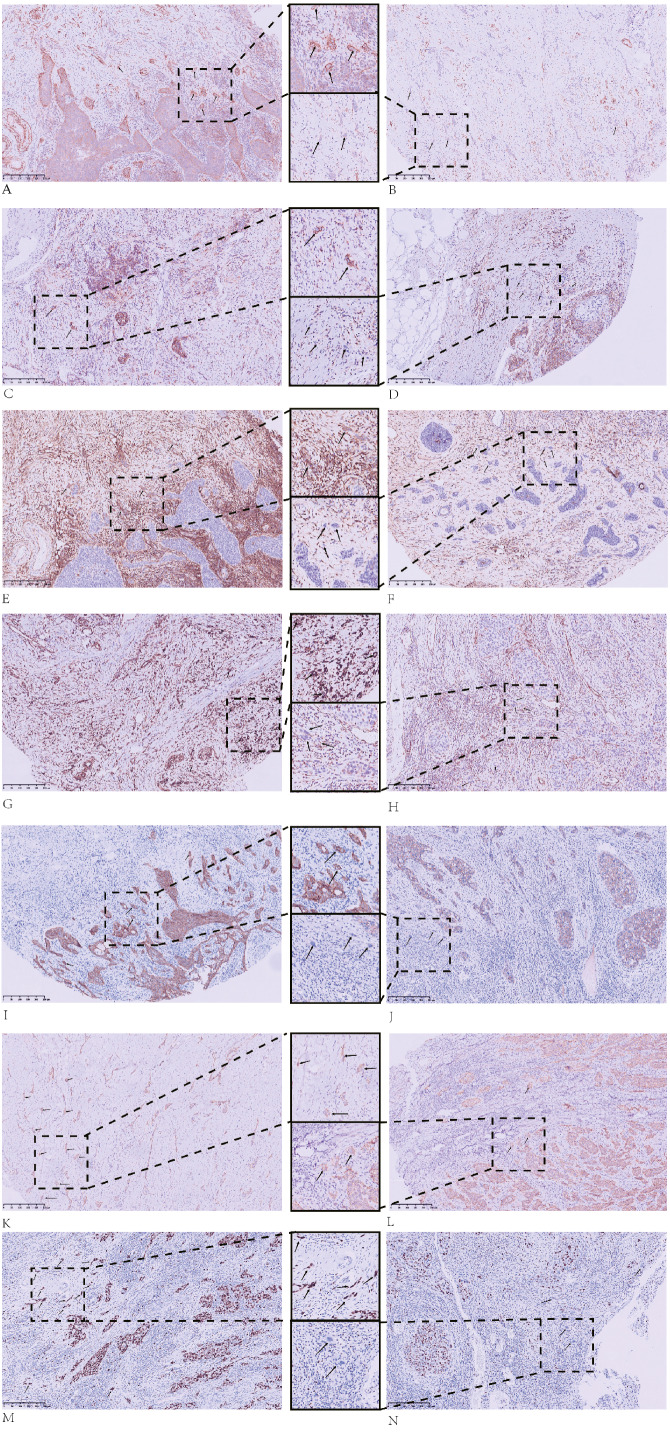
Recent evidence indicates that cancer stem cells (CSCs) are the origin of cancers. Scientists have identified CSCs in various tumors and have suggested the existence of a variety of states of CSCs. The existence of epithelial-mesenchymal transition (EMT)-like CSCs has been confirmed , but they have not been identified . Tumor budding was defined as single cell or clusters of ≤ 5 cells at the invasive front of cancers. Such tumor budding is hypothesized to be closely related to EMT and linked to CSCs, especially to those migrating at the invasive front. Therefore, tumor budding has been proposed to represent EMT-like stem cells. However, this hypothesis has not yet been proven. Thus, we studied the expression of EMT markers, certain CSC markers of tumor budding, and the tumor center of cervical squamous cell carcinoma (CxSCC). We performed tissue chip analyses of 95 primary CxSCCs from patients. Expression of EMT and CSC markers (E-cadherin, -catenin, vimentin, Ki67, CD44, SOX2 , and ALDH1A1) in a set of tumor samples on tissue chips (87 cases of tumor budding/the main tumor body) were evaluated by immunohistochemistry. We found that the cell-membranous expression of -catenin was stronger in the main tumor body than in tumor buds. Compared with the main tumor body, tumor buds had reduced proliferative activity as measured by Ki67. Moreover, vimentin expression was high and E-cadherin expression was low in tumor buds. Expression of EMT-related markers suggested that tumor buds were correlated with EMT. We noted that CxSCC tumor buds had a CD44/SOX2/ALDH1A1 staining pattern, indicating that tumor buds of CxSCC present CSC-like immunophenotypic features. Taken together, our data indicate that tumor buds in CxSCC may represent EMT-like CSCs
最近的证据表明,癌症干细胞(CSC)是癌症的起源。科学家们已经在各种肿瘤中鉴定出 CSC,并提出了 CSC 的多种状态存在。上皮-间充质转化(EMT)样 CSC 的存在已经得到证实,但尚未得到证实。肿瘤芽被定义为癌症侵袭前沿的单细胞或≤5 个细胞的细胞簇。这种肿瘤芽被假设与 EMT 密切相关,并与 CSC 相关,特别是与侵袭前沿迁移的 CSC 相关。因此,肿瘤芽被认为代表 EMT 样干细胞。然而,这一假设尚未得到证实。因此,我们研究了 EMT 标志物、肿瘤芽中某些 CSC 标志物以及宫颈鳞状细胞癌(CxSCC)肿瘤中心的表达。我们对 95 例来自患者的原发性 CxSCC 进行了组织芯片分析。通过免疫组织化学法评估组织芯片上一组肿瘤样本(87 例肿瘤芽/主要肿瘤体)中 EMT 和 CSC 标志物(E-钙粘蛋白、β-连环蛋白、波形蛋白、Ki67、CD44、SOX2 和 ALDH1A1)的表达。我们发现β-连环蛋白的细胞膜表达在主要肿瘤体中强于肿瘤芽。与主要肿瘤体相比,肿瘤芽的增殖活性较低,Ki67 测定。此外,肿瘤芽中波形蛋白表达高,E-钙粘蛋白表达低。EMT 相关标志物的表达表明肿瘤芽与 EMT 相关。我们注意到 CxSCC 肿瘤芽具有 CD44/SOX2/ALDH1A1 染色模式,表明 CxSCC 肿瘤芽具有 CSC 样免疫表型特征。总之,我们的数据表明,CxSCC 中的肿瘤芽可能代表 EMT 样 CSC。