Gomes Inês, Jesus Ribeiro Joana, Palavra Filipe
Neurology Department, Centro Hospitalar e Universitário de Coimbra, Coimbra, Portugal.
Neurology Department, Centro Hospitalar de Leiria, Leiria, Portugal.
J Multidiscip Healthc. 2022 Jul 14;15:1469-1480. doi: 10.2147/JMDH.S266990. eCollection 2022.
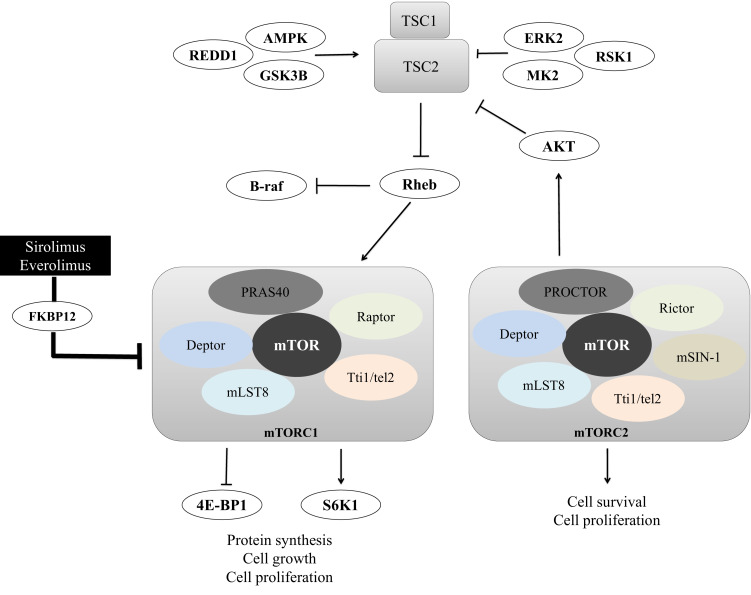
Tuberous sclerosis complex (TSC) is a rare genetic disease of autosomal dominant transmission that, in most cases, results from the presence of pathogenic variants of the or genes, encoding hamartin and tuberin, respectively. It is a multisystemic disease, affecting most frequently the brain, skin, kidney, and heart. The wide variety of possible clinical manifestations, given this multisystem dimension, makes the follow-up of patients with TSC an exercise of multidisciplinarity. In fact, these patients may require the intervention of various medical specialties, which thus have to combine their efforts to practice a medicine that is truly holistic. The past few years have witnessed a dramatic leap not only in the diagnosis and management of TSC patients, with standard monitoring recommendations, but also in the therapeutic field, with the use of mTORC1 inhibitors. In this article, we review the clinical manifestations associated with TSC, as well as the treatment and follow-up strategies that should be implemented, from a multidisciplinary perspective.
结节性硬化症(TSC)是一种罕见的常染色体显性遗传疾病,在大多数情况下,是由分别编码错构瘤蛋白和结节蛋白的TSC1或TSC2基因的致病性变异引起的。它是一种多系统疾病,最常影响大脑、皮肤、肾脏和心脏。鉴于这种多系统层面,各种可能的临床表现使得对TSC患者的随访成为一项多学科工作。事实上,这些患者可能需要多个医学专科的干预,因此必须共同努力,实施真正全面的医疗。在过去几年里,不仅在TSC患者的诊断和管理方面(有标准的监测建议),而且在治疗领域(使用mTORC1抑制剂)都取得了巨大飞跃。在本文中,我们将从多学科角度回顾与TSC相关的临床表现,以及应实施的治疗和随访策略。