Lin Yu-Ting, Yu Chia-Ling, Tu Yu-Kang, Chi Ching-Chi
Department of Pharmacy, Chang Gung Memorial Hospital, Linkou, Taoyuan 33305, Taiwan.
Institute of Epidemiology and Preventive Medicine, College of Public Health, National Taiwan University, Taipei 10617, Taiwan.
Biomedicines. 2022 Mar 31;10(4):826. doi: 10.3390/biomedicines10040826.
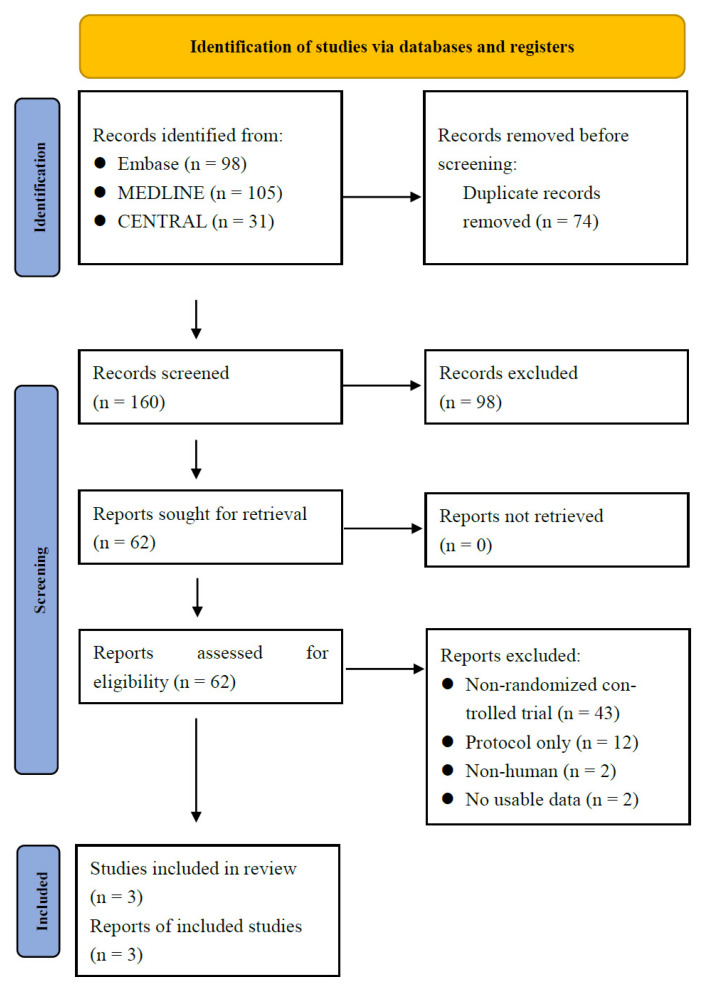
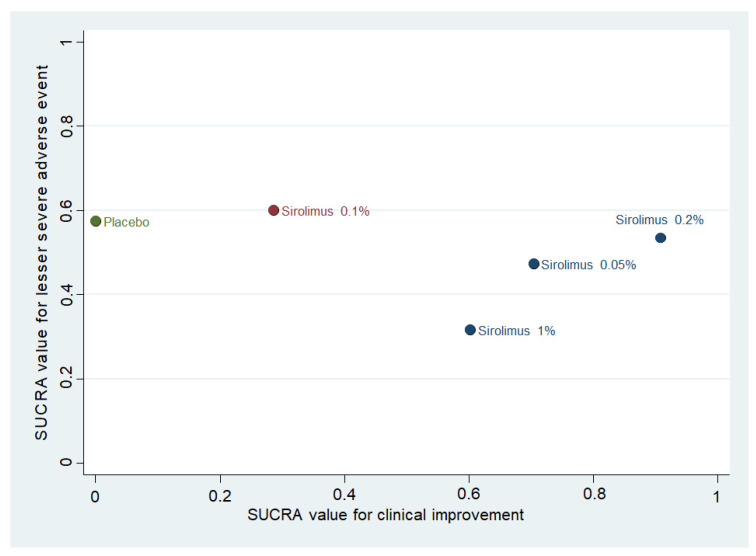
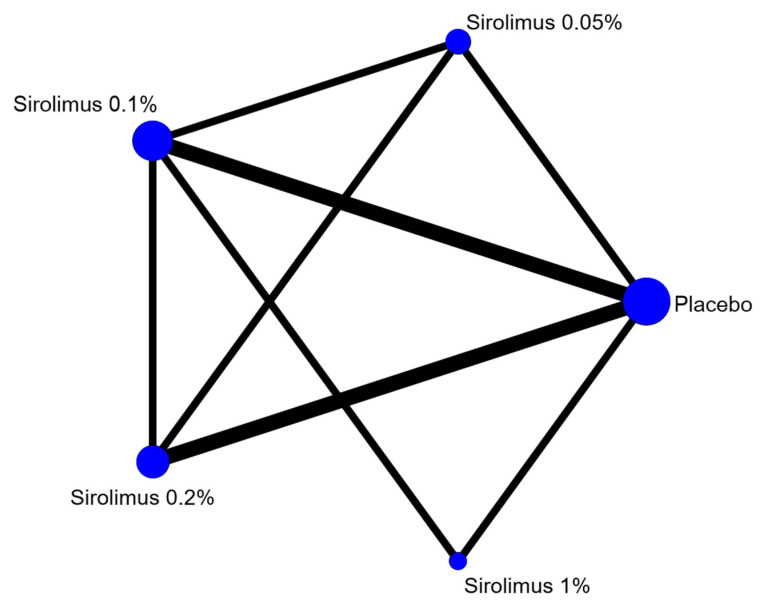
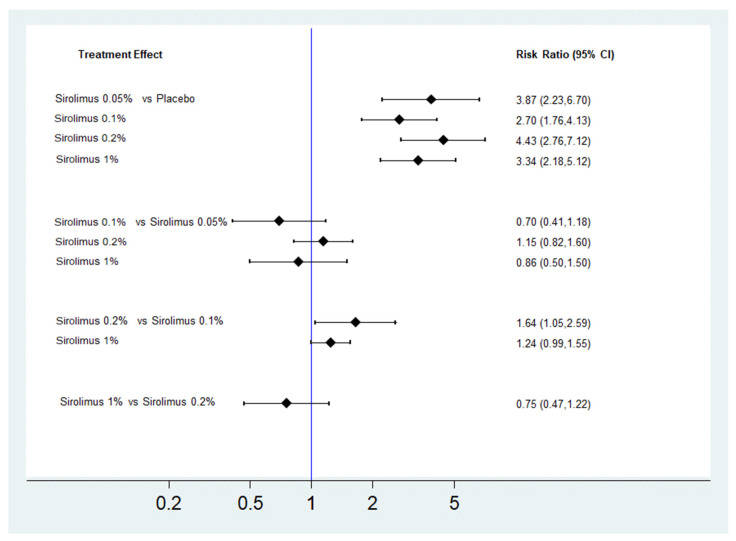
Previous studies have suggested that the topical mechanistic target of rapamycin (mTOR) inhibitors may be effective in treating facial angiofibromas in patients with tuberous sclerosis complex (TSC). Various concentrations of topical sirolimus for TSC have been tested, but their comparative efficacy and safety remained unclear. To assess the effects of topical mTOR inhibitors in treating facial angiofibromas, we conducted a systematic review and network meta-analysis (NMA) and searched MEDLINE, Embase, and Cochrane Library for relevant randomized controlled trials on 14 February 2022. The Cochrane Collaboration tool was used to assess the risk of bias of included trials. Our outcomes were clinical improvement and severe adverse events leading to withdrawal. We included three trials on 261 TSC patients with facial angiofibromas. The NMA found when compared with placebo, facial angiofibromas significantly improved following the application of various concentrations of topical sirolimus (risk ratio being 3.87, 2.70, 4.43, and 3.34 for 0.05%, 0.1%, 0.2%, and 1%, respectively). When compared with placebo, all concentrations of topical sirolimus did not differ in severe adverse events leading to withdrawal. The ranking analysis suggested topical sirolimus 0.2% as the most effective drug. In conclusion, topical sirolimus 0.05-1% are effective and safe in treating facial angiofibromas in patients with TSC, with topical sirolimus 0.2% being the most effective.
先前的研究表明,局部应用雷帕霉素靶蛋白(mTOR)抑制剂可能有效治疗结节性硬化症(TSC)患者的面部血管纤维瘤。已经测试了各种浓度的用于TSC的局部西罗莫司,但它们的相对疗效和安全性仍不明确。为了评估局部mTOR抑制剂治疗面部血管纤维瘤的效果,我们进行了一项系统评价和网状Meta分析(NMA),并于2022年2月14日在MEDLINE、Embase和Cochrane图书馆中检索了相关的随机对照试验。采用Cochrane协作工具评估纳入试验的偏倚风险。我们的结局指标是临床改善情况以及导致停药的严重不良事件。我们纳入了三项针对261例患有面部血管纤维瘤的TSC患者的试验。NMA发现,与安慰剂相比,应用各种浓度的局部西罗莫司后,面部血管纤维瘤有显著改善(0.05%、0.1%、0.2%和1%浓度的风险比分别为3.87、2.70、4.43和3.34)。与安慰剂相比,所有浓度的局部西罗莫司在导致停药的严重不良事件方面没有差异。排序分析表明0.2%的局部西罗莫司是最有效的药物。总之,0.05 - 1%的局部西罗莫司治疗TSC患者的面部血管纤维瘤有效且安全,其中0.2%的局部西罗莫司最有效。