Carlos Chagas Filho Biophysics Institute, Federal University of Rio de Janeiro, Rio de Janeiro, Brazil.
Clementino Fraga Filho University Hospital, Federal University of Rio de Janeiro, Rio de Janeiro, Brazil; School of Medicine and Surgery, Federal University of the State of Rio de Janeiro, Rio de Janeiro, Brazil.
Biochim Biophys Acta Mol Basis Dis. 2022 Dec 1;1868(12):166496. doi: 10.1016/j.bbadis.2022.166496. Epub 2022 Jul 18.
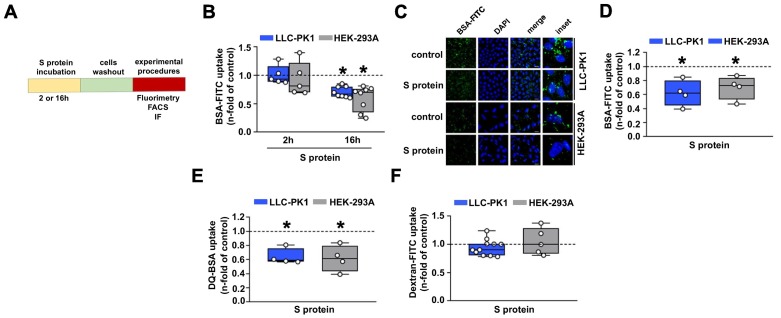
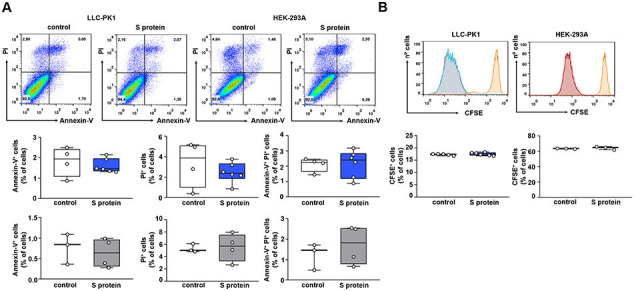
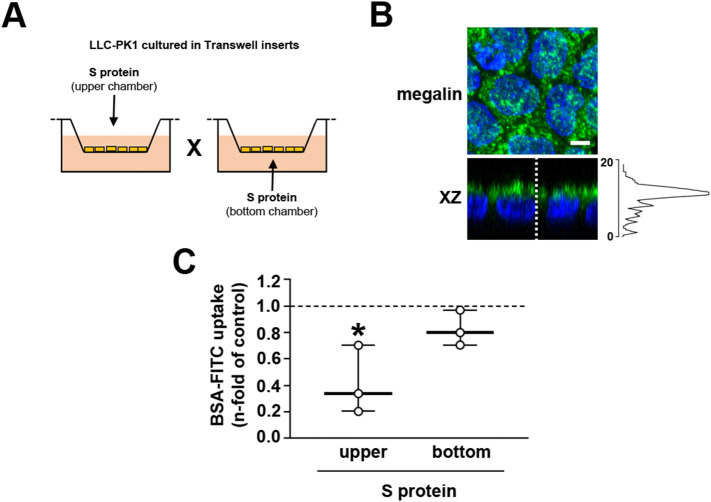
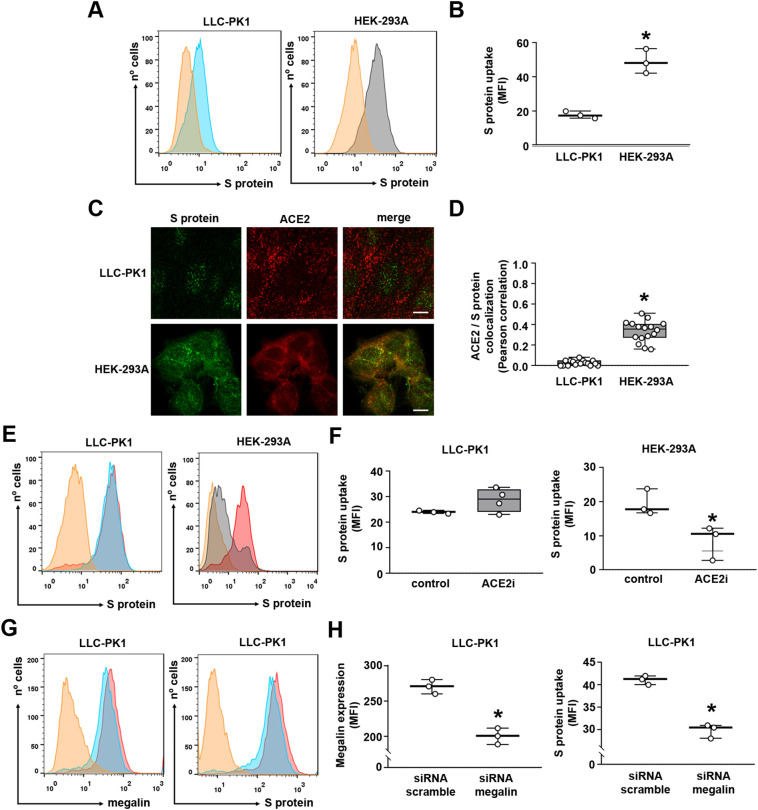
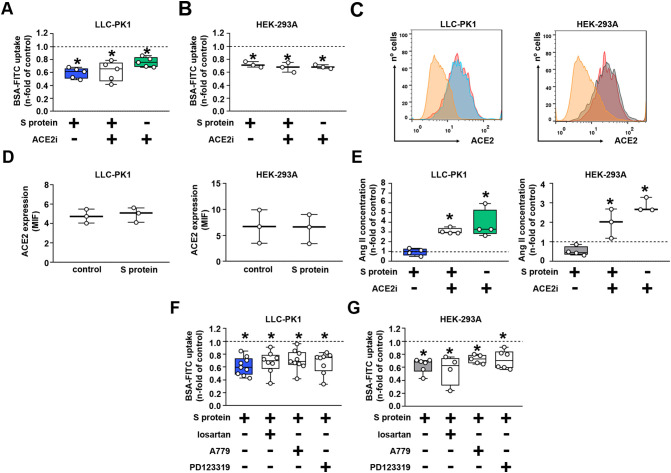
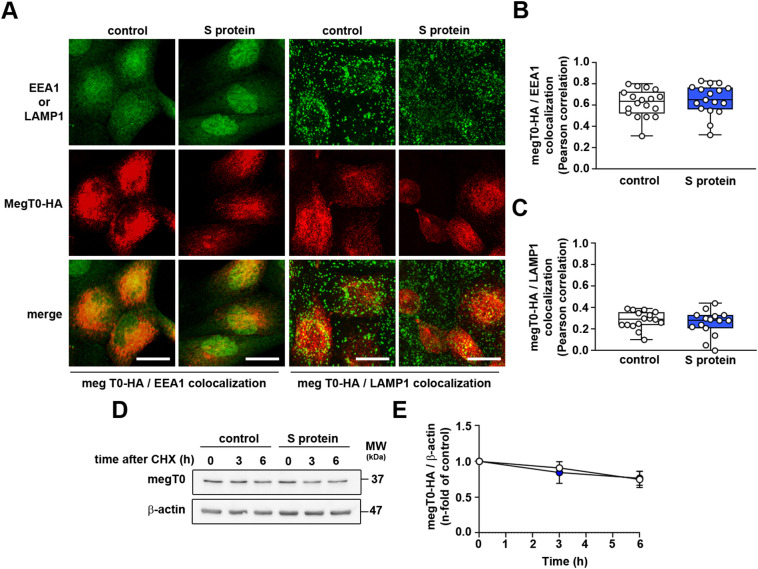
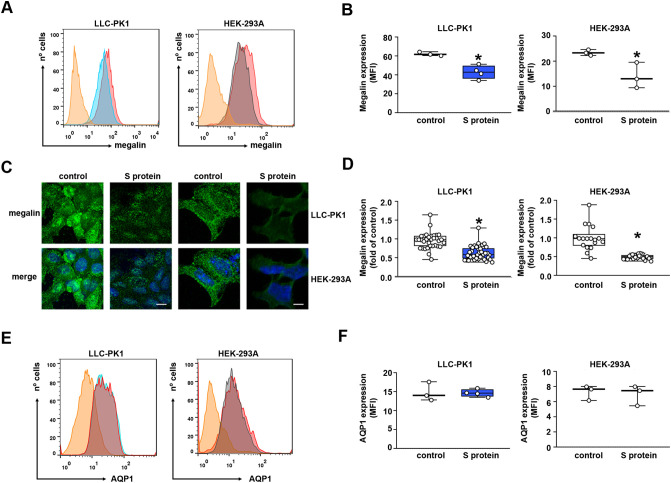
Patients with COVID-19 have high prevalence of albuminuria which is used as a marker of progression of renal disease and is associated with severe COVID-19. We hypothesized that SARS-CoV-2 spike protein (S protein) could modulate albumin handling in proximal tubule epithelial cells (PTECs) and, consequently contribute to the albuminuria observed in patients with COVID-19. In this context, the possible effect of S protein on albumin endocytosis in PTECs was investigated. Two PTEC lines were used: HEK-293A and LLC-PK1. Incubation of both cell types with S protein for 16 h inhibited albumin uptake at the same magnitude. This effect was associated with canonical megalin-mediated albumin endocytosis because: (1) DQ-albumin uptake, a marker of the lysosomal degradation pathway, was reduced at a similar level compared with fluorescein isothiocyanate (FITC)-albumin uptake; (2) dextran-FITC uptake, a marker of fluid-phase endocytosis, was not changed; (3) cell viability and proliferation were not changed. The inhibitory effect of S protein on albumin uptake was only observed when it was added at the luminal membrane, and it did not involve the ACE2/Ang II/AT1R axis. Although both cells uptake S protein, it does not seem to be required for modulation of albumin endocytosis. The mechanism underlying the inhibition of albumin uptake by S protein encompasses a decrease in megalin expression without changes in megalin trafficking and stability. These results reveal a possible mechanism to explain the albuminuria observed in patients with COVID-19.
COVID-19 患者白蛋白尿的患病率很高,白蛋白尿是肾病进展的标志物,与严重的 COVID-19 相关。我们假设严重急性呼吸综合征冠状病毒 2(SARS-CoV-2)刺突蛋白(S 蛋白)可以调节近端肾小管上皮细胞(PTEC)中的白蛋白处理,从而导致 COVID-19 患者观察到的白蛋白尿。在这种情况下,研究了 S 蛋白对 PTEC 中白蛋白内吞作用的可能影响。使用了两种 PTEC 系:HEK-293A 和 LLC-PK1。用 S 蛋白孵育两种细胞类型 16 小时,以相同的幅度抑制白蛋白摄取。这种作用与经典的巨球蛋白介导的白蛋白内吞作用有关,因为:(1)DQ-白蛋白摄取(溶酶体降解途径的标志物)与异硫氰酸荧光素(FITC)-白蛋白摄取相比降低了相同的水平;(2)葡聚糖-FITC 摄取(液相等离子内吞作用的标志物)没有改变;(3)细胞活力和增殖没有改变。只有当 S 蛋白添加到腔膜时,才会观察到 S 蛋白对白蛋白摄取的抑制作用,并且它不涉及 ACE2/Ang II/AT1R 轴。尽管两种细胞都摄取 S 蛋白,但它似乎不是调节白蛋白内吞作用所必需的。S 蛋白抑制白蛋白摄取的机制包括巨球蛋白表达减少,而巨球蛋白转运和稳定性没有变化。这些结果揭示了一种可能的机制,可以解释 COVID-19 患者观察到的白蛋白尿。