Department of Oncology, Xiangya Hospital, Central South University, Changsha, 410008, Hunan, China.
Laboratory of Liver Diseases, National Institute on Alcohol Abuse and Alcoholism, National Institutes of Health, Bethesda, MD, 20892, USA.
Int J Biol Sci. 2022 Jul 4;18(11):4341-4356. doi: 10.7150/ijbs.71134. eCollection 2022.
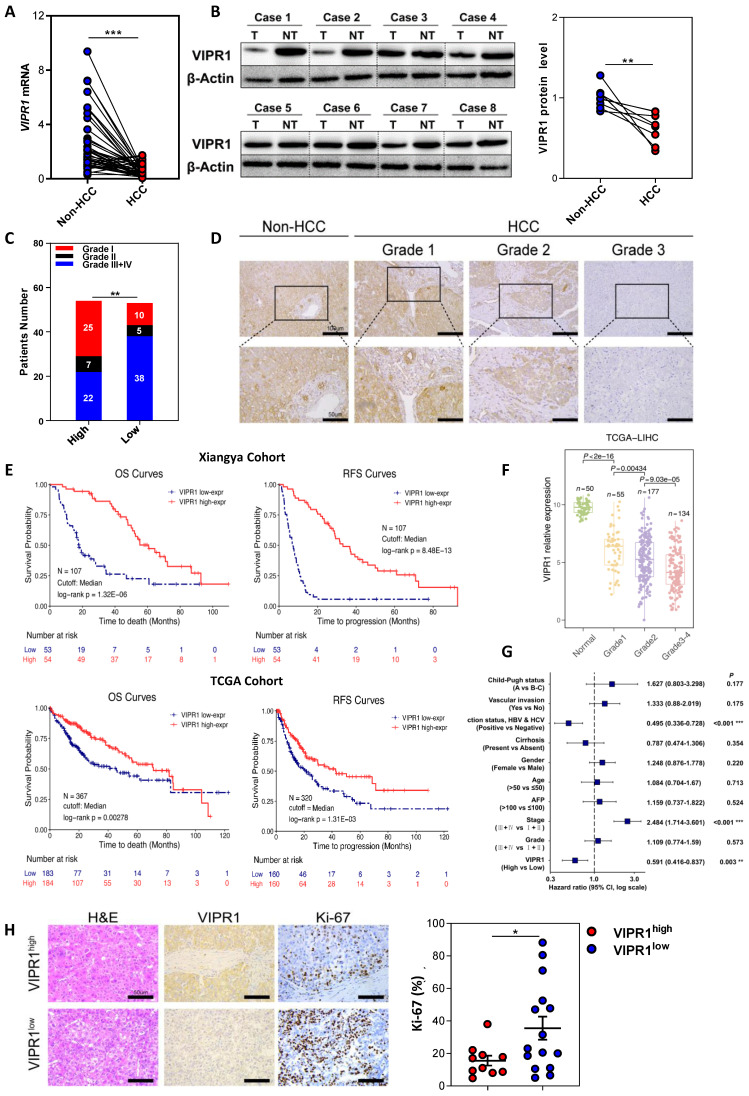
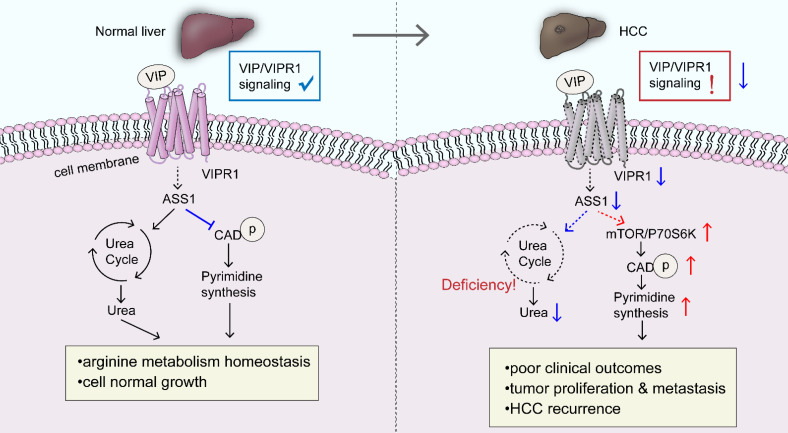
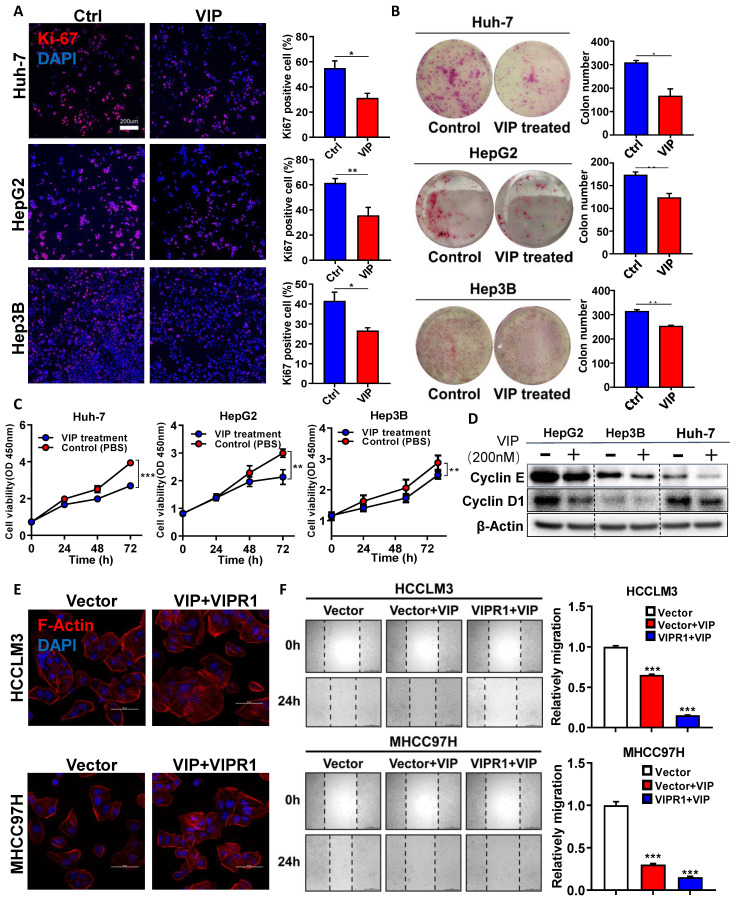
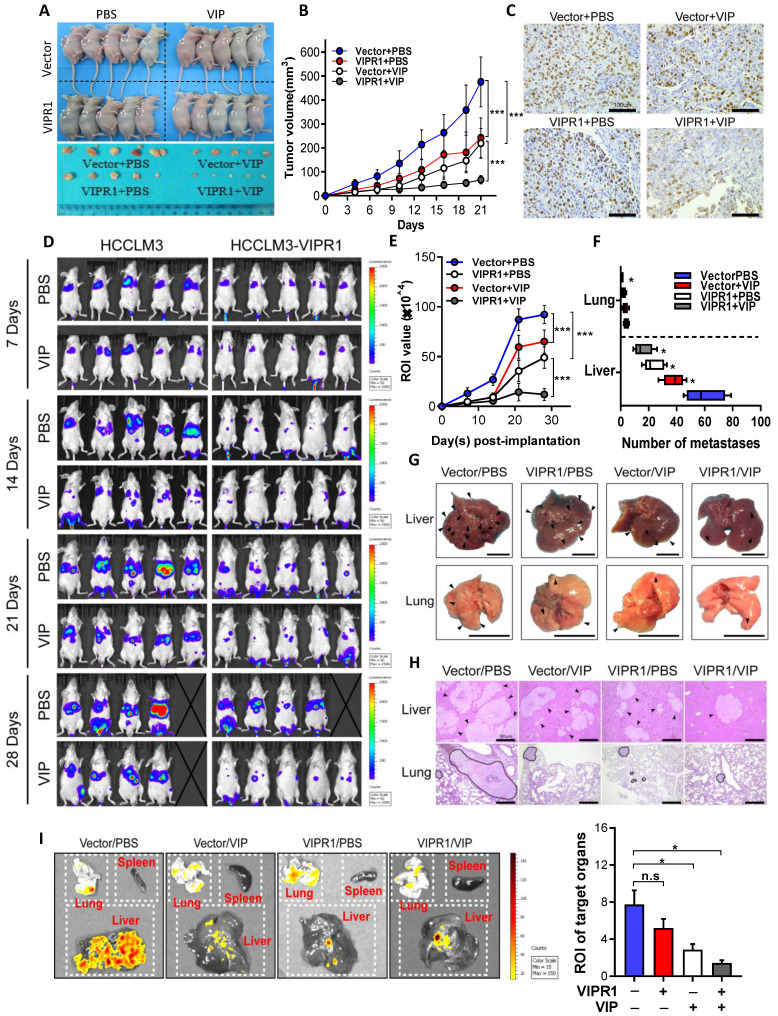
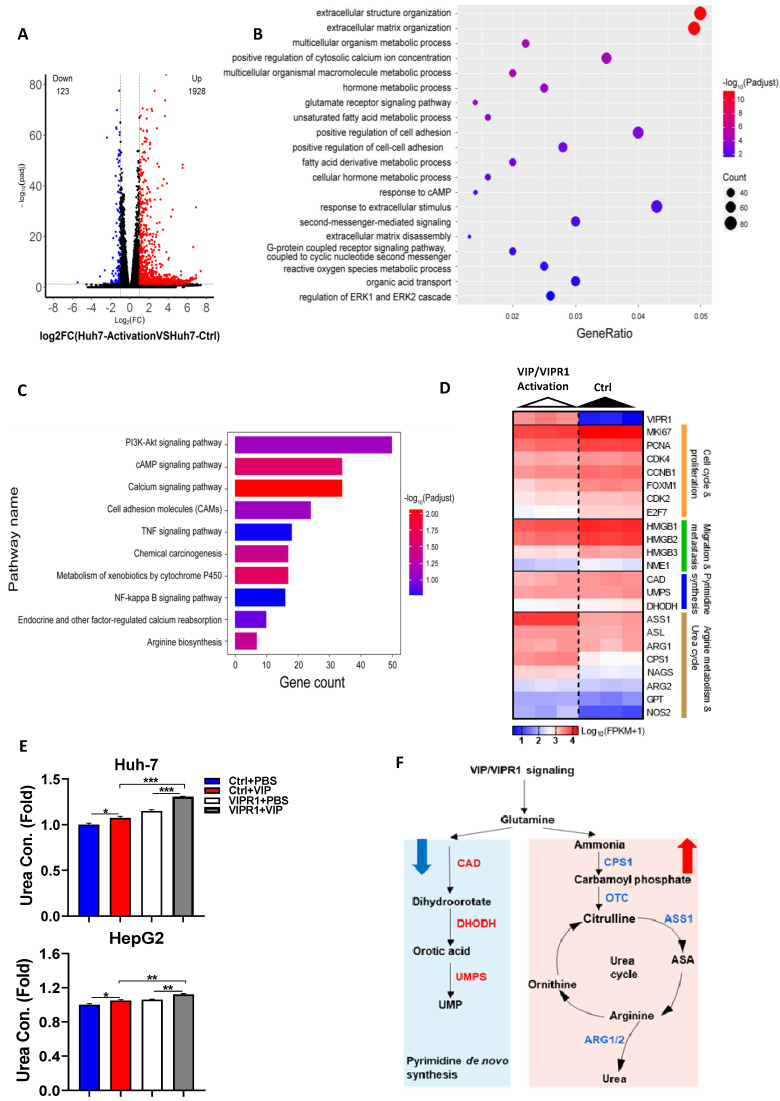
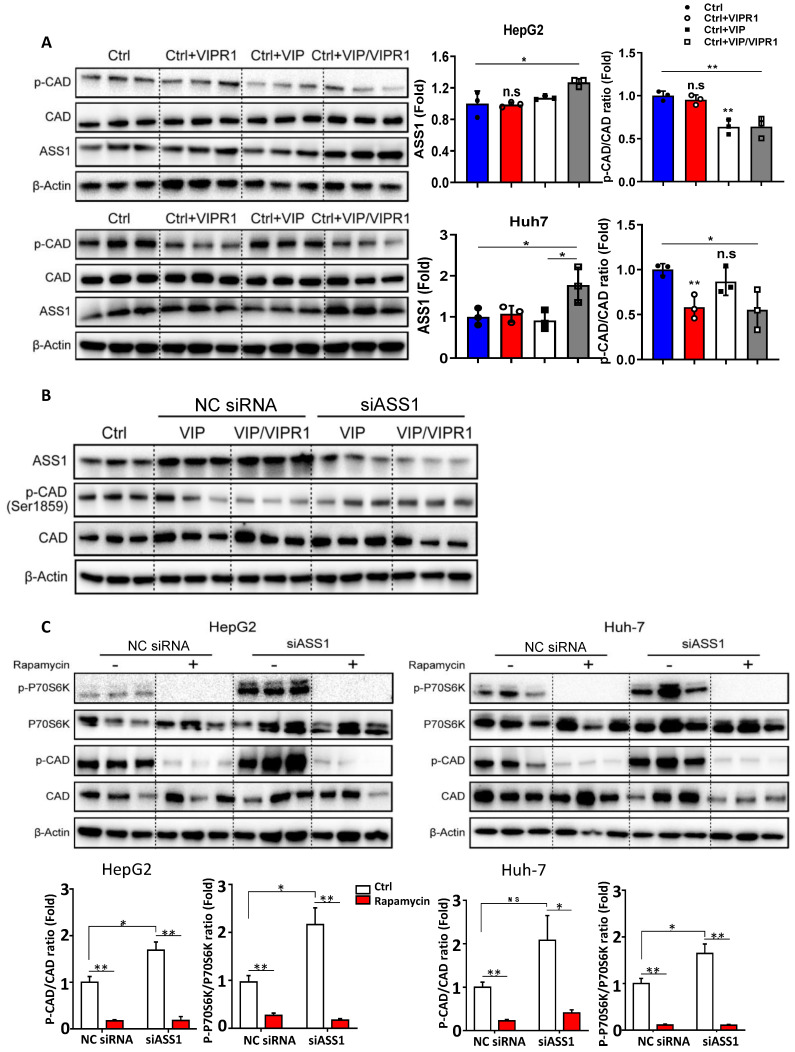
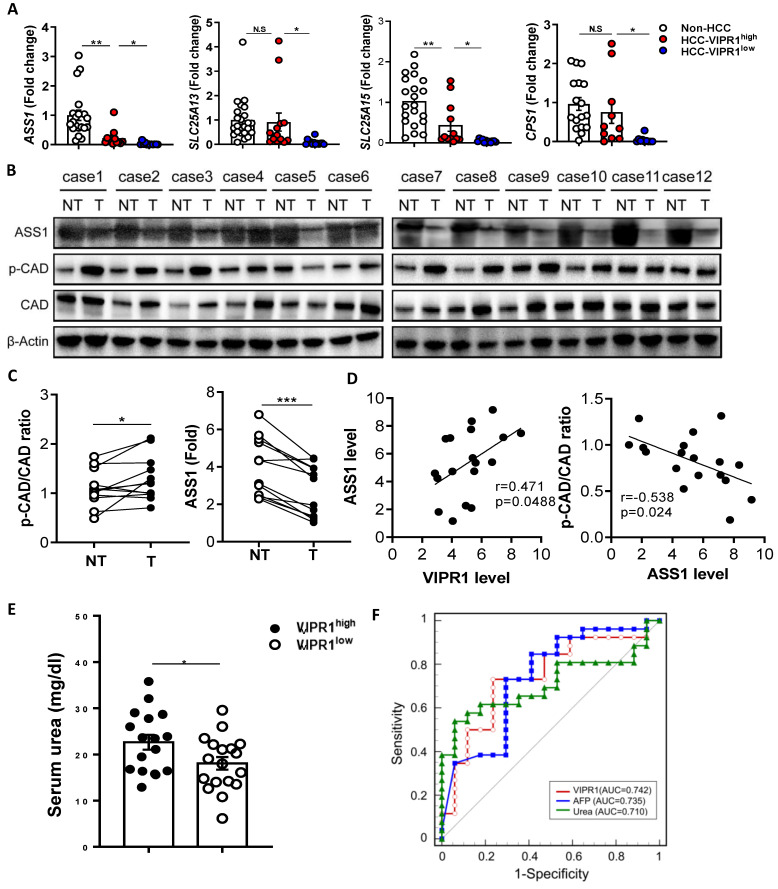
Vasoactive intestinal polypeptide type-I receptor (VIPR1) overexpression has been reported in numerous types of malignancies and utilized to develop novel target therapeutics and radiolabeled VIP analogue-based tumor imaging technology, but its role in liver carcinogenesis has not been explored. In the current study, we investigated the role of the VIP/VIPR1 signaling in controlling hepatocellular carcinoma (HCC) progression. By analyzing clinical samples, we found the expression level of VIPR1 was downregulated in human HCC tissues, which was correlated with advanced clinical stages, tumor growth, recurrence, and poor outcomes of HCC clinically. and in studies revealed that activation of VIPR1 by VIP markedly inhibited HCC growth and metastasis. Intriguingly, transcriptome sequencing analyses revealed that activation of VIPR1 by VIP regulated arginine biosynthesis. Mechanistical studies in cultured HCC cells demonstrated that VIP treatment partially restored the expression of arginine anabolic key enzyme argininosuccinate synthase (ASS1), and to some extent, inhibited pyrimidine synthetic pathway by downregulating the activation of CAD (carbamoyl-phosphate synthetase 2, aspartate transcarbamylase, and dihydroorotase). VIP treatment upregulated ASS1 and subsequently suppressed CAD phosphorylation in an mTOR/p70S6K signaling dependent manner. Clinically, we found human HCC samples were associated with downregulation of ASS1 but upregulation of CAD phosphorylation, and that VIPR1 levels positively correlated with ASS1 levels and serum levels of urea, the end product of the urea cycle and arginine metabolism in HCC. Loss of VIPR1 expression in HCC facilitates CAD phosphorylation and tumor progression, and restoration of VIPR1 and treatment with the VIPR1 agonist may be a promising approach for HCC treatment.
血管活性肠肽 I 型受体(VIPR1)在多种恶性肿瘤中过表达,并被用于开发新的靶向治疗药物和放射性标记 VIP 类似物的肿瘤成像技术,但它在肝癌发生中的作用尚未得到探索。在本研究中,我们研究了 VIP/VIPR1 信号在控制肝细胞癌(HCC)进展中的作用。通过分析临床样本,我们发现 VIPR1 的表达水平在人 HCC 组织中下调,这与晚期临床分期、肿瘤生长、复发和 HCC 的不良临床结局相关。并且研究表明,VIP 通过 VIPR1 的激活显著抑制 HCC 的生长和转移。有趣的是,转录组测序分析表明,VIP 通过 VIPR1 激活调节精氨酸生物合成。在培养的 HCC 细胞中进行的机制研究表明,VIP 处理部分恢复了精氨酸合成关键酶精氨酸琥珀酸合成酶(ASS1)的表达,并在一定程度上通过下调 CAD(氨基甲酰磷酸合成酶 2、天冬氨酸转氨甲酰酶和二氢乳清酸)的激活来抑制嘧啶合成途径。VIP 处理以依赖 mTOR/p70S6K 信号的方式上调 ASS1,并随后抑制 CAD 磷酸化。临床上,我们发现人 HCC 样本与 ASS1 的下调和 CAD 磷酸化的上调相关,并且 VIPR1 水平与 ASS1 水平和 HCC 患者血清中尿素(尿素循环和精氨酸代谢的终产物)水平呈正相关。在 HCC 中,VIPR1 表达的丧失促进 CAD 磷酸化和肿瘤进展,恢复 VIPR1 并使用 VIPR1 激动剂治疗可能是 HCC 治疗的一种有前途的方法。