Kawabata Shigeki
Dementia Project Promotion Office, Sompo Care Inc., Tokyo, Japan.
Front Aging Neurosci. 2022 Jul 5;14:913693. doi: 10.3389/fnagi.2022.913693. eCollection 2022.
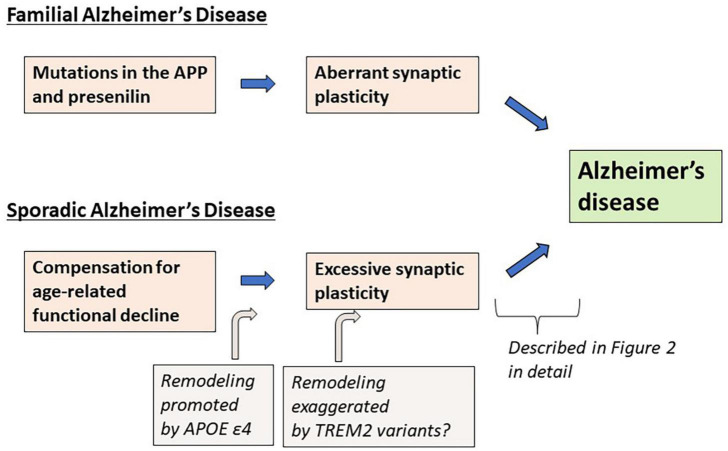
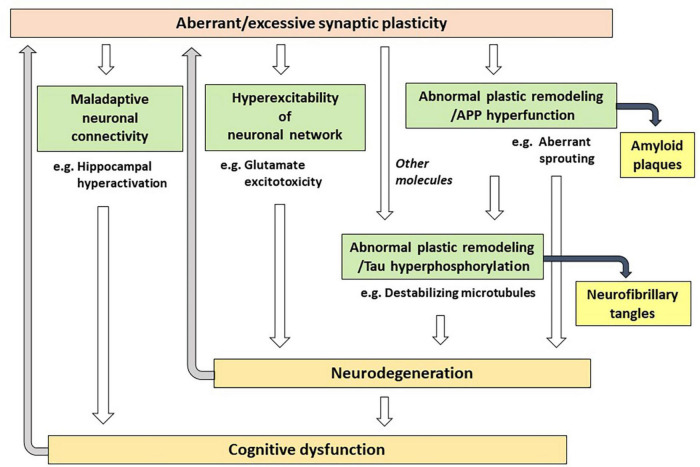
The amyloid hypothesis for the pathogenesis of Alzheimer's disease (AD) is widely accepted. Last year, the US Food and Drug Administration considered amyloid-β peptide (Aβ) as a surrogate biomarker and approved an anti-Aβ antibody, aducanumab, although its effectiveness in slowing the progression of AD is still uncertain. This approval has caused a great deal of controversy. Opinions are divided about whether there is enough evidence to definitely consider Aβ as a causative substance of AD. To develop this discussion constructively and to discover the most suitable therapeutic interventions in the end, an alternative persuasive hypothesis needs to emerge to better explain the facts. In this paper, I propose a hypothesis that excessive/aberrant and maladaptive synaptic plasticity is the pathophysiological basis for AD.
阿尔茨海默病(AD)发病机制的淀粉样蛋白假说已被广泛接受。去年,美国食品药品监督管理局将β淀粉样肽(Aβ)视为替代生物标志物,并批准了一种抗Aβ抗体——阿杜卡单抗,尽管其在减缓AD进展方面的有效性仍不确定。这一批准引发了诸多争议。对于是否有足够证据明确将Aβ视为AD的致病物质,各方观点不一。为了建设性地开展这一讨论并最终找到最合适的治疗干预措施,需要出现一个更有说服力的替代假说,以更好地解释这些事实。在本文中,我提出一个假说,即过度/异常和适应不良的突触可塑性是AD的病理生理基础。