Hernandez-Sapiens Mercedes A, Reza-Zaldívar Edwin E, Márquez-Aguirre Ana L, Gómez-Pinedo Ulises, Matias-Guiu Jorge, Cevallos Ricardo R, Mateos-Díaz Juan C, Sánchez-González Víctor J, Canales-Aguirre Alejandro A
Unidad de Evaluación Preclínica, Unidad de Biotecnología Médica y Farmacéutica, Centro de Investigación y Asistencia en Tecnología y Diseño del Estado de Jalisco, Guadalajara, México.
Instituto de Neurociencias, IdISSC, Hospital Clínico San Carlos, Madrid, España.
Neural Regen Res. 2022 Jan;17(1):31-37. doi: 10.4103/1673-5374.313016.
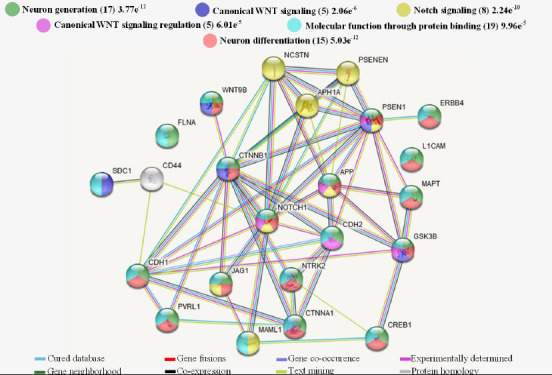
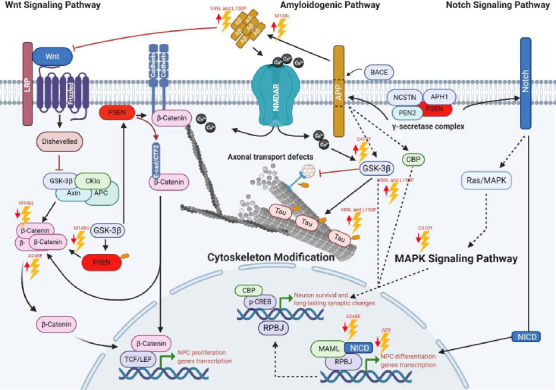
The presenilin genes (PSEN1 and PSEN2) are mainly responsible for causing early-onset familial Alzheimer's disease, harboring ~300 causative mutations, and representing ~90% of all mutations associated with a very aggressive disease form. Presenilin 1 is the catalytic core of the γ-secretase complex that conducts the intramembranous proteolytic excision of multiple transmembrane proteins like the amyloid precursor protein, Notch-1, N- and E-cadherin, LRP, Syndecan, Delta, Jagged, CD44, ErbB4, and Nectin1a. Presenilin 1 plays an essential role in neural progenitor maintenance, neurogenesis, neurite outgrowth, synaptic function, neuronal function, myelination, and plasticity. Therefore, an imbalance caused by mutations in presenilin 1/γ-secretase might cause aberrant signaling, synaptic dysfunction, memory impairment, and increased Aβ/Aβ ratio, contributing to neurodegeneration during the initial stages of Alzheimer's disease pathogenesis. This review focuses on the neuronal differentiation dysregulation mediated by PSEN1 mutations in Alzheimer's disease. Furthermore, we emphasize the importance of Alzheimer's disease-induced pluripotent stem cells models in analyzing PSEN1 mutations implication over the early stages of the Alzheimer's disease pathogenesis throughout neuronal differentiation impairment.
早老素基因(PSEN1和PSEN2)主要导致早发性家族性阿尔茨海默病,携带约300种致病突变,占所有与一种极具侵袭性疾病形式相关突变的约90%。早老素1是γ-分泌酶复合物的催化核心,该复合物对多种跨膜蛋白进行膜内蛋白水解切割,如淀粉样前体蛋白、Notch-1、N-钙黏蛋白和E-钙黏蛋白、低密度脂蛋白受体相关蛋白、多配体蛋白聚糖、Delta、Jagged、CD44、表皮生长因子受体4和连接蛋白1a。早老素1在神经祖细胞维持、神经发生、神经突生长、突触功能、神经元功能、髓鞘形成和可塑性中起重要作用。因此,早老素1/γ-分泌酶突变引起的失衡可能导致异常信号传导、突触功能障碍、记忆损害以及Aβ/Aβ比率增加,在阿尔茨海默病发病机制的初始阶段促成神经退行性变。本综述重点关注阿尔茨海默病中由PSEN1突变介导的神经元分化失调。此外,我们强调阿尔茨海默病诱导多能干细胞模型在分析PSEN1突变对整个神经元分化受损过程中阿尔茨海默病发病机制早期阶段的影响方面的重要性。