Zeng Chu-Yang, Wang Xi-Feng, Hua Fu-Zhou
Department of Anesthesiology, The Second Affiliated Hospital of Nanchang University, Nanchang, China.
Department of Rehabilitation Medicine, The Third Hospital of Hebei Medical University, Shijiazhuang, China.
Front Pharmacol. 2022 Jul 5;13:927126. doi: 10.3389/fphar.2022.927126. eCollection 2022.
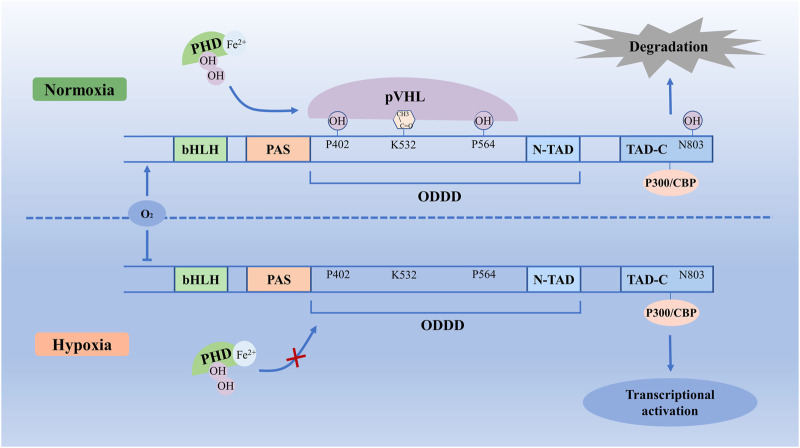
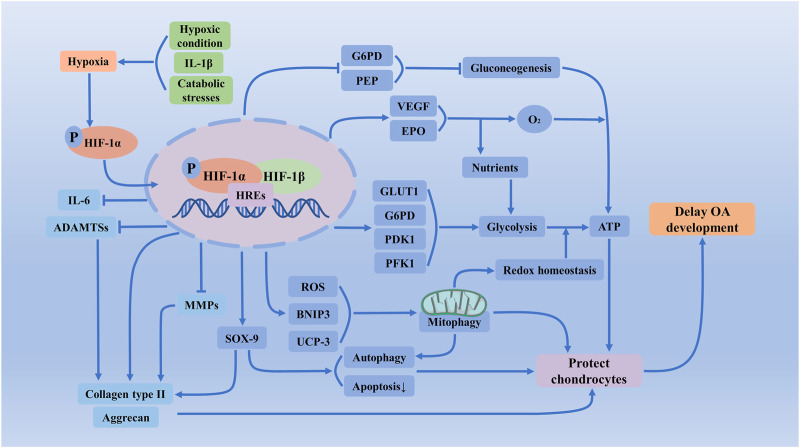
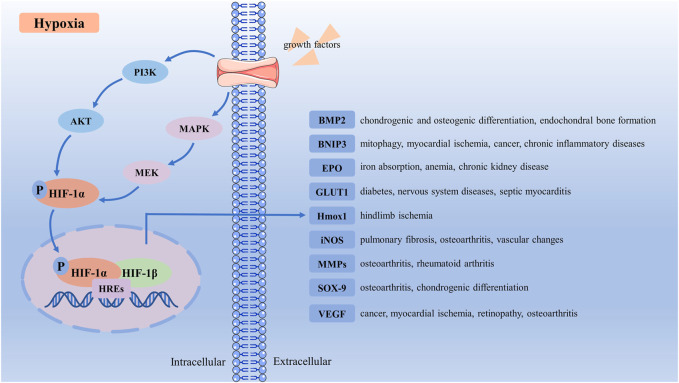
Osteoarthritis is a common age-related joint degenerative disease. Pain, swelling, brief morning stiffness, and functional limitations are its main characteristics. There are still no well-established strategies to cure osteoarthritis. Therefore, better clarification of mechanisms associated with the onset and progression of osteoarthritis is critical to provide a theoretical basis for the establishment of novel preventive and therapeutic strategies. Chondrocytes exist in a hypoxic environment, and HIF-1α plays a vital role in regulating hypoxic response. HIF-1α responds to cellular oxygenation decreases in tissue regulating survival and growth arrest of chondrocytes. The activation of HIF-1α could regulate autophagy and apoptosis of chondrocytes, decrease inflammatory cytokine synthesis, and regulate the chondrocyte extracellular matrix environment. Moreover, it could maintain the chondrogenic phenotype that regulates glycolysis and the mitochondrial function of osteoarthritis, resulting in a denser collagen matrix that delays cartilage degradation. Thus, HIF-1α is likely to be a crucial therapeutic target for osteoarthritis regulating chondrocyte inflammation and metabolism. In this review, we summarize the mechanism of hypoxia in the pathogenic mechanisms of osteoarthritis, and focus on a series of therapeutic treatments targeting HIF-1α for osteoarthritis. Further clarification of the regulatory mechanisms of HIF-1α in osteoarthritis may provide more useful clues to developing novel osteoarthritis treatment strategies.
骨关节炎是一种常见的与年龄相关的关节退行性疾病。疼痛、肿胀、短暂的晨僵和功能受限是其主要特征。目前仍没有成熟的治愈骨关节炎的策略。因此,更好地阐明与骨关节炎发病和进展相关的机制对于建立新的预防和治疗策略提供理论基础至关重要。软骨细胞存在于低氧环境中,而缺氧诱导因子-1α(HIF-1α)在调节低氧反应中起关键作用。HIF-1α对组织中细胞氧合减少作出反应,调节软骨细胞的存活和生长停滞。HIF-1α的激活可调节软骨细胞的自噬和凋亡,减少炎性细胞因子合成,并调节软骨细胞外基质环境。此外,它可维持调节骨关节炎糖酵解和线粒体功能的软骨形成表型,从而形成更致密的胶原基质,延缓软骨降解。因此,HIF-1α可能是调节软骨细胞炎症和代谢的骨关节炎关键治疗靶点。在本综述中,我们总结了低氧在骨关节炎发病机制中的作用机制,并重点介绍了一系列针对骨关节炎的靶向HIF-1α的治疗方法。进一步阐明HIF-1α在骨关节炎中的调节机制可能为开发新的骨关节炎治疗策略提供更有用的线索。