Hao Jian, Bei Jiaxin, Li Zhenhan, Han Mingyuan, Ma Boyuan, Ma Pengyi, Zhou Xianhu
Orthopedics Department, The Affiliated Hospital of Medical School, Ningbo University, Ningbo, China.
Laboratory of Interventional Radiology, Department of Minimally Invasive Interventional Radiology and Department of Radiology, The Second Affiliated Hospital of Guangzhou Medical University, Guangzhou, China.
Front Pharmacol. 2022 Jul 5;13:902102. doi: 10.3389/fphar.2022.902102. eCollection 2022.
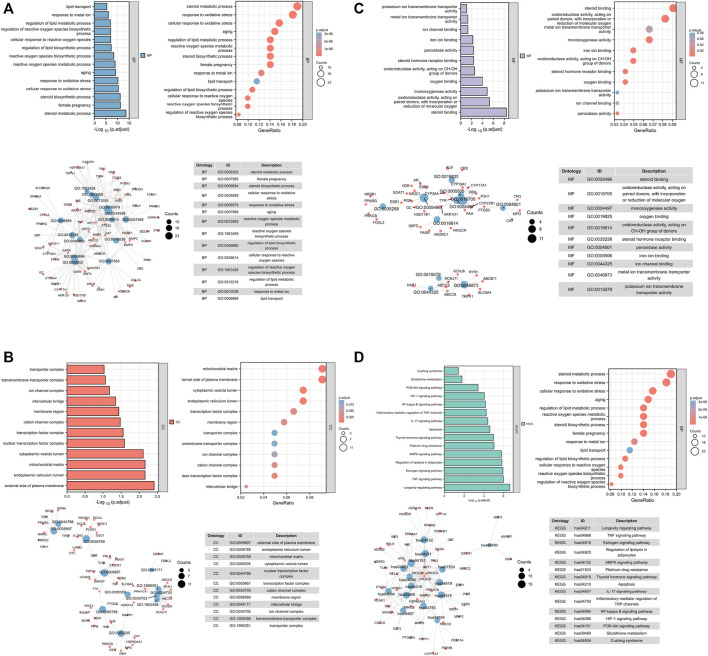
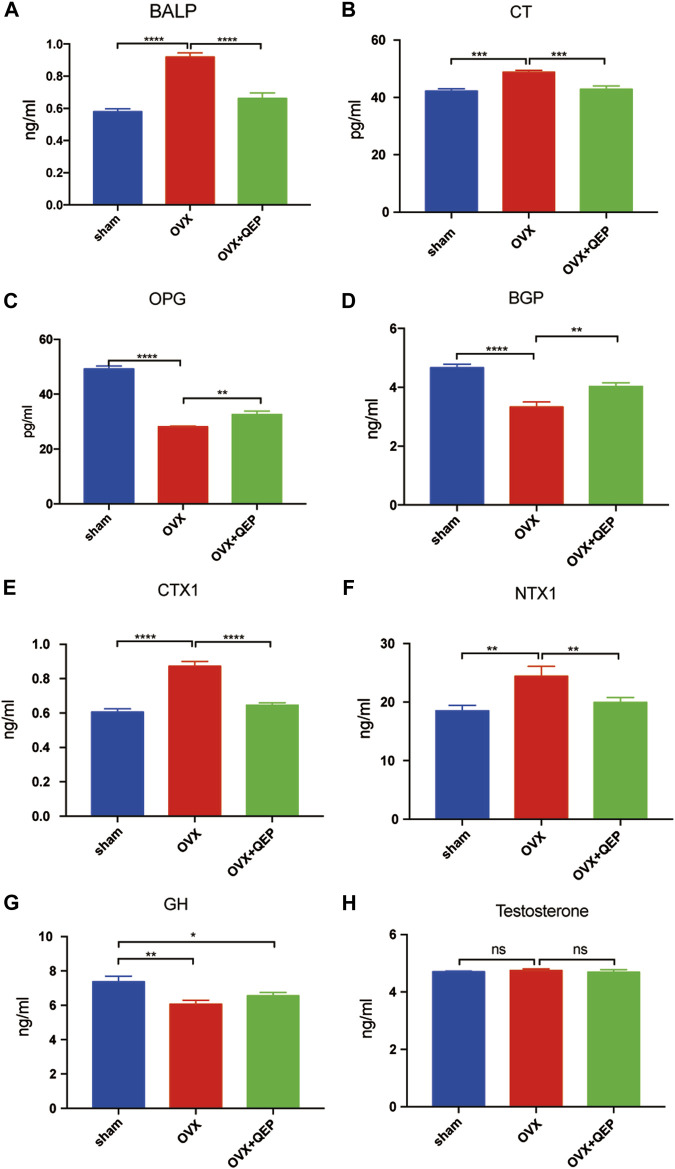
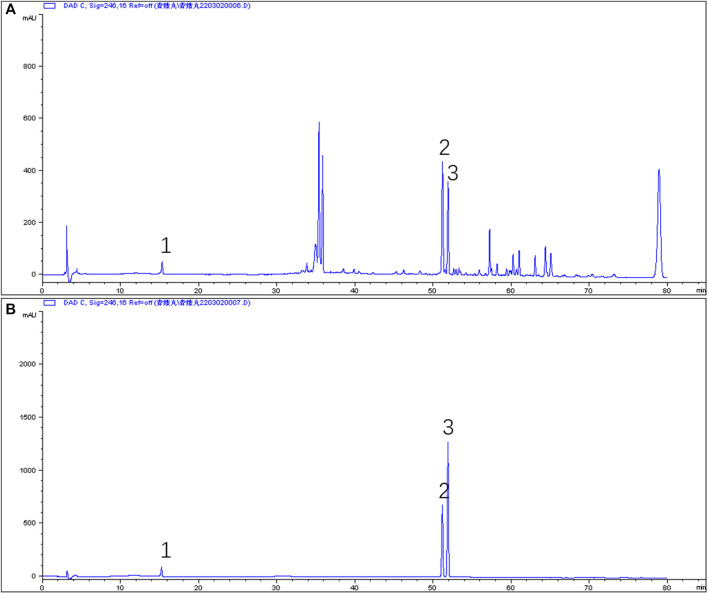
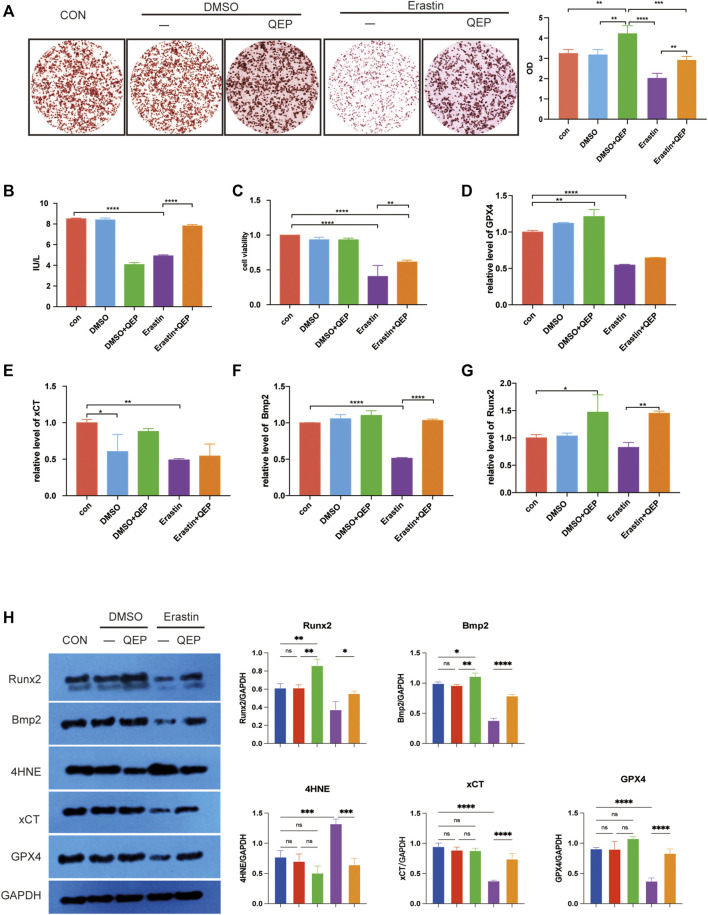
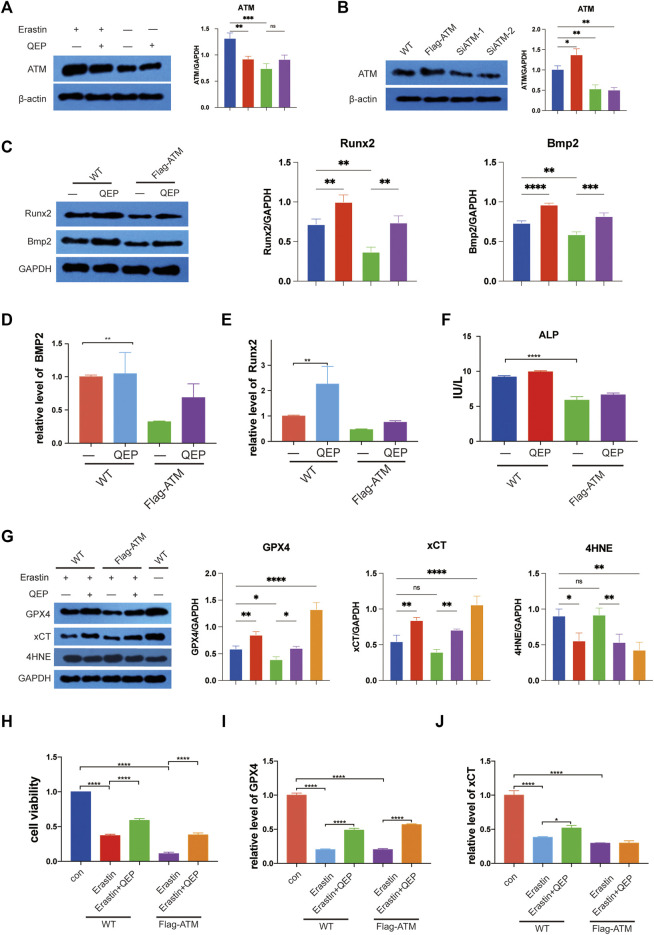
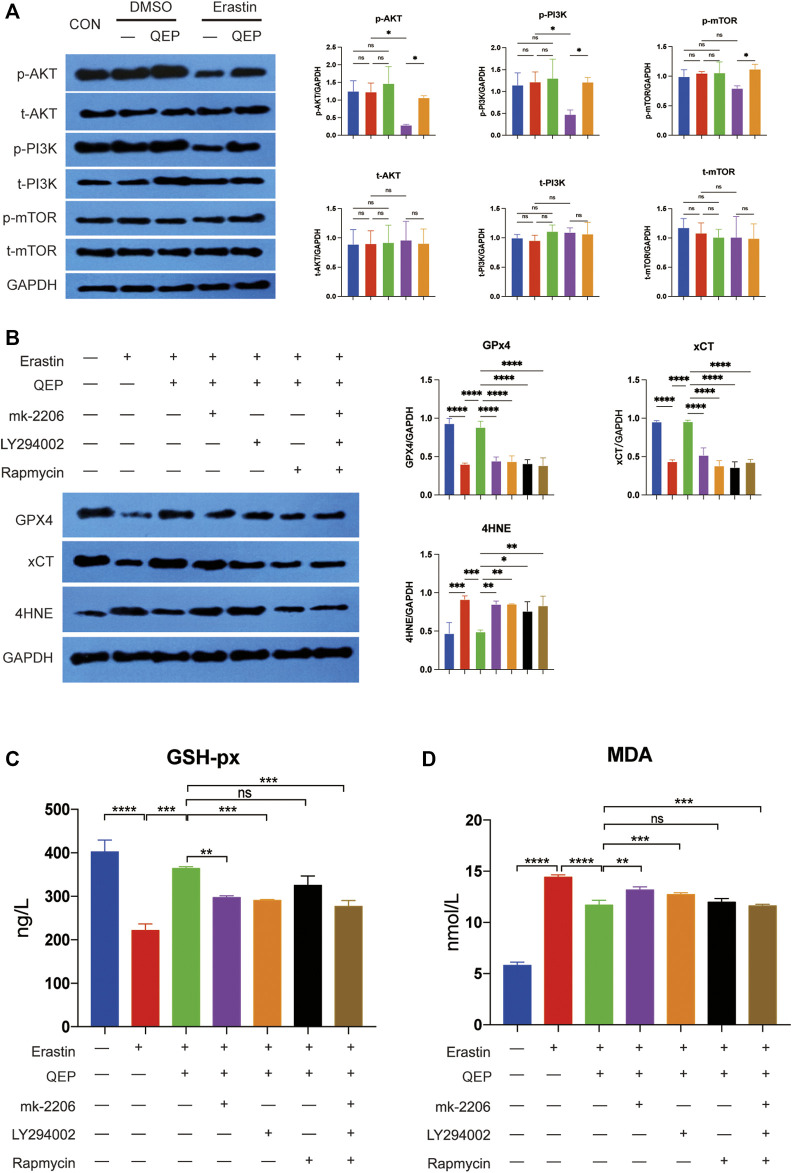
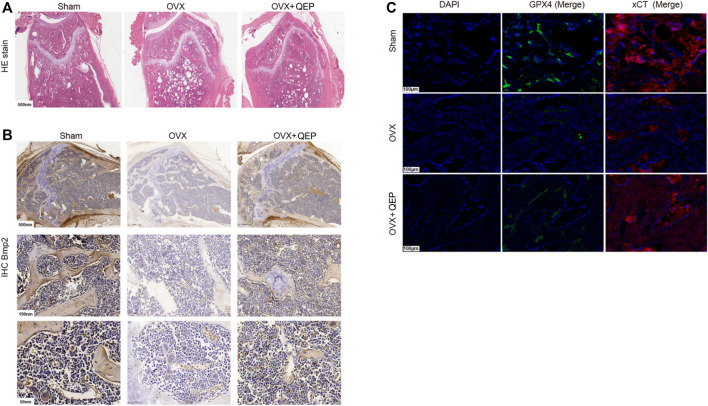
Osteoporosis (OP) is an aging-related disease that is the main etiology of fragility fracture. Qing'e Pill (QEP) is a mixture of traditional Chinese medicine (TCM) consisting of Oliv., L., L., and L. QEP has an anti-osteoporosis function, but the underlying mechanism remains unclear. In this study, online databases were employed to determine the chemical compounds of QEP and potential target genes in osteoporosis. Potential pathways associated with genes were defined by Gene Ontology (GO) and Kyoto Encyclopaedia of Genes and Genomes (KEGG) databases. A compound-target-disease network was constructed. Hub genes screened through Cytoscape were intersected with the FerrDB database. The potential key genes were validated in HFOB 1.19 cells, and rat models were ovariectomized through Western blot, RT-qPCR, ELISA, HE staining, immunohistochemistry, and immunofluorescence analyses. The intersection targets of QEP and osteoporosis contained 121 proteins, whereas the target-pathway network included 156 pathways. We filtered five genes that stood out in the network analysis for experimental verification. The experiments validated that QEP exerted therapeutic effects on osteoporosis by inhibiting ferroptosis and promoting cell survival the PI3K/AKT pathway and ATM. In conclusion, combining the application of network analysis and experimental verification may provide an efficient method to validate the molecular mechanism of QEP on osteoporosis.
骨质疏松症(OP)是一种与衰老相关的疾病,是脆性骨折的主要病因。青娥丸(QEP)是一种由淫羊藿、巴戟天、杜仲和补骨脂组成的中药合剂。QEP具有抗骨质疏松作用,但其潜在机制尚不清楚。在本研究中,利用在线数据库确定QEP的化学成分和骨质疏松症中的潜在靶基因。通过基因本体论(GO)和京都基因与基因组百科全书(KEGG)数据库定义与基因相关的潜在途径。构建了化合物-靶标-疾病网络。通过Cytoscape筛选出的枢纽基因与FerrDB数据库进行交叉分析。在人永生化成骨细胞HFOB 1.19中验证潜在的关键基因,并通过蛋白质免疫印迹法、逆转录-定量聚合酶链反应(RT-qPCR)、酶联免疫吸附测定(ELISA)、苏木精-伊红(HE)染色、免疫组织化学和免疫荧光分析对去卵巢大鼠模型进行验证。QEP与骨质疏松症的交叉靶点包含121种蛋白质,而靶标-途径网络包含156条途径。我们在网络分析中筛选出五个突出的基因进行实验验证。实验证实,QEP通过抑制铁死亡并激活磷脂酰肌醇-3激酶/蛋白激酶B(PI3K/AKT)途径和共济失调毛细血管扩张症突变基因(ATM)促进细胞存活,从而对骨质疏松症发挥治疗作用。总之,结合网络分析和实验验证的应用可能为验证QEP治疗骨质疏松症的分子机制提供一种有效的方法。