Eshghi Alireza, Hajiahmadi Maryam, Nikbakht Mohammad Hossein, Esmaeili Mona
Department of Pediatric Dentistry, Dental Research Center, School of Dentistry, Isfahan University of Medical Sciences, Isfahan, Iran.
Student Research Committee, School of Dentistry, Isfahan University of Medical Sciences, Isfahan, Iran.
Int J Dent. 2022 Jul 12;2022:6963944. doi: 10.1155/2022/6963944. eCollection 2022.
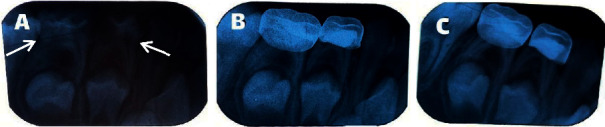
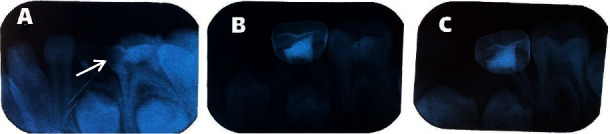
Among the new therapeutic materials, MTA and Biodentine are recommended for pulpotomy and sealing the pulp. Considering the similar characteristics of these two materials and considering that their effects on the treatment of primary second molars with irreversible pulpitis have not been compared properly, this study aimed to compare clinical and radiographic success between MTA and Biodentine in pulpotomy of primary mandibular second molars with irreversible pulpitis.
This study was conducted as a randomized double-blind clinical trial. Participants were selected according to inclusion criteria and 52 samples were randomly selected using random numbers table in group A. Then, patients in the next group B were matched with the first group in terms of age range and sex. In group A, the remaining pulp was covered with 2 mm MTA+ and in group B with 3 mm Biodentine. Participants were called for clinical evaluation every three months for 12 months (long-term follow-up). Radiographic evaluations were in the sixth and twelfth months.
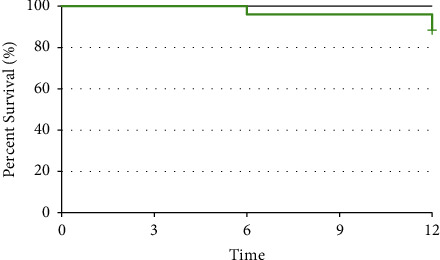
Fischer's exact test showed that there was no significant difference between MTA and Biodentine in terms of clinical and radiographic success rates ( value = 1). According to the results of the Kaplan-Meier test, the survival rate in both pulp treatment methods was similar in symptomatic teeth.
The results of this study showed that Biodentine properties are similar to MTA, and both materials show high clinical and radiographic success rates in long-term follow-up.
在新型治疗材料中,MTA和生物活性玻璃陶瓷被推荐用于牙髓切断术和牙髓封闭。考虑到这两种材料的相似特性,且它们对不可逆性牙髓炎的乳牙第二磨牙治疗效果尚未得到充分比较,本研究旨在比较MTA和生物活性玻璃陶瓷在下颌乳牙第二磨牙不可逆性牙髓炎牙髓切断术中的临床和影像学成功率。
本研究作为一项随机双盲临床试验进行。根据纳入标准选择参与者,并使用随机数字表在A组中随机选择52个样本。然后,B组患者在年龄范围和性别方面与第一组匹配。在A组中,用2毫米MTA+覆盖剩余牙髓,在B组中用3毫米生物活性玻璃陶瓷覆盖。每三个月对参与者进行一次为期12个月的临床评估(长期随访)。在第六个月和第十二个月进行影像学评估。
费舍尔精确检验表明,MTA和生物活性玻璃陶瓷在临床和影像学成功率方面无显著差异(值 = 1)。根据卡普兰 - 迈耶检验结果,两种牙髓治疗方法在有症状牙齿中的生存率相似。
本研究结果表明,生物活性玻璃陶瓷的性能与MTA相似,两种材料在长期随访中均显示出较高的临床和影像学成功率。