Lin Galvin Sim Siang, Chin Yu Jie, Choong Rob Son, Wafa Sharifah Wade'ah Wafa Syed Saadun Tarek, Dziaruddin Nabihah, Baharin Fadzlinda, Ismail Ahmad Faisal
Department of Restorative Dentistry, Kulliyyah of Dentistry, International Islamic University Malaysia, Kuantan Campus, Kuantan 25200, Pahang, Malaysia.
Department of Paediatric Dentistry and Orthodontics, Faculty of Dentistry, Universiti Malaya, Kuala Lumpur 50603, Malaysia.
Children (Basel). 2024 May 10;11(5):574. doi: 10.3390/children11050574.
This systematic review and meta-analysis aimed to evaluate the success rates of pulpotomy treatment for irreversible pulpitis in primary teeth.
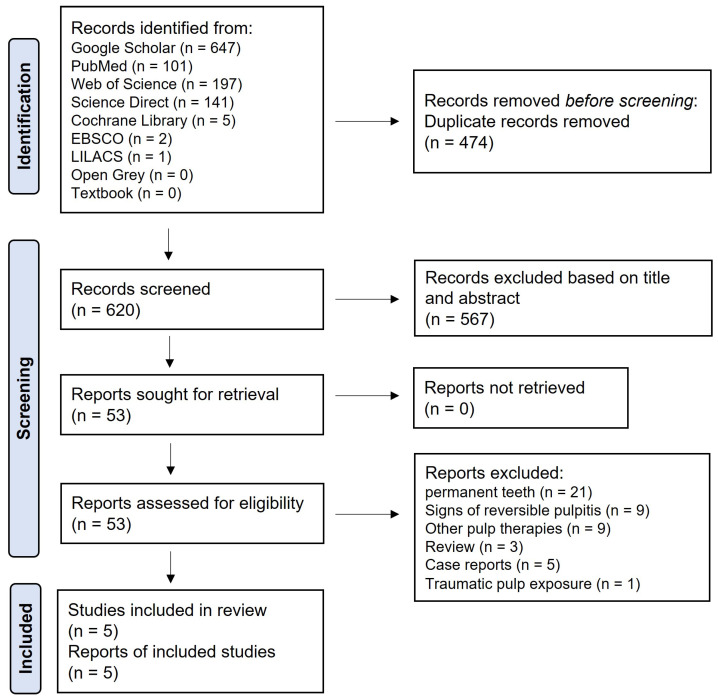
This study was registered and conducted according to the Preferred Reporting Items for Systematic Reviews and Meta-Analyses Protocols. Relevant studies published between January 1980 and April 2023 were identified across eight online databases and two paediatric dentistry textbooks. Study selection, data extraction, and quality assessment were conducted by multiple investigators independently. Data analysis involved single-arm and two-arm meta-analyses, leave-one-out sensitivity analysis, meta-regression, and assessment of publication bias. The risks of bias were evaluated using the Cochrane Collaboration's assessment tools. The levels of evidence were determined using the Oxford Centre for Evidence-Based Medicine (OCEBM) tool.
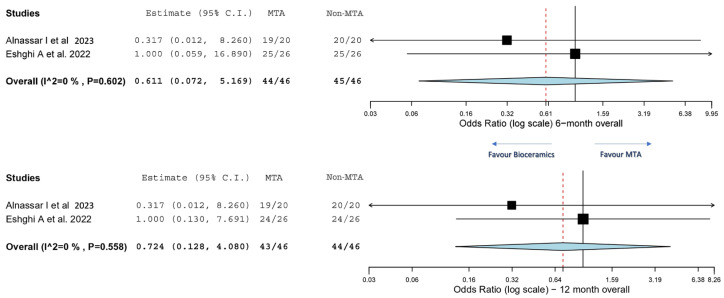
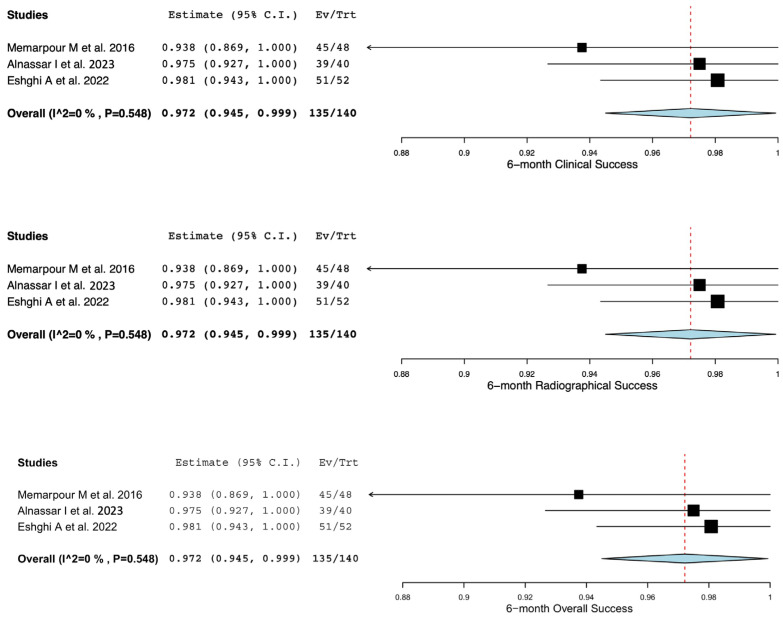
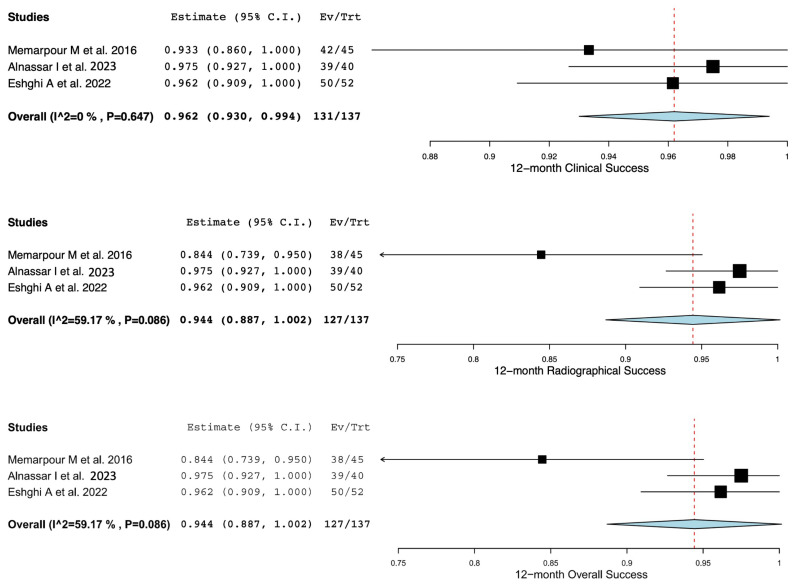
Five primary studies were included. The weighted mean overall success rates at 6-month and 12-month follow-ups were 97.2% and 94.4%, respectively. Two-arm meta-analysis revealed no significant difference ( > 0.05) between the use of mineral trioxide aggregate (MTA) and non-MTA bioceramic-based materials as pulpotomy medicaments. The sample size of each study did not affect the degree of data heterogeneity. Egger's test revealed no significant publication bias.
Pulpotomy may be regarded as an alternative modality for treating primary teeth with irreversible pulpitis. Nevertheless, future well-designed trials and extended follow-up periods are warranted.
本系统评价和荟萃分析旨在评估乳牙不可复性牙髓炎活髓切断术的成功率。
本研究按照系统评价和荟萃分析方案的首选报告项目进行注册和实施。通过八个在线数据库和两本儿童牙科学教科书检索1980年1月至2023年4月发表的相关研究。由多名研究人员独立进行研究选择、数据提取和质量评估。数据分析包括单臂和双臂荟萃分析、逐一剔除敏感性分析、荟萃回归以及发表偏倚评估。使用Cochrane协作网的评估工具评估偏倚风险。使用牛津循证医学中心(OCEBM)工具确定证据水平。
纳入五项原始研究。6个月和12个月随访时的加权平均总体成功率分别为97.2%和94.4%。双臂荟萃分析显示,使用三氧化矿物凝聚体(MTA)和非MTA生物陶瓷基材料作为活髓切断术药物之间无显著差异(>0.05)。每项研究的样本量不影响数据异质性程度。Egger检验显示无显著发表偏倚。
活髓切断术可被视为治疗乳牙不可复性牙髓炎的一种替代方法。然而,未来需要设计良好的试验并延长随访期。