Canarelli Sarah E, Swalm Brooke M, Larson Eric T, Morrison Michael J, Weerapana Eranthie
Department of Chemistry, Boston College Chestnut Hill Massachusetts 02467 USA
Rheos Medicines, Inc Cambridge Massachusetts 02142 USA
RSC Chem Biol. 2022 Jun 9;3(7):972-982. doi: 10.1039/d2cb00091a. eCollection 2022 Jul 6.
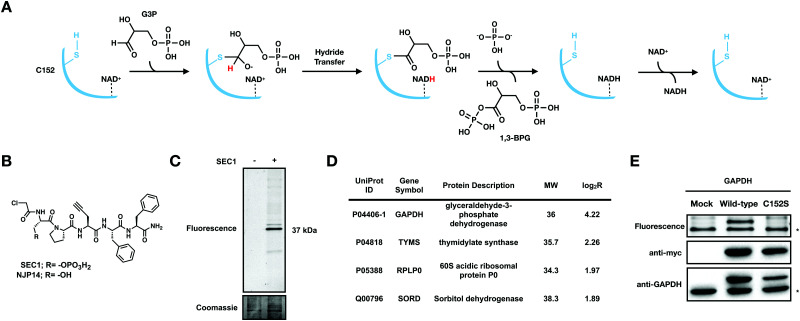
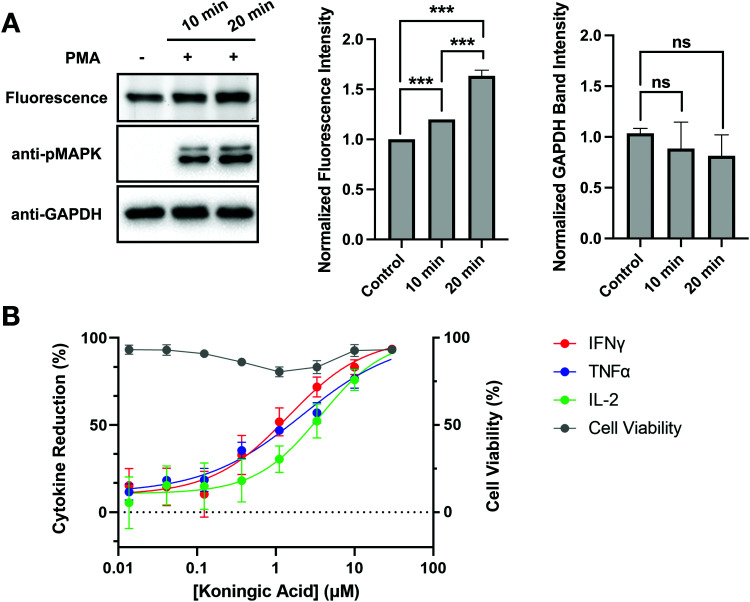
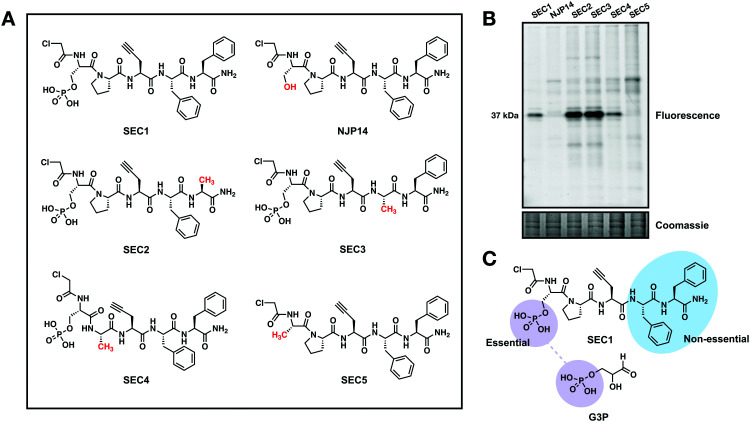
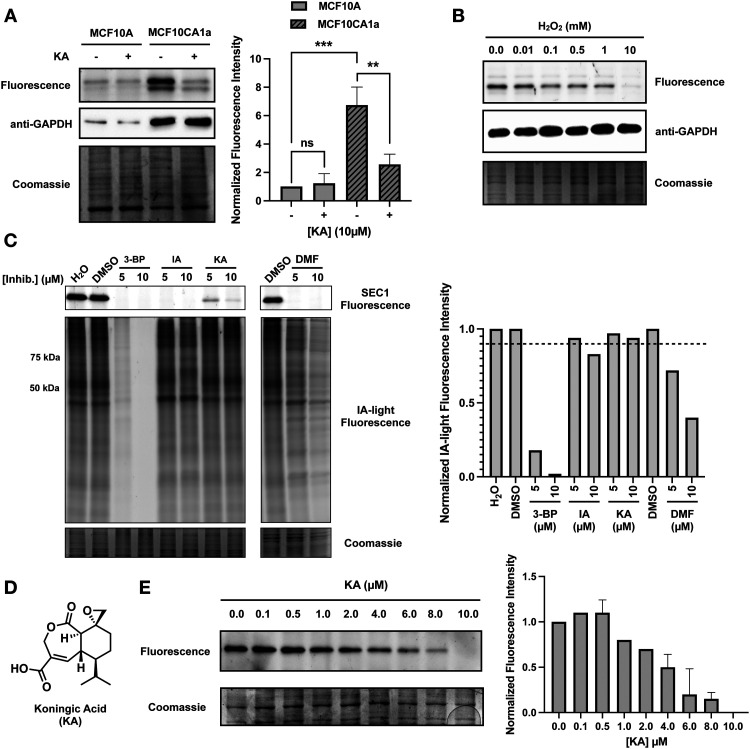
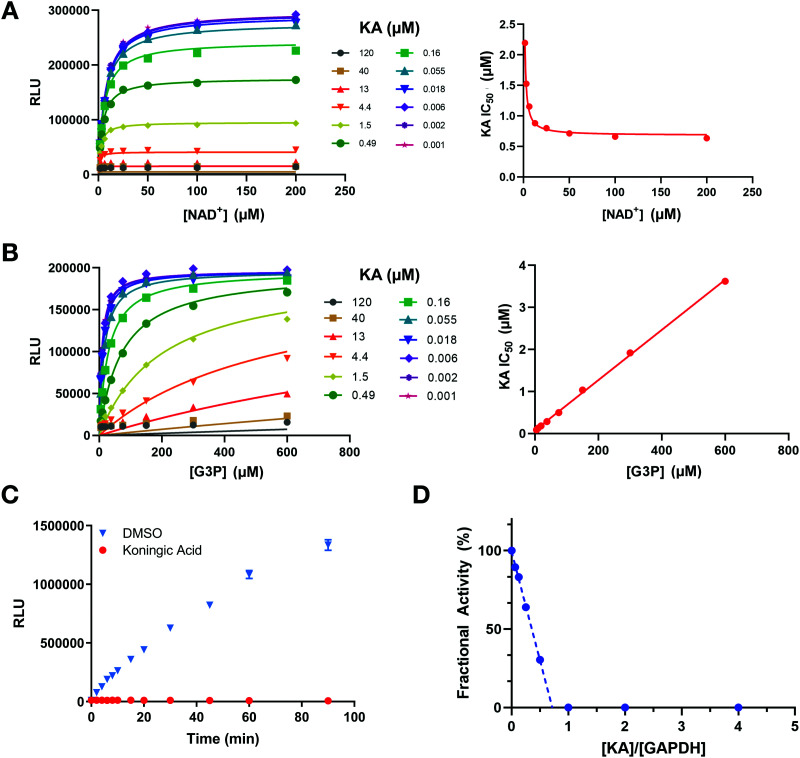
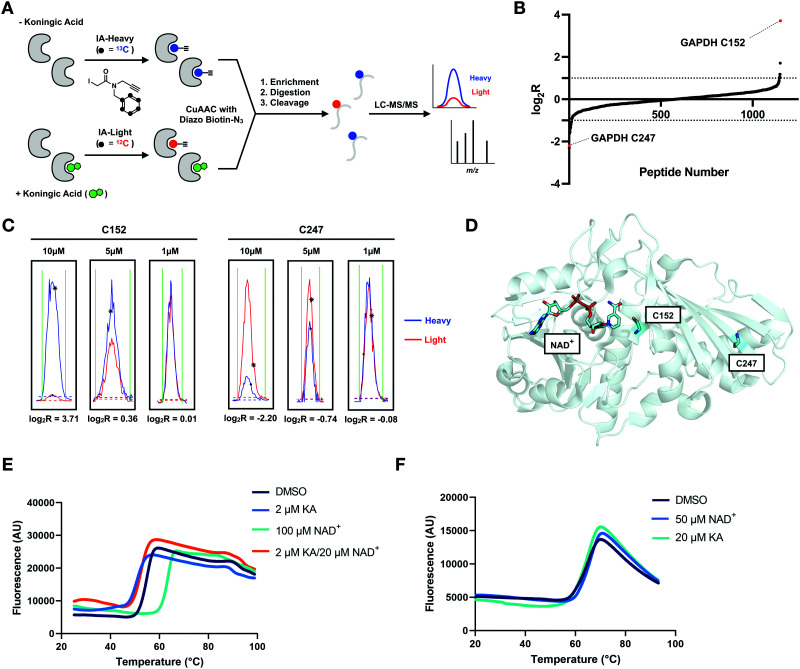
Glyceraldehyde 3-phosphate dehydrogenase (GAPDH) is a central enzyme in glycolysis that regulates the Warburg effect in cancer cells. In addition to its role in metabolism, GAPDH is also implicated in diverse cellular processes, including transcription and apoptosis. Dysregulated GAPDH activity is associated with a variety of pathologies, and GAPDH inhibitors have demonstrated therapeutic potential as anticancer and immunomodulatory agents. Given the critical role of GAPDH in pathophysiology, it is important to have access to tools that enable rapid monitoring of GAPDH activity and inhibition within a complex biological system. Here, we report an electrophilic peptide-based probe, SEC1, which covalently modifies the active-site cysteine, C152, of GAPDH to directly report on GAPDH activity within a proteome. We demonstrate the utility of SEC1 to assess changes in GAPDH activity in response to oncogenic transformation, reactive oxygen species (ROS) and small-molecule GAPDH inhibitors, including Koningic acid (KA). We then further evaluated KA, to determine the detailed mechanism of inhibition. Our mechanistic studies confirm that KA is a highly effective irreversible inhibitor of GAPDH, which acts through a NAD-uncompetitive and G3P-competitive mechanism. Proteome-wide evaluation of the cysteine targets of KA demonstrated high selectivity for the active-site cysteine of GAPDH over other reactive cysteines within the proteome. Lastly, the therapeutic potential of KA was investigated in an autoimmune model, where treatment with KA resulted in decreased cytokine production by Th1 effector cells. Together, these studies describe methods to evaluate GAPDH activity and inhibition within a proteome, and report on the high potency and selectivity of KA as an irreversible inhibitor of GAPDH.
甘油醛-3-磷酸脱氢酶(GAPDH)是糖酵解中的一种核心酶,可调节癌细胞中的瓦伯格效应。除了在代谢中的作用外,GAPDH还参与多种细胞过程,包括转录和细胞凋亡。GAPDH活性失调与多种病理状况相关,并且GAPDH抑制剂已显示出作为抗癌和免疫调节药物的治疗潜力。鉴于GAPDH在病理生理学中的关键作用,获得能够在复杂生物系统中快速监测GAPDH活性和抑制作用的工具非常重要。在此,我们报告了一种基于亲电肽的探针SEC1,它可共价修饰GAPDH的活性位点半胱氨酸C152,以直接报告蛋白质组内的GAPDH活性。我们证明了SEC1在评估GAPDH活性响应致癌转化、活性氧(ROS)和小分子GAPDH抑制剂(包括康宁酸(KA))变化方面的实用性。然后,我们进一步评估了KA,以确定其详细的抑制机制。我们的机制研究证实,KA是一种高效的GAPDH不可逆抑制剂,其作用机制为NAD非竞争性和G3P竞争性。对KA的半胱氨酸靶点进行全蛋白质组评估表明,与蛋白质组内其他反应性半胱氨酸相比,KA对GAPDH的活性位点半胱氨酸具有高度选择性。最后,在自身免疫模型中研究了KA的治疗潜力,用KA治疗可导致Th1效应细胞产生的细胞因子减少。总之,这些研究描述了评估蛋白质组内GAPDH活性和抑制作用的方法,并报告了KA作为GAPDH不可逆抑制剂的高效性和选择性。