Lund University Diabetes Centre, Department of Clinical Sciences Malmö, Unit of Islet Pathophysiology, Lund University, 20502, Malmö, Sweden.
Metabolic Research Unit, Institute of Neuroscience and Physiology, Department of Physiology, University of Göteborg, 405 30, Göteborg, Sweden.
Nat Commun. 2022 Jul 22;13(1):4237. doi: 10.1038/s41467-022-31103-y.
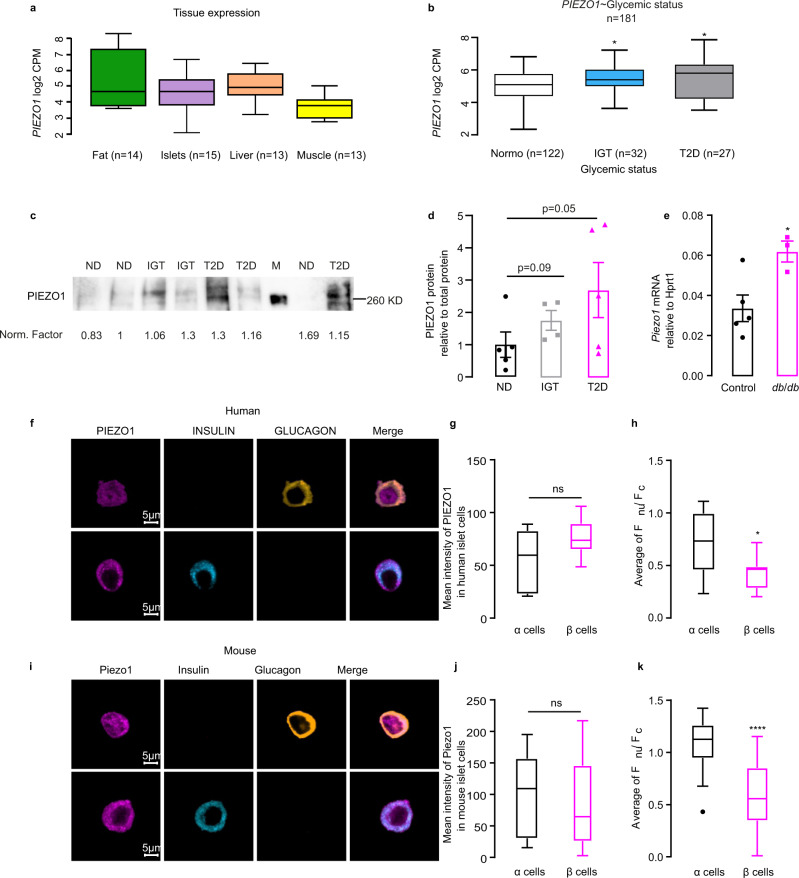
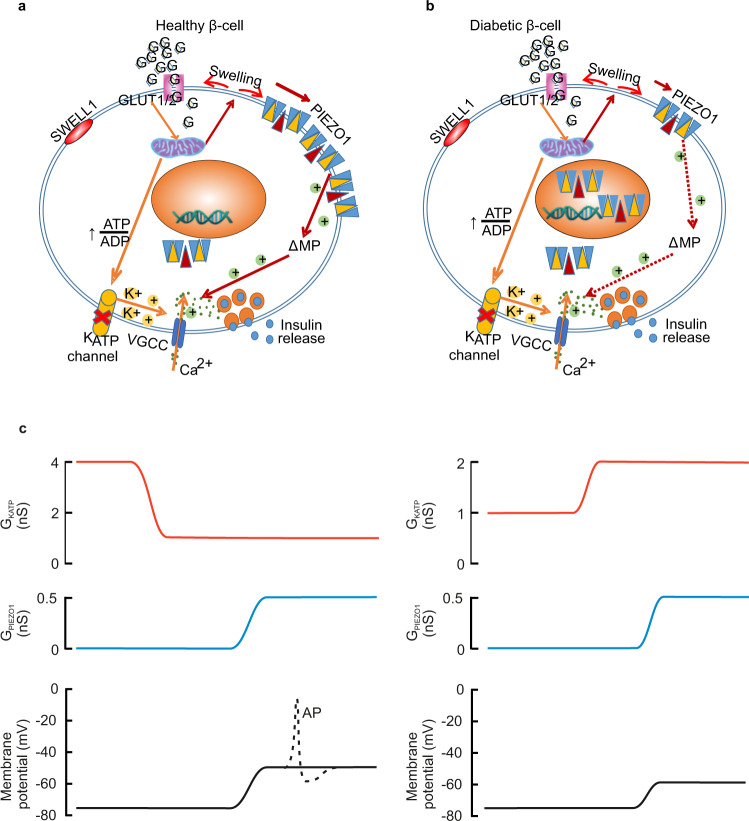
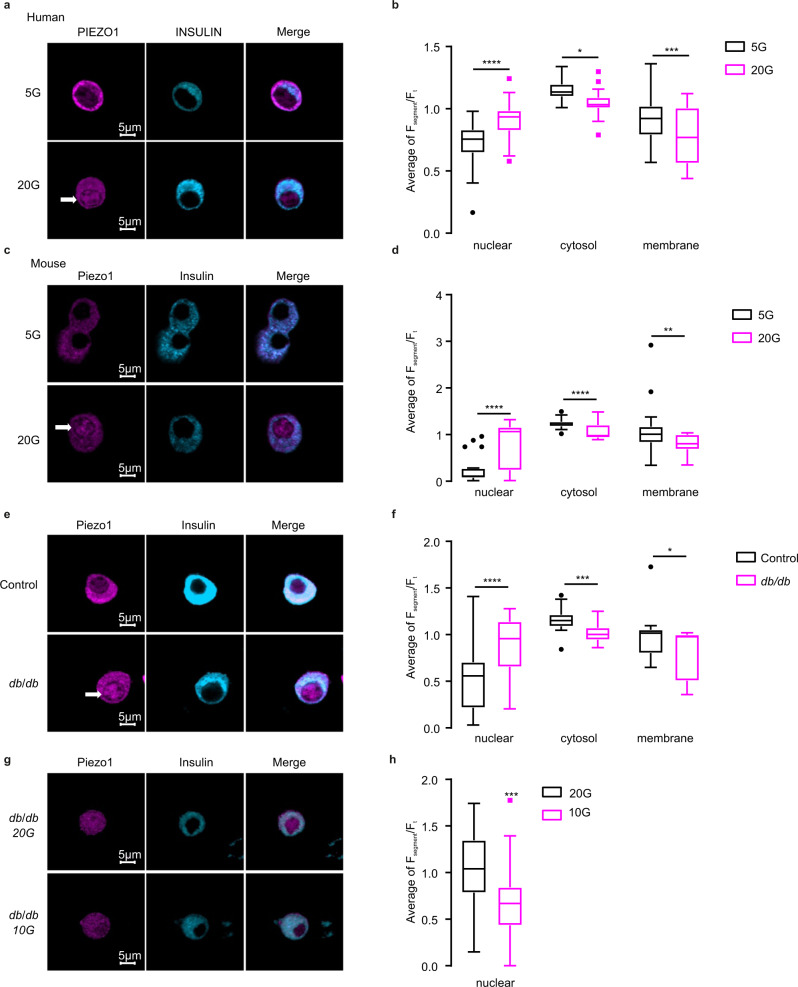
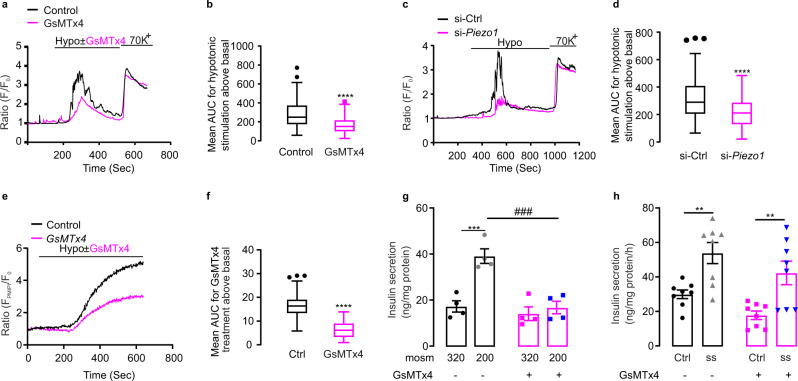
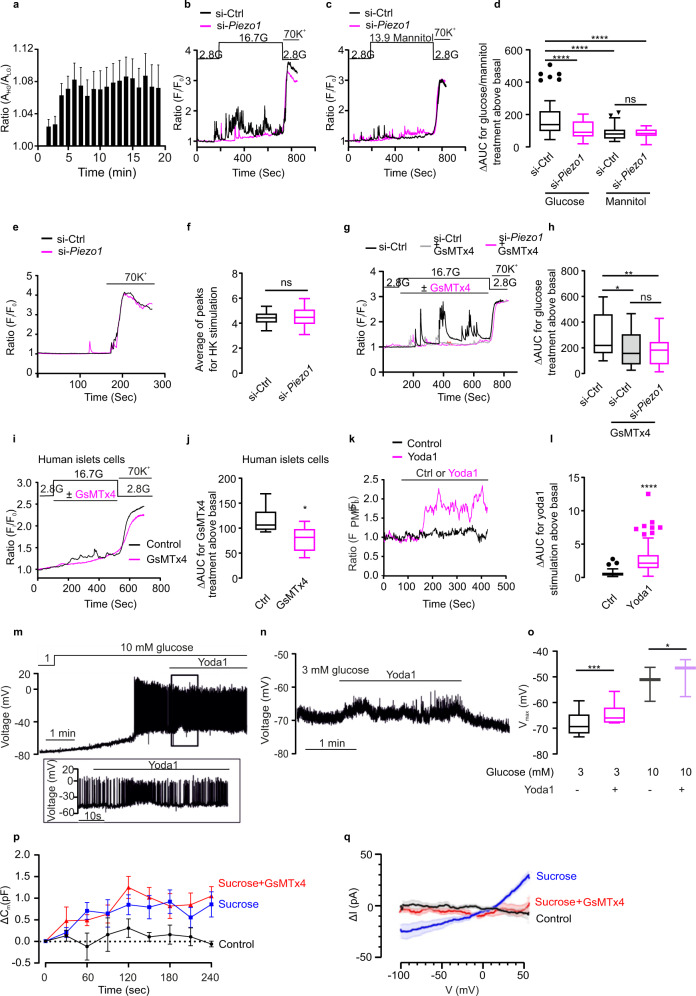
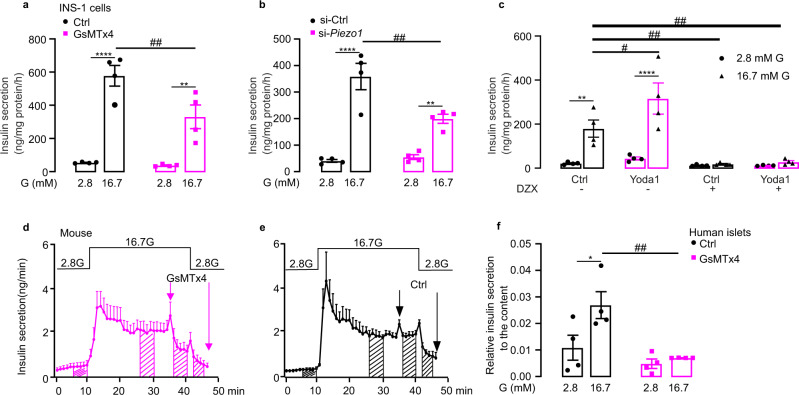
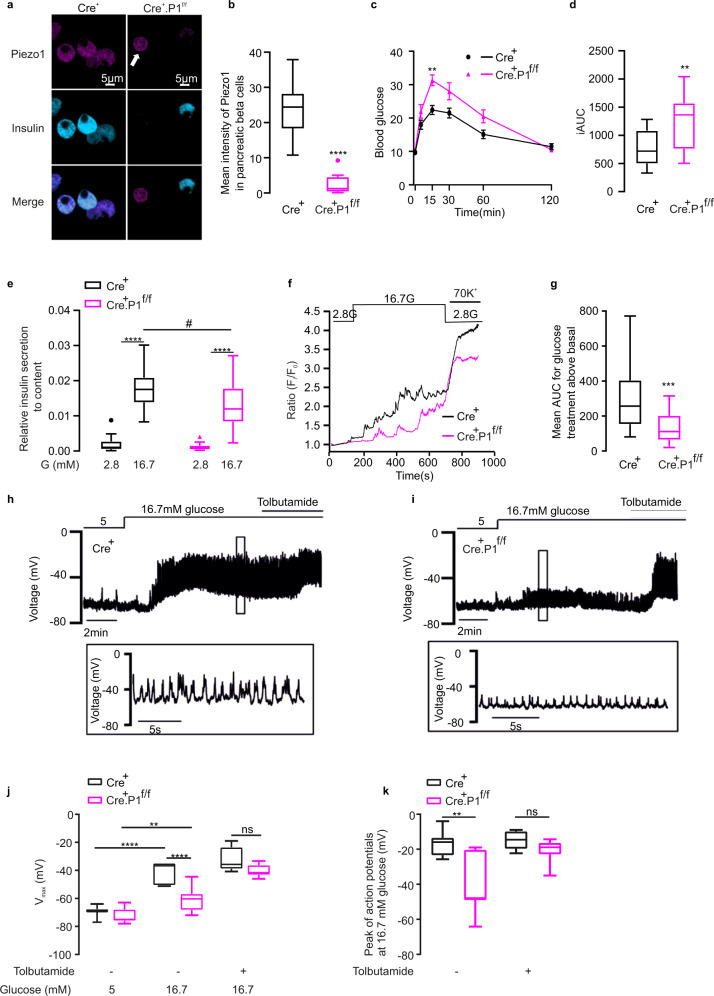
Glucose-induced insulin secretion depends on β-cell electrical activity. Inhibition of ATP-regulated potassium (K) channels is a key event in this process. However, K channel closure alone is not sufficient to induce β-cell electrical activity; activation of a depolarizing membrane current is also required. Here we examine the role of the mechanosensor ion channel PIEZO1 in this process. Yoda1, a specific PIEZO1 agonist, activates a small membrane current and thereby triggers β-cell electrical activity with resultant stimulation of Ca-influx and insulin secretion. Conversely, the PIEZO1 antagonist GsMTx4 reduces glucose-induced Ca-signaling, electrical activity and insulin secretion. Yet, PIEZO1 expression is elevated in islets from human donors with type-2 diabetes (T2D) and a rodent T2D model (db/db mouse), in which insulin secretion is reduced. This paradox is resolved by our finding that PIEZO1 translocates from the plasmalemma into the nucleus (where it cannot influence the membrane potential of the β-cell) under experimental conditions emulating T2D (high glucose culture). β-cell-specific Piezo1-knockout mice show impaired glucose tolerance in vivo and reduced glucose-induced insulin secretion, β-cell electrical activity and Ca elevation in vitro. These results implicate mechanotransduction and activation of PIEZO1, via intracellular accumulation of glucose metabolites, as an important physiological regulator of insulin secretion.
葡萄糖诱导的胰岛素分泌依赖于β细胞的电活性。ATP 调节钾 (K) 通道的抑制是该过程中的一个关键事件。然而,K 通道的关闭本身不足以诱导β细胞的电活性;还需要激活去极化膜电流。在这里,我们研究了机械敏感离子通道 PIEZO1 在这个过程中的作用。Yoda1 是一种特异性 PIEZO1 激动剂,它激活小的膜电流,从而引发β细胞的电活性,导致钙内流和胰岛素分泌的刺激。相反,PIEZO1 拮抗剂 GsMTx4 降低葡萄糖诱导的 Ca 信号转导、电活性和胰岛素分泌。然而,在 2 型糖尿病(T2D)患者和 2 型糖尿病啮齿动物模型(db/db 小鼠)的胰岛中,PIEZO1 的表达升高,而胰岛素分泌减少。这一悖论通过我们的发现得到了解决,即在模拟 T2D(高葡萄糖培养)的实验条件下,PIEZO1 从质膜转位到细胞核(在那里它不能影响β细胞的膜电位)。β细胞特异性 Piezo1 敲除小鼠在体内表现出葡萄糖耐量受损,并且在体外葡萄糖诱导的胰岛素分泌、β细胞电活性和钙升高减少。这些结果表明,机械转导和 PIEZO1 的激活,通过细胞内葡萄糖代谢物的积累,是胰岛素分泌的一个重要生理调节剂。