Department of Internal Medicine, Erasmus University Medical Center, Rotterdam, The Netherlands.
Erasmus MC Transplant Institute, Erasmus University Medical Center, Rotterdam, The Netherlands.
Clin Infect Dis. 2023 Feb 8;76(3):e172-e178. doi: 10.1093/cid/ciac571.
Illness after infection with the severe acute respiratory syndrome coronavirus 2 (SARS-CoV-2) Omicron variant is less severe compared with previous variants. Data on the disease burden in immunocompromised patients are lacking. We investigated the clinical characteristics and outcomes of immunocompromised patients with coronavirus disease 2019 (COVID-19) caused by Omicron.
Organ transplant recipients, patients on anti-CD20 therapy, and allogenic hematopoietic stem cell transplantation recipients infected with the Omicron variant were included. Characteristics of consenting patients were collected and patients were contacted regularly until symptom resolution. To identify possible risk factors for hospitalization, a univariate logistic analysis was performed.
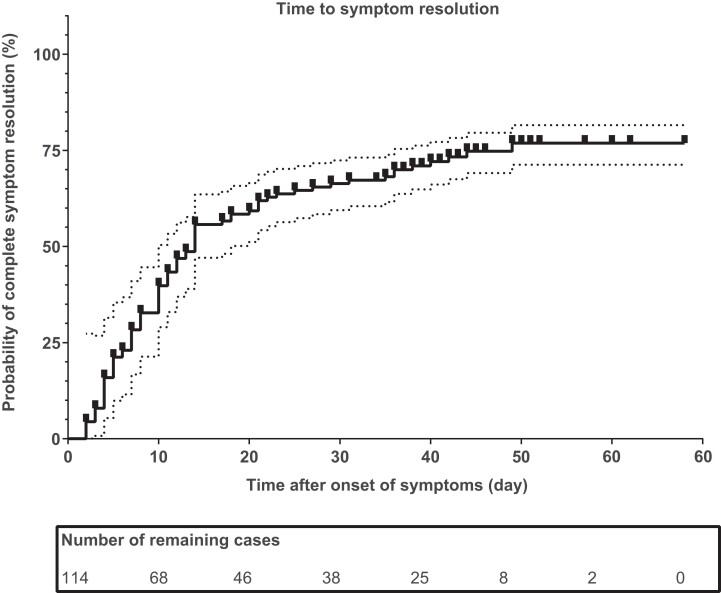
114 consecutive immunocompromised patients were enrolled. Eighty-nine percent had previously received 3 mRNA vaccinations. While only 1 patient died, 23 (20%) were hospitalized for a median of 11 days. A low SARS-CoV-2 immunoglobulin G (IgG) antibody response (<300 BAU [binding antibody units]/mL) at diagnosis, being older, being a lung transplant recipient, having more comorbidities, and having a higher frailty score were associated with hospital admission (all P < .01). At the end of follow-up, 25% had still not fully recovered. Of the 23 hospitalized patients, 70% had a negative and 92% had a low IgG (<300 BAU/mL) antibody response at admission. Sotrovimab was administered to 17 of these patients, and 1 died.
While the mortality in immunocompromised patients infected with Omicron was low, hospital admission was frequent and the duration of symptoms often prolonged. In addition to vaccination, other interventions are needed to limit the morbidity from COVID-19 in immunocompromised patients.
与之前的变异株相比,感染严重急性呼吸综合征冠状病毒 2(SARS-CoV-2)奥密克戎变异株后的疾病严重程度较轻。关于免疫功能低下患者疾病负担的数据尚缺乏。我们研究了奥密克戎导致的 2019 冠状病毒病(COVID-19)的免疫功能低下患者的临床特征和结局。
本研究纳入了感染奥密克戎变异株的器官移植受者、接受抗 CD20 治疗的患者以及异基因造血干细胞移植受者。收集了同意参与研究的患者的特征,并定期联系患者,直到症状缓解。为了确定住院的可能危险因素,进行了单变量逻辑分析。
连续纳入了 114 例免疫功能低下的患者。89%的患者之前接受过 3 剂 mRNA 疫苗接种。虽然仅有 1 例患者死亡,但仍有 23 例(20%)患者因中位住院时间为 11 天而住院。在诊断时 SARS-CoV-2 免疫球蛋白 G(IgG)抗体反应较低(<300 BAU[结合抗体单位]/mL)、年龄较大、肺移植受者、合并症较多以及衰弱评分较高与住院有关(均 P <.01)。在随访结束时,仍有 25%的患者未完全康复。在 23 例住院患者中,70%的患者入院时 IgG 抗体阴性,92%的患者 IgG 抗体低(<300 BAU/mL)。对其中 17 例患者给予索托维单抗治疗,其中 1 例死亡。
虽然感染奥密克戎的免疫功能低下患者的死亡率较低,但住院率较高,症状持续时间往往较长。除了接种疫苗外,还需要采取其他干预措施来降低免疫功能低下患者 COVID-19 的发病率。