Department of Endocrinology, Xinhua Hospital, Shanghai Jiaotong University School of Medicine, Shanghai, China.
Pudong New Area Gaoqiao community health center, Shanghai, China.
J Clin Lab Anal. 2022 Sep;36(9):e24615. doi: 10.1002/jcla.24615. Epub 2022 Jul 23.
Thyroid nodule prevalence is increasing lately, especially in diabetes, but the mechanism of which is not clear. In this study, we investigated if osteoprotegerin (OPG) is involved in the pathogenesis of thyroid nodules in diabetes.
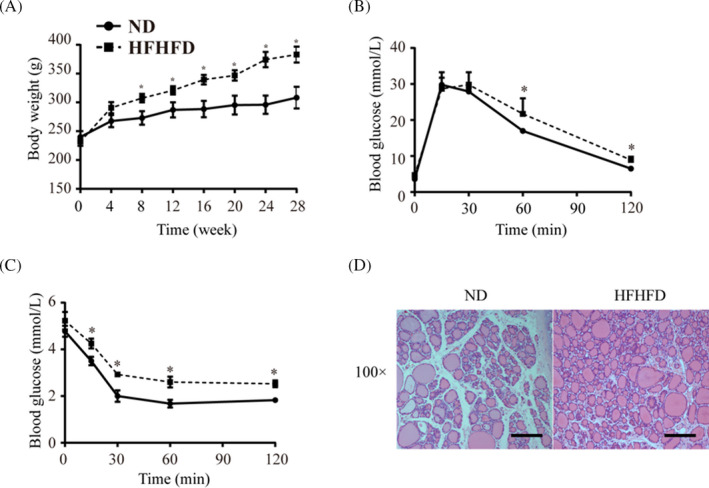
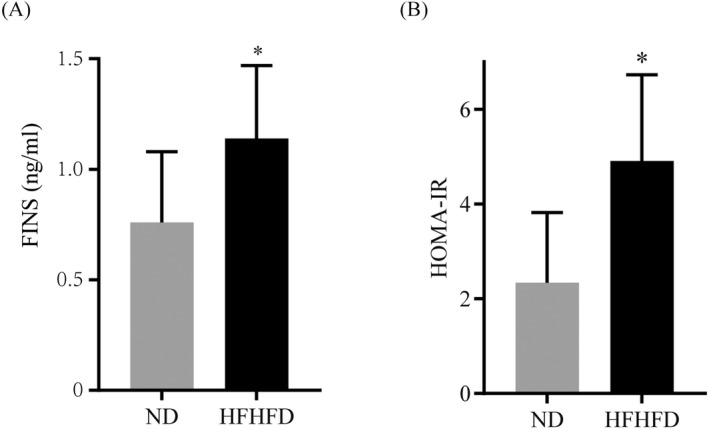
A total of 7568 individuals with detailed information and ultrasound examination results were studied for the prevalence of thyroid nodules. Among them, 1883 were with type 2 diabetes and 5685 were non-diabetic. Then, 1120 individuals were randomly selected for the measurement of OPG. Diabetic rats were made by feeding a high-fat-high-fructose diet for 28 weeks. Rats fed with a normal diet were as controls. Fresh thyroid tissues were obtained and fixed, dehydrated, and embedded in paraffin for hematoxylin-eosin staining and observing pathological changes. qPCR and western blot were used to detect OPG expression in rat thyroid tissues.
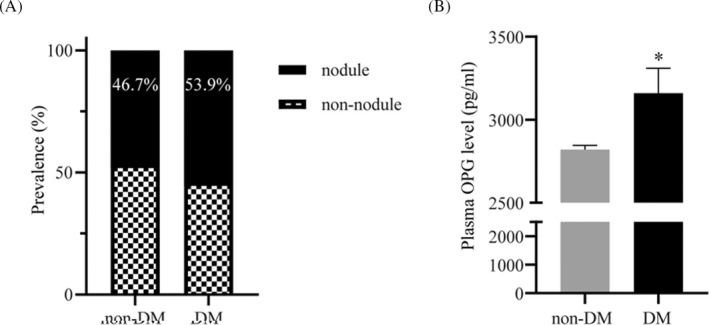
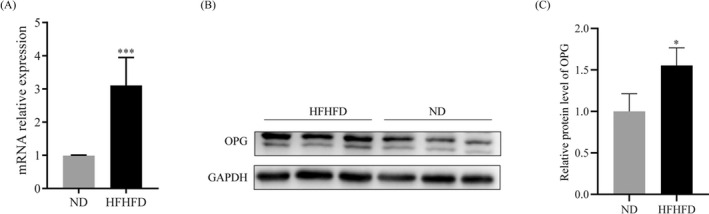
We found that HbA1c is an independent risk factor for thyroid nodules (Exp [β] = 1.158, p < 0.001). The prevalence of thyroid nodules in type 2 diabetes was higher than that in non-diabetes (53.9% vs. 46.7%, p < 0.001). Serum OPG levels were significantly elevated in the diabetes group than in the non-diabetes group (3160.17 pg/ml vs. 2819.39 pg/ml, p < 0.01). The expression of OPG increased significantly in the thyroid tissues of diabetic rats.
Osteoprotegerin may be associated with thyroid nodule development in diabetes.
甲状腺结节的患病率最近一直在上升,尤其是在糖尿病患者中,但具体的发病机制尚不清楚。本研究旨在探讨核因子κB 受体活化因子配体(RANKL)/核因子κB 受体活化因子配体受体(RANK)/骨保护素(OPG)系统是否参与糖尿病患者甲状腺结节的发病机制。
本研究共纳入 7568 例有详细资料和超声检查结果的个体,以调查甲状腺结节的患病率。其中,1883 例为 2 型糖尿病患者,5685 例为非糖尿病患者。随后,随机选择 1120 例个体测量 OPG。给予大鼠高脂高果糖饮食 28 周建立糖尿病模型,给予普通饮食的大鼠作为对照组。取新鲜甲状腺组织,固定、脱水、包埋于石蜡中,进行苏木精-伊红染色,观察病理变化。采用 qPCR 和 Western blot 检测大鼠甲状腺组织中 OPG 的表达。
我们发现糖化血红蛋白(HbA1c)是甲状腺结节的独立危险因素(Exp [β] = 1.158,p < 0.001)。2 型糖尿病患者甲状腺结节的患病率高于非糖尿病患者(53.9% vs. 46.7%,p < 0.001)。糖尿病组血清 OPG 水平明显高于非糖尿病组(3160.17 pg/ml vs. 2819.39 pg/ml,p < 0.01)。糖尿病大鼠甲状腺组织中 OPG 的表达明显增加。
OPG 可能与糖尿病患者甲状腺结节的发生有关。