Section of Pacing and Electrophysiology, Division of Cardiology, The First Affiliated Hospital of Nanjing Medical University, 300 Guangzhou Road, Nanjing, 210029, People's Republic of China.
Division of Cardiology, Xuzhou Central Hospital, Xuzhou, People's Republic of China.
Stem Cell Res Ther. 2022 Jul 23;13(1):333. doi: 10.1186/s13287-022-02984-z.
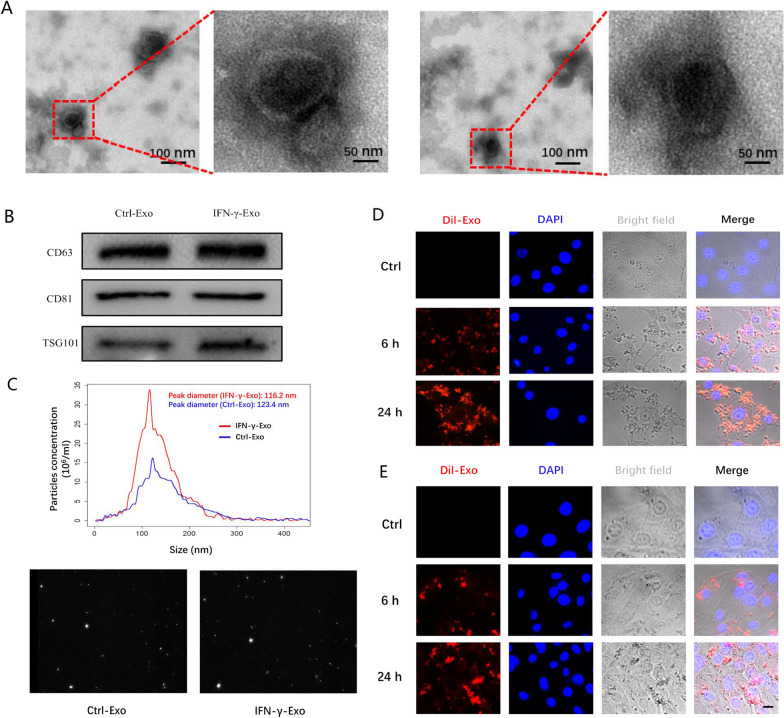
Mesenchymal stromal cells (MSCs) activated with IFN-γ elicit stronger physical effects. Exosomes (Exos) secreted from MSCs show protective effects against myocardial injury. This study aimed to determine whether Exos derived from IFN-γ-treated MSCs exhibit more potent cardioprotective function and the underlying mechanisms.
H9c2 cells or human umbilical vein endothelial cells (HUVECs) were treated with Exos isolated from MSCs (Ctrl-Exo) or IFN-γ-primed MSCs (IFN-γ-Exo) under oxygen and glucose deprivation (OGD) conditions in vitro and in vivo in an infarcted rat heart. RNA sequencing was used to identify differentially expressed functional transcription factors (TFs). Quantitative reverse transcription-PCR (qPCR) was used to confirm the upregulated TFs and miRNA in IFN-γ-primed MSCs. Dual-luciferase reporter gene assay was used to analyze the transcriptional regulation of miRNAs by STAT1. The target of miR-21-5p (miR-21) was determined by luciferase reporter assays and qPCR. The function of BTG2 was verified in vitro under OGD conditions.
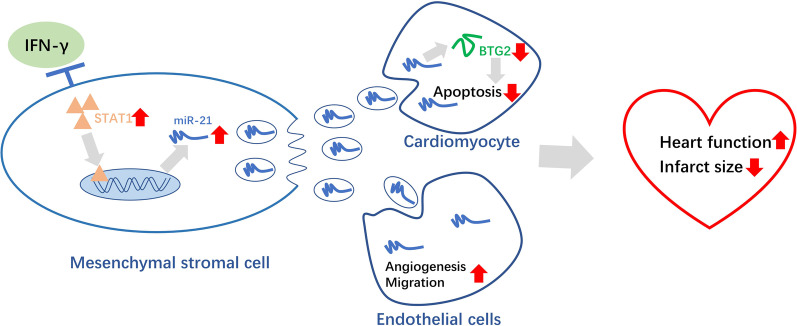
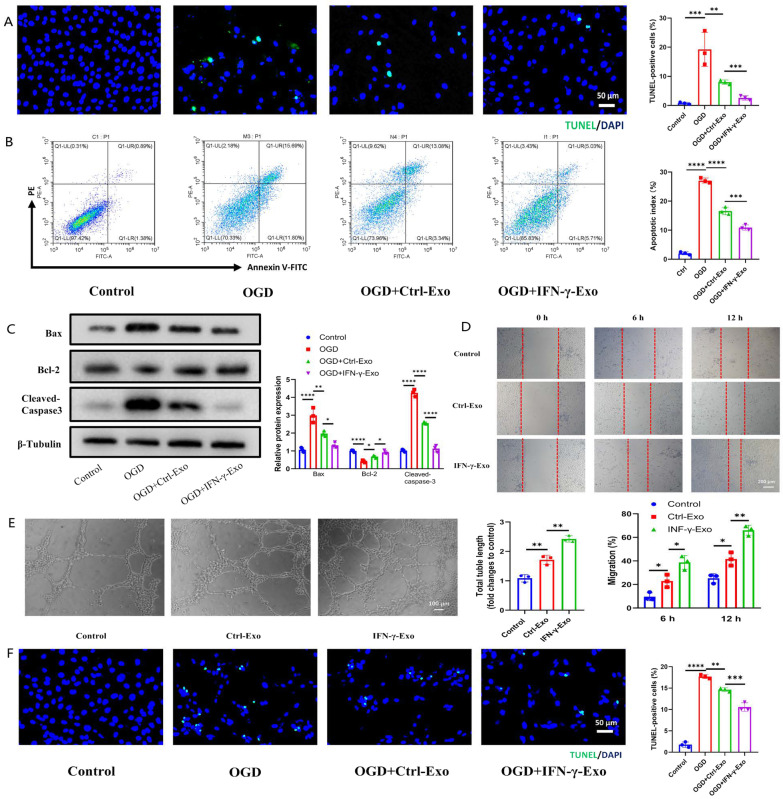
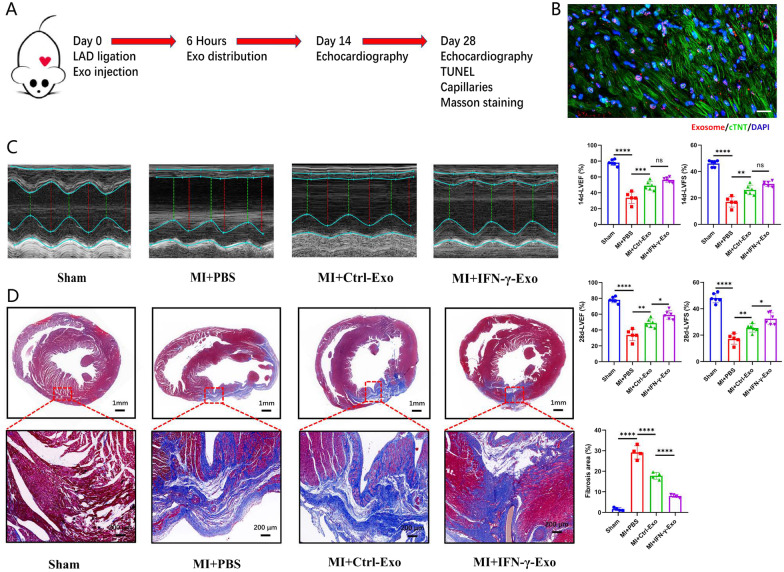
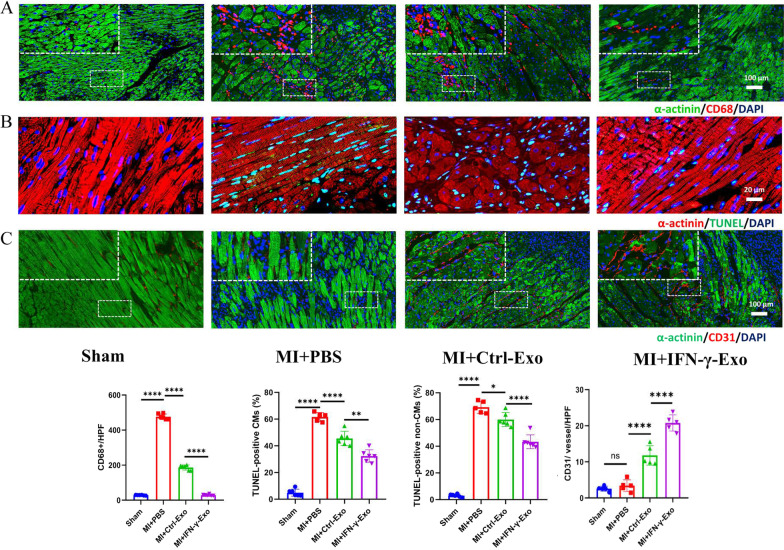
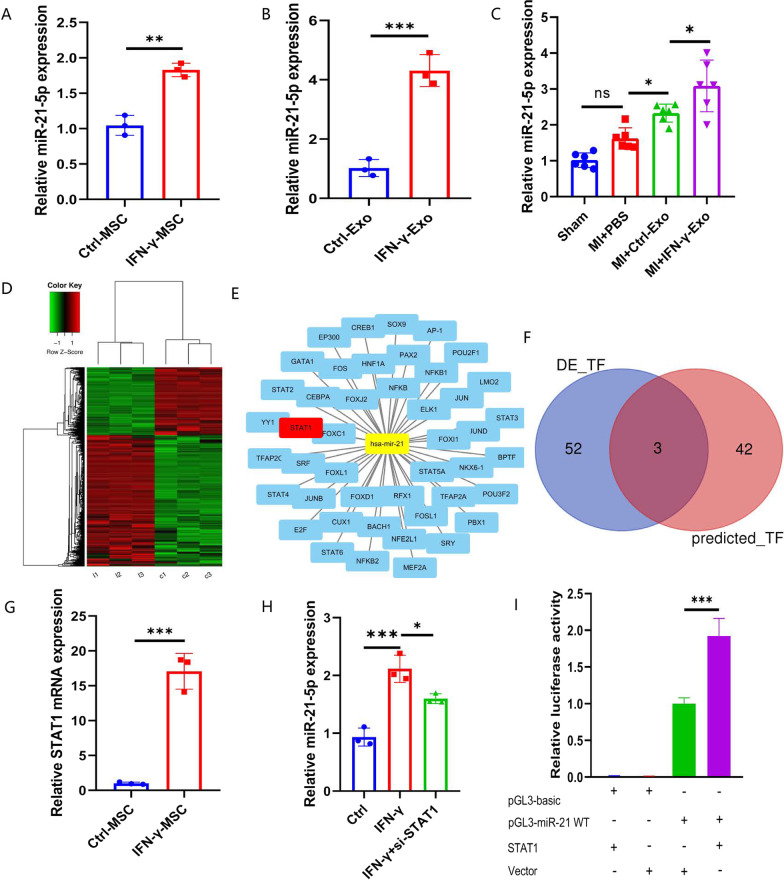
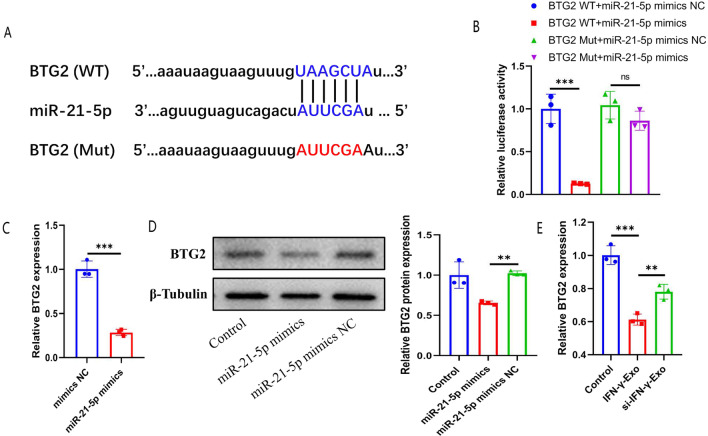
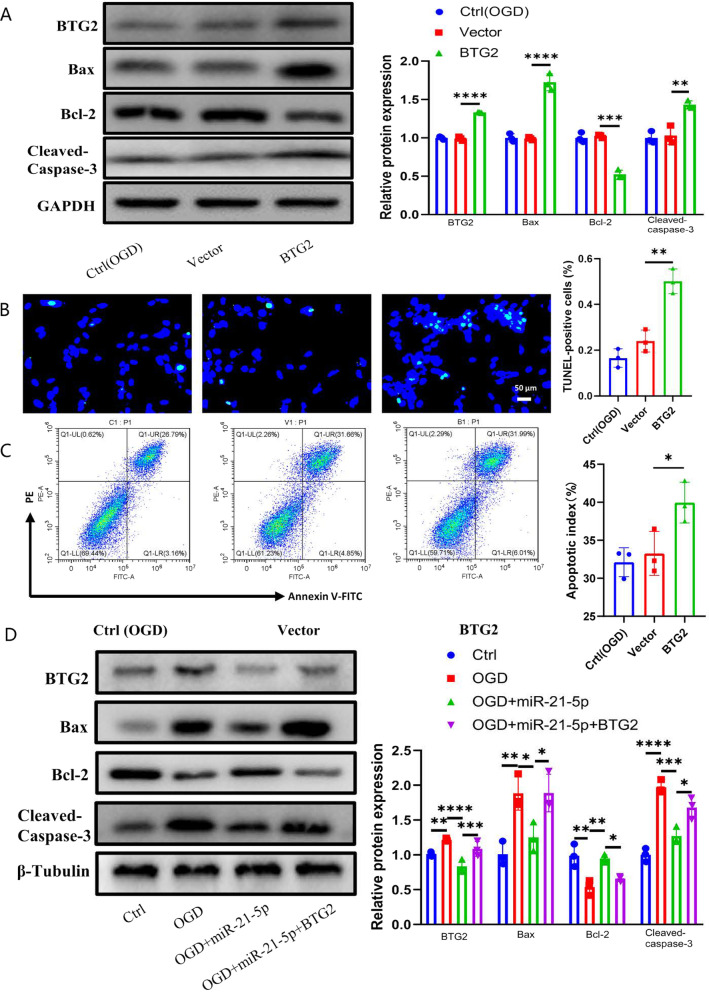
IFN-γ-Exo accelerated migration and tube-like structure formation and prevented OGD-induced apoptosis in H9c2. Similarly, IFN-γ-Exo treatment caused a decrease in fibrosis, reduced cardiomyocyte apoptosis, and improved cardiac function compared to Ctrl-Exo treatment. MiR-21 was significantly upregulated in IFN-γ-primed MSCs and IFN-γ-Exo. STAT1 transcriptionally induced miR-21 expression. Up-regulated miR-21 could inhibit BTG anti-proliferation factor 2 (BTG2) expressions. BTG2 promoted H9c2 cell apoptosis and reversed the protective effects of miR-21 under OGD conditions.
IFN-γ-Exo showed enhanced therapeutic efficacy against acute MI, possibly by promoting angiogenesis and reducing apoptosis by upregulating miR-21, which directly targeted BTG2.
经 IFN-γ 激活的间充质基质细胞 (MSCs) 可发挥更强的物理效应。MSCs 分泌的外泌体 (Exos) 对心肌损伤具有保护作用。本研究旨在确定经 IFN-γ 处理的 MSC 衍生的 Exos 是否具有更强的心脏保护功能及其潜在机制。
体外和体内实验中,在缺氧和葡萄糖剥夺 (OGD) 条件下,将 H9c2 细胞或人脐静脉内皮细胞 (HUVEC) 分别用 MSC 分离的 Exos (Ctrl-Exo) 或 IFN-γ 预刺激的 MSC 衍生的 Exos (IFN-γ-Exo) 处理。采用 RNA 测序鉴定差异表达的功能转录因子 (TFs)。采用定量逆转录-PCR (qPCR) 验证 IFN-γ 预刺激 MSC 中上调的 TFs 和 miRNA。双荧光素酶报告基因检测分析 STAT1 对 miRNA 的转录调控。通过荧光素酶报告基因检测和 qPCR 确定 miR-21-5p (miR-21) 的靶标。在 OGD 条件下,通过体外实验验证 BTG2 的功能。
IFN-γ-Exo 可促进 H9c2 的迁移和管状结构形成,并防止 OGD 诱导的细胞凋亡。同样,与 Ctrl-Exo 治疗相比,IFN-γ-Exo 治疗可减少纤维化、降低心肌细胞凋亡并改善心脏功能。IFN-γ 预刺激 MSC 和 IFN-γ-Exo 中 miR-21 显著上调。STAT1 转录诱导 miR-21 的表达。上调的 miR-21 可抑制 BTG 抗增殖因子 2 (BTG2) 的表达。BTG2 促进 H9c2 细胞凋亡,并在 OGD 条件下逆转 miR-21 的保护作用。
IFN-γ-Exo 对急性心肌梗死显示出增强的治疗效果,可能是通过上调 miR-21 促进血管生成和减少细胞凋亡,而 miR-21 直接靶向 BTG2。