Department of Rehabilitation, The Second Affiliated Hospital of Nanchang University, Nanchang, Jiangxi 330321, P.R. China.
Department of Clinical Laboratory, Jiangxi Thoracic Hospital, Nanchang, Jiangxi 330321, P.R. China.
Int J Mol Med. 2020 Oct;46(4):1453-1465. doi: 10.3892/ijmm.2020.4677. Epub 2020 Jul 16.
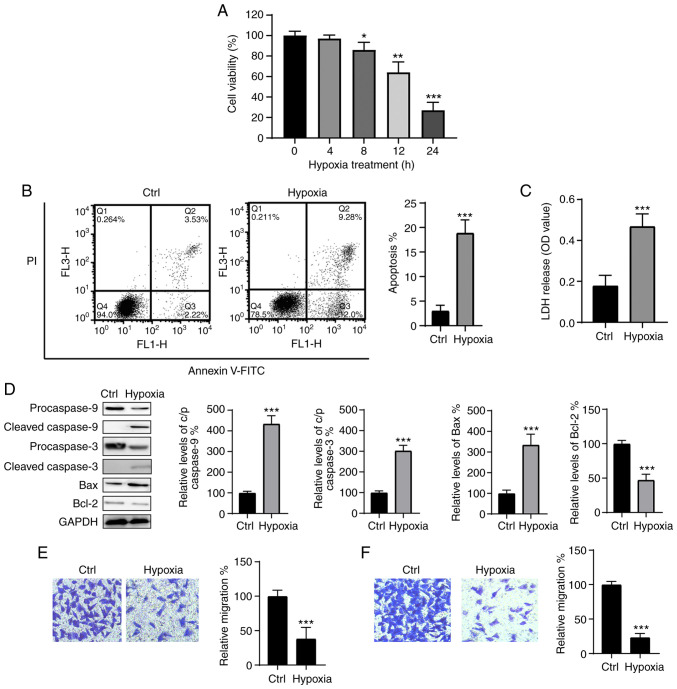
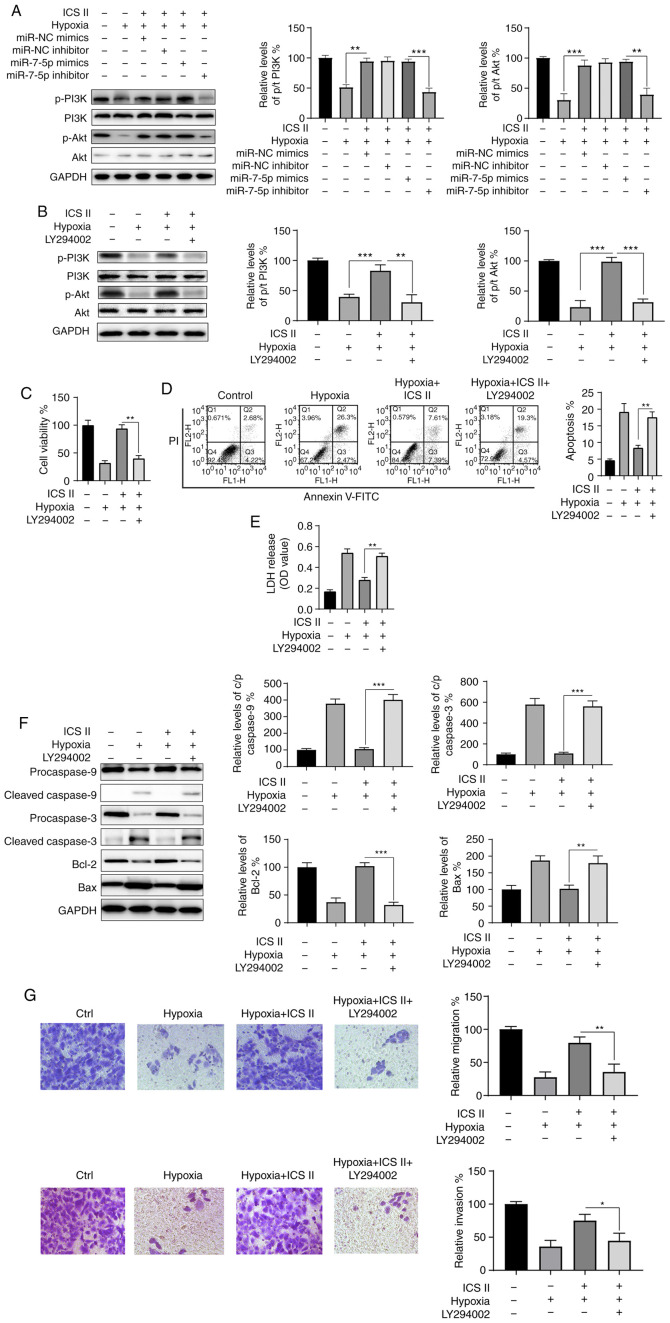
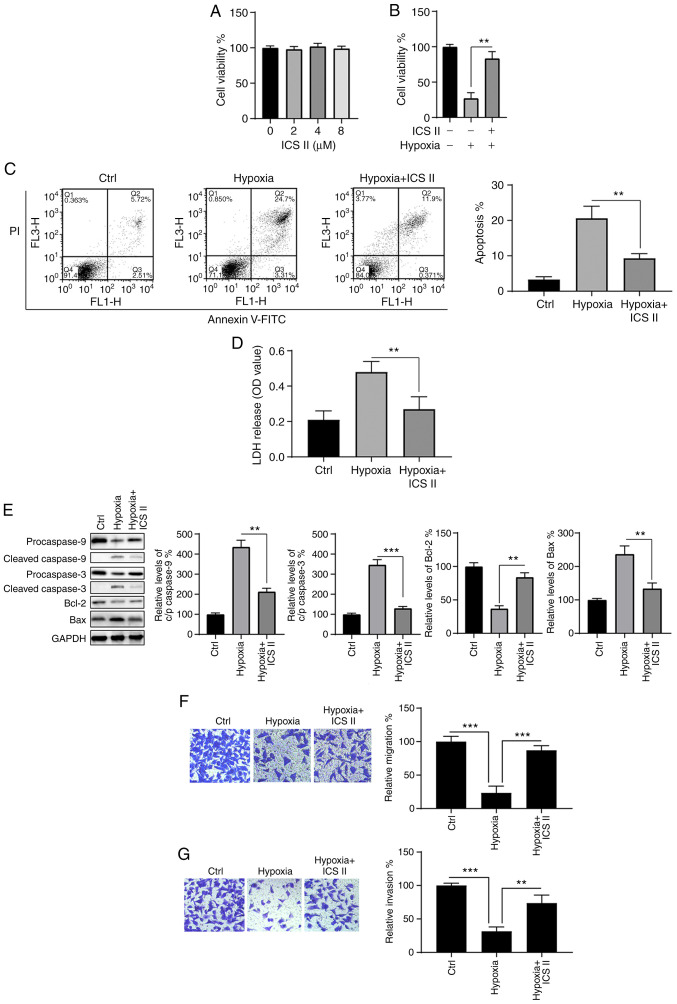
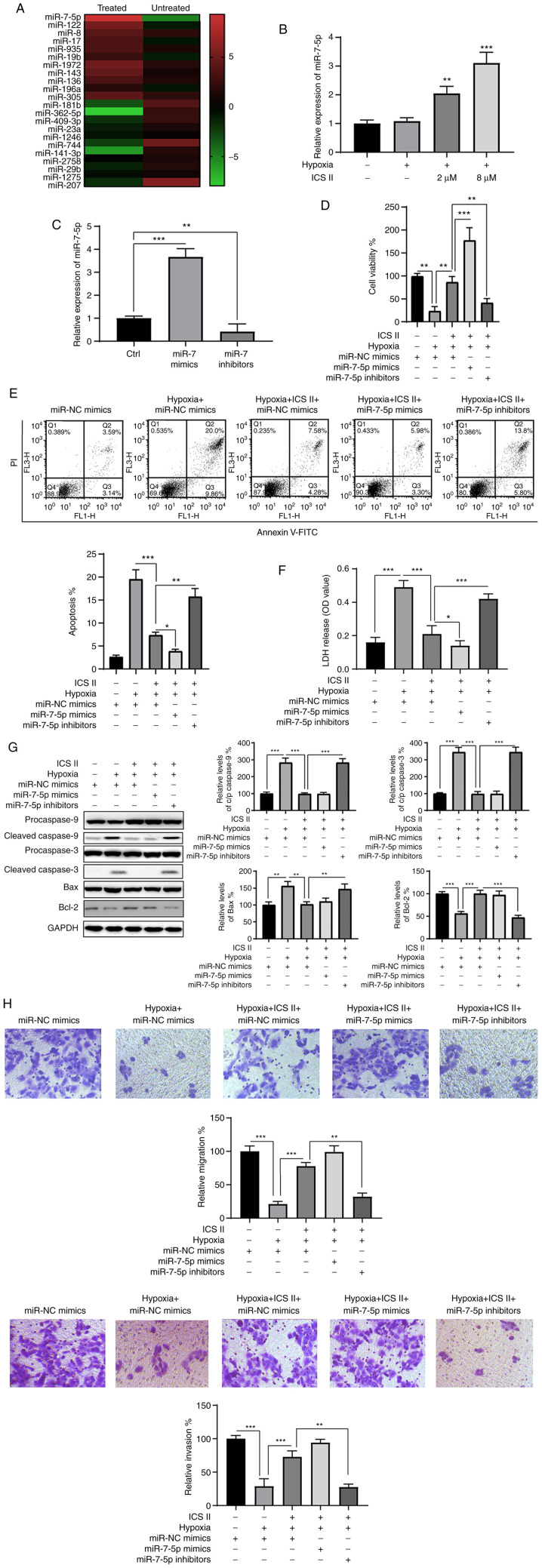
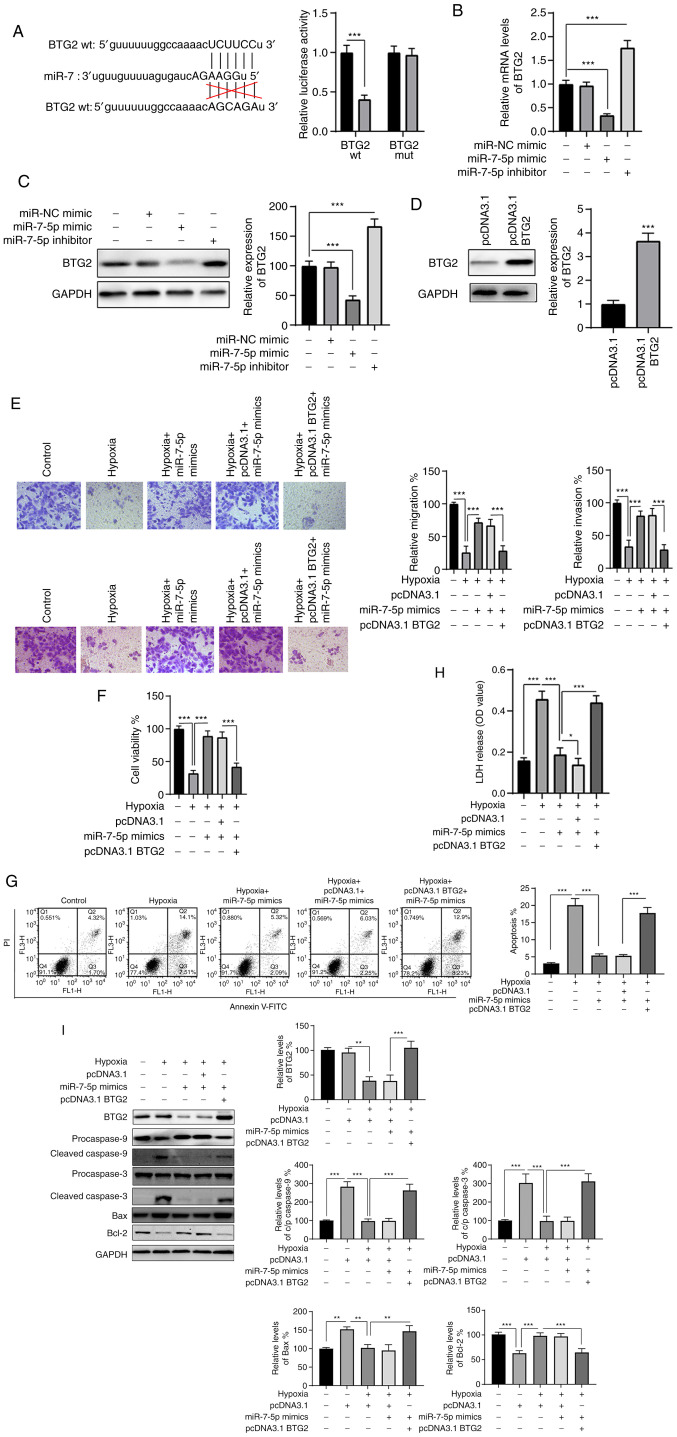
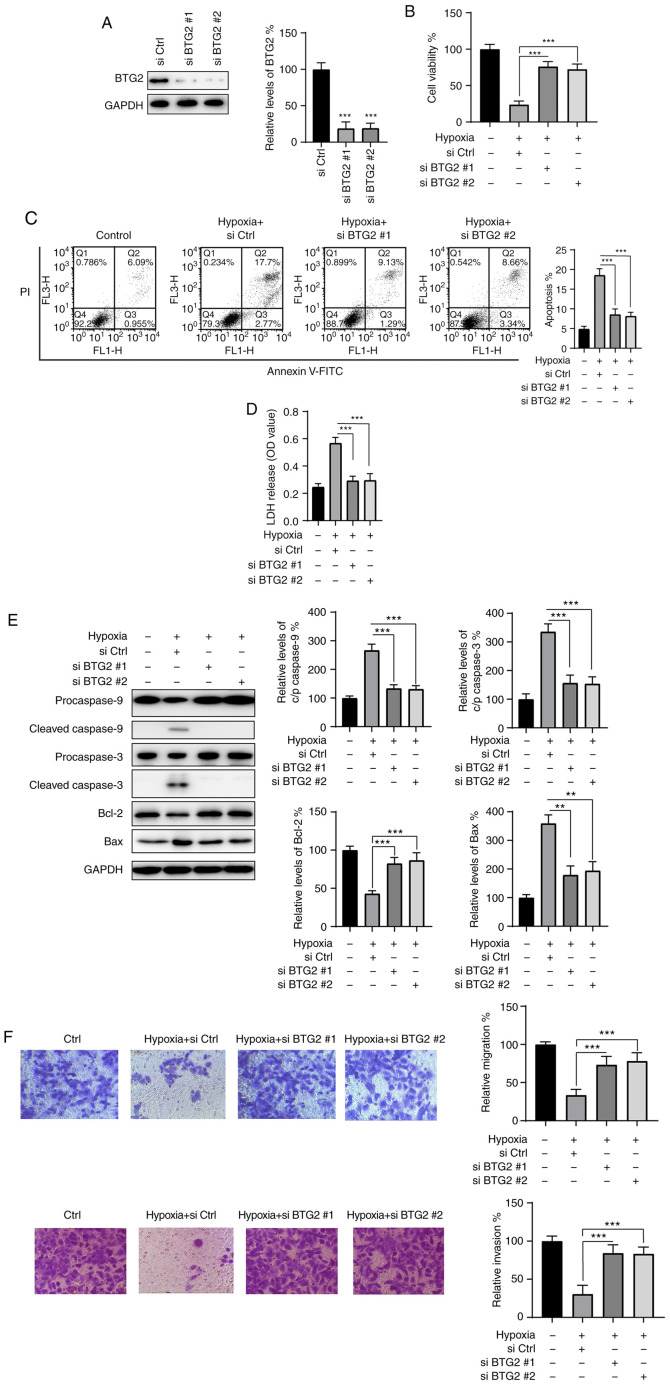
Icariside II (ICS II) has been reported to have protective effects against oxidative stress. However, whether ICS II protects cardiomyocytes from myocardial infarction (MI), and the associated underlying mechanisms, remain to be elucidated. Therefore, the current study investigated the effects of ICS II on hypoxia‑injured H9c2 cells, as well as the associated molecular mechanisms. A hypoxic injury model was established to emulate the effects of MI. The effects of ICS II on the proliferation of rat cardiomyocyte H9c2 cells were assessed with cell counting kit‑8 assays. The apoptotic status of the cells was assessed by flow cytometry, and the expression of apoptosis‑related proteins was analyzed by western blotting. A microRNA (miRNA/miR) microarray was used to quantify the differential expression of miRNAs after ICS II treatment, and the levels of miR‑7‑5p were further quantified by reverse transcription‑quantitative PCR. Whether ICS II affected hypoxia‑injured cells via miR‑7‑5p was subsequently examined, and the target of miR‑7‑5p was also investigated by bioinformatics analysis and luciferase reporter assays. The effects of ICS II on the PI3K/Akt pathway were then evaluated by western blot analysis. Hypoxia treatment decreased viability and the migration and invasion abilities of H9c2 cells, and also induced apoptosis. ICS II significantly increased viability and reduced hypoxia‑associated apoptosis. Moreover, ICS II treatment led to the upregulation of miR‑7‑5p, and the protective effects of ICS II were found to rely on miR‑7‑5p. Moreover, BTG anti‑proliferation factor (BTG2) was identified as a direct target of miR‑7‑5p, and overexpression of BTG2 inhibited the protective effects of miR‑7‑5p. Finally, ICS II treatment resulted in the activation of the PI3K/Akt signaling pathway, which is essential for the survival of H9c2 cells under hypoxic conditions. In summary, ICS II reduces hypoxic injury in H9c2 cells via the miR‑7‑5p/BTG2 axis and activation of the PI3K/Akt signaling pathway.
二氢马兜铃内酰胺 I(ICS II)已被报道具有抗氧化应激作用。然而,ICS II 是否能保护心肌细胞免受心肌梗死(MI)的影响,以及相关的潜在机制仍有待阐明。因此,本研究旨在探讨 ICS II 对缺氧损伤的 H9c2 细胞的作用及其相关的分子机制。建立了缺氧损伤模型来模拟 MI 的影响。通过细胞计数试剂盒-8 检测 ICS II 对大鼠心肌细胞 H9c2 细胞增殖的影响。通过流式细胞术检测细胞凋亡状态,通过蛋白质印迹法分析凋亡相关蛋白的表达。采用 miRNA(miRNA/miR)微阵列定量分析 ICS II 处理后 miR-7-5p 的差异表达,并通过逆转录-定量 PCR 进一步定量 miR-7-5p 的水平。随后,通过生物信息学分析和荧光素酶报告基因检测,研究 ICS II 是否通过 miR-7-5p 影响缺氧损伤细胞。通过生物信息学分析和荧光素酶报告基因检测,研究 ICS II 是否通过 miR-7-5p 影响缺氧损伤细胞。通过生物信息学分析和荧光素酶报告基因检测,研究 ICS II 是否通过 miR-7-5p 影响缺氧损伤细胞。
ICS II 显著增加了细胞活力,降低了缺氧相关的细胞凋亡。此外,ICS II 处理导致 miR-7-5p 的上调,ICS II 的保护作用依赖于 miR-7-5p。此外,BTG 抗增殖因子(BTG2)被鉴定为 miR-7-5p 的直接靶标,BTG2 的过表达抑制了 miR-7-5p 的保护作用。最后,ICS II 处理导致 PI3K/Akt 信号通路的激活,这对于 H9c2 细胞在缺氧条件下的存活至关重要。综上所述,ICS II 通过 miR-7-5p/BTG2 轴和 PI3K/Akt 信号通路的激活减轻 H9c2 细胞的缺氧损伤。