Neuromuscular Unit, Department of Neurology, Hospital Universitario y Politécnico la Fe, Valencia, Spain.
Centro de Investigación Biomédica en Red de Enfermedades Raras (CIBERER), Valencia, Spain.
Eur J Neurol. 2022 Nov;29(11):3337-3346. doi: 10.1111/ene.15501. Epub 2022 Jul 24.
The aim was to assess the safety and efficacy of nusinersen in adult 5q spinal muscular atrophy (SMA) patients.
Patients older than 15 years and followed for at least 6 months with one motor scale (Hammersmith Functional Motor Scale Expanded, HFMSE; Revised Upper Limb Module, RULM) in five referral centers were included. The clinical and patients' global impression of change (CGI-C and PGI-C) were recorded in treated patients at the last visit. Functional scales (Egen Klassification, EK2; Revised Amyotrophic Lateral Sclerosis Functional Rating Scale, ALSFRS-R) and the percentage predicted forced vital capacity were collected when available.
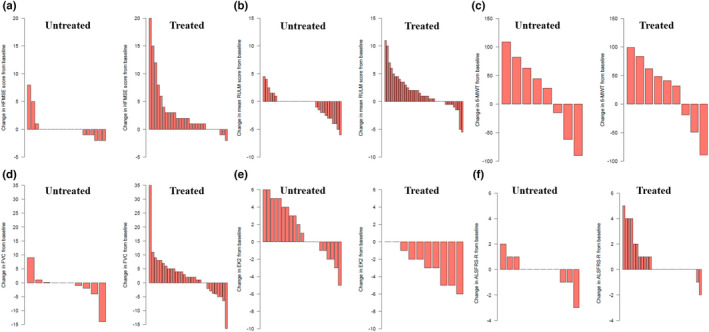
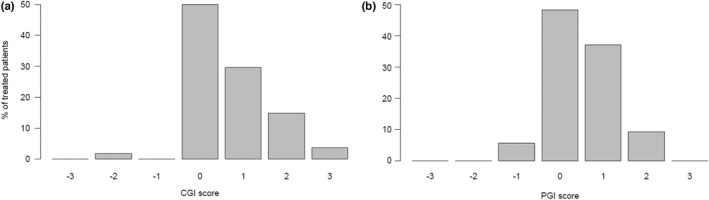
Seventy-nine SMA patients (39 treated with nusinersen) were included. Compared with untreated patients, treated patients showed a significant improvement of 2 points (±0.46) in RULM (p < 0.001) after 6 months. After a mean follow-up of 16 months, nusinersen treatment was associated with a significant improvement in HFMSE (odds ratio [OR] 1.15, p = 0.006), the 6-min walk test (OR = 1.07, p < 0.001) and the EK2 (OR = 0.81, p = 0.001). Compared with untreated patients, more treated patients experienced clinically meaningful improvements in all scales, but these differences were statistically significant only for RULM (p = 0.033), ALSFRS-R (p = 0.005) and EK2 (p < 0.001). According to the CGI-C and PGI-C, 64.1% and 61.5% of treated patients improved with treatment. Being a non-sitter was associated with less response to treatment, whilst a longer time of treatment was associated with better response. Most treated patients (77%) presented at least one adverse event, mostly mild.
Nusinersen treatment is associated with some improvements in adult SMA patients. Most severely affected patients with complex spines are probably those with the most unfavorable risk-benefit ratio.
本研究旨在评估nusinersen 在成人 5q 型脊髓性肌萎缩症(SMA)患者中的安全性和疗效。
纳入在 5 个转诊中心接受治疗且至少随访 6 个月的年龄大于 15 岁、使用 1 种运动量表(Hammersmith 功能性运动量表扩展版,HFMSE;修订后的上肢模块,RULM)的患者。在最后一次就诊时,对接受治疗的患者记录临床和患者整体印象变化(CGI-C 和 PGI-C)。收集功能量表(Egen 分类,EK2;修订后的肌萎缩侧索硬化功能评定量表,ALSFRS-R)和预计用力肺活量的百分比。
共纳入 79 例 SMA 患者(39 例接受 nusinersen 治疗)。与未治疗患者相比,治疗 6 个月后,RULM 评分(p<0.001)显著提高了 2 分(±0.46)。在平均随访 16 个月后,nusinersen 治疗与 HFMSE(优势比[OR]1.15,p=0.006)、6 分钟步行试验(OR=1.07,p<0.001)和 EK2(OR=0.81,p=0.001)显著改善相关。与未治疗患者相比,更多的治疗患者在所有量表上均出现了有临床意义的改善,但只有 RULM(p=0.033)、ALSFRS-R(p=0.005)和 EK2(p<0.001)的差异具有统计学意义。根据 CGI-C 和 PGI-C,64.1%和 61.5%的治疗患者病情改善。非坐姿患者对治疗的反应较差,而治疗时间较长的患者对治疗的反应较好。大多数接受治疗的患者(77%)出现了至少 1 种不良反应,大多为轻度。
nusinersen 治疗可改善成人 SMA 患者的部分症状。脊柱情况复杂且病情最严重的患者可能是风险效益比最不利的患者。