Clinical Medical Research Center for Women and Children Diseases, Maternal and Child Health Care Hospital of Shandong Province, Jinan, China.
Department of Biosciences and Nutrition, Karolinska Institutet, Huddinge, Sweden.
Front Endocrinol (Lausanne). 2022 Jul 6;13:930227. doi: 10.3389/fendo.2022.930227. eCollection 2022.
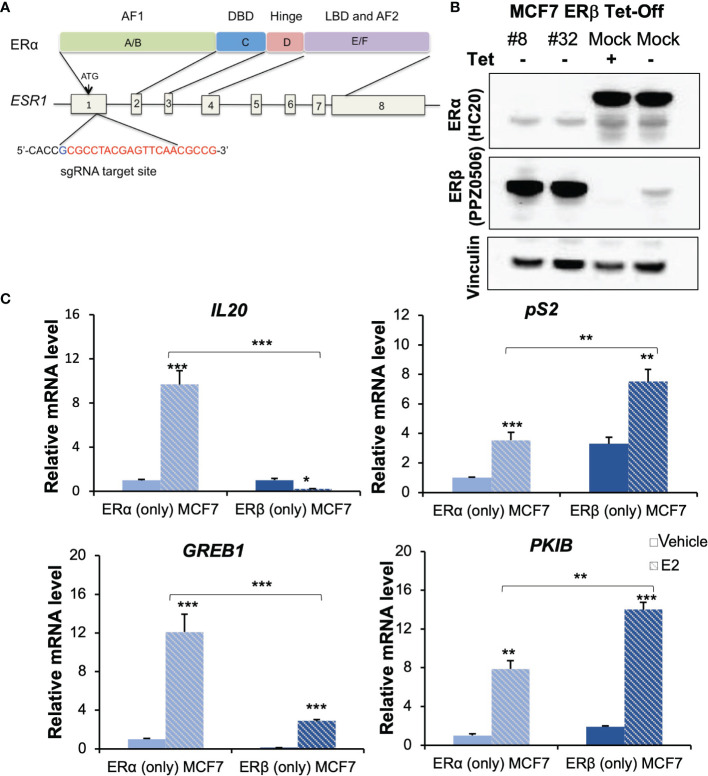
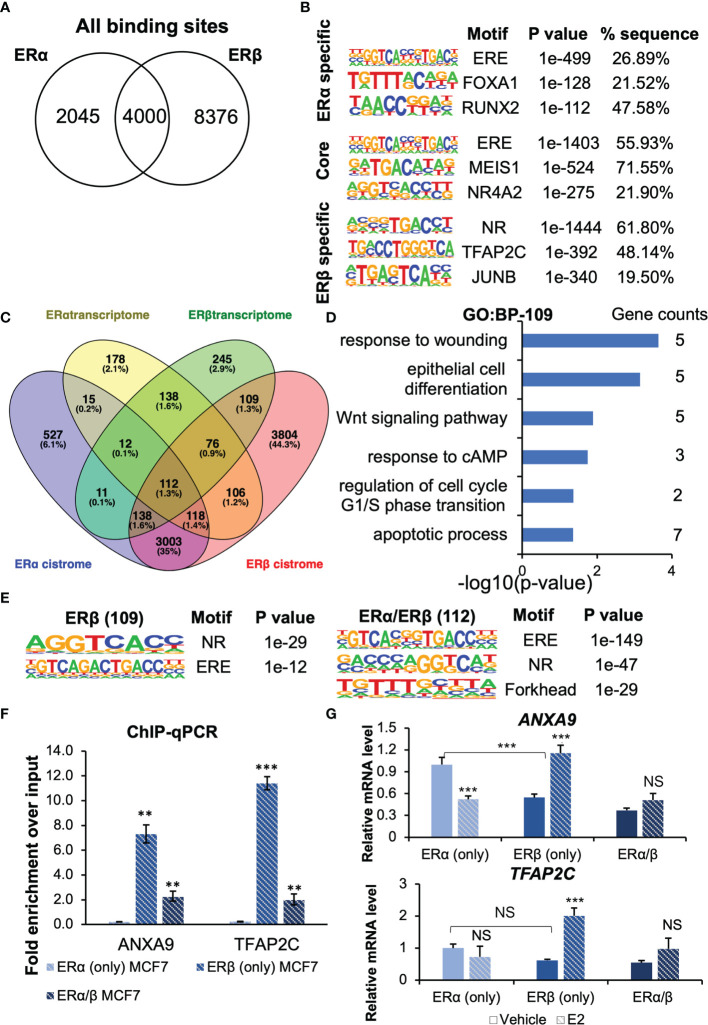
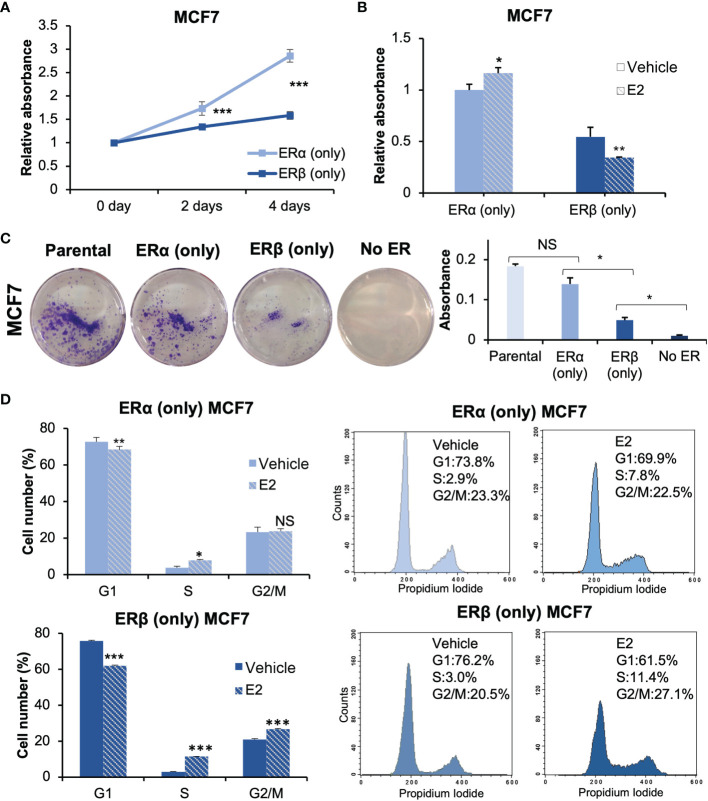
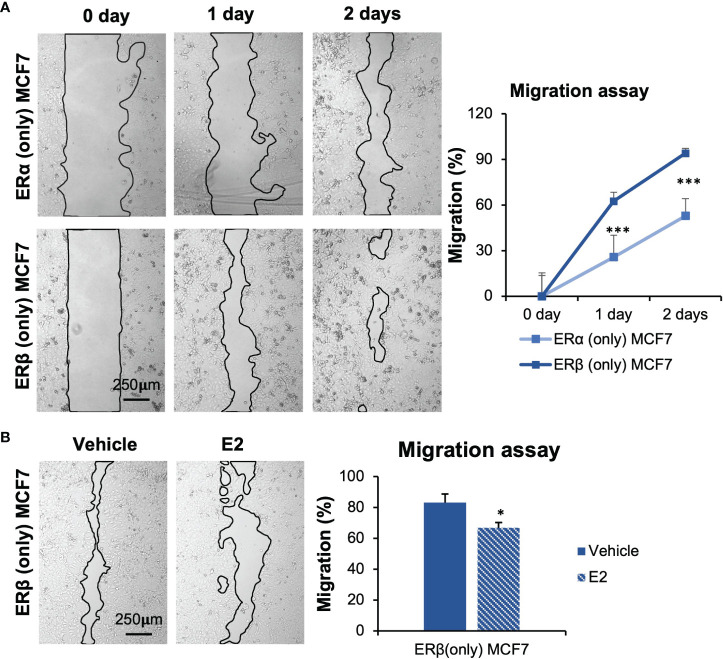
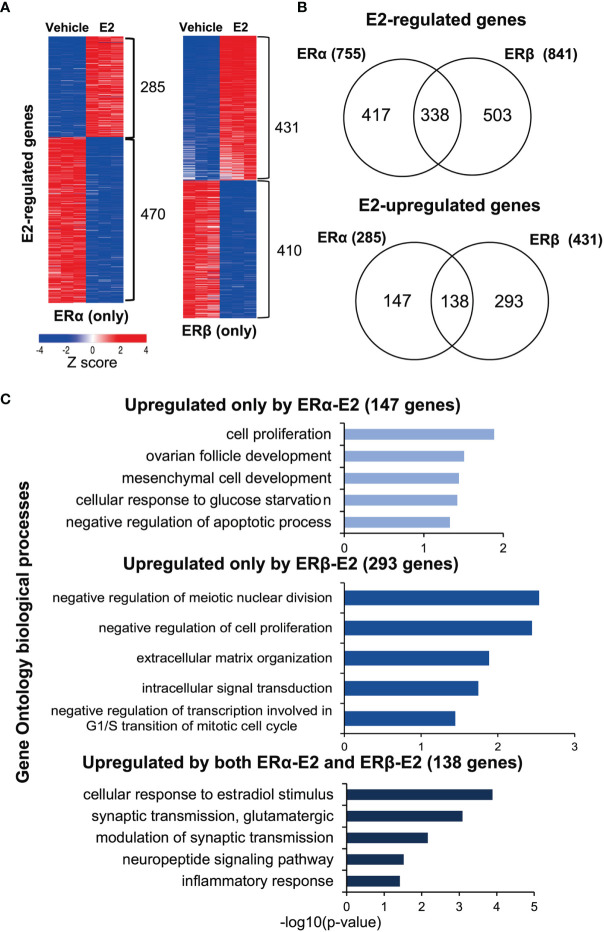
The two estrogen receptors ERα and ERβ are nuclear receptors that bind estrogen (E2) and function as ligand-inducible transcription factors. They are homologues and can form dimers with each other and bind to the same estrogen-response element motifs in the DNA. ERα drives breast cancer growth whereas ERβ has been reported to be anti-proliferative. However, they are rarely expressed in the same cells, and it is not fully investigated to which extent their functions are different because of inherent differences or because of different cellular context. To dissect their similarities and differences, we here generated a novel estrogen-dependent cell model where ERα homodimers can be directly compared to ERβ homodimers within the identical cellular context. By using CRISPR-cas9 to delete ERα in breast cancer MCF7 cells with Tet-Off-inducible ERβ expression, we generated MCF7 cells that express ERβ but not ERα. MCF7 (ERβ only) cells exhibited regulation of estrogen-responsive targets in a ligand-dependent manner. We demonstrated that either ER was required for MCF7 proliferation, but while E2 increased proliferation ERα, it reduced proliferation through a G2/M arrest ERβ. The two ERs also impacted migration differently. In absence of ligand, ERβ increased migration, but upon E2 treatment, ERβ reduced migration. E2 ERα, on the other hand, had no significant impact on migration. RNA sequencing revealed that E2 regulated a transcriptome of around 800 genes each receptor, but over half were specific for either ERα or ERβ (417 and 503 genes, respectively). Functional gene ontology enrichment analysis reinforced that E2 regulated cell proliferation in opposite directions depending on the ER, and that ERβ specifically impacted extracellular matrix organization. We corroborated that ERβ bound to cis-regulatory chromatin of its unique proposed migration-related direct targets ANXA9 and TFAP2C. In conclusion, we demonstrate that within the same cellular context, the two ERs regulate cell proliferation in the opposite manner, impact migration differently, and each receptor also regulates a distinct set of target genes in response to E2. The developed cell model provides a novel and valuable resource to further complement the mechanistic understanding of the two different ER isoforms.
两种雌激素受体 ERα 和 ERβ 是核受体,能与雌激素(E2)结合并作为配体诱导转录因子发挥作用。它们是同源物,可以相互形成二聚体,并与 DNA 中的相同雌激素反应元件基序结合。ERα 驱动乳腺癌生长,而 ERβ 已被报道具有抗增殖作用。然而,它们很少在同一细胞中表达,并且由于内在差异或由于不同的细胞环境,它们的功能在何种程度上不同尚未得到充分研究。为了剖析它们的相似性和差异性,我们在此生成了一种新型的雌激素依赖性细胞模型,在该模型中,可以在相同的细胞环境中直接比较 ERα 同源二聚体和 ERβ 同源二聚体。通过使用 CRISPR-cas9 在具有 Tet-Off 诱导型 ERβ 表达的乳腺癌 MCF7 细胞中删除 ERα,我们生成了仅表达 ERβ 而不表达 ERα 的 MCF7 细胞。MCF7(仅 ERβ)细胞以配体依赖性方式调节雌激素反应靶标。我们证明,两种 ER 均对 MCF7 增殖有影响,但 E2 通过 G2/M 阻滞增加 ERα 增殖,而通过 ERβ 减少增殖。两种 ER 对迁移的影响也不同。在没有配体的情况下,ERβ 增加迁移,但在 E2 处理后,ERβ 减少迁移。E2 对 ERα 则对迁移没有显著影响。RNA 测序显示,E2 调节了每个受体约 800 个基因的转录组,但超过一半的基因是 ERα 或 ERβ 特有的(分别为 417 和 503 个基因)。功能基因本体富集分析也证实,E2 通过不同的方式调节细胞增殖,具体取决于 ER,并且 ERβ 特异性地影响细胞外基质组织。我们证实 ERβ 结合到其独特的拟议迁移相关直接靶标 ANXA9 和 TFAP2C 的顺式调控染色质。总之,我们证明在相同的细胞环境中,两种 ER 以相反的方式调节细胞增殖,对迁移的影响不同,并且每种受体也会根据 E2 调节一组不同的靶基因。所开发的细胞模型提供了一种新的有价值的资源,可以进一步补充对两种不同 ER 同工型的机制理解。