Tao Wen-Hui, Shan Xi-Sheng, Zhang Jia-Xin, Liu Hua-Yue, Wang Bi-Ying, Wei Xiang, Zhang Mian, Peng Ke, Ding Jun, Xu Shang-Xian, Li Lin-Gui, Hu Jun-Kai, Meng Xiao-Wen, Ji Fu-Hai
Department of Anesthesiology, First Affiliated Hospital of Soochow University, Soochow, China.
Institute of Anesthesiology, Soochow University, Soochow, China.
Front Pharmacol. 2022 Jun 14;13:782466. doi: 10.3389/fphar.2022.782466. eCollection 2022.
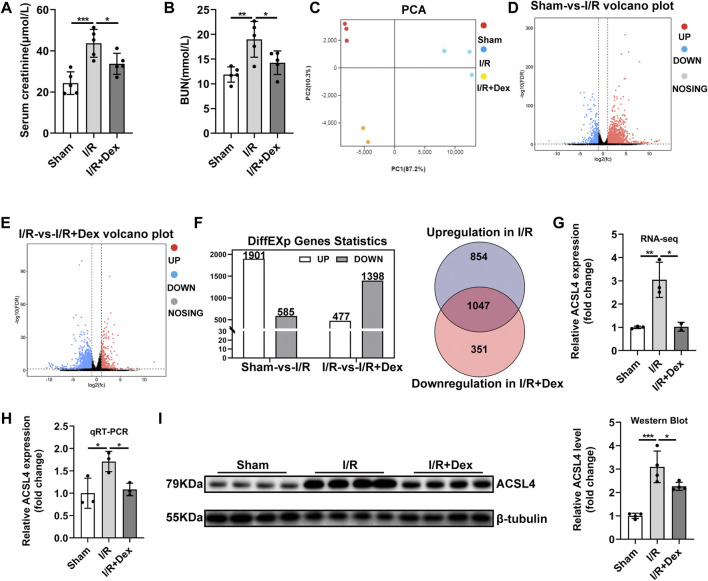
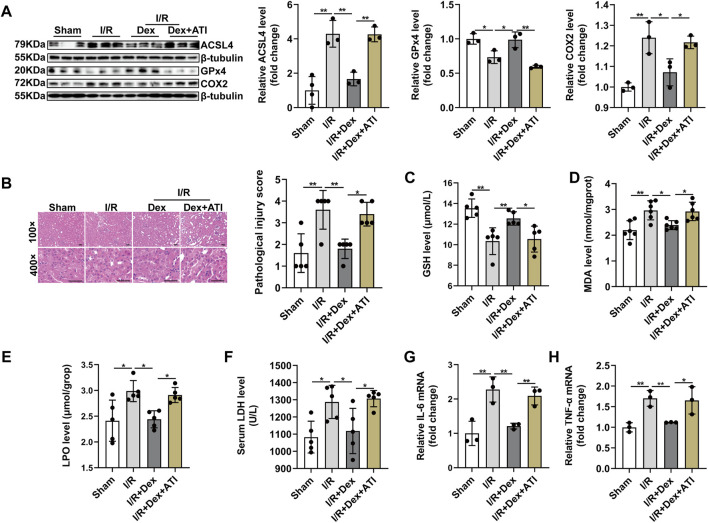
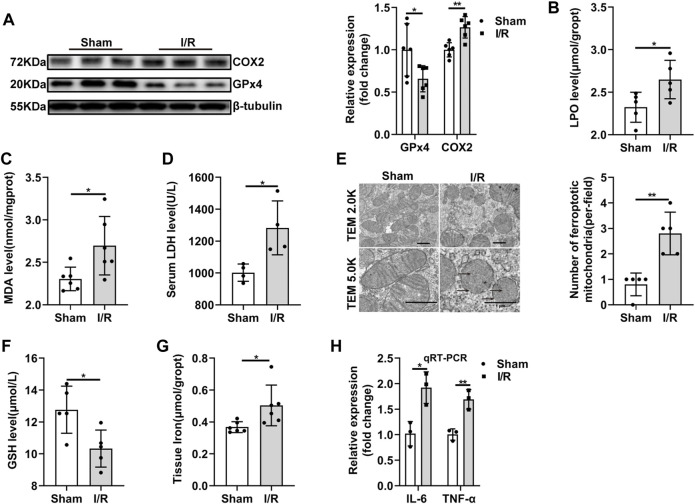
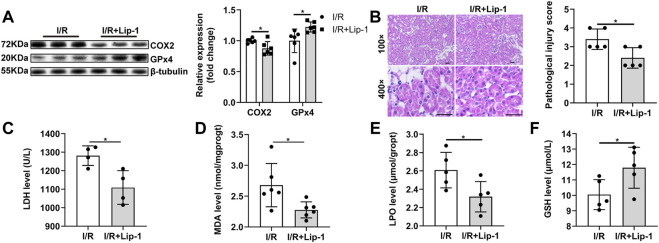
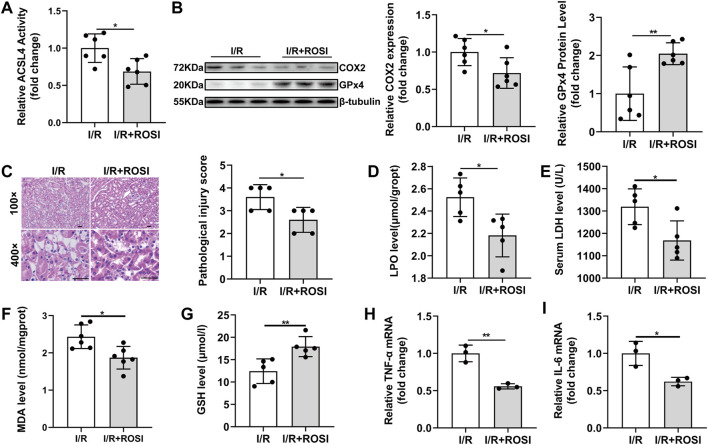
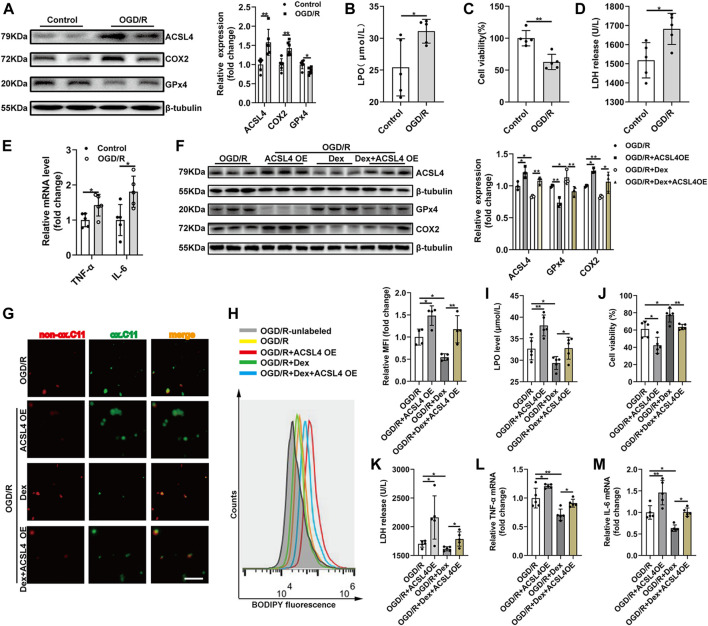
Ischemia-reperfusion (I/R) injury is a serious clinical pathology associated with acute kidney injury (AKI). Ferroptosis is non-apoptotic cell death that is known to contribute to renal I/R injury. Dexmedetomidine (Dex) has been shown to exert anti-inflammatory and organ protective effects. This study aimed to investigate the detailed molecular mechanism of Dex protects kidneys against I/R injury through inhibiting ferroptosis. We established the I/R-induced renal injury model in mice, and OGD/R induced HEK293T cells damage . RNA-seq analysis was performed for identifying the potential therapeutic targets. RNA-seq analysis for differentially expressed genes (DEGs) reported Acyl-CoA synthetase long-chain family member 4 (ACSL4) related to ferroptosis and inflammation in I/R mice renal, which was validated in rodent renal. Liproxstatin-1, the specific small-molecule inhibitor of ferroptosis, significantly attenuated ferroptosis-mediated renal I/R injury with decreased LPO, MDA, and LDH levels, and increased GSH level. Inhibiting the activity of ACSL4 by the Rosiglitazone (ROSI) resulted in the decreased ferroptosis and inflammation, as well as reduced renal tissue damage, with decreasing LPO, MDA and LDH level, increasing GSH level, reducing COX2 and increasing GPx4 protein expression, and suppressing the TNF-α mRNA and IL-6 mRNA levels. Dex as a α2-adrenergic receptor (α2-AR) agonist performed renal protective effects against I/R-induced injury. Our results also revealed that Dex administration mitigated tissue damage, inhibited ferroptosis, and downregulated inflammation response following renal I/R injury, which were associated with the suppression of ACSL4. In addition, ACSL4 overexpression abolishes Dex-mediated protective effects on OGD/R induced ferroptosis and inflammation in HEK293T cells, and promotion of ACSL4 expression by α2-AR inhibitor significantly reversed the effects on the protective role of Dex. This present study indicated that the Dex attenuates ferroptosis-mediated renal I/R injury and inflammation by inhibiting ACSL4 α2-AR.
缺血再灌注(I/R)损伤是一种与急性肾损伤(AKI)相关的严重临床病理状态。铁死亡是一种非凋亡性细胞死亡,已知其会导致肾脏I/R损伤。右美托咪定(Dex)已被证明具有抗炎和器官保护作用。本研究旨在探讨Dex通过抑制铁死亡保护肾脏免受I/R损伤的详细分子机制。我们建立了小鼠I/R诱导的肾损伤模型,以及氧糖剥夺/再灌注(OGD/R)诱导的HEK293T细胞损伤模型。进行RNA测序分析以鉴定潜在的治疗靶点。对I/R小鼠肾脏中与铁死亡和炎症相关的差异表达基因(DEG)进行的RNA测序分析报告了酰基辅酶A合成酶长链家族成员4(ACSL4),这在啮齿动物肾脏中得到了验证。铁死亡的特异性小分子抑制剂Liproxstatin-1显著减轻了铁死亡介导的肾脏I/R损伤,降低了脂质过氧化(LPO)、丙二醛(MDA)和乳酸脱氢酶(LDH)水平,并提高了谷胱甘肽(GSH)水平。罗格列酮(ROSI)抑制ACSL4的活性导致铁死亡和炎症减少,以及肾组织损伤减轻,LPO、MDA和LDH水平降低,GSH水平升高,环氧化酶2(COX2)减少,谷胱甘肽过氧化物酶4(GPx4)蛋白表达增加,肿瘤坏死因子-α(TNF-α)mRNA和白细胞介素-6(IL-6)mRNA水平受到抑制。Dex作为一种α2肾上腺素能受体(α2-AR)激动剂对I/R诱导的损伤具有肾脏保护作用。我们结果还显示,给予Dex可减轻肾I/R损伤后的组织损伤,抑制铁死亡,并下调炎症反应,这与ACSL4的抑制有关。此外,ACSL4过表达消除了Dex对OGD/R诱导的HEK293T细胞铁死亡和炎症的保护作用,α2-AR抑制剂促进ACSL4表达显著逆转了Dex的保护作用。本研究表明,Dex通过抑制ACSL4-α2-AR减轻铁死亡介导的肾脏I/R损伤和炎症。