Hassanein Tarek, Tai Dean, Liu Chenghai, Box Terry D, Tong Myron J, Rossaro Lorenzo, Pozza Renee, Glenn Jeffrey S, Cheung Ramsey, Hemaidan Ammar, He Yingchun, Behling Cynthia, Hu Xiqi, Makhlouf Hala, Fan Haina, Ren Yayun, Khim Chng Elaine Lay, Liu Ping, Vierling John M
SCTI Research Foundation, Coronado, CA, USA.
HistoIndex Pte Ltd, 79 Ayer Rajah Crescent, Singapore 139955, Singapore.
Evid Based Complement Alternat Med. 2022 Jul 15;2022:4494099. doi: 10.1155/2022/4494099. eCollection 2022.
Hepatitis C virus (HCV) is a common cause of progressive hepatic fibrosis, cirrhosis, and hepatocellular carcinoma worldwide. Despite the availability of effective direct-acting antivirals, patients often have significant hepatic fibrosis at the time of diagnosis due to delay in diagnosis and comorbidities which promote fibrogenesis. Thus, antifibrotic agents represent an attractive adjunctive therapy. Fuzheng Huayu (FZHY), a traditional Chinese medicine botanical formulation, has been used as an antifibrotic agent in chronic HBV infection. Our aim was to assess FZHY in patients with HCV infection and active viremia.
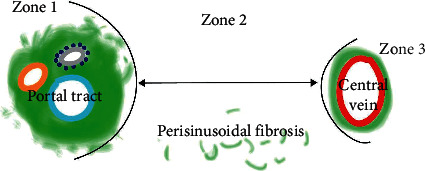
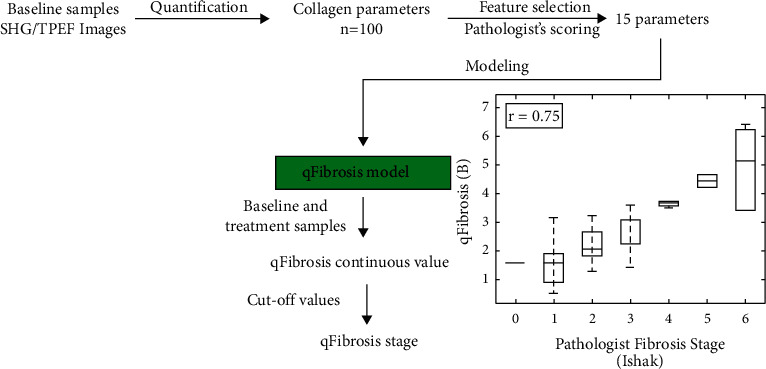
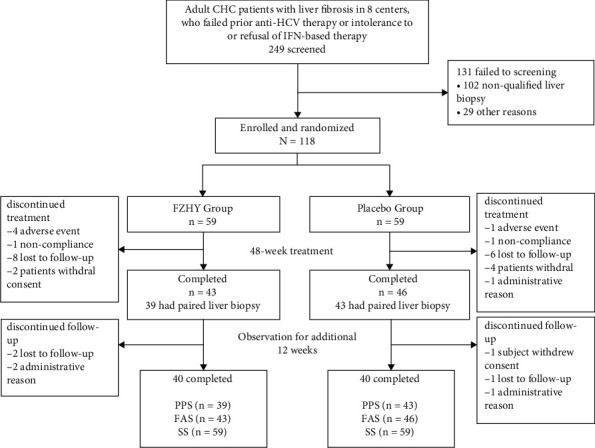
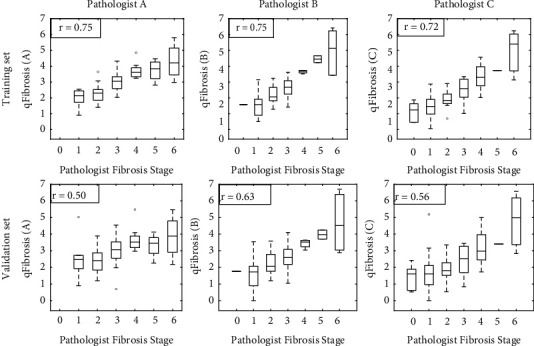
We randomized 118 patients with active viremia from 8 liver centers in the U.S. to receive oral FZHY ( = 59) or placebo ( = 59) for 48 weeks. Efficacy was assessed by histopathologic changes at the end of therapy. A subset of biopsies was further analyzed using qFibrosis to detect subtle changes in fibrosis in different zones of the hepatic lobules.
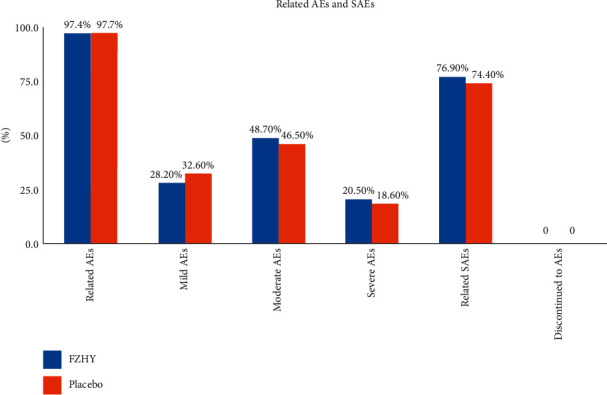
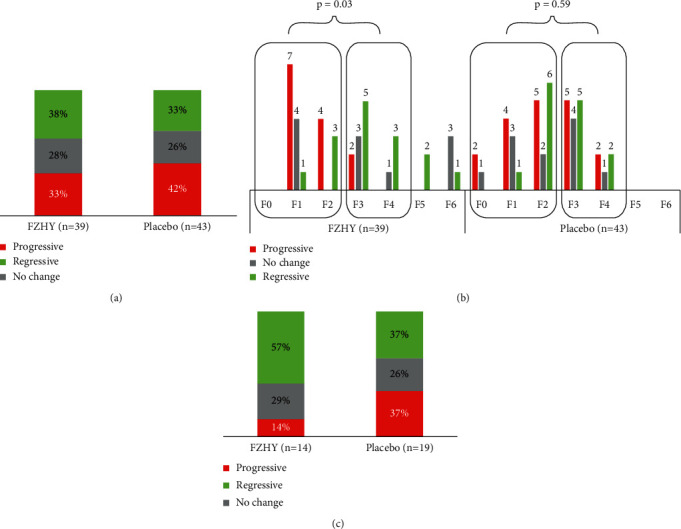
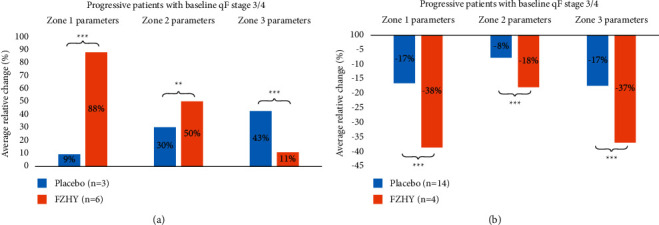
FZHY was well tolerated and safe. Patients with baseline Ishak fibrosis stages F3 and F4 had better response rates to FZHY than patients with baseline F0-F2 (=0.03). qFibrosis zonal analysis showed significant improvement in fibrosis in all zones in patients with regression of the fibrosis stage.
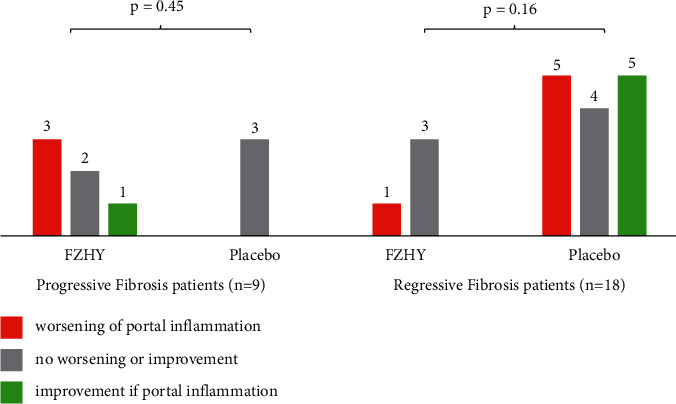
FZHY produced antifibrotic effects in patients with baseline Ishak F3 and F4 fibrosis stages. Reduction in fibrosis severity was zonal and correlated with the severity of inflammation. Based on its tolerability, safety, and efficacy, FZHY should be further investigated as a therapy in chronic liver diseases because of its dual anti-inflammatory and antiibrotic properties. . This is the first US-based, multicenter and placebo-controlled clinical trial that shows statistically significant reduction in fibrosis in patients with active HCV using an antifibrotic botanical formula. This has important implications as there is an immediate need for effective antifibrotic agents in treating many chronic diseases including NASH that lead to scarring of the liver. With artificial intelligence-based methodology, qFibrosis, we may provide a more reliable way to assess the FZHY as a therapy in chronic liver diseases because of its dual anti-inflammatory and antifibrotic properties.
丙型肝炎病毒(HCV)是全球范围内导致进行性肝纤维化、肝硬化和肝细胞癌的常见病因。尽管有有效的直接抗病毒药物,但由于诊断延迟和促进纤维化形成的合并症,患者在诊断时往往已有显著的肝纤维化。因此,抗纤维化药物是一种有吸引力的辅助治疗方法。扶正化瘀(FZHY)是一种中药植物制剂,已被用作慢性HBV感染的抗纤维化药物。我们的目的是评估FZHY对HCV感染且病毒血症活跃的患者的疗效。
我们将来自美国8个肝脏中心的118例病毒血症活跃的患者随机分为两组,分别口服FZHY(n = 59)或安慰剂(n = 59),为期48周。通过治疗结束时的组织病理学变化评估疗效。对一部分活检样本进一步使用qFibrosis分析,以检测肝小叶不同区域纤维化的细微变化。
FZHY耐受性良好且安全。基线Ishak纤维化分期为F3和F4的患者对FZHY的反应率高于基线F0 - F2的患者(P = 0.03)。qFibrosis分区分析显示,纤维化分期逆转的患者所有区域的纤维化均有显著改善。
FZHY对基线Ishak F3和F4纤维化分期的患者产生了抗纤维化作用。纤维化严重程度的降低呈分区性,且与炎症严重程度相关。基于其耐受性、安全性和疗效,由于FZHY具有抗炎和抗纤维化双重特性,应进一步研究其作为慢性肝病治疗药物的可能性。这是美国首个基于多中心、安慰剂对照的临床试验,表明使用抗纤维化植物配方可使活跃HCV患者的纤维化程度在统计学上显著降低。这具有重要意义,因为在治疗包括导致肝瘢痕形成的非酒精性脂肪性肝炎(NASH)在内的许多慢性疾病时,迫切需要有效的抗纤维化药物。通过基于人工智能的方法qFibrosis,由于FZHY具有抗炎和抗纤维化双重特性,我们或许能提供一种更可靠的方法来评估其作为慢性肝病治疗药物的效果。