Moschetto Salvatore, Bolognesi Margherita, Prescimone Federico, Brucale Marco, Mezzi Alessio, Ortolani Luca, Caporali Maria, Pingue Pasqualantonio, Serrano-Ruiz Manuel, Pisignano Dario, Peruzzini Maurizio, Persano Luana, Toffanin Stefano
Istituto per lo Studio dei Materiali Nanostrutturati (ISMN)-Consiglio Nazionale delle Ricerche (CNR), Via P. Gobetti 101, 40129 Bologna, Italy.
Istituto per lo Studio dei Materiali Nanostrutturati (ISMN)-Consiglio Nazionale delle Ricerche (CNR), P.O. Box 10, Monterotondo Scalo, I-00016 Rome, Italy.
ACS Appl Nano Mater. 2021 Apr 23;4(4):3476-3485. doi: 10.1021/acsanm.0c03465. Epub 2021 Mar 29.
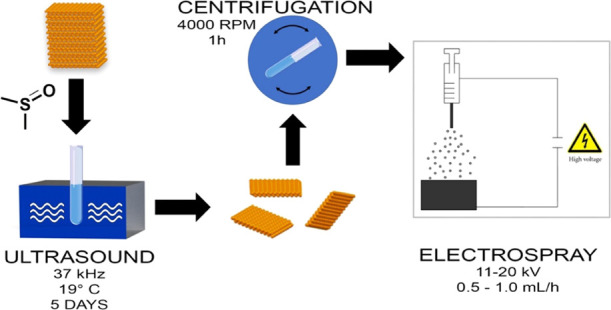
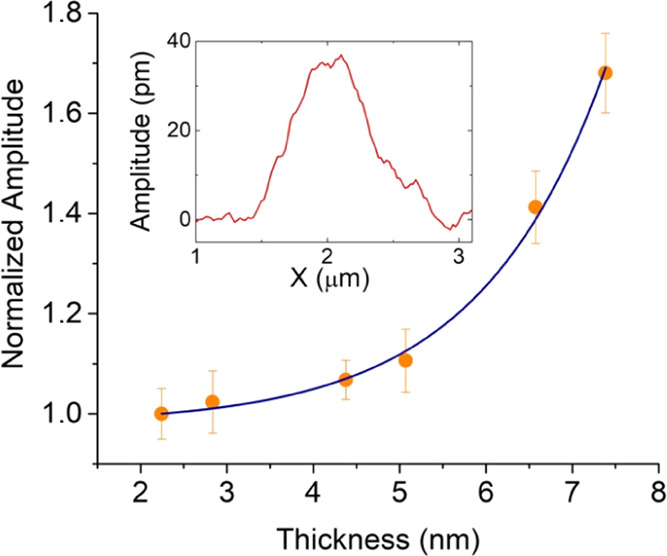
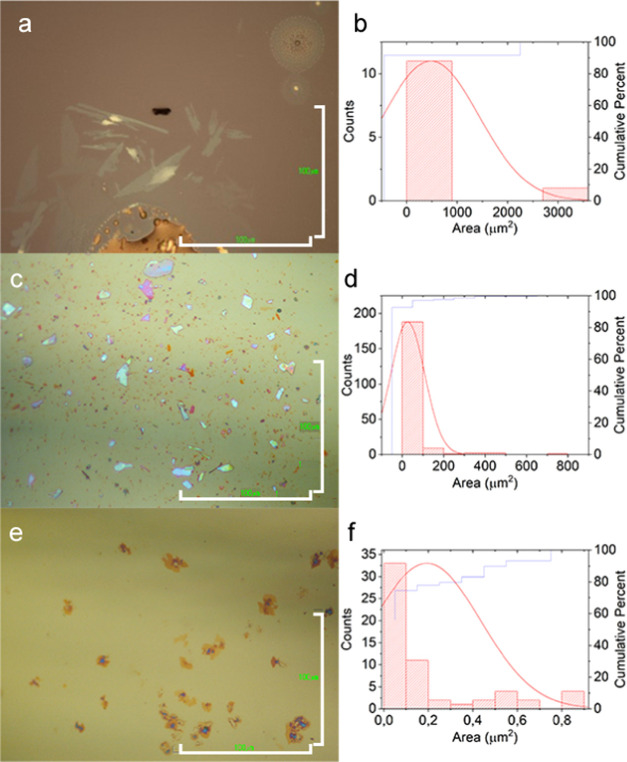
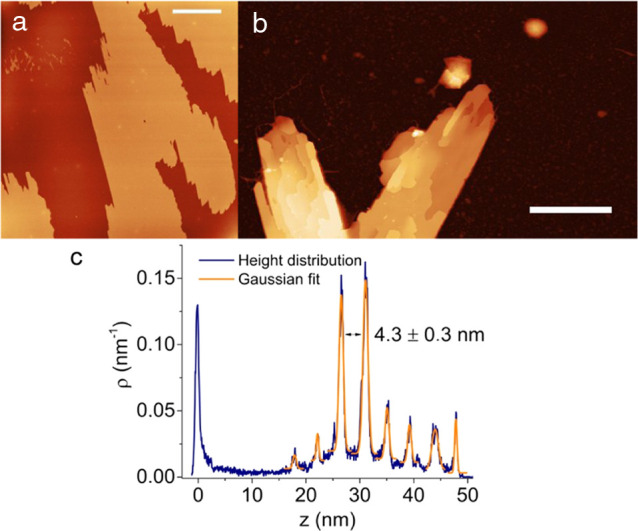
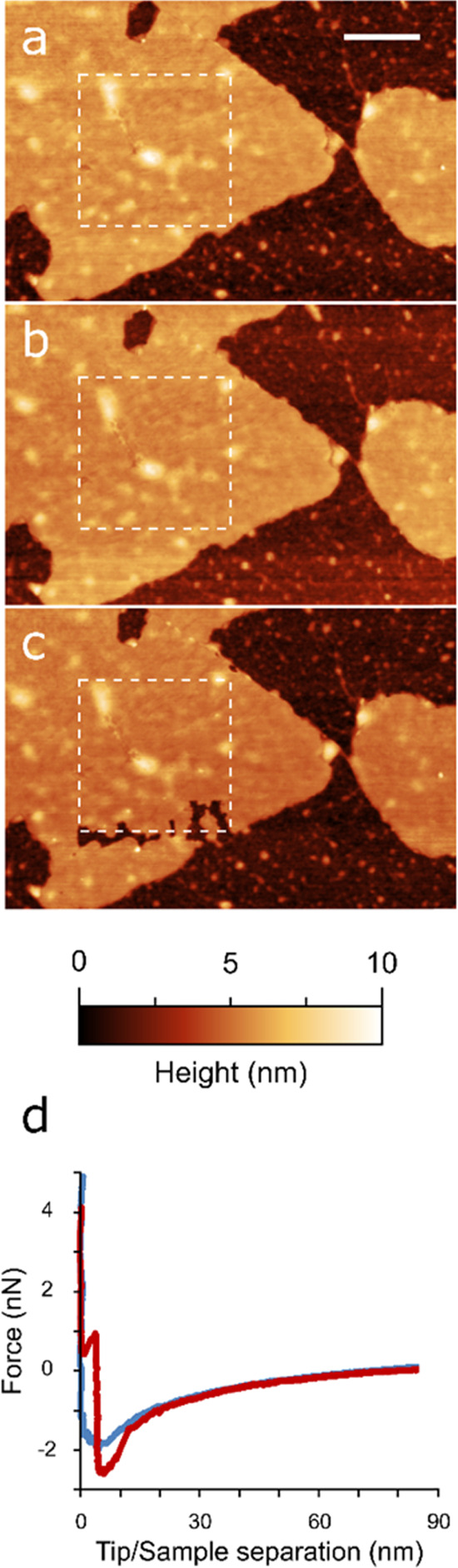
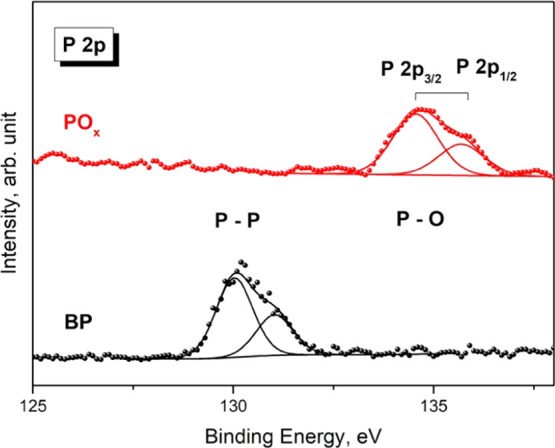
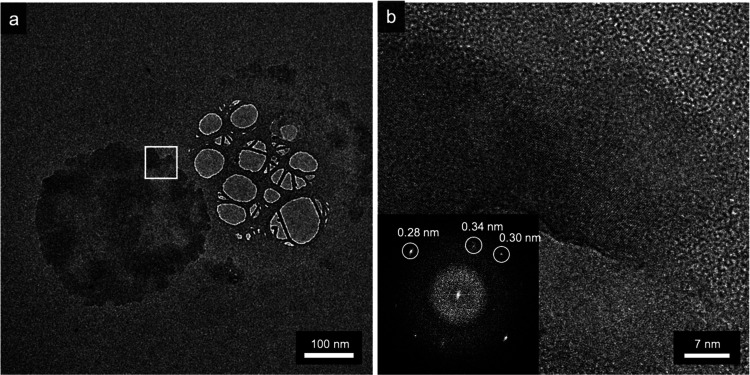
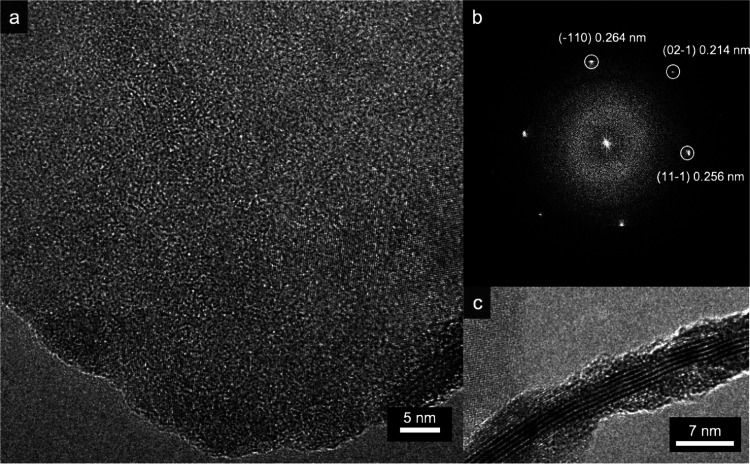
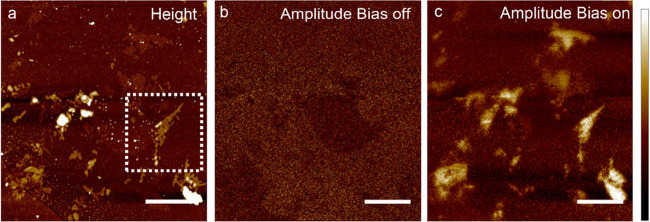
Bidimensional (2D) materials are nowadays being developed as outstanding candidates for electronic and optoelectronic components and devices. Targeted applications include sensing, energy conversion, and storage. Phosphorene is one of the most promising systems in this context, but its high reactivity under atmospheric conditions and its small-area/lab-scale deposition techniques have hampered the introduction of this material in real-world applications so far. However, phosphorene oxides in the form of low-dimensional structures (2D PO ) should behave as an electroresponsive material according to recent theoretical studies. In the present work, we introduce electrospraying for the deposition of stoichiometric and large-area 2D PO nanoflakes starting from a suspension of liquid-phase-exfoliated phosphorene. We obtained 2D PO nanostructures with a mean surface area two orders of magnitude larger than phosphorene structures obtained with standard mechanical and liquid exfoliation techniques. X-ray spectroscopy and high-resolution electron microscopy confirmed the PO-like crystallographic structure of the electrosprayed flakes. Finally, we experimentally demonstrated for the first time the electromechanical responsivity of the 2D PO nanoflakes, through piezoresponse force microscopy (PFM). This work sheds light on the possible implementation of phosphorus oxide-based 2D nanomaterials in the value chain of fabrication and engineering of devices, which might be easily scaled up for energy-harvesting/conversion applications.
如今,二维(2D)材料正被开发成为电子和光电子元件及器件的杰出候选材料。目标应用包括传感、能量转换和存储。在此背景下,磷烯是最有前景的体系之一,但它在大气条件下的高反应活性以及其小面积/实验室规模的沉积技术,迄今为止阻碍了这种材料在实际应用中的引入。然而,根据最近的理论研究,低维结构形式的磷烯氧化物(2D PO)应表现为一种电响应材料。在本工作中,我们引入了电喷雾法,用于从液相剥离磷烯的悬浮液中沉积化学计量比且大面积的2D PO纳米片。我们获得的2D PO纳米结构的平均表面积比用标准机械和液体剥离技术获得的磷烯结构大两个数量级。X射线光谱和高分辨率电子显微镜证实了电喷雾纳米片的类PO晶体结构。最后,我们通过压电力显微镜(PFM)首次通过实验证明了2D PO纳米片的机电响应性。这项工作揭示了基于磷氧化物的二维纳米材料在器件制造和工程价值链中可能的应用,这对于能量收集/转换应用可能很容易扩大规模。