Silvestrini Sara, Romandini Matteo, Marciani Giulia, Arrighi Simona, Carrera Lisa, Fiorini Andrea, López-García Juan Manuel, Lugli Federico, Ranaldo Filomena, Slon Viviane, Tassoni Laura, Higgins Owen Alexander, Bortolini Eugenio, Curci Antonio, Meyer Matthias, Meyer Michael Christian, Oxilia Gregorio, Zerboni Andrea, Benazzi Stefano, Spinapolice Enza Elena
Università di Bologna Dipartimento di Beni Culturali di Ravenna Italy.
U.R. Università di Siena Dipartimento di Scienze Fisiche, della Terra e dell'Ambiente Siena Italy.
J Quat Sci. 2022 Feb;37(2):235-256. doi: 10.1002/jqs.3341. Epub 2021 Jul 13.
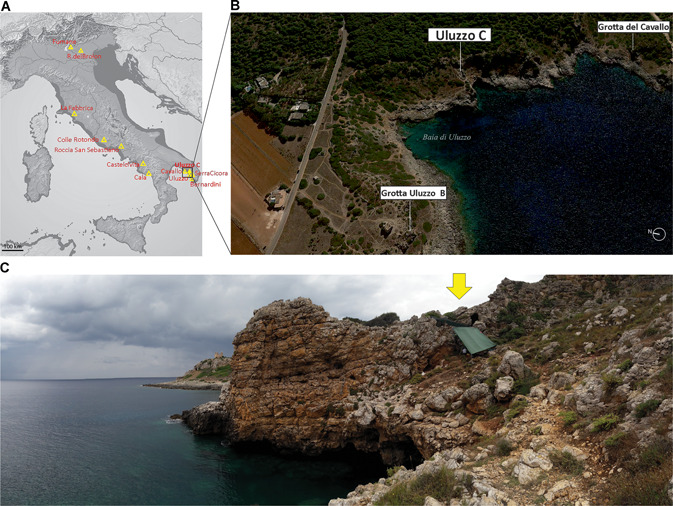
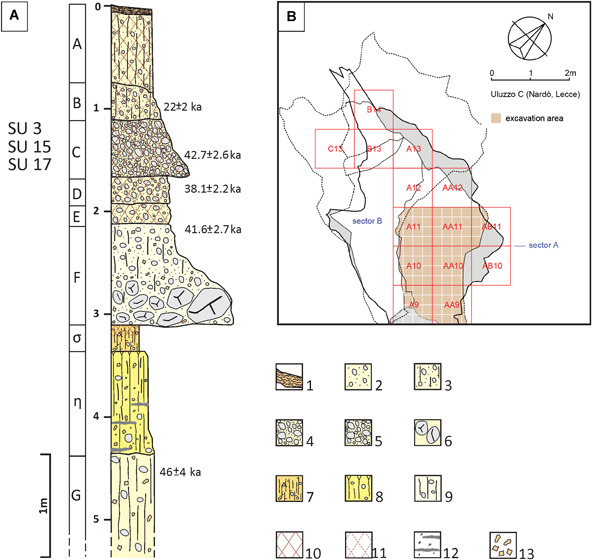
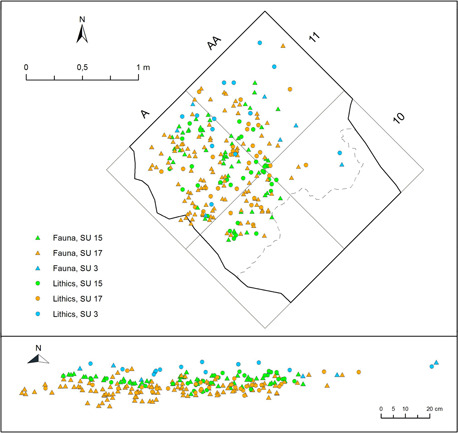
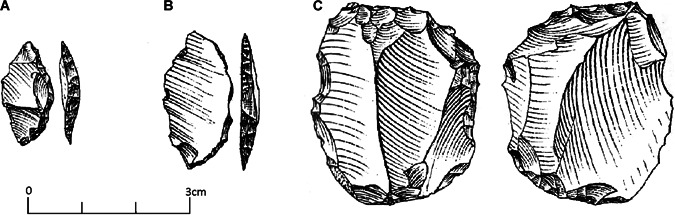
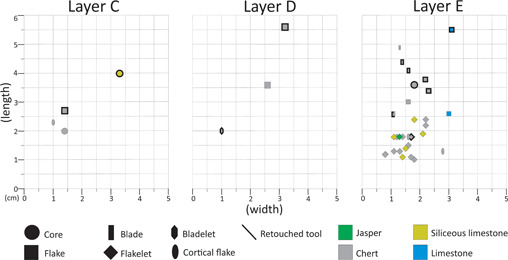
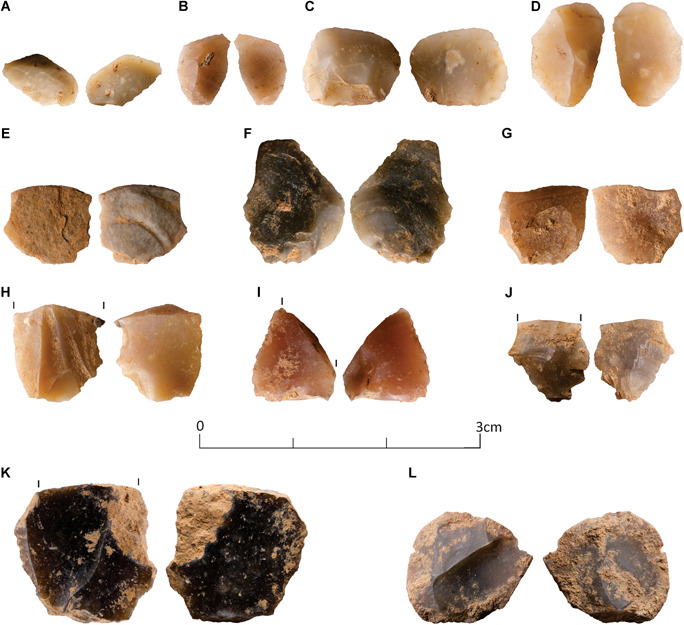
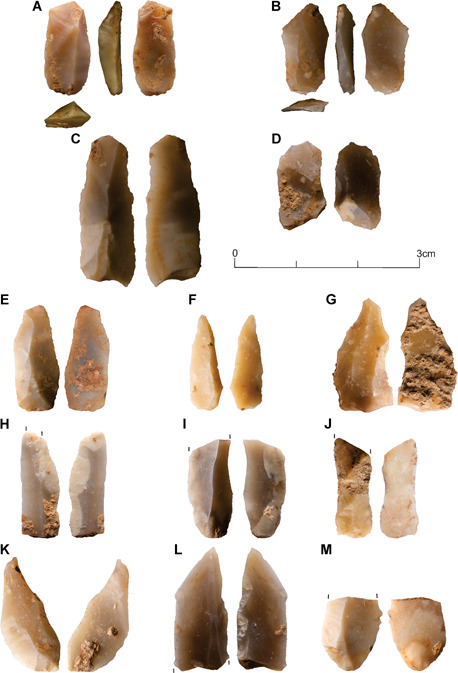
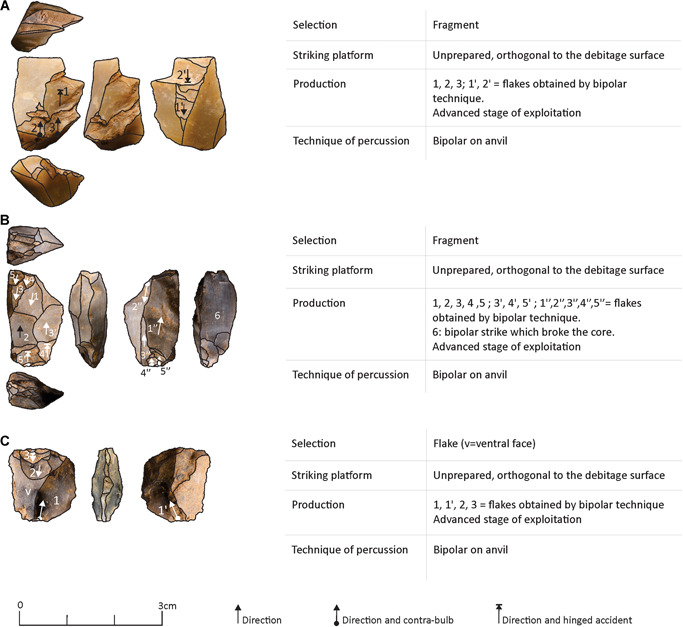
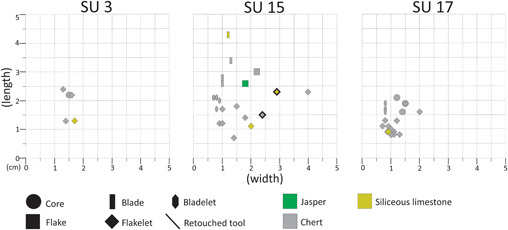
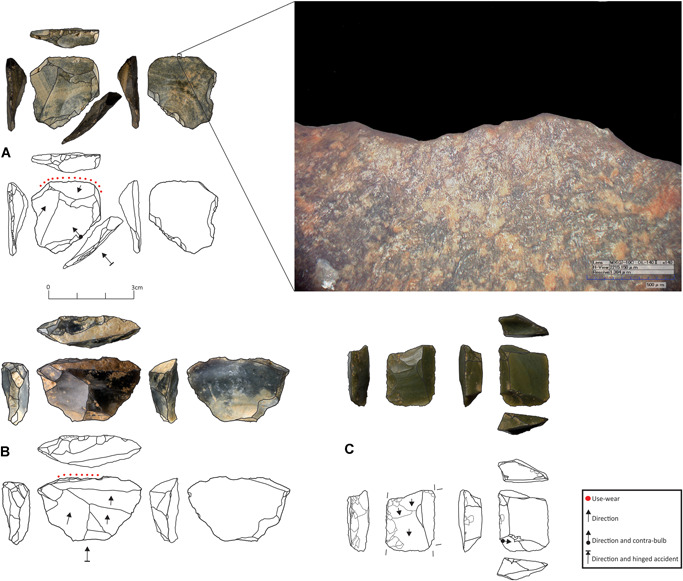
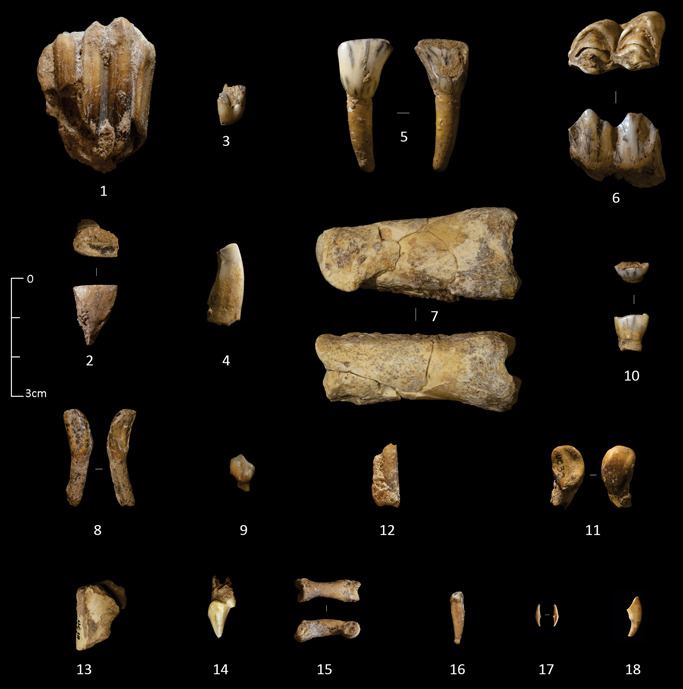
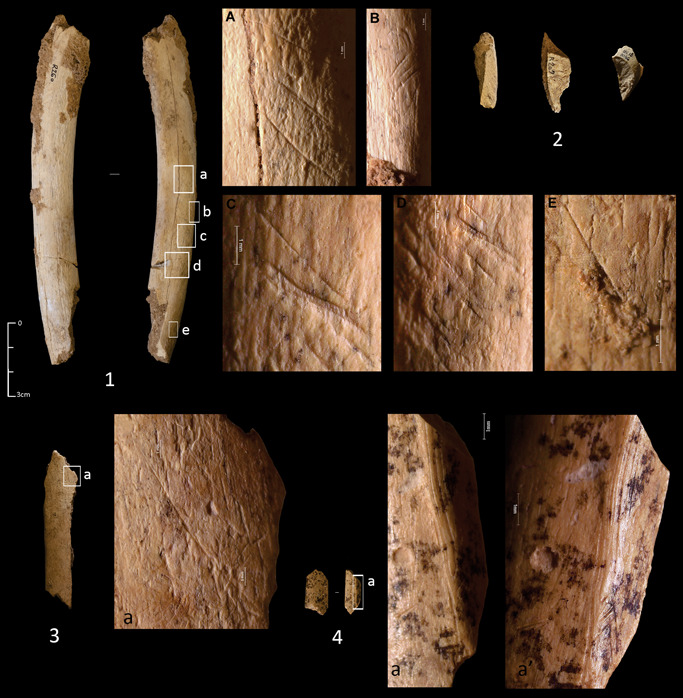
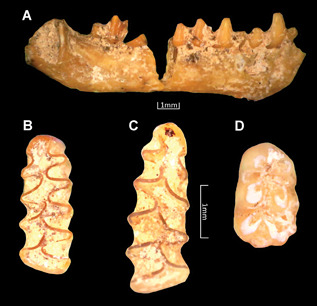
The Middle to Upper Palaeolithic transition, between 50 000 and 40 000 years ago, is a period of important ecological and cultural changes. In this framework, the Rock Shelter of Uluzzo C (Apulia, southern Italy) represents an important site due to Late Mousterian and Uluzzian evidence preserved in its stratigraphic sequence. Here, we present the results of a multidisciplinary analysis performed on the materials collected between 2016 and 2018 from the Uluzzian stratigraphic units (SUs) 3, 15 and 17. The analysis involved lithic technology, use-wear, zooarchaeology, ancient DNA of sediments and palaeoproteomics, completed by quartz single-grain optically stimulated luminescence dating of the cave sediments. The lithic assemblage is characterized by a volumetric production and a debitage with no or little management of the convexities (by using the bipolar technique), with the objective to produce bladelets and flakelets. The zooarchaeological study found evidence of butchery activity and of the possible exploitation of marine resources, while drawing a picture of a patchy landscape, composed of open forests and dry open environments surrounding the shelter. Ancient mitochondrial DNA from two mammalian taxa were recovered from the sediments. Preliminary zooarchaeology by mass spectrometry results are consistent with ancient DNA and zooarchaeological taxonomic information, while further palaeoproteomics investigations are ongoing. Our new data from the re-discovery of the Uluzzo C Rock Shelter represent an important contribution to better understand the meaning of the Uluzzian in the context of the Middle/Upper Palaeolithic transition in south-eastern Italy.
旧石器时代中期向晚期的过渡发生在距今5万至4万年前,这是一个生态和文化发生重要变化的时期。在此背景下,乌卢佐C岩棚(意大利南部普利亚大区)因其地层序列中保存的莫斯特晚期和乌卢兹期证据而成为一个重要遗址。在这里,我们展示了对2016年至2018年间从乌卢兹期地层单元3、15和17收集的材料进行多学科分析的结果。分析包括石器技术、使用磨损分析、动物考古学、沉积物古DNA和古蛋白质组学,并通过对洞穴沉积物进行石英单颗粒光释光测年加以完善。石器组合的特点是批量生产以及采用双极技术对石核凸面进行零加工或少量加工,目的是生产细石叶和小石片。动物考古学研究发现了屠宰活动的证据以及可能对海洋资源的开发利用,同时描绘出一幅斑驳的地貌图景,包括庇护所周围的开阔森林和干旱开阔环境。从沉积物中提取了两个哺乳动物类群的古代线粒体DNA。通过质谱分析进行的初步动物考古学结果与古代DNA和动物考古学分类信息一致,而进一步的古蛋白质组学研究仍在进行中。我们对乌卢佐C岩棚重新发现所获得的新数据,对于更好地理解乌卢兹期在意大利东南部旧石器时代中期/晚期过渡背景下的意义做出了重要贡献。