Center for Biostatistics, Bioinformatics and Big Data, The Second Affiliated Hospital and School of Public Health, Zhejiang University School of Medicine, Hangzhou, China.
Department of Surgical Oncology, Affiliated Sir Run Run Shaw Hospital, Zhejiang University School of Medicine, Hangzhou, China.
Front Immunol. 2022 Jul 6;13:887916. doi: 10.3389/fimmu.2022.887916. eCollection 2022.
Immune checkpoint inhibition therapy has been achieved significant success in the treatment of non-small cell lung cancer (NSCLC). However, the role of soluble immune checkpoint- related proteins in NSCLC remains obscure.
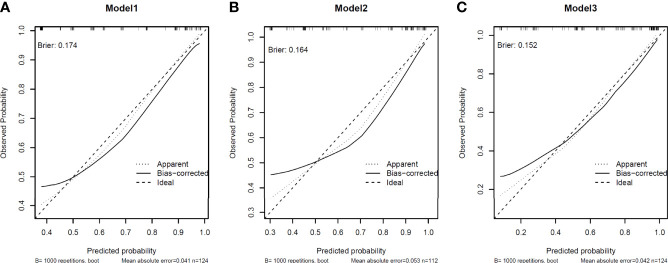
We evaluated the circulating levels of 14 immune checkpoint-related proteins panel (BTLA, LAG-3, GITR, IDO, PD-L2, PD-L1, PD-1, HVEM, Tim-3, CD28, CD27, CD80, CD137 and CTLA-4) and their associations with the risk of invasive disease and the risk of NSCLC in 43 pre-invasive (AIS), 81 invasive NSCLC (IAC) patients and matched 35 healthy donors using a multiplex Luminex assay. Gene expression in tumors from TCGA were analyzed to elucidate potential mechanisms. The multivariate logistic regression model was applied in the study. ROC(receiver operator characteristic) curve and calibration curve were used in the performance evaluation.
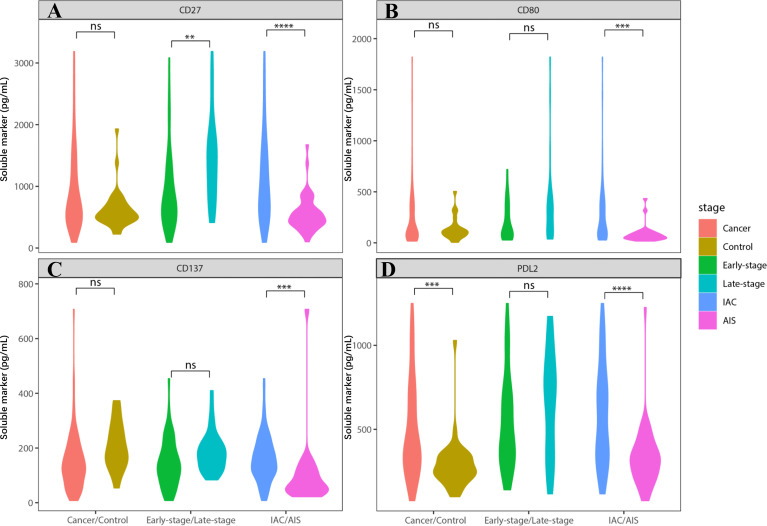
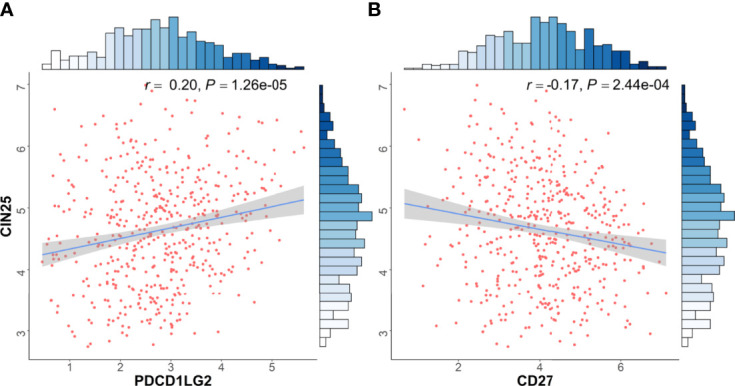
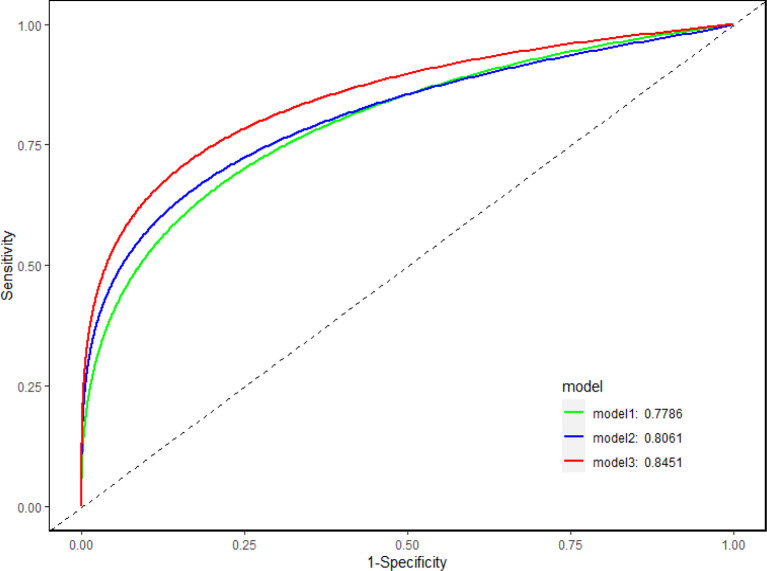
We found that sCD27, sCD80, CD137 and sPDL2 levels were significantly increased in IAC cases compared to AIS cases (= 1.05E-06, 4.44E-05, 2.30E-05 and 1.16E-06, respectively), whereas sPDL1 and sPDL2 levels were significantly increased in NSCLC cases compared to healthy controls (=3.25E-05 and 1.49E-05, respectively). Unconditional univariate logistic regression analysis indicated that increased sCD27, sCD80, sCD137, and sPDL2 were significantly correlated with the risk of invasive diseases. The model with clinical variables, sCD27 and sPDL2 demonstrated the best performance (AUC=0.845) in predicting the risk of IAC. CD27 and PDCD1LG2 (PDL2) showed significant association with cancer invasion signature in TCGA dataset.
Our study provides evidence that soluble immune checkpoint-related proteins may associate with the risk of IAC, and we further established an optimized multivariate predictive model, which highlights their potential application in the treatment of NSCLC patients. Future studies may apply these biomarkers to test their predictive value of survival and treatment outcome during immunotherapy in NSCLC patients.
免疫检查点抑制疗法在非小细胞肺癌(NSCLC)的治疗中取得了显著的成功。然而,可溶性免疫检查点相关蛋白在 NSCLC 中的作用仍不清楚。
我们使用多重 Luminex 分析评估了 43 例前侵袭性(AIS)、81 例侵袭性 NSCLC(IAC)患者和匹配的 35 名健康供体中 14 种免疫检查点相关蛋白(BTLA、LAG-3、GITR、IDO、PD-L2、PD-L1、PD-1、HVEM、Tim-3、CD28、CD27、CD80、CD137 和 CTLA-4)的循环水平,并探讨了它们与侵袭性疾病风险和 NSCLC 风险的关系。利用 TCGA 中的基因表达数据来阐明潜在的机制。研究中应用了多变量逻辑回归模型。ROC(receiver operator characteristic)曲线和校准曲线用于性能评估。
我们发现,与 AIS 病例相比,IAC 病例中 sCD27、sCD80、CD137 和 sPDL2 水平显著升高(=1.05E-06、4.44E-05、2.30E-05 和 1.16E-06),而 NSCLC 病例中 sPDL1 和 sPDL2 水平与健康对照相比显著升高(=3.25E-05 和 1.49E-05)。无条件单因素逻辑回归分析表明,sCD27、sCD80、sCD137 和 sPDL2 的升高与侵袭性疾病的风险显著相关。包含临床变量、sCD27 和 sPDL2 的模型在预测 IAC 风险方面表现最佳(AUC=0.845)。在 TCGA 数据集,CD27 和 PDCD1LG2(PDL2)与癌症侵袭特征显著相关。
我们的研究提供了证据表明,可溶性免疫检查点相关蛋白可能与 IAC 的风险相关,我们进一步建立了一个优化的多变量预测模型,突出了它们在 NSCLC 患者治疗中的潜在应用。未来的研究可能会应用这些生物标志物来检验它们在 NSCLC 患者免疫治疗中的生存和治疗结果的预测价值。