Rossignol Julien, Belaid Zakia, Fouquet Guillemette, Guillem Flavia, Rignault Rachel, Milpied Pierre, Renand Amédée, Coman Tereza, D'Aveni Maud, Dussiot Michael, Colin Elia, Levy Jonathan, Carvalho Caroline, Goudin Nicolas, Cagnard Nicolas, Côté Francine, Babdor Joel, Bhukhai Kanit, Polivka Laura, Bigorgne Amélie E, Halse Héloise, Marabelle Aurélien, Mouraud Séverine, Lepelletier Yves, Maciel Thiago T, Rubio Marie-Thérèse, Heron Delphine, Robert Caroline, Girault Isabelle, Lebeherec Doris, Scoazec Jean-Yves, Moura Ivan, Condon Louise, Weimershaus Mirjana, Pages Franck, Davoust Jean, Gross David, Hermine Olivier
Institut National de la Santé et de la Recherche Médicale, Unité Mixte de Recherche (UMR) 1163, 75015 Paris, France.
Sorbonne Paris Cité, Université René Descartes, Imagine Institute, 75015 Paris, France.
iScience. 2022 May 5;25(6):104353. doi: 10.1016/j.isci.2022.104353. eCollection 2022 Jun 17.
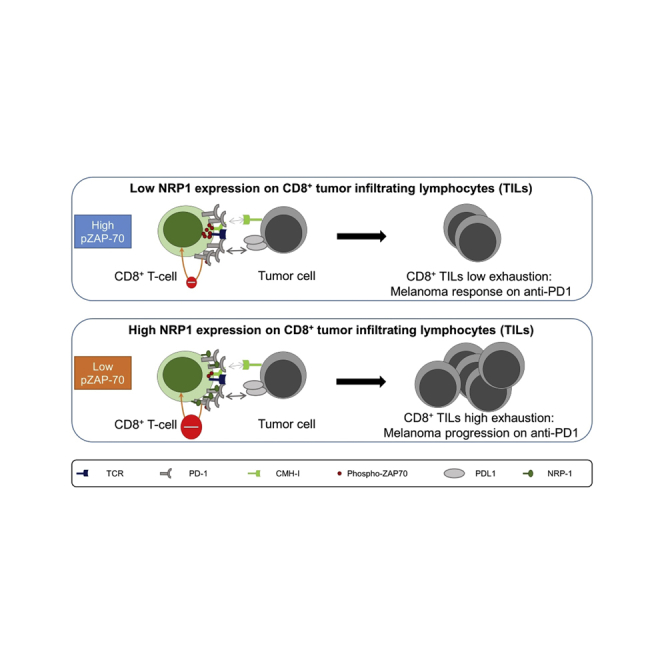
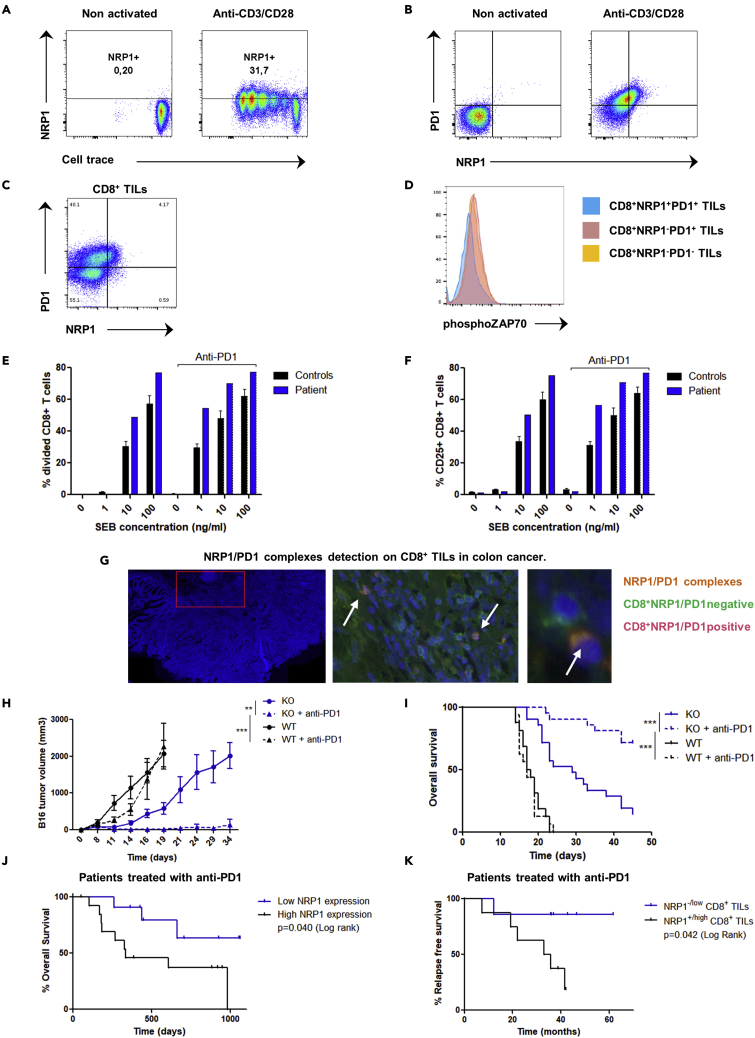
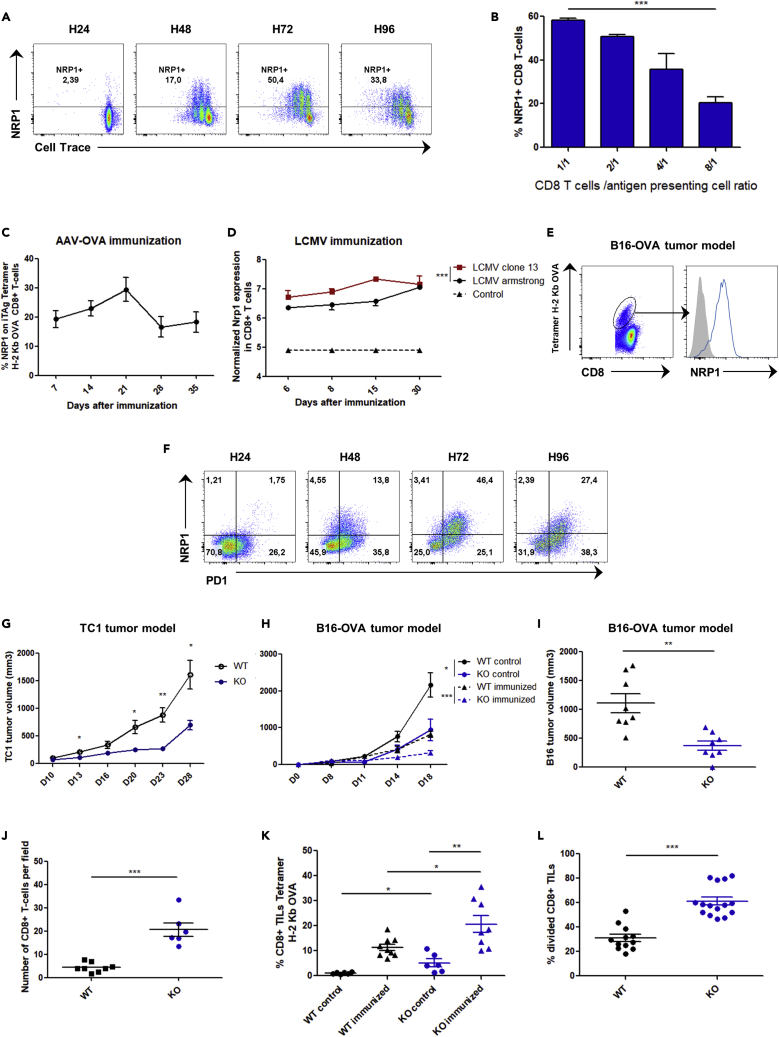
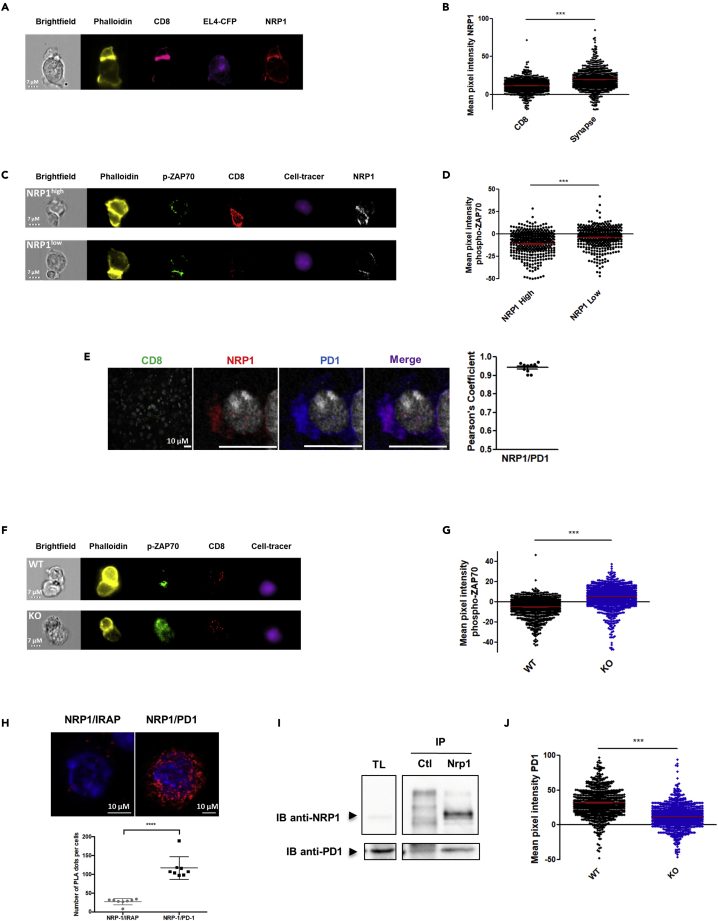
Targeting immune checkpoints, such as Programmed cell Death 1 (PD1), has improved survival in cancer patients by restoring antitumor immune responses. Most patients, however, relapse or are refractory to immune checkpoint blocking therapies. Neuropilin-1 (NRP1) is a transmembrane glycoprotein required for nervous system and angiogenesis embryonic development, also expressed in immune cells. We hypothesized that NRP1 could be an immune checkpoint co-receptor modulating CD8 T cells activity in the context of the antitumor immune response. Here, we show that NRP1 is recruited in the cytolytic synapse of PD1CD8 T cells, cooperates and enhances PD-1 activity. In mice, CD8 T cells specific deletion of improves anti-PD1 antibody antitumor immune responses. Likewise, in human metastatic melanoma, the expression of NRP1 in tumor infiltrating CD8 T cells predicts poor outcome of patients treated with anti-PD1. NRP1 is a promising target to overcome resistance to anti-PD1 therapies.
靶向免疫检查点,如程序性细胞死亡蛋白1(PD1),通过恢复抗肿瘤免疫反应提高了癌症患者的生存率。然而,大多数患者会复发或对免疫检查点阻断疗法耐药。神经纤毛蛋白-1(NRP1)是神经系统和血管生成胚胎发育所需的跨膜糖蛋白,也在免疫细胞中表达。我们假设NRP1可能是一种免疫检查点共受体,在抗肿瘤免疫反应中调节CD8 T细胞活性。在这里,我们表明NRP1被招募到PD1 CD8 T细胞的溶细胞突触中,协同并增强PD-1活性。在小鼠中,CD8 T细胞特异性缺失NRP1可改善抗PD1抗体的抗肿瘤免疫反应。同样,在人类转移性黑色素瘤中,肿瘤浸润CD8 T细胞中NRP1的表达预示着接受抗PD1治疗的患者预后不良。NRP1是克服抗PD1治疗耐药性的一个有前景的靶点。