Quino Juanita Elizabeth, Perez Fabian, Perez Angelica, Vang April Pangia, Avendano Leonie, Dang Julie, Chen Moon S, Arana Alexa Morales, Rocha Sienna, Nuno Miriam, Lara Primo N, Fejerman Laura, Carvajal-Carmona Luis G
Comprehensive Cancer Center, University of California Davis, Sacramento, CA, United States.
Genome Center, University of California Davis, Davis, CA, United States.
Front Oncol. 2022 Jul 7;12:883200. doi: 10.3389/fonc.2022.883200. eCollection 2022.
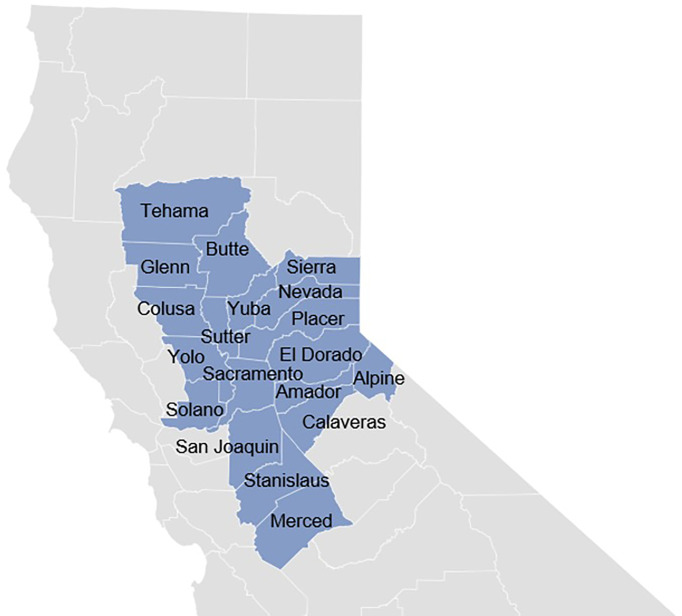
Cancer is the leading cause of death among Latinos, the largest minority population in the United States (US). To address cancer challenges experienced by Latinos, we conducted a catchment area population assessment (CAPA) using validated questions from the National Cancer Institute (NCI) population health assessment supplement at our NCI-designated cancer center in California.
A mixed-methods CAPA was administered by bilingual-bicultural staff, with a focus on understanding the differences between foreign-born and US-born Latinos.
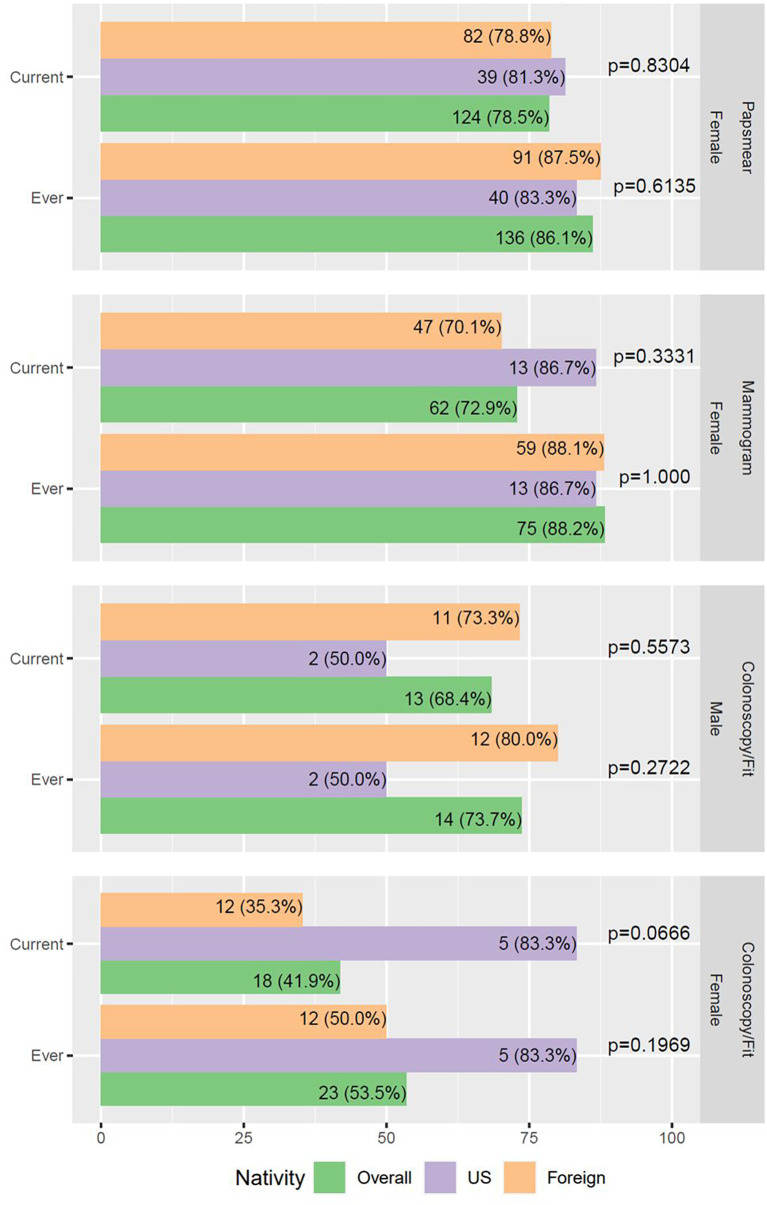
255 Latinos responded to the survey conducted between August 2019 and May 2020. Most respondents were foreign-born (63.9%), female (78.2%), and monolingual Spanish speakers (63.2%). Results showed that compared to US-born Latinos, foreign-born individuals were older, had lower educational attainment, were most likely to be monolingual Spanish speakers, were low-income, and were more likely to be uninsured. Foreign-born Latinos had lower levels of alcohol consumption and higher consumption of fruits and vegetables. The rate of preventive cancer screenings for breast, cervical and colorectal cancer did not differ by birthplace, although a low fraction (35.3%) of foreign-born Latinas who were up-to-date compared to US-born Latinas (83.3%) with colorectal cancer screening was observed. Time since the last routine check-up for all preventable cancers (cervical p=0.0002, breast p=0.0039, and colorectal p=0.0196) is significantly associated with being up to date with cancer screening. Individuals who had a check-up of two or more years ago are 84% less likely to be up to date with pap smears than those who had a check-up within the year (p=0.0060). Individuals without health insurance are 94% less likely to be up to date with mammograms and colonoscopy/FIT tests (p=0.0016 and p=0.0133, respectively) than those who are insured. There is no significant association between screening and nativity.
Considerable differences in socio-economic and environmental determinants of health and colorectal cancer screening rates were observed between US-born and foreign-born Latinos. The present study represents the foundation for future targeted intervention among immigrant populations at our cancer center's catchment area.
癌症是美国最大的少数族裔拉丁裔人群的主要死因。为应对拉丁裔面临的癌症挑战,我们在加利福尼亚州的美国国立癌症研究所(NCI)指定癌症中心,使用NCI人群健康评估补充问卷中的经过验证的问题,进行了一次集水区人口评估(CAPA)。
由具备双语和双文化背景的工作人员开展了一项混合方法的CAPA,重点是了解外国出生和美国出生的拉丁裔之间的差异。
255名拉丁裔对2019年8月至2020年5月期间进行的调查做出了回应。大多数受访者是外国出生(63.9%)、女性(78.2%)且只会说西班牙语(63.2%)。结果显示,与美国出生的拉丁裔相比,外国出生的个体年龄更大、受教育程度更低、最有可能只会说西班牙语、收入低且更有可能未参保。外国出生的拉丁裔酒精消费量较低,水果和蔬菜消费量较高。乳腺癌、宫颈癌和结直肠癌的预防性癌症筛查率在出生地方面没有差异,不过与美国出生的拉丁裔(83.3%)相比,外国出生的拉丁裔女性中进行结直肠癌筛查且筛查及时的比例较低(35.3%)。所有可预防癌症(宫颈癌p=0.0002,乳腺癌p=0.0039,结直肠癌p=0.0196)自上次常规检查以来的时间与癌症筛查是否及时显著相关。两年或更久以前进行过检查的个体进行巴氏涂片检查及时的可能性比当年进行过检查的个体低84%(p=0.0060)。未参保的个体进行乳房X光检查以及结肠镜检查/粪便免疫化学检验(FIT)及时的可能性分别比参保个体低94%(分别为p=0.0016和p=0.0133)。筛查与出生地之间没有显著关联。
在美国出生和外国出生的拉丁裔之间,观察到了健康和结直肠癌筛查率的社会经济及环境决定因素方面的显著差异。本研究为我们癌症中心集水区内移民人群未来的针对性干预奠定了基础。