Meyer Alex M, Hart Alexander A, Keith Jerrod N
Carver College of Medicine, University of Iowa, Iowa City, USA.
Plastic and Reconstructive Surgery, University of Iowa Hospitals and Clinics, Iowa City, USA.
Cureus. 2022 Jun 19;14(6):e26096. doi: 10.7759/cureus.26096. eCollection 2022 Jun.
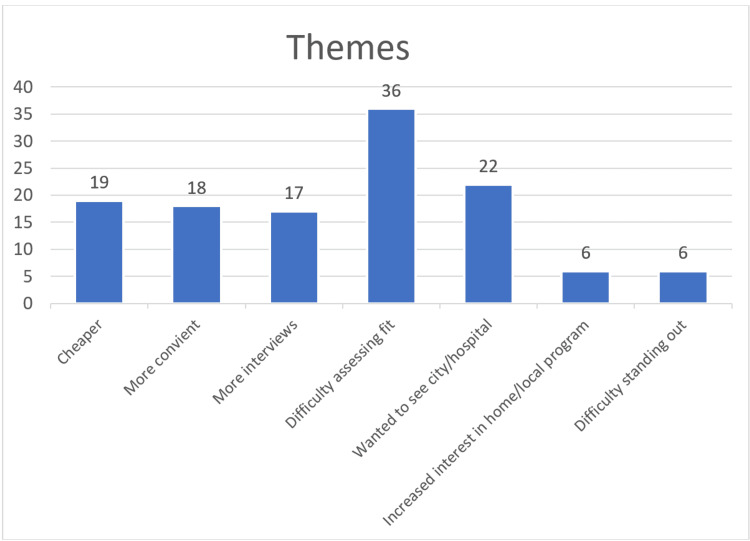
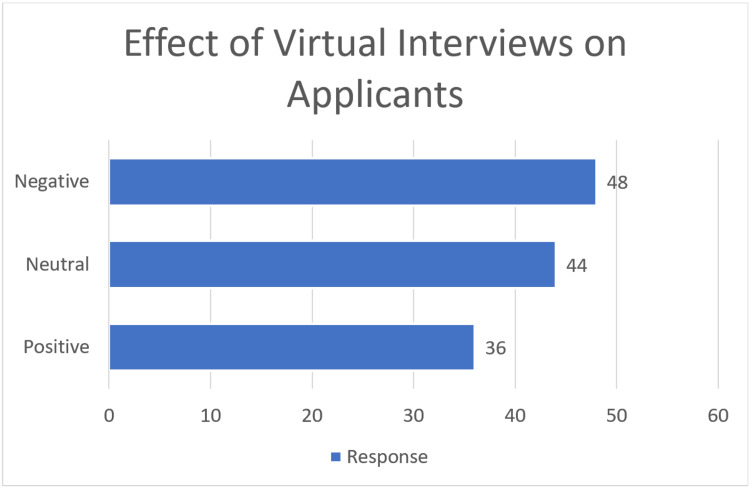
Background The number of residency applications submitted by medical students has risen at an alarming rate, causing increased cost of applications and subsequent interview travel. These both contribute to increased cost for medical students. In light of these concerns, specialty governing bodies have proposed ideas to fight these trends including, application limits, interview limits, using a preference signaling system, and continuing virtual interviews. During the Covid-19 pandemic, all residency interviews were performed virtually, essentially making travel expenses negligible. However, this created a new concern with regards to assessing program and applicant compatibility, as compared to in-person interactions and did nothing to combat the increases in application numbers. Therefore, we want to critically assess the effects of virtual interviews on number of applications submitted, number of interview invites received, and number of interviews attended. We also aim to analyze how applicants viewed the virtual process. Methods 600 medical students were eligible to participate. 456 students from years 2018-2020 were eligible to be surveyed following the NRMP match. 144 students were eligible to be surveyed following 2021 NRMP match. The survey was distributed to medical school graduates just prior to graduation and asked how many programs each student applied to, how many interview invites they received, and how many interviews they attended. The 2021 survey also asked, "How did virtual interviews affect your interview experience?" The quantitative results were compared with student's t-test and qualitative results are presented below. Results The average number of programs each applicant applied to increased from 35.4 to 47.7 (p-value=0.002) when residency interviews switched from in-person to virtual. However, interview invites received and interviews attended did not change (16.8 vs 16.3, p-value=0.91, 11.8 vs 12.7, p-value=0.18). There were 188 participants in the in-person interview group (response rate=41.2%) and 128 participants in the virtual interview group (response rate=83.3%). The standard deviation and range also increased for number of applications, number of interview invites received, and number of interviews attended. There were 123 responses to the free response question. 36 had a positive experience, 44 were neutral, 47 were negative. The positive themes included 15 noted less expenses, 18 noted more convenient/less time, and 18 were able to attend more interviews. Negative themes included, 38 noted difficulty assessing program fit, 19 wanted to see the program or city in person, eight had increased interest in home/local programs, six found it difficult to make connections or stand out. Conclusion Sixty-three percent of students reported a positive or neutral experience with virtual interviews. Students applied to more programs when interviews were virtual, but did not receive more interview invites or attend more interviews. These results suggest that virtual interviews are sufficient to conduct residency interviews, however the number of applications continues to rise with no increase in the number interview invites received or number of interviews attended. The increase in the standard deviation and range for all three variables may point to some applicants being able to get more invites and attend more interviews leaving less available spots for other applicants.
背景 医学生提交的住院医师申请数量以惊人的速度增长,导致申请成本和后续面试差旅费增加。这些都增加了医学生的费用。鉴于这些担忧,专业管理机构提出了应对这些趋势的想法,包括申请限制、面试限制、使用偏好信号系统以及继续采用虚拟面试。在新冠疫情期间,所有住院医师面试均以虚拟方式进行,基本上使差旅费可以忽略不计。然而,与面对面交流相比,这在评估项目与申请人的匹配度方面引发了新的担忧,而且对申请数量的增加毫无作用。因此,我们希望严格评估虚拟面试对提交的申请数量、收到的面试邀请数量以及参加的面试数量的影响。我们还旨在分析申请人对虚拟面试过程的看法。
方法 600名医学生有资格参与。2018年至2020年的456名学生在参加美国国家住院医师匹配项目(NRMP)匹配后有资格接受调查。144名学生在2021年NRMP匹配后有资格接受调查。该调查在医学院毕业生毕业前发放,询问每名学生申请了多少个项目、收到了多少面试邀请以及参加了多少次面试。2021年的调查还询问了“虚拟面试如何影响你的面试体验?”定量结果通过学生t检验进行比较,定性结果如下所示。
结果 当住院医师面试从面对面改为虚拟面试时,每名申请人申请的项目平均数量从35.4个增加到47.7个(p值=0.002)。然而,收到的面试邀请数量和参加的面试数量没有变化(16.8对16.3,p值=0.91;11.8对12.7,p值=0.18)。面对面面试组有188名参与者(回复率=41.2%),虚拟面试组有128名参与者(回复率=83.3%)。申请数量、收到的面试邀请数量和参加的面试数量的标准差和范围也有所增加。
对自由回答问题有123条回复。36人有积极体验,44人持中立态度,47人有消极体验。积极主题包括15人指出费用更低,18人指出更方便/时间更少,18人能够参加更多面试。消极主题包括,38人指出难以评估项目匹配度,19人希望亲自参观项目或城市,8人对家乡/当地项目的兴趣增加,6人发现难以建立联系或脱颖而出。
结论 63%的学生报告对虚拟面试有积极或中立的体验。面试为虚拟形式时,学生申请了更多项目,但收到的面试邀请或参加的面试并未增多。这些结果表明,虚拟面试足以进行住院医师面试,然而申请数量持续上升,而收到的面试邀请数量或参加的面试数量并未增加。所有三个变量的标准差和范围增加可能表明一些申请人能够获得更多邀请并参加更多面试,从而使其他申请人可获得的名额减少。