Ma Wenting, Sapio Matthew R, Manalo Allison P, Maric Dragan, Dougherty Mary Kate, Goto Taichi, Mannes Andrew J, Iadarola Michael J
Department of Perioperative Medicine, Clinical Center, National Institutes of Health, Bethesda, MD, United States.
National Institute of Neurological Disorders and Stroke, Flow and Imaging Cytometry Core Facility, Bethesda, MD, United States.
Front Mol Neurosci. 2022 Jul 7;15:926596. doi: 10.3389/fnmol.2022.926596. eCollection 2022.
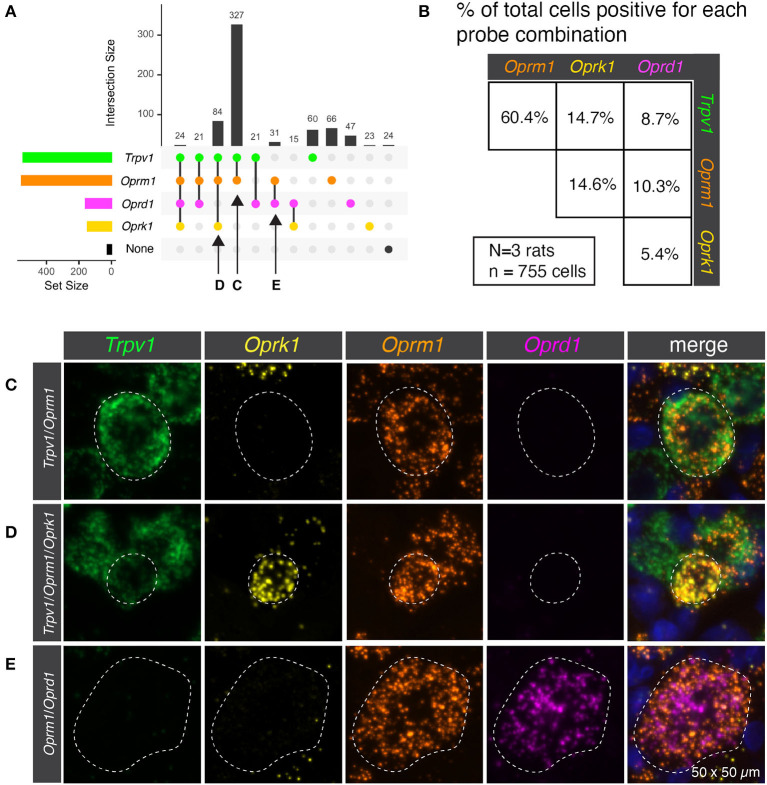
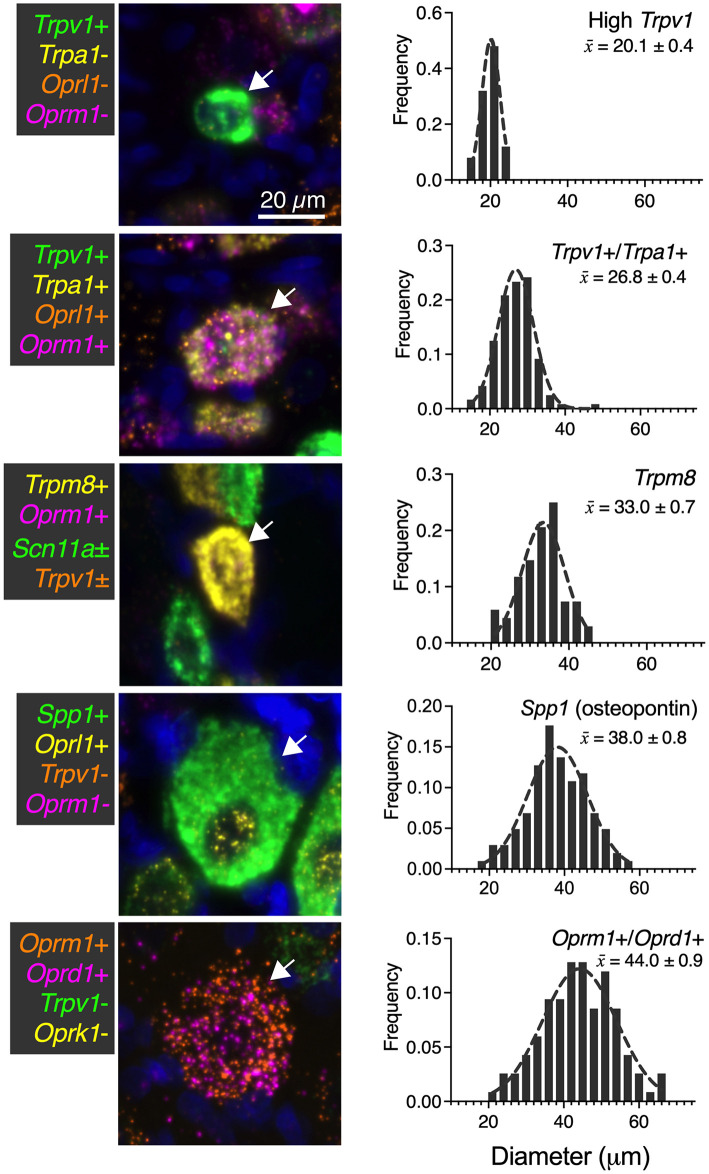
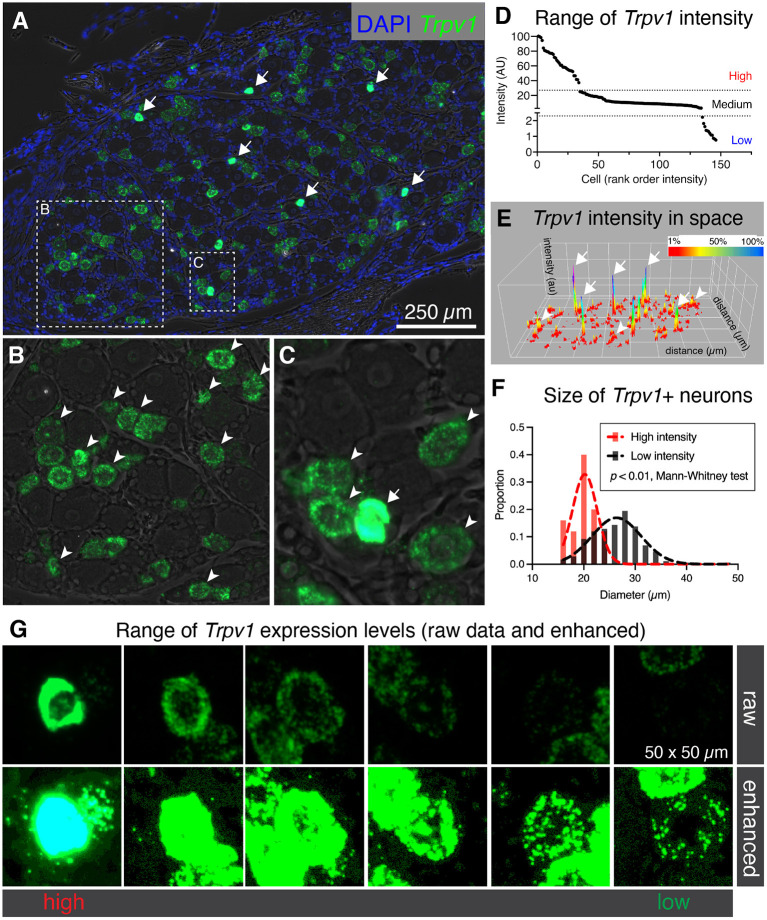
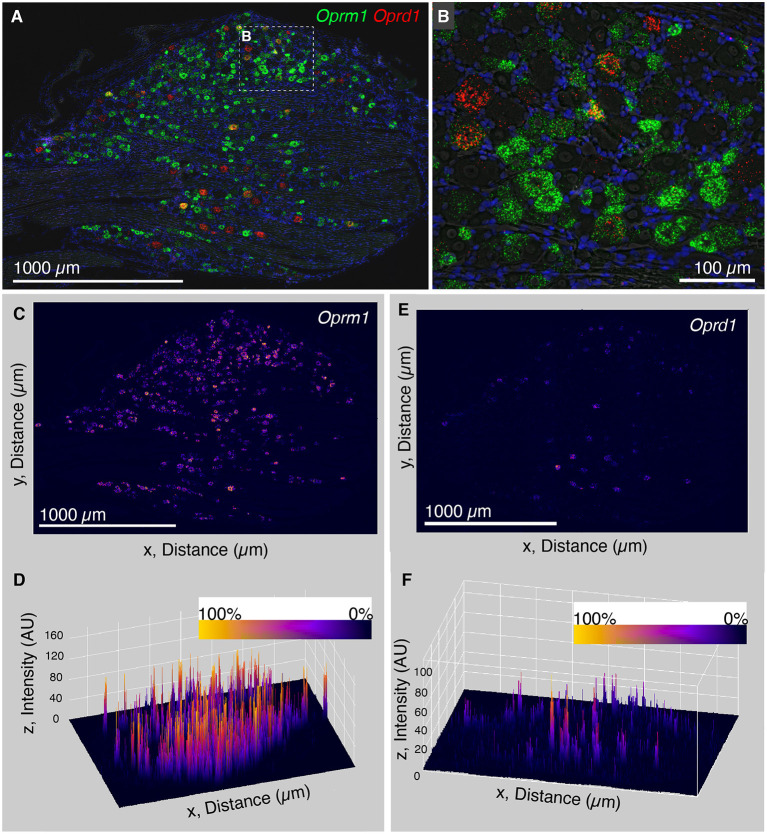
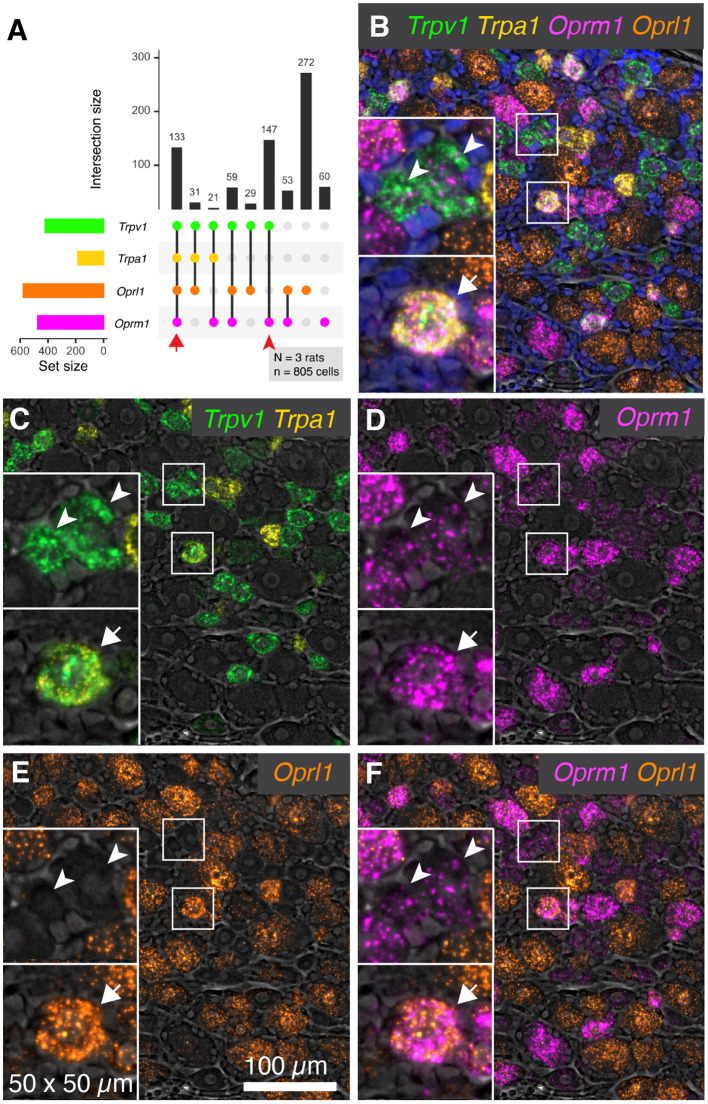
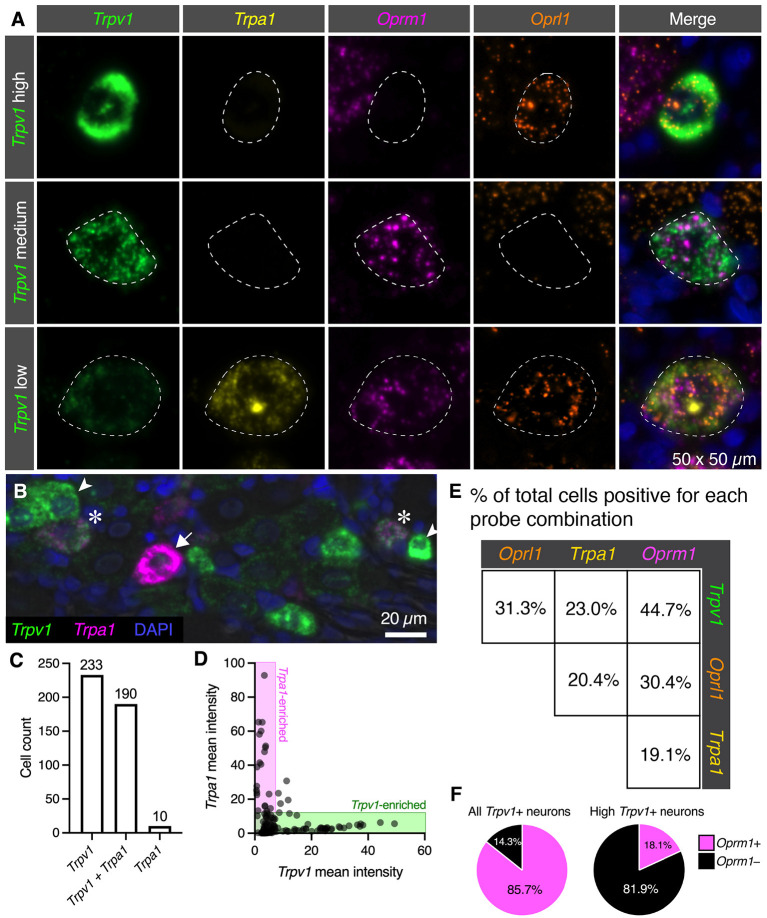
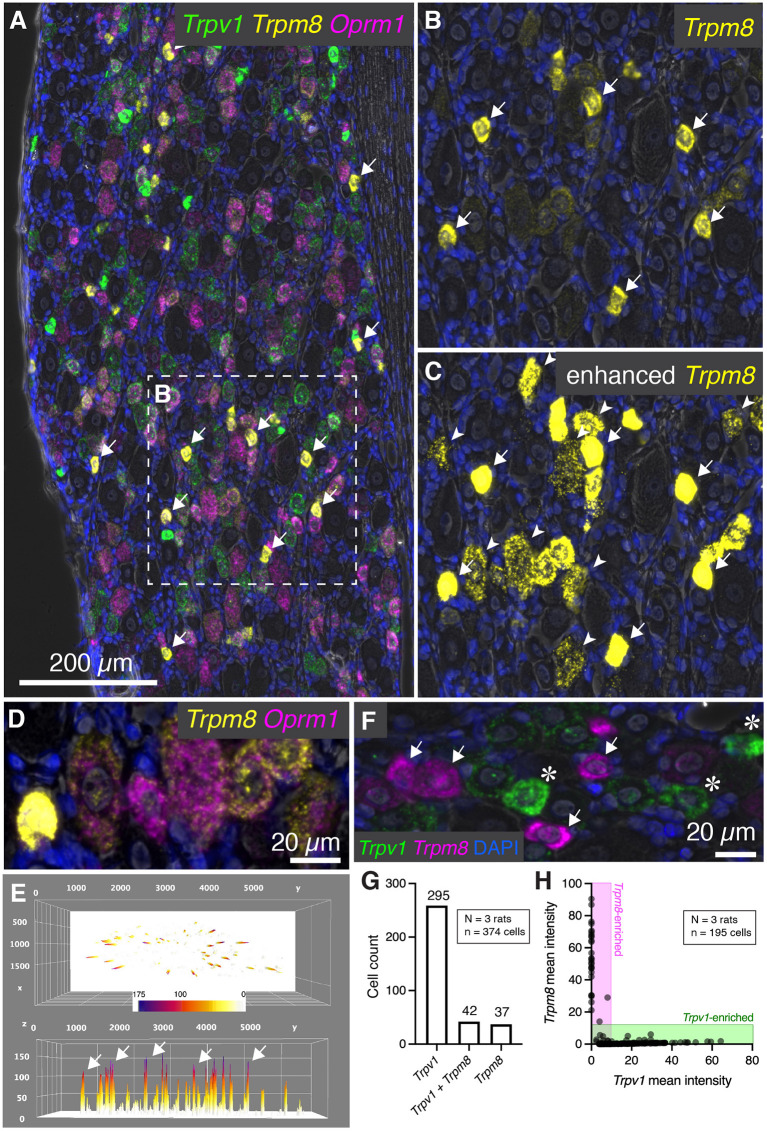
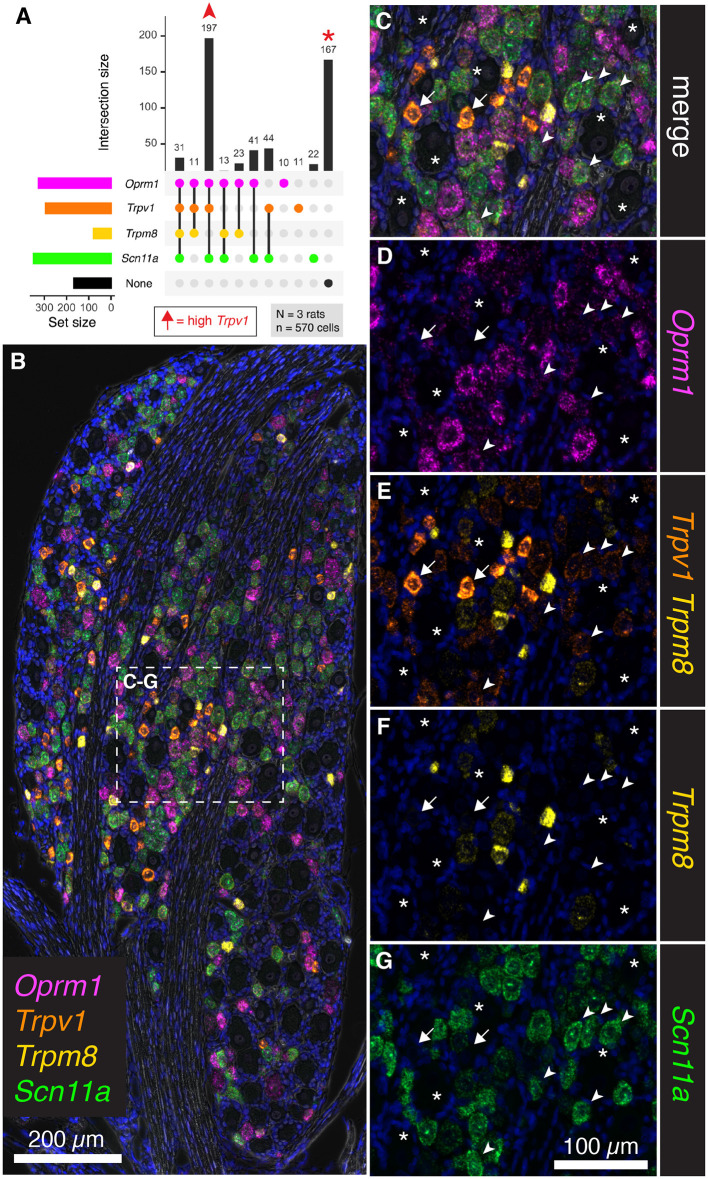
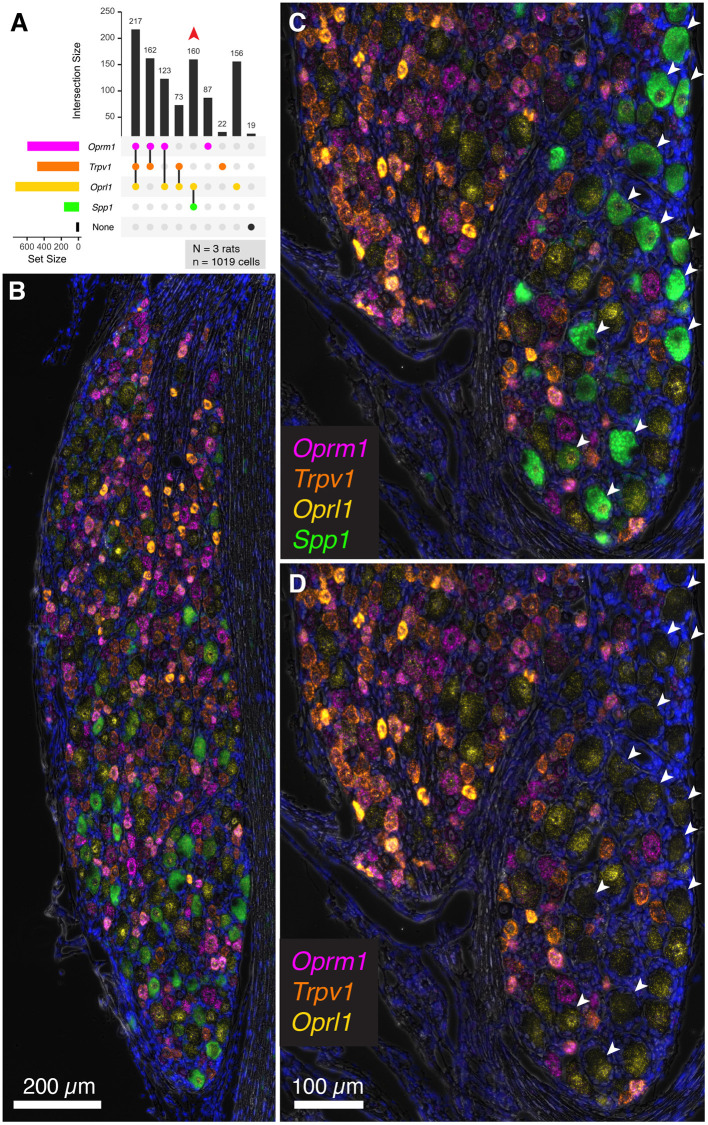
Primary afferent neurons of the dorsal root ganglia (DRG) transduce peripheral nociceptive signals and transmit them to the spinal cord. These neurons also mediate analgesic control of the nociceptive inputs, particularly through the μ-opioid receptor (encoded by ). While opioid receptors are found throughout the neuraxis and in the spinal cord tissue itself, intrathecal administration of μ-opioid agonists also acts directly on nociceptive nerve terminals in the dorsal spinal cord resulting in marked analgesia. Additionally, selective chemoaxotomy of cells expressing the TRPV1 channel, a nonselective calcium-permeable ion channel that transduces thermal and inflammatory pain, yields profound pain relief in rats, canines, and humans. However, the relationship between and expressing DRG neurons has not been precisely determined. The present study examines rat DRG neurons using high resolution multiplex fluorescent hybridization to visualize molecular co-expression. Neurons positive for exhibited varying levels of expression for and co-expression of other excitatory and inhibitory ion channels or receptors. A subpopulation of densely labeled + neurons did not co-express . In contrast, a population of less densely labeled + neurons did co-express . This finding suggests that the medium/low expressing neurons represent a specific set of DRG neurons subserving the opponent processes of both transducing and inhibiting nociceptive inputs. Additionally, the medium/low expressing neurons co-expressed other markers implicated in pathological pain states, such as and , which are involved in chemical nociception and cold allodynia, respectively, as well as , whose mutations are implicated in familial episodic pain. Conversely, none of the + neurons co-expressed , which codes for osteopontin, a marker for large diameter proprioceptive neurons, validating that nociception and proprioception are governed by separate neuronal populations. Our findings support the hypothesis that the population of and coexpressing neurons may explain the remarkable efficacy of opioid drugs administered at the level of the DRG-spinal synapse, and that this subpopulation of + neurons is responsible for registering tissue damage.
背根神经节(DRG)的初级传入神经元转导外周伤害性信号并将其传递至脊髓。这些神经元还介导对伤害性输入的镇痛控制,特别是通过μ-阿片受体(由[此处缺失相关基因信息]编码)。虽然阿片受体存在于整个神经轴以及脊髓组织本身,但鞘内注射μ-阿片激动剂也直接作用于脊髓背角的伤害性神经末梢,从而产生显著的镇痛效果。此外,对表达TRPV1通道(一种转导热痛和炎性疼痛的非选择性钙通透性离子通道)的细胞进行选择性化学轴突切断术,在大鼠、犬类和人类中均能产生显著的疼痛缓解。然而,表达[此处缺失相关基因信息]和[此处缺失相关基因信息]的DRG神经元之间的关系尚未精确确定。本研究使用高分辨率多重荧光原位杂交技术检测大鼠DRG神经元,以可视化分子共表达情况。对[此处缺失相关基因信息]呈阳性的神经元表现出不同水平的[此处缺失相关基因信息]表达以及其他兴奋性和抑制性离子通道或受体的共表达。一群标记密集的[此处缺失相关基因信息]+神经元不共表达[此处缺失相关基因信息]。相反,一群标记较稀疏的[此处缺失相关基因信息]+神经元共表达[此处缺失相关基因信息]。这一发现表明,中/低水平表达[此处缺失相关基因信息]的神经元代表了一组特定的DRG神经元,它们参与转导和抑制伤害性输入的拮抗过程。此外,中/低水平表达[此处缺失相关基因信息]的神经元还共表达了其他与病理性疼痛状态相关的标志物,如[此处缺失相关基因信息]和[此处缺失相关基因信息],它们分别参与化学性伤害感受和冷觉异常,以及[此处缺失相关基因信息],其突变与家族性发作性疼痛有关。相反,没有一个[此处缺失相关基因信息]+神经元共表达[此处缺失相关基因信息],[此处缺失相关基因信息]编码骨桥蛋白(一种大直径本体感觉神经元的标志物),这证实了伤害感受和本体感觉由不同的神经元群体控制。我们的研究结果支持这样一种假设,即共表达[此处缺失相关基因信息]和[此处缺失相关基因信息]的神经元群体可能解释了在DRG-脊髓突触水平给予阿片类药物的显著疗效,并且这一[此处缺失相关基因信息]+神经元亚群负责记录组织损伤。