Liu Min, Zhu Jingling, Song Xia, Wen Yuting, Li Jun
Department of Biomedical Engineering, National University of Singapore, 15 Kent Ridge Crescent, Singapore 119276, Singapore.
NUS Graduate School for Integrative Sciences & Engineering (NGS), National University of Singapore, 28 Medical Drive, Singapore 117456, Singapore.
Gels. 2022 Jul 14;8(7):441. doi: 10.3390/gels8070441.
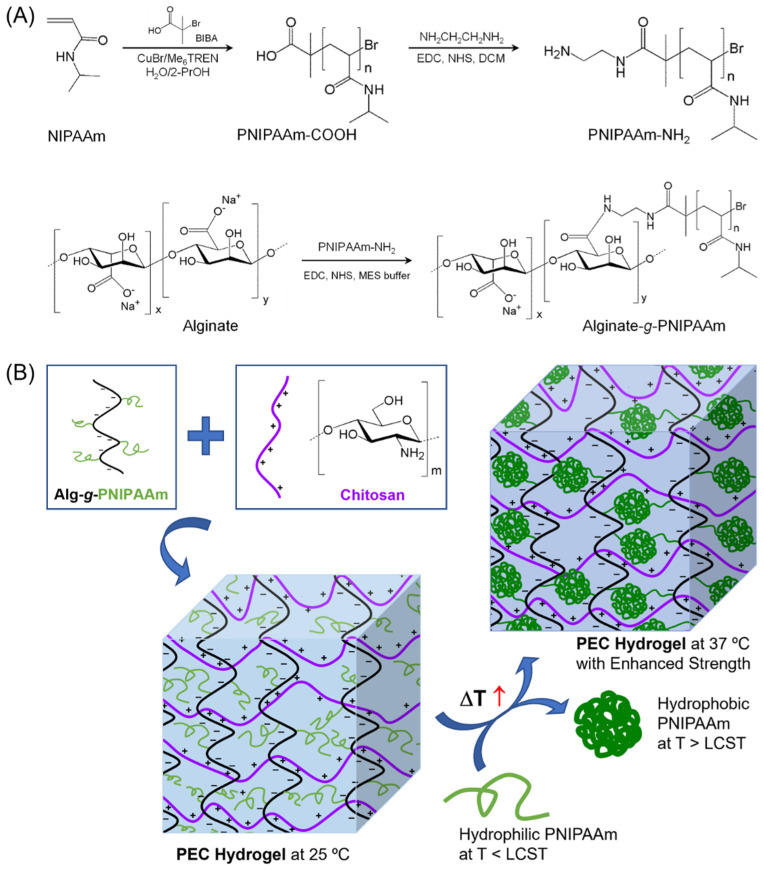
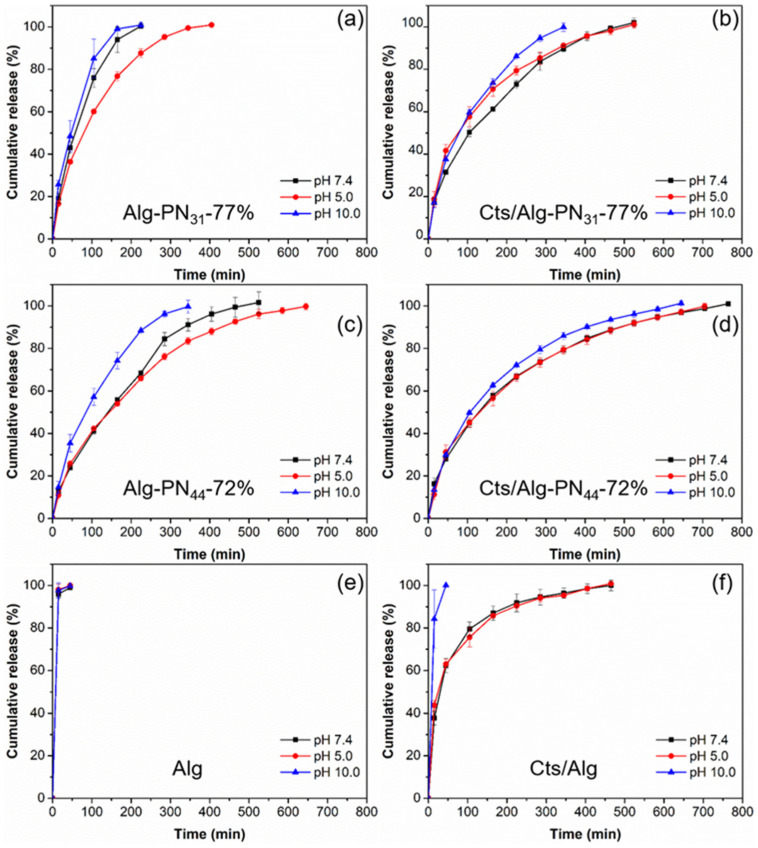
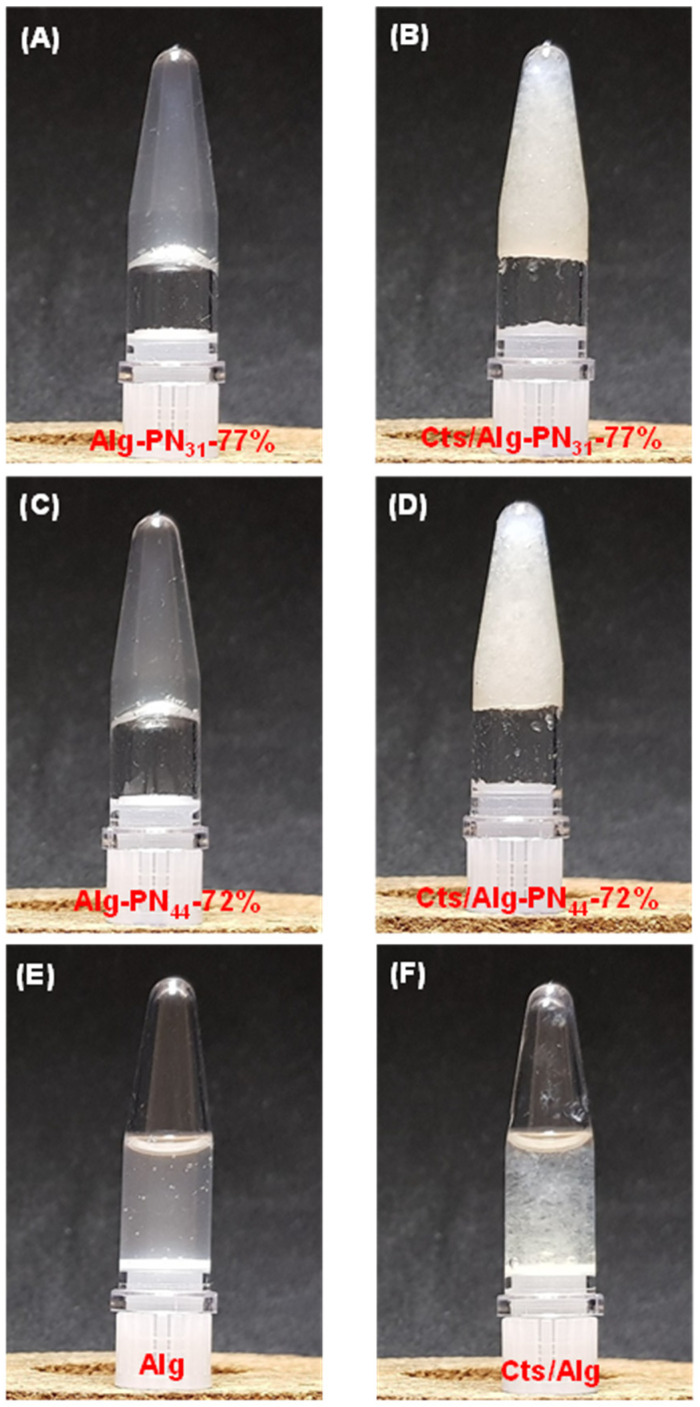
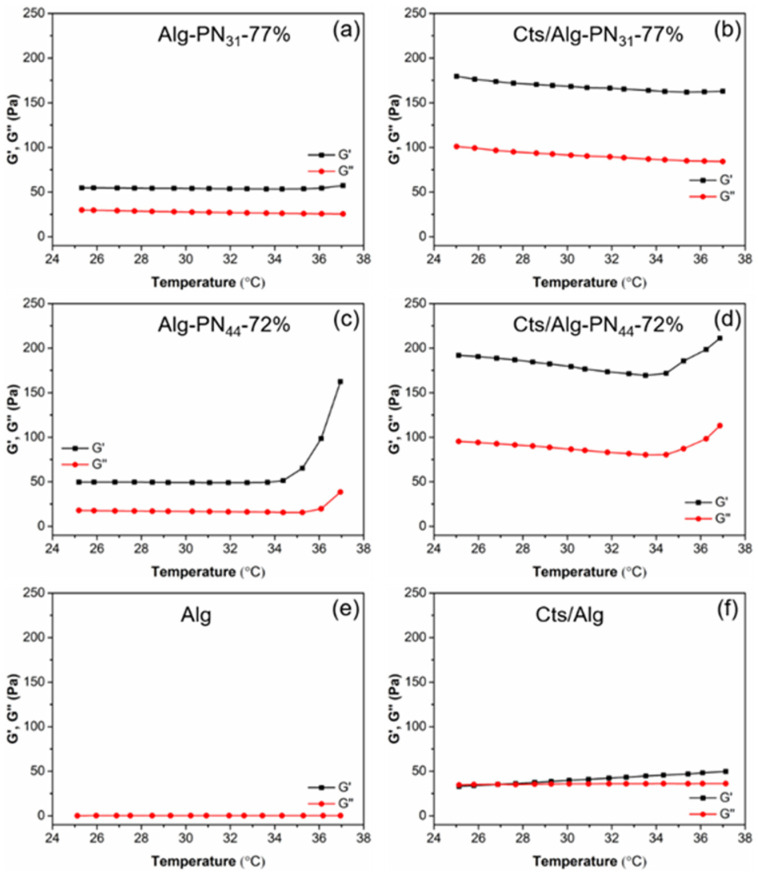
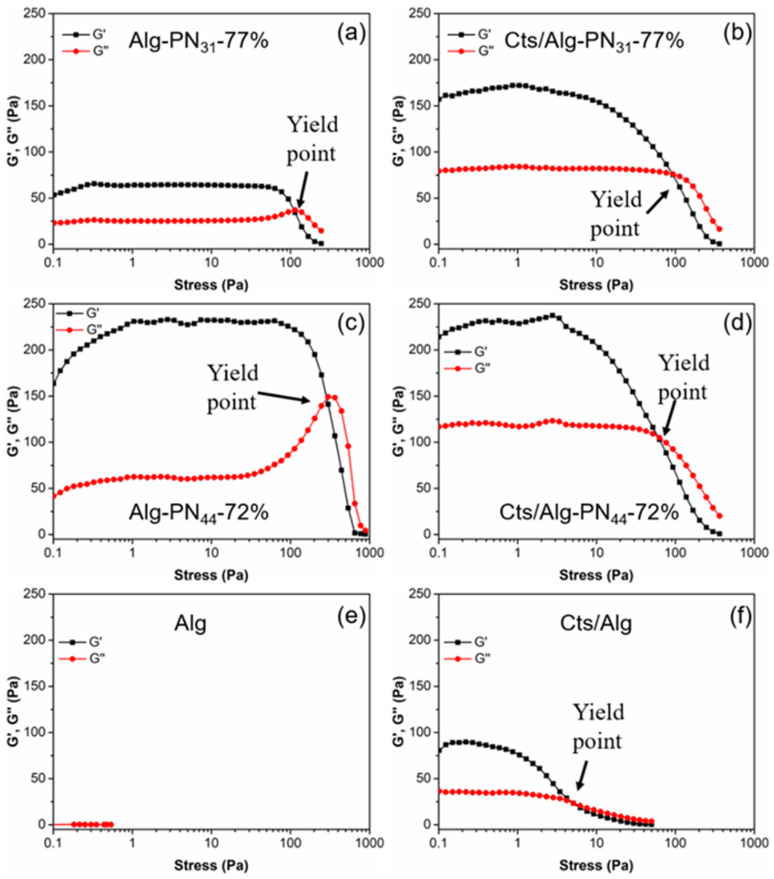
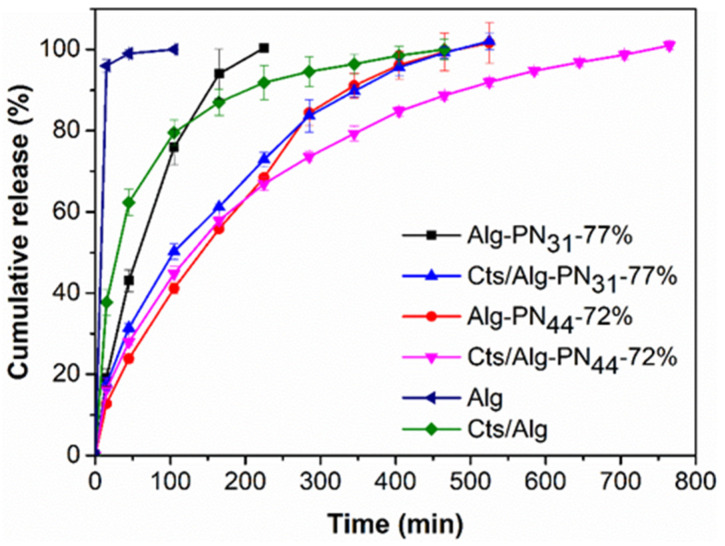
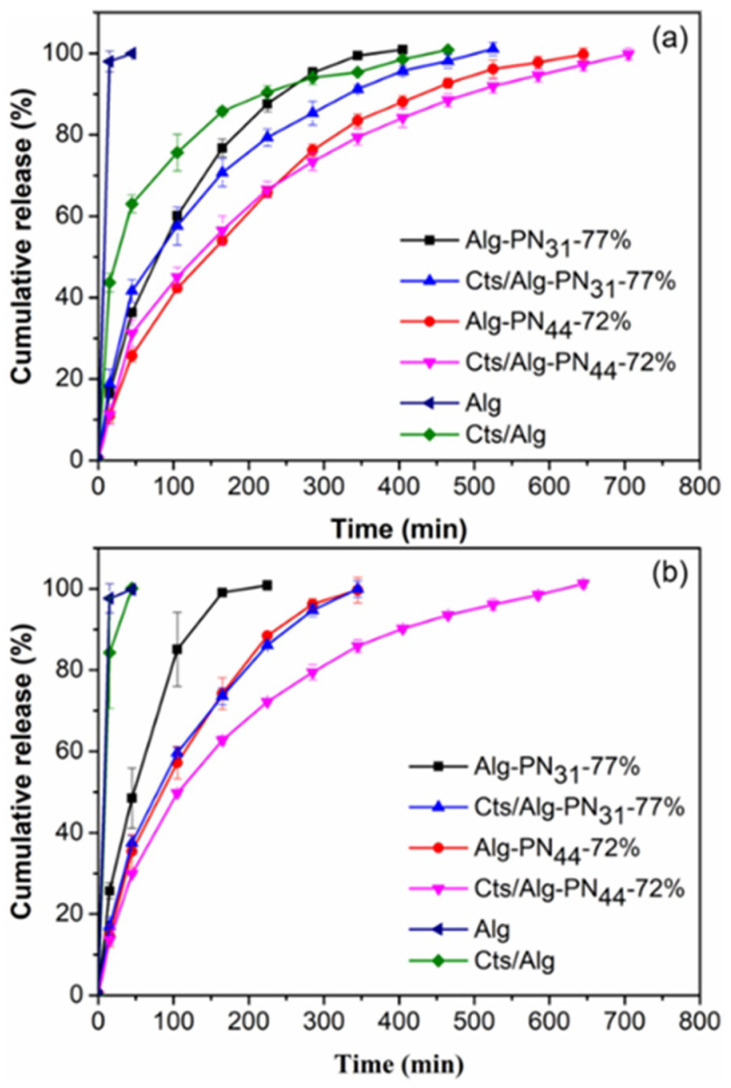
Smart hydrogels that can respond to external stimuli such as temperature and pH have attracted tremendous interest for biological and biomedical applications. In this work, we synthesized two alginate--poly(-isopropylacrylamide) (Alg--PNIPAAm) copolymers and aimed to prepare smart hydrogels through formation of polyelectrolyte complex (PEC) between the negatively charged Alg--PNIPAAm copolymers and the positively charged chitosan (Cts) in aqueous solutions. The hydrogels were expected to be able to respond to both temperature and pH changes due to the nature of Alg--PNIPAAm and chitosan. The hydrogel formation was determined by a test tube inverting method and confirmed by the rheological measurements. The rheological measurements showed that the PEC hydrogels formed at room temperature could be further enhanced by increasing temperature over the lower critical solution temperature (LCST) of PNIPAAm, because PNIPAAm would change from hydrophilic to hydrophobic upon increasing temperature over its LCST, and the hydrophobic interaction between the PNIPAAm segments may act as additional physical crosslinking. The controlled release properties of the hydrogels were studied by using the organic dye rhodamine B (RB) as a model drug at different pH. The PEC hydrogels could sustain the RB release more efficiently at neutral pH. Both low pH and high pH weakened the PEC hydrogels, and resulted in less sustained release profiles. The release kinetics data were found to fit well to the Krosmyer-Peppas power law model. The analysis of the release kinetic parameters obtained by the modelling indicates that the release of RB from the PEC hydrogels followed mechanisms combining diffusion and dissolution of the hydrogels, but the release was mainly governed by diffusion with less dissolution at pH 7.4 when the PEC hydrogels were stronger and stabler than those at pH 5.0 and 10.0. Therefore, the PEC hydrogels are a kind of smart hydrogels holding great potential for drug delivery applications.
能够响应温度和pH等外部刺激的智能水凝胶在生物和生物医学应用中引起了极大的关注。在这项工作中,我们合成了两种藻酸盐-聚(N-异丙基丙烯酰胺)(Alg-PNIPAAm)共聚物,并旨在通过在水溶液中带负电荷的Alg-PNIPAAm共聚物与带正电荷的壳聚糖(Cts)之间形成聚电解质复合物(PEC)来制备智能水凝胶。由于Alg-PNIPAAm和壳聚糖的性质,预计水凝胶能够响应温度和pH的变化。通过试管倒置法确定水凝胶的形成,并通过流变学测量进行确认。流变学测量表明,在室温下形成的PEC水凝胶可以通过将温度升高到PNIPAAm的低临界溶液温度(LCST)以上而进一步增强,因为PNIPAAm在温度超过其LCST时会从亲水性转变为疏水性,并且PNIPAAm链段之间的疏水相互作用可能充当额外的物理交联。通过使用有机染料罗丹明B(RB)作为模型药物,在不同pH下研究了水凝胶的控释性能。PEC水凝胶在中性pH下可以更有效地维持RB的释放。低pH和高pH都会削弱PEC水凝胶,并导致缓释曲线变差。发现释放动力学数据与Krosmyer-Peppas幂律模型拟合良好。通过建模获得的释放动力学参数分析表明,RB从PEC水凝胶中的释放遵循水凝胶扩散和溶解相结合的机制,但在pH 7.4时,当PEC水凝胶比pH 5.0和10.0时更强更稳定时,释放主要由扩散控制,溶解较少。因此,PEC水凝胶是一种在药物递送应用中具有巨大潜力的智能水凝胶。