Univ. Lille, Inserm, CHU Lille, Laboratory of Development and Plasticity of the Neuroendocrine Brain, Lille Neuroscience & Cognition, UMR-S1172, EGID, DISTALZ, Lille, France.
Universidade de Santiago de Compostela-Instituto de Investigation Sanitaria, Santiago de Compostela, Spain.
Nat Metab. 2022 Jul;4(7):813-825. doi: 10.1038/s42255-022-00610-z. Epub 2022 Jul 25.
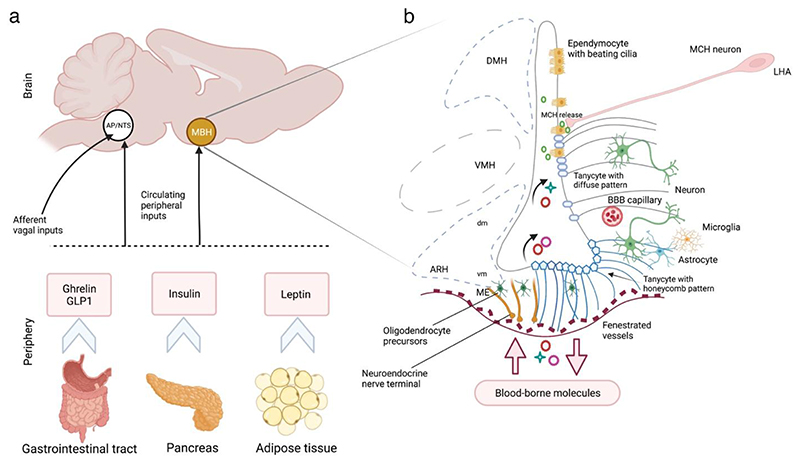
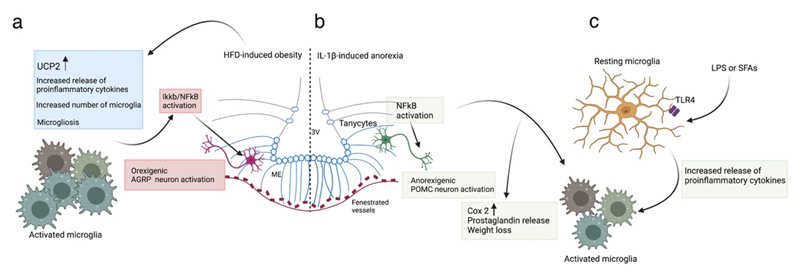
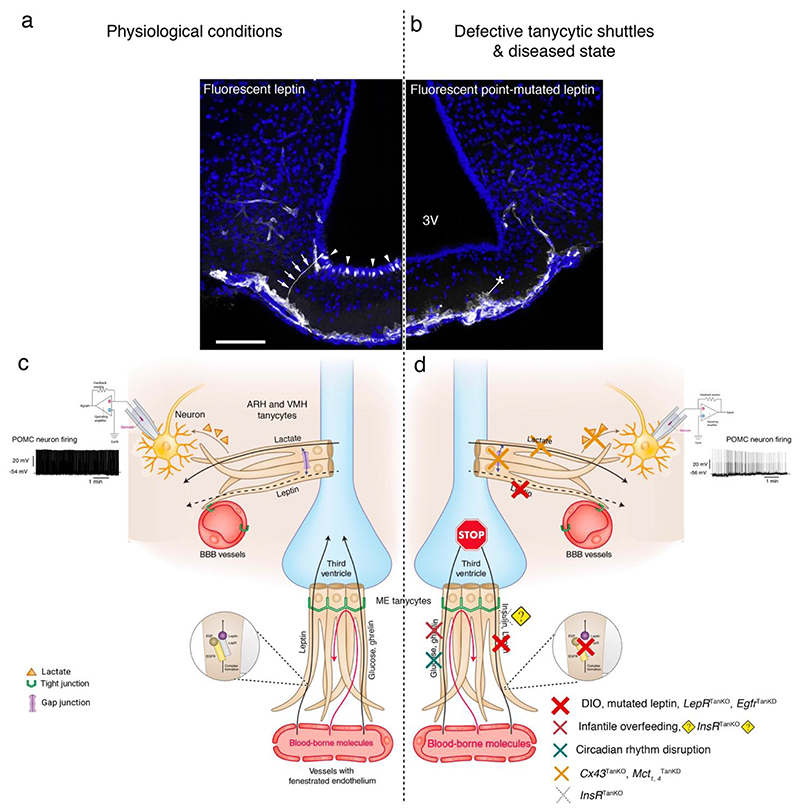
Communication between the periphery and the brain is key for maintaining energy homeostasis. To do so, peripheral signals from the circulation reach the brain via the circumventricular organs (CVOs), which are characterized by fenestrated vessels lacking the protective blood-brain barrier (BBB). Glial cells, by virtue of their plasticity and their ideal location at the interface of blood vessels and neurons, participate in the integration and transmission of peripheral information to neuronal networks in the brain for the neuroendocrine control of whole-body metabolism. Metabolic diseases, such as obesity and type 2 diabetes, can disrupt the brain-to-periphery communication mediated by glial cells, highlighting the relevance of these cell types in the pathophysiology of such complications. An improved understanding of how glial cells integrate and respond to metabolic and humoral signals has become a priority for the discovery of promising therapeutic strategies to treat metabolic disorders. This Review highlights the role of glial cells in the exchange of metabolic signals between the periphery and the brain that are relevant for the regulation of whole-body energy homeostasis.
外周与大脑之间的通讯对于维持能量稳态至关重要。为此,来自循环系统的外周信号通过具有窗孔的血管而缺乏保护的血脑屏障(BBB)的脑 circumventricular 器官(CVOs)到达大脑。神经胶质细胞凭借其可塑性及其在血管和神经元界面的理想位置,参与外周信息向大脑神经元网络的整合和传递,以进行全身代谢的神经内分泌控制。代谢疾病,如肥胖症和 2 型糖尿病,可能会破坏由神经胶质细胞介导的脑到外周的通讯,突出了这些细胞类型在这些并发症的病理生理学中的相关性。更好地了解神经胶质细胞如何整合和响应代谢和体液信号,已成为发现治疗代谢紊乱的有前途的治疗策略的重点。这篇综述强调了神经胶质细胞在调节全身能量稳态的外周和大脑之间代谢信号交换中的作用。