Instituto Multidisciplinar para el Estudio del Medio 'Ramón Margalef', Universidad de Alicante, Alicante, Spain.
Laboratorio de Biodiversidad y Funcionamiento Ecosistémico, Instituto de Recursos Naturales y Agrobiología de Sevilla (IRNAS), CSIC, Sevilla, Spain.
Nat Plants. 2022 Aug;8(8):879-886. doi: 10.1038/s41477-022-01198-8. Epub 2022 Jul 25.
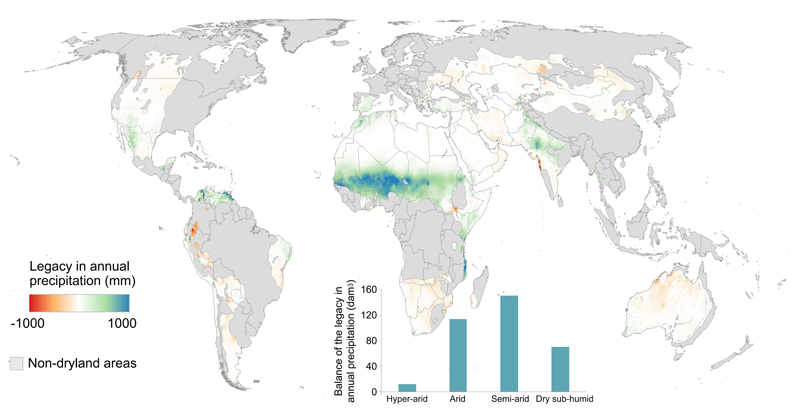
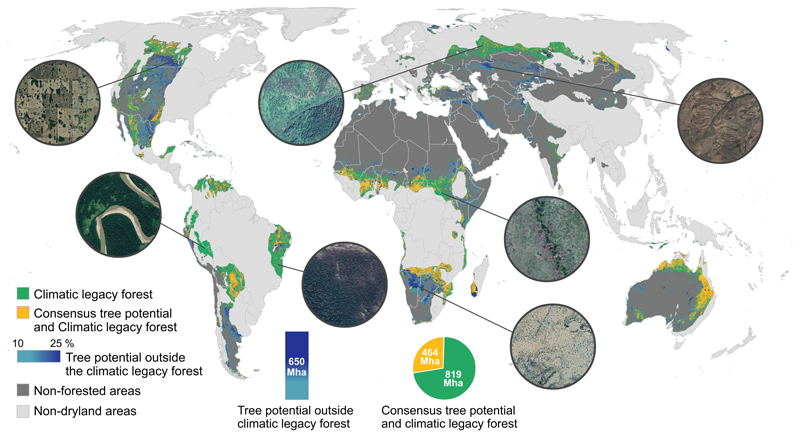
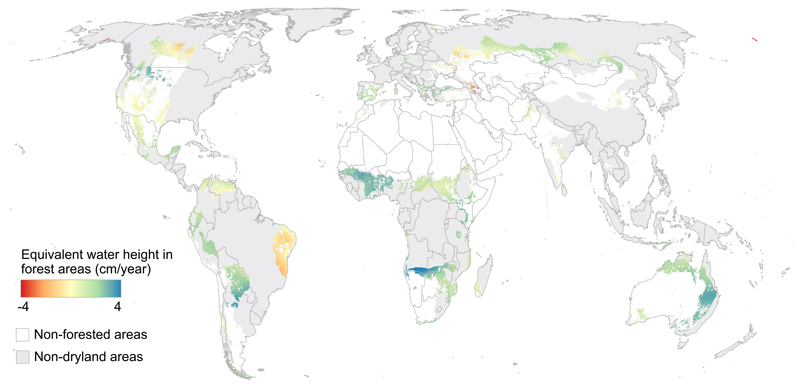
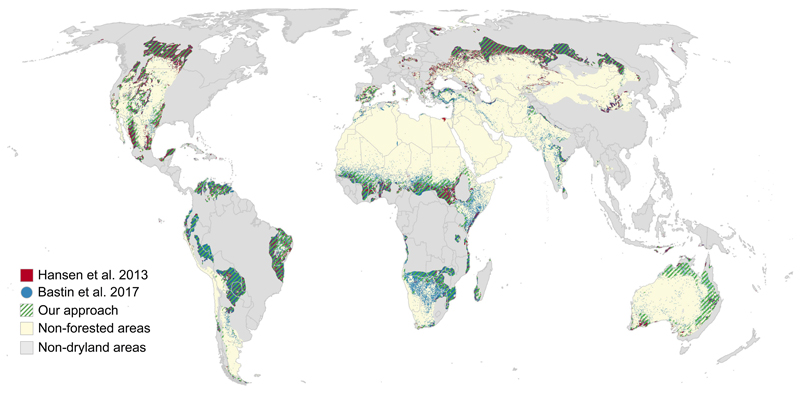
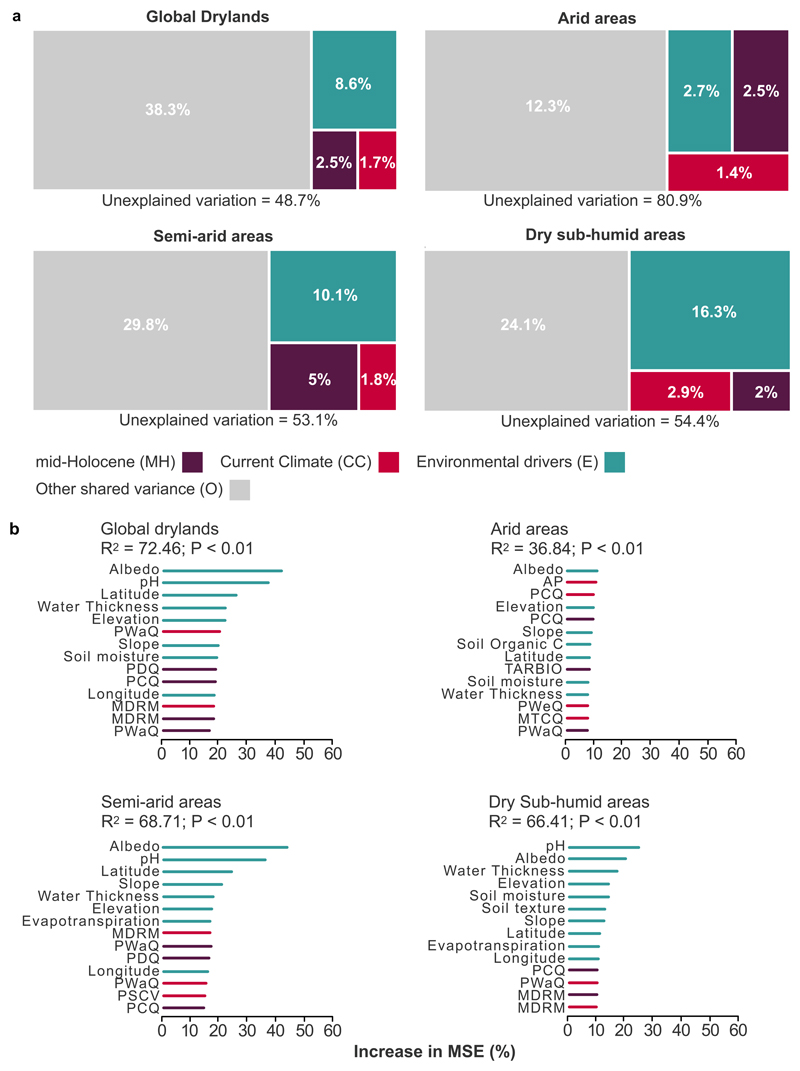
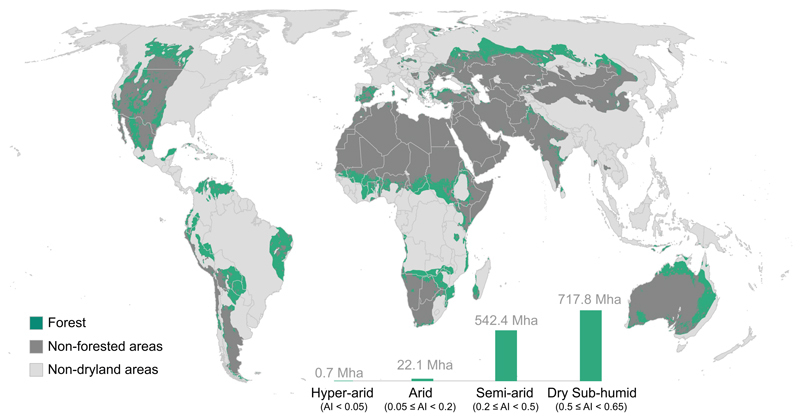
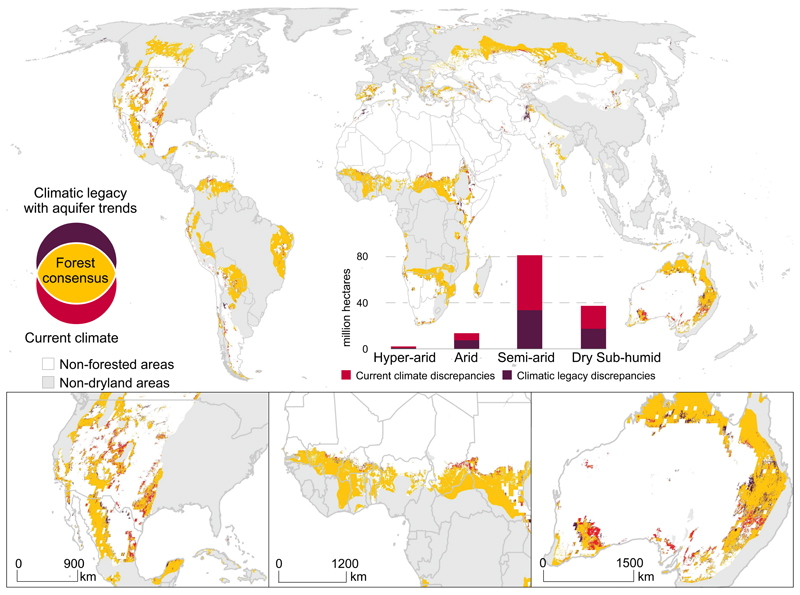
Knowing the extent and environmental drivers of forests is key to successfully restore degraded ecosystems, and to mitigate climate change and desertification impacts using tree planting. Water availability is the main limiting factor for the development of forests in drylands, yet the importance of groundwater resources and palaeoclimate as drivers of their current distribution has been neglected. Here we report that mid-Holocene climates and aquifer trends are key predictors of the distribution of dryland forests worldwide. We also updated the global extent of dryland forests to 1,283 million hectares and showed that failing to consider past climates and aquifers has resulted in ignoring or misplacing up to 130 million hectares of forests in drylands. Our findings highlight the importance of a wetter past and well-preserved aquifers to explain the current distribution of dryland forests, and can guide restoration actions by avoiding unsuitable areas for tree establishment in a drier world.
了解森林的范围和环境驱动因素是成功恢复退化生态系统的关键,通过植树造林来减轻气候变化和荒漠化的影响。水的可用性是干旱地区森林发展的主要限制因素,但地下水资源和古气候作为其当前分布驱动因素的重要性却被忽视了。在这里,我们报告说,中全新世的气候和含水层趋势是世界范围内旱地森林分布的关键预测因子。我们还更新了全球旱地森林的范围,达到 12830 万公顷,并表明,如果不考虑过去的气候和含水层,就有可能忽视或错误地将多达 1.3 亿公顷的森林置于旱地之中。我们的研究结果强调了过去更湿润和保存完好的含水层对解释旱地森林当前分布的重要性,并可以通过避免在更干燥的世界中为树木建立不合适的区域来指导恢复行动。