Carrasco-Uribarren Andoni, Pardos-Aguilella Pilar, Pérez-Guillén Silvia, López-de-Celis Carlos, Rodríguez-Sanz Jacobo, Cabanillas-Barea Sara
Faculty of Medicine and Health Sciences, Universitat International de Catalunya, 08195 Barcelona, Spain.
Faculty of Health Sciences, Universidad de Zaragoza, 50009 Zaragoza, Spain.
Life (Basel). 2022 Jul 9;12(7):1023. doi: 10.3390/life12071023.
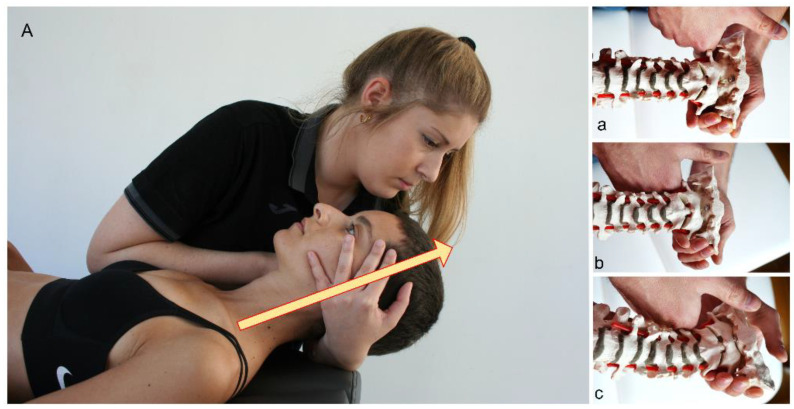
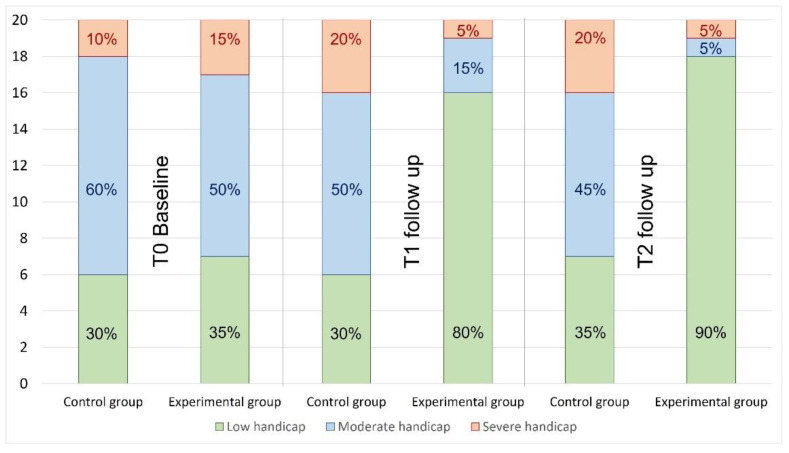
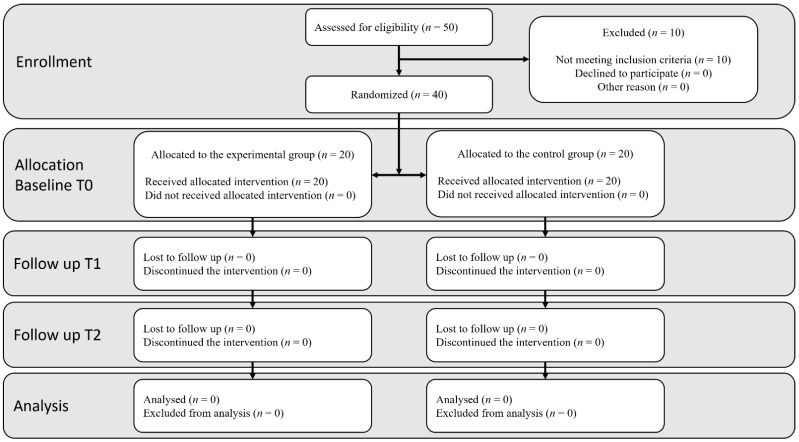
Cervicogenic dizziness is clinically associated with upper cervical spine dysfunctions. It seems that manual therapy decreases the intensity of dizziness in these subjects, but what happens to pain measured by pressure pain threshold (PPT) has not been studied. Purpose: analyze the short-term effects of combination two manipulation techniques protocol in worst dizziness intensity (wVAS), dizziness and cervical disability, upper cervical spine mobility and mechanosensivity of cervical tissue. Methods: Assessor-blinded randomized controlled trial was developed. A total of 40 patients with cervicogenic dizziness were randomly divided into two groups. The experimental group received three treatments consisting of a functional massage and a manipulation technique, and compared with a control group. The wVAS, dizziness handicap inventory (DHI), neck disability index (NDI), UCS mobility, and PPTs were measured. Measurements were made at the baseline, first follow-up 48 h after intervention and second follow-up 1 month after the intervention. Results: at second follow-up wVAS (p < 0.001), NDI (p < 0.001), DHI (p < 0.001), and upper right trapezius (p < 0.022) and right suboccipital (p < 0.043) PPTs showed a difference between groups in favor of the experimental group. Conclusions: apparently, the proposed intervention protocol decreases the intensity of dizziness and the mechanosensitivity of the cervical tissue and improves the feeling of disability due to neck pain and dizziness.
颈源性眩晕在临床上与上颈椎功能障碍相关。手动疗法似乎能降低这些患者的眩晕强度,但压力痛阈(PPT)所测量的疼痛情况尚未得到研究。目的:分析两种手法治疗技术联合方案对最严重眩晕强度(wVAS)、眩晕及颈部功能障碍、上颈椎活动度和颈部组织机械敏感性的短期影响。方法:开展评估者盲法随机对照试验。40例颈源性眩晕患者被随机分为两组。实验组接受包括功能性按摩和一种手法治疗技术的三次治疗,并与对照组进行比较。测量wVAS、眩晕残障量表(DHI)、颈部功能障碍指数(NDI)、上颈椎活动度和PPT。在基线、干预后48小时的首次随访以及干预后1个月的第二次随访时进行测量。结果:在第二次随访时,wVAS(p < 0.001)、NDI(p < 0.001)、DHI(p < 0.001)以及右上斜方肌(p < 0.022)和右枕下肌(p < 0.043)的PPT在两组间存在差异,有利于实验组。结论:显然,所提出的干预方案降低了眩晕强度和颈部组织的机械敏感性,并改善了因颈部疼痛和眩晕导致的功能障碍感。