Batista Viviane Lima, De Jesus Luís Cláudio Lima, Tavares Laísa Macedo, Barroso Fernanda Lima Alvarenga, Fernandes Lucas Jorge da Silva, Freitas Andria Dos Santos, Americo Monique Ferrary, Drumond Mariana Martins, Mancha-Agresti Pamela, Ferreira Enio, Laguna Juliana Guimarães, Alcantara Luiz Carlos Júnior, Azevedo Vasco
Department of Genetics, Ecology and Evolution, Federal University of Minas Gerais, Belo Horizonte 31270-901, Brazil.
Department of Biological Sciences, Federal Center for Technological Education of Minas Gerais, Belo Horizonte 30421-169, Brazil.
Microorganisms. 2022 Jul 14;10(7):1418. doi: 10.3390/microorganisms10071418.
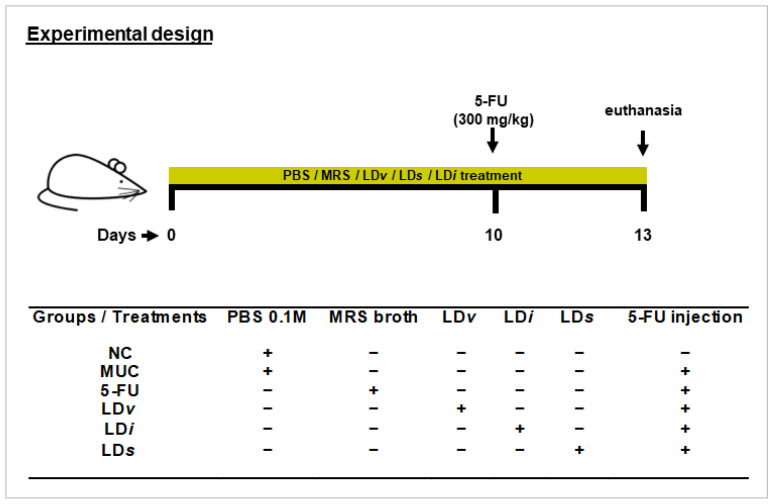
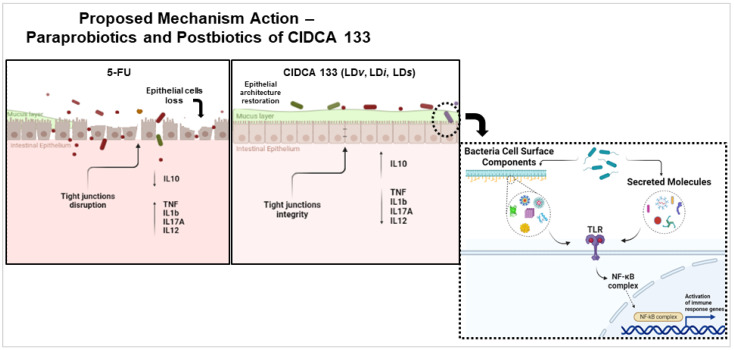
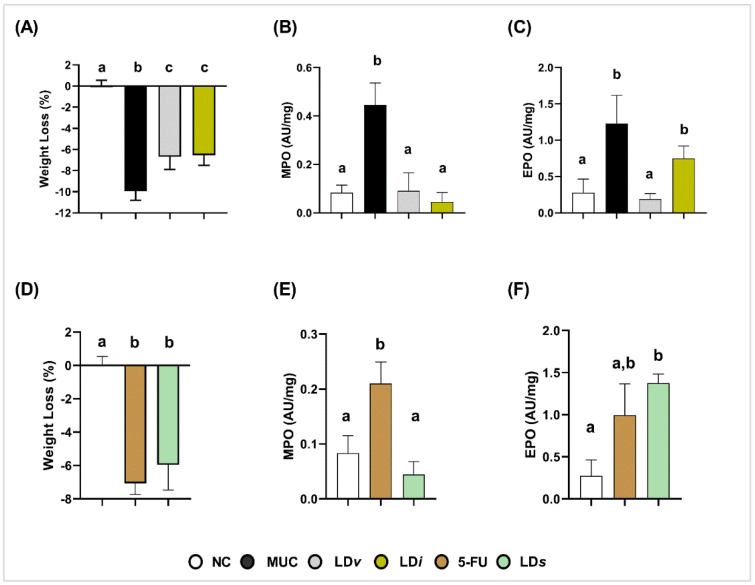
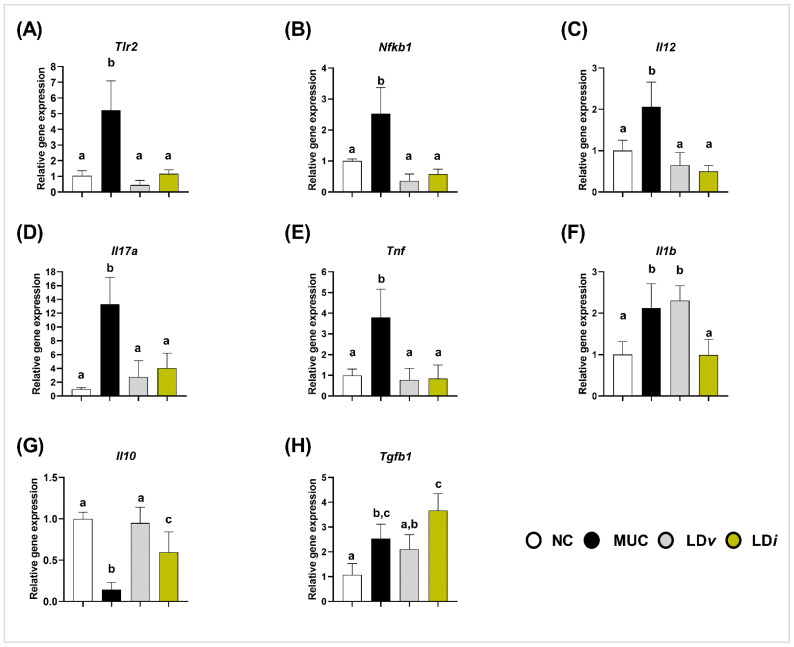
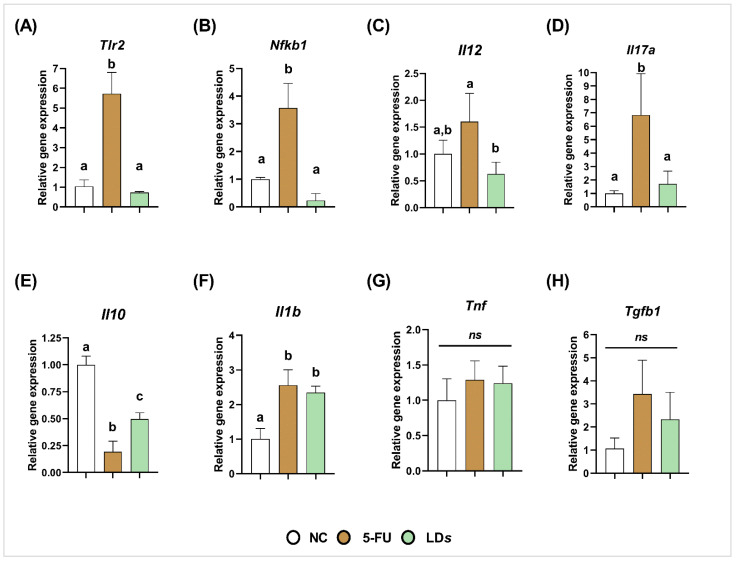
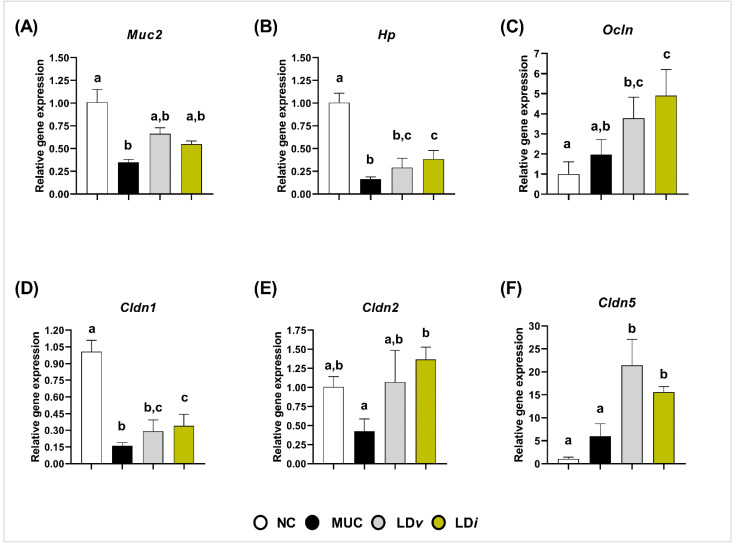
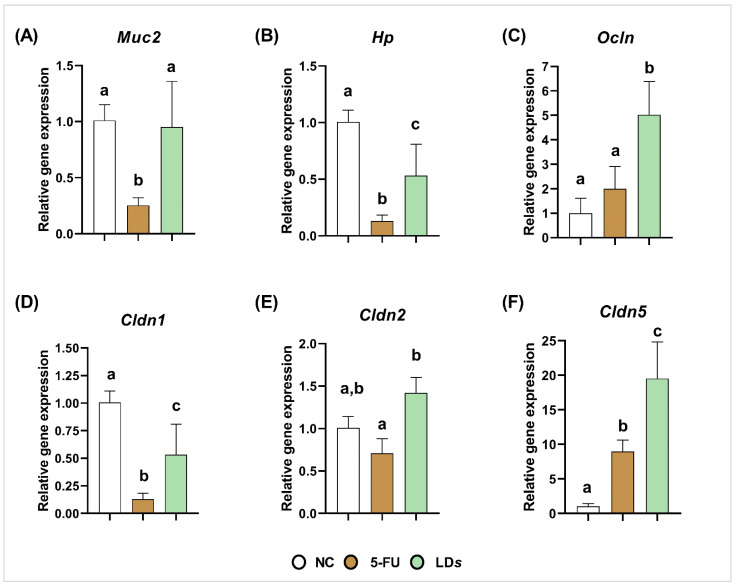
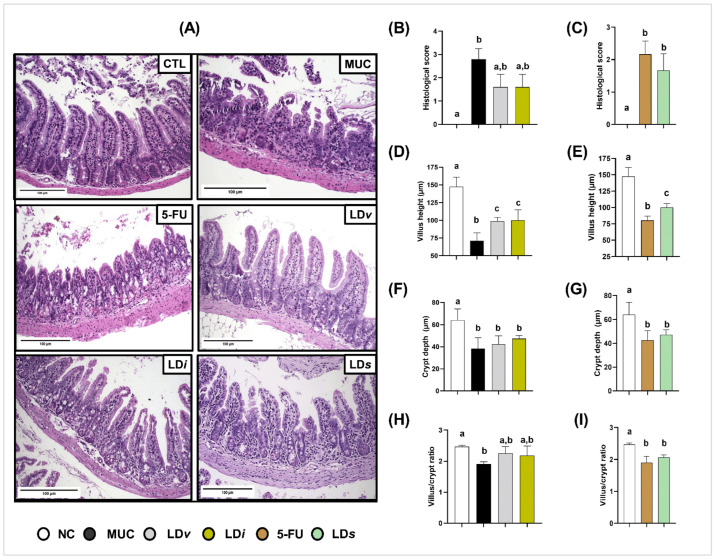
Intestinal mucositis is a commonly reported side effect in oncology practice. Probiotics are considered an excellent alternative therapeutic approach to this debilitating condition; however, there are safety questions regarding the viable consumption of probiotics in clinical practice due to the risks of systemic infections, especially in immune-compromised patients. The use of heat-killed or cell-free supernatants derived from probiotic strains has been evaluated to minimize these adverse effects. Thus, this work evaluated the anti-inflammatory properties of paraprobiotics (heat-killed) and postbiotics (cell-free supernatant) of the probiotic CIDCA 133 strain in a mouse model of 5-Fluorouracil drug-induced mucositis. Administration of paraprobiotics and postbiotics reduced the neutrophil cells infiltrating into the small intestinal mucosa and ameliorated the intestinal epithelium architecture damaged by 5-FU. These ameliorative effects were associated with a downregulation of inflammatory markers (, , , , , ), and upregulation of immunoregulatory cytokine and the epithelial barrier markers , , , , and . Thus, heat-killed CIDCA 133 and supernatants derived from this strain were shown to be effective in reducing 5-FU-induced inflammatory damage, demonstrating them to be an alternative approach to the problems arising from the use of live beneficial microorganisms in clinical practice.
肠道黏膜炎是肿瘤学实践中常见的一种副作用。益生菌被认为是治疗这种使人虚弱病症的一种极佳替代疗法;然而,由于存在全身感染风险,尤其是在免疫功能低下的患者中,临床实践中关于益生菌活菌食用的安全性存在问题。已对使用源自益生菌菌株的热灭活或无细胞上清液进行了评估,以尽量减少这些不良反应。因此,本研究在5-氟尿嘧啶药物诱导的黏膜炎小鼠模型中评估了益生菌CIDCA 133菌株的副益生菌(热灭活)和后生元(无细胞上清液)的抗炎特性。给予副益生菌和后生元可减少浸润至小肠黏膜的中性粒细胞,并改善由5-氟尿嘧啶破坏的肠上皮结构。这些改善作用与炎症标志物( 、 、 、 、 、 )的下调以及免疫调节细胞因子和上皮屏障标志物 、 、 、 、 和 的上调有关。因此,热灭活的CIDCA 133及其菌株衍生的上清液被证明可有效减轻5-氟尿嘧啶诱导的炎症损伤,表明它们是解决临床实践中使用活的有益微生物所产生问题的一种替代方法。