
用于控制氧化应激和癌症治疗的纳米诊疗系统的微环境行为
Microenvironmental Behaviour of Nanotheranostic Systems for Controlled Oxidative Stress and Cancer Treatment.
作者信息
Rehman Yaser, Qutaish Hamzeh, Kim Jung Ho, Huang Xu-Feng, Alvi Sadia, Konstantinov Konstantin
机构信息
Institute for Superconducting and Electronics Materials (ISEM), University of Wollongong (UOW), Wollongong, NSW 2522, Australia.
Illawarra Health & Medical Research Institute (IHMRI), University of Wollongong (UOW), Wollongong, NSW 2522, Australia.
出版信息
Nanomaterials (Basel). 2022 Jul 18;12(14):2462. doi: 10.3390/nano12142462.
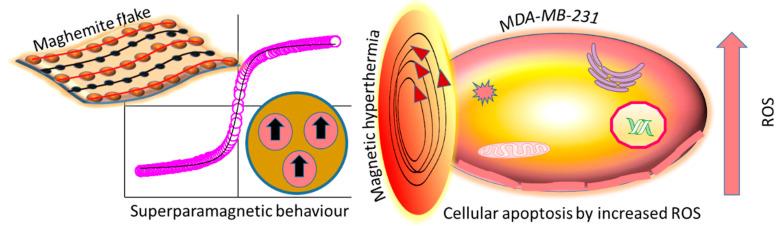
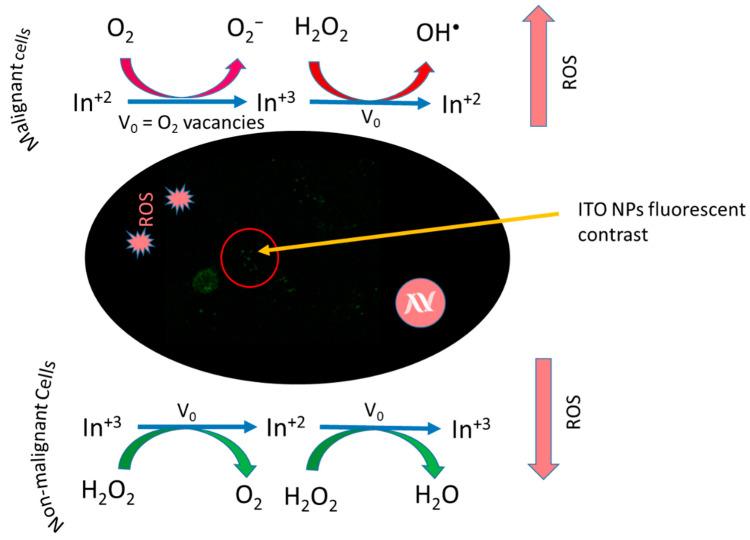
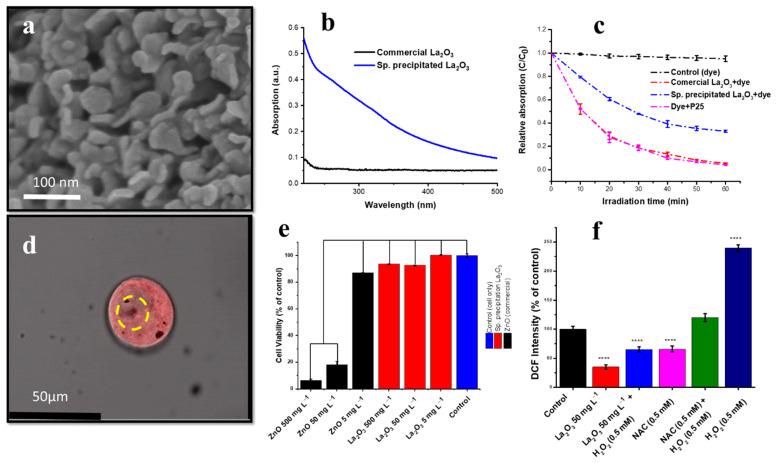
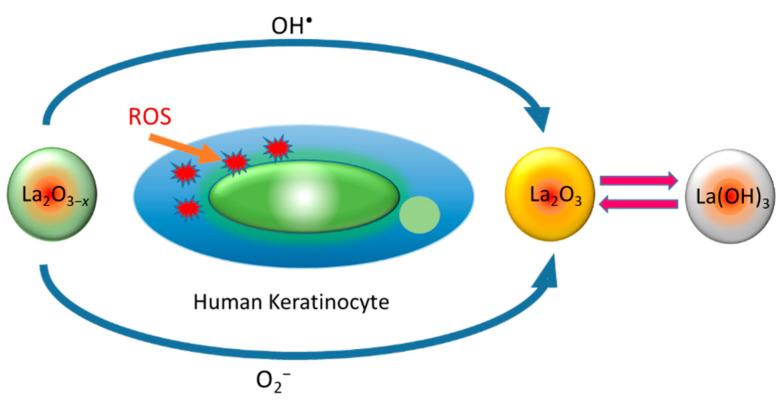
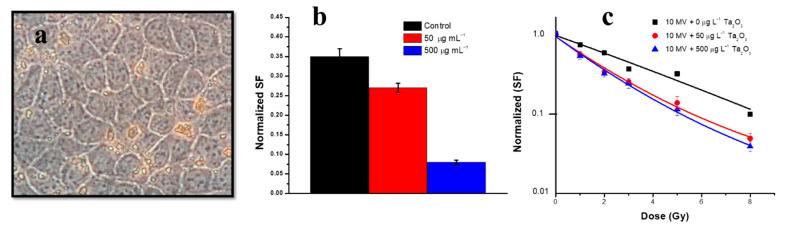
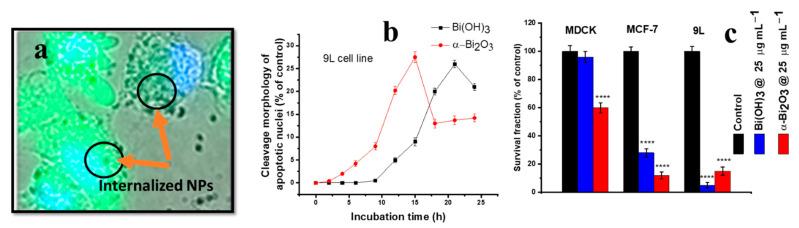
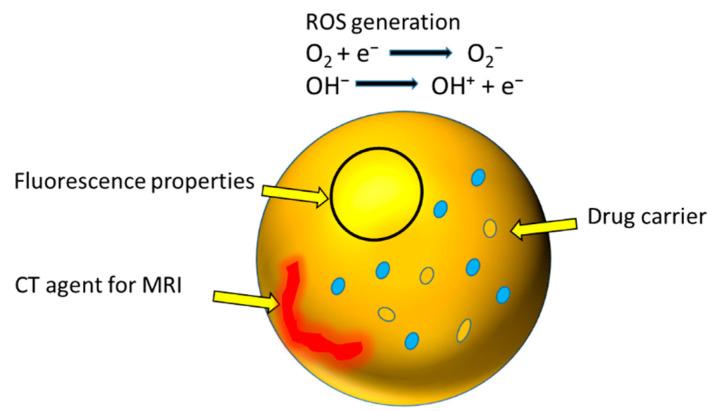
The development of smart, efficient and multifunctional material systems for diseases treatment are imperative to meet current and future health challenges. Nanomaterials with theranostic properties have offered a cost effective and efficient solution for disease treatment, particularly, metal/oxide based nanotheranostic systems already offering therapeutic and imaging capabilities for cancer treatment. Nanoparticles can selectively generate/scavenge ROS through intrinsic or external stimuli to augment/diminish oxidative stress. An efficient treatment requires higher oxidative stress/toxicity in malignant disease, with a minimal level in surrounding normal cells. The size, shape and surface properties of nanoparticles are critical parameters for achieving a theranostic function in the microenvironment. In the last decade, different strategies for the synthesis of biocompatible theranostic nanostructures have been introduced. The exhibition of therapeutics properties such as selective reactive oxygen species (ROS) scavenging, hyperthermia, antibacterial, antiviral, and imaging capabilities such as MRI, CT and fluorescence activity have been reported in a variety of developed nanosystems to combat cancer, neurodegenerative and emerging infectious diseases. In this review article, theranostic in vitro behaviour in relation to the size, shape and synthesis methods of widely researched and developed nanosystems (Au, Ag, MnO, iron oxide, maghemite quantum flakes, LaO, TaO, cerium nanodots, ITO, MgO) are presented. In particular, ROS-based properties of the nanostructures in the microenvironment for cancer therapy are discussed. The provided overview of the biological behaviour of reported metal-based nanostructures will help to conceptualise novel designs and synthesis strategies for the development of advanced nanotheranostic systems.
开发智能、高效且多功能的疾病治疗材料系统对于应对当前和未来的健康挑战至关重要。具有诊疗特性的纳米材料为疾病治疗提供了一种经济高效的解决方案,特别是基于金属/氧化物的纳米诊疗系统已经具备了癌症治疗的治疗和成像能力。纳米颗粒可以通过内在或外部刺激选择性地产生/清除活性氧,以增强/减少氧化应激。有效的治疗需要在恶性疾病中产生更高的氧化应激/毒性,而在周围正常细胞中保持最低水平。纳米颗粒的尺寸、形状和表面性质是在微环境中实现诊疗功能的关键参数。在过去十年中,已经引入了不同的合成生物相容性诊疗纳米结构的策略。在各种已开发的纳米系统中,已经报道了诸如选择性清除活性氧(ROS)、热疗、抗菌、抗病毒等治疗特性,以及诸如磁共振成像(MRI)、计算机断层扫描(CT)和荧光活性等成像能力,以对抗癌症、神经退行性疾病和新出现的传染病。在这篇综述文章中,介绍了广泛研究和开发的纳米系统(金、银、氧化锰、氧化铁、磁赤铁矿量子薄片、氧化镧、氧化钽、铈纳米点、氧化铟锡、氧化镁)的诊疗体外行为与尺寸、形状和合成方法的关系。特别讨论了纳米结构在癌症治疗微环境中基于ROS的特性。所提供的已报道金属基纳米结构的生物学行为概述将有助于构思先进纳米诊疗系统的新颖设计和合成策略。
 Zotero 插件