Barbosa Camila S, Ahmad Anees, Maluf Sarah El Chamy, Moura Igor M R, Souza Guilherme E, Guerra Giovanna A H, Barros Roberto R Moraes, Gazarini Marcos L, Aguiar Anna C C, Burtoloso Antonio C B, Guido Rafael V C
São Carlos Institute of Physics, University of São Paulo, Av. João Dagnone, 1100, Santa Angelina, São Carlos 13563-120, Brazil.
São Carlos Institute of Chemistry, University of São Paulo, Av. João Dagnone, 1100, Santa Angelina, São Carlos 13563-120, Brazil.
Pharmaceuticals (Basel). 2022 Jun 30;15(7):814. doi: 10.3390/ph15070814.
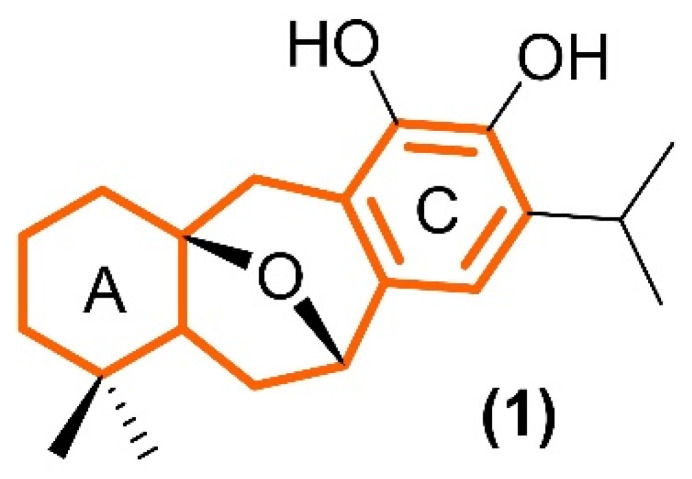
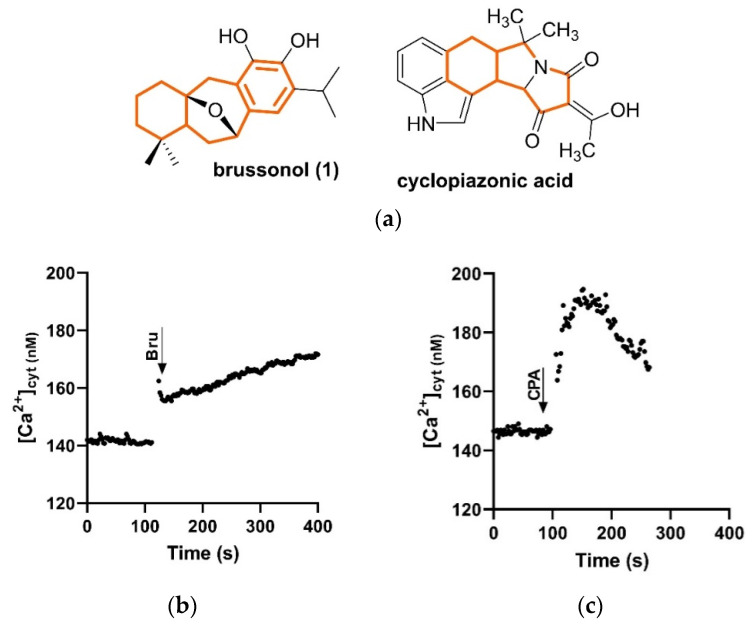
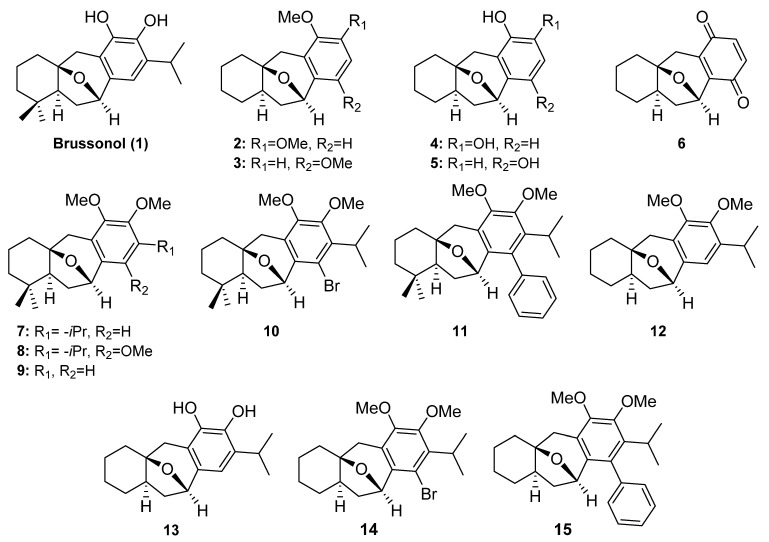
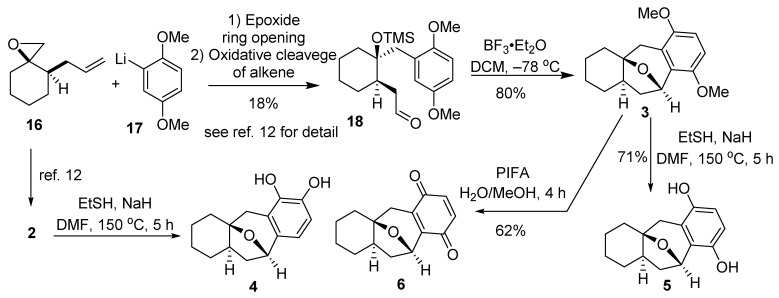
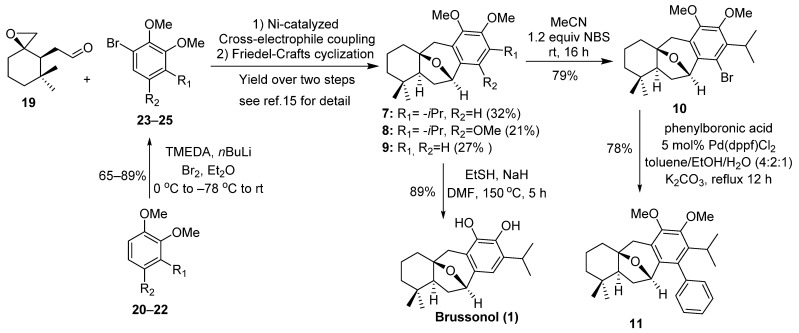
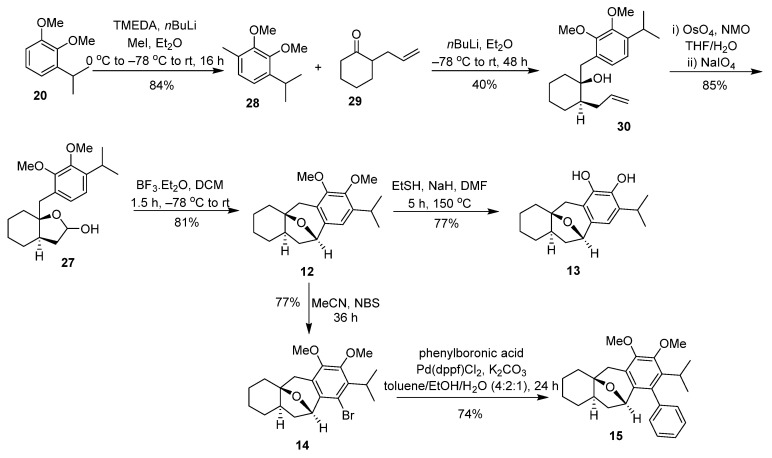
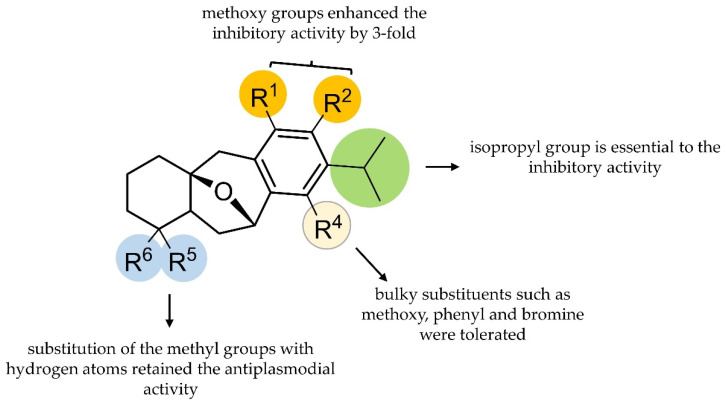
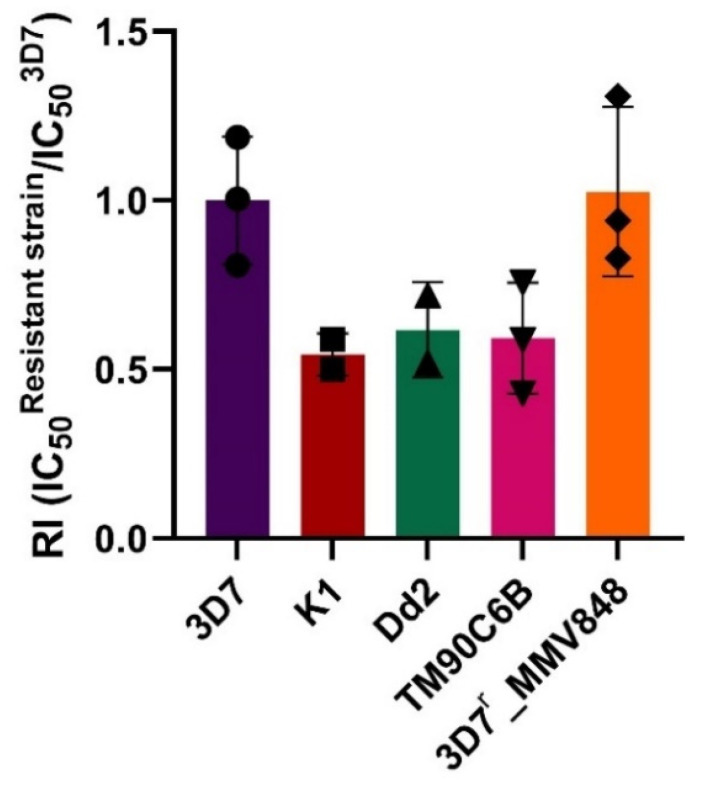
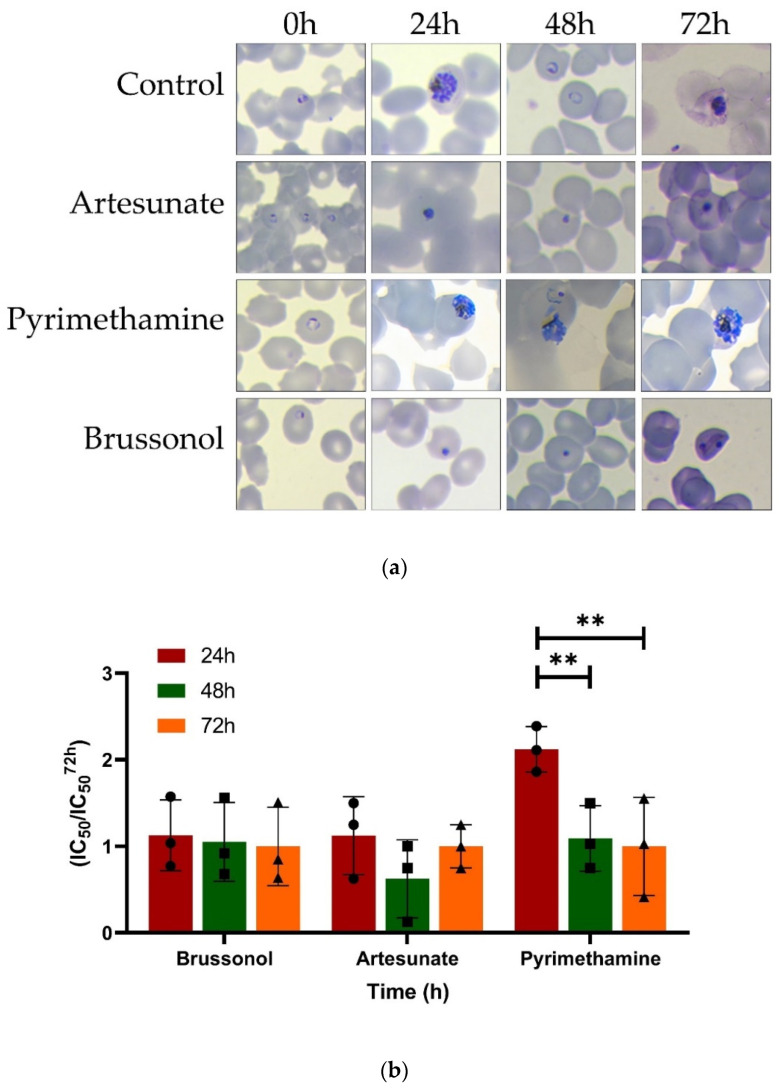
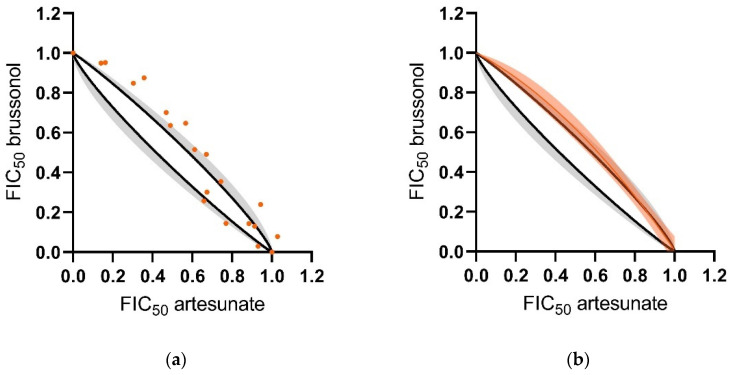
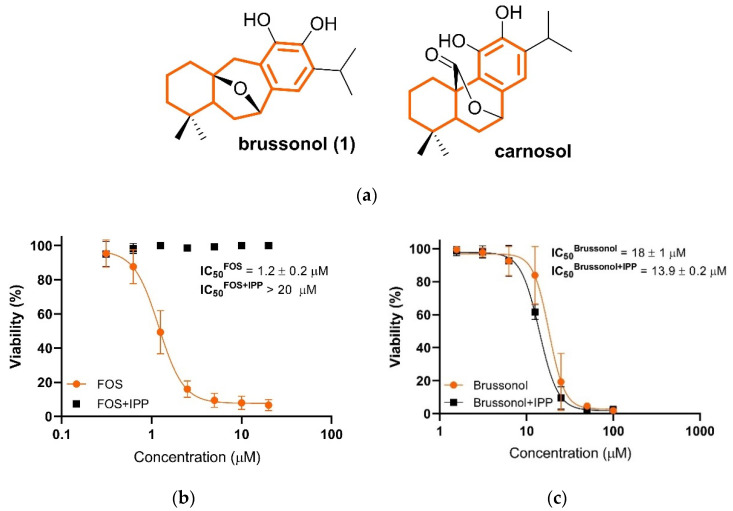
Malaria is a parasitic disease caused by protozoan parasites from the genus . is the most prevalent species worldwide and the causative agent of severe malaria. The spread of resistance to the currently available antimalarial therapy is a major concern. Therefore, it is imperative to discover and develop new antimalarial drugs, which not only treat the disease but also control the emerging resistance. Brussonol is an icetexane derivative and a member of a family of diterpenoids that have been isolated from several terrestrial plants. Here, the synthesis and antiplasmodial profiling of a series of brussonol derivatives are reported. The compounds showed inhibitory activities in the low micromolar range against a panel of sensitive and resistant strains (ICs = 5-16 μM). Moreover, brussonol showed fast-acting in vitro inhibition and an additive inhibitory behavior when combined with the antimalarial artesunate (FIC~1). The mode of action investigation indicated that brussonol increased the cytosolic calcium levels within the parasite. Hence, the discovery of brussonol as a new scaffold endowed with antiplasmodial activity will enable us to design derivatives with improved properties to deliver new lead candidates for malaria.
疟疾是一种由疟原虫属原生动物寄生虫引起的寄生虫病。疟原虫是全球最普遍的物种,也是重症疟疾的病原体。对目前可用抗疟疗法的耐药性传播是一个主要问题。因此,发现和开发新的抗疟药物势在必行,这些药物不仅要治疗疾病,还要控制新出现的耐药性。布鲁索诺醇是一种异贝壳杉烷衍生物,是从几种陆生植物中分离出来的二萜类化合物家族的一员。在此,报道了一系列布鲁索诺醇衍生物的合成和抗疟原虫活性分析。这些化合物对一组敏感和耐药疟原虫菌株显示出低微摩尔范围内的抑制活性(IC50 = 5 - 16 μM)。此外,布鲁索诺醇显示出快速的体外抑制作用,并且与抗疟青蒿琥酯联合使用时表现出相加抑制行为(FIC~1)。作用方式研究表明,布鲁索诺醇增加了寄生虫胞质内的钙水平。因此,发现布鲁索诺醇作为一种具有抗疟原虫活性的新骨架,将使我们能够设计出具有改进特性的衍生物,为疟疾提供新的潜在先导化合物。