Bartolucci Damiano, Pession Andrea, Hrelia Patrizia, Tonelli Roberto
R&D Department, BIOGENERA SpA, 40064 Bologna, Italy.
Pediatric Unit, IRCCS, Azienda Ospedaliero-Universitaria di Bologna, 40138 Bologna, Italy.
Pharmaceutics. 2022 Jul 12;14(7):1453. doi: 10.3390/pharmaceutics14071453.
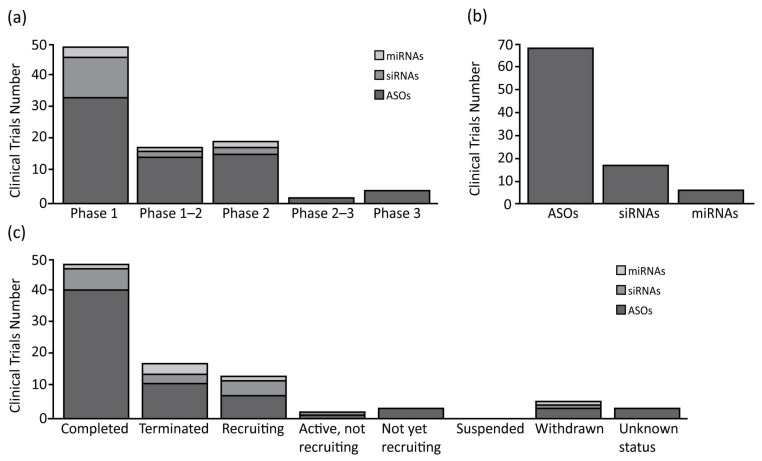
Cancer incidence and mortality continue to increase, while the conventional chemotherapeutic drugs confer limited efficacy and relevant toxic side effects. Novel strategies are urgently needed for more effective and safe therapeutics in oncology. However, a large number of proteins are considered undruggable by conventional drugs, such as the small molecules. Moreover, the mRNA itself retains oncological functions, and its targeting offers the double advantage of blocking the tumorigenic activities of the mRNA and the translation into protein. Finally, a large family of non-coding RNAs (ncRNAs) has recently emerged that are also dysregulated in cancer, but they could not be targeted by drugs directed against the proteins. In this context, this review describes how the oligonucleotide therapeutics targeting RNA or DNA sequences, are emerging as a new class of drugs, able to tackle the limitations described above. Numerous clinical trials are evaluating oligonucleotides for tumor treatment, and in the next few years some of them are expected to reach the market. We describe the oligonucleotide therapeutics targeting undruggable proteins (focusing on the most relevant, such as those originating from the MYC and RAS gene families), and for ncRNAs, in particular on those that are under clinical trial evaluation in oncology. We highlight the challenges and solutions for the clinical success of oligonucleotide therapeutics, with particular emphasis on the peculiar challenges that render it arduous to treat tumors, such as heterogeneity and the high mutation rate. In the review are presented these and other advantages offered by the oligonucleotide as an emerging class of biotherapeutics for a new era of precision anti-cancer medicine.
癌症的发病率和死亡率持续上升,而传统化疗药物的疗效有限且伴有相关毒副作用。肿瘤学领域迫切需要新的策略来实现更有效、更安全的治疗。然而,许多蛋白质被认为是传统药物(如小分子药物)难以作用的靶点。此外,mRNA本身具有致癌功能,靶向mRNA具有双重优势,既能阻断mRNA的致癌活性,又能阻止其翻译成蛋白质。最后,最近出现了一大类非编码RNA(ncRNA),它们在癌症中也存在失调,但无法被针对蛋白质的药物靶向。在此背景下,本综述描述了靶向RNA或DNA序列的寡核苷酸疗法如何作为一类新型药物出现,能够克服上述局限性。众多临床试验正在评估寡核苷酸用于肿瘤治疗的效果,预计未来几年其中一些将上市。我们描述了靶向难以成药蛋白质的寡核苷酸疗法(重点关注最相关的蛋白质,如源自MYC和RAS基因家族的蛋白质)以及针对ncRNA的寡核苷酸疗法,特别是那些正在肿瘤学临床试验评估中的疗法。我们强调了寡核苷酸疗法临床成功面临的挑战及解决方案,特别强调了导致肿瘤治疗困难的特殊挑战,如异质性和高突变率。本综述还介绍了寡核苷酸作为一类新兴生物疗法在精准抗癌医学新时代所具有的这些及其他优势。