de Aguiar Ferreira Carolina, Heidari Pedram, Ataeinia Bahar, Sinevici Nicoleta, Granito Alyssa, Kumar Hritik Mahajan, Wehrenberg-Klee Eric, Mahmood Umar
Department of Radiology, Massachusetts General Hospital, Boston, MA 02114, USA.
Pharmaceutics. 2022 Jul 13;14(7):1460. doi: 10.3390/pharmaceutics14071460.
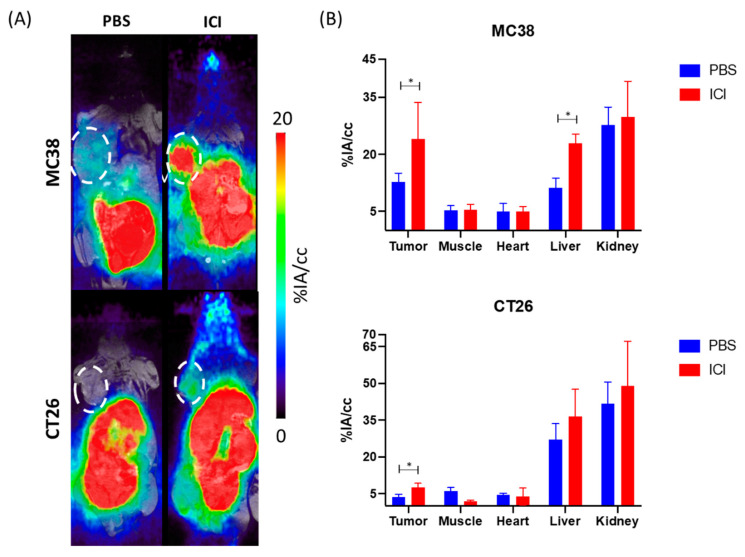
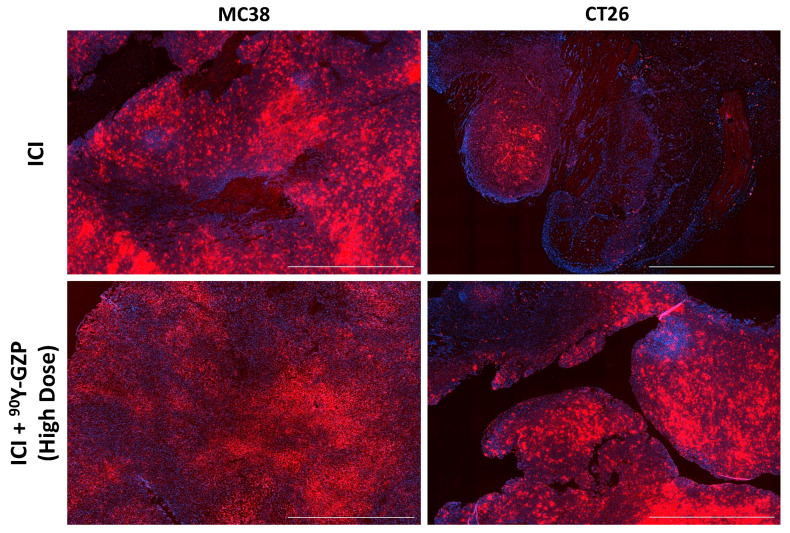
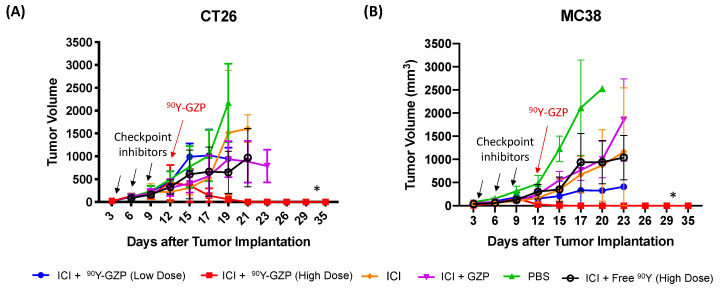
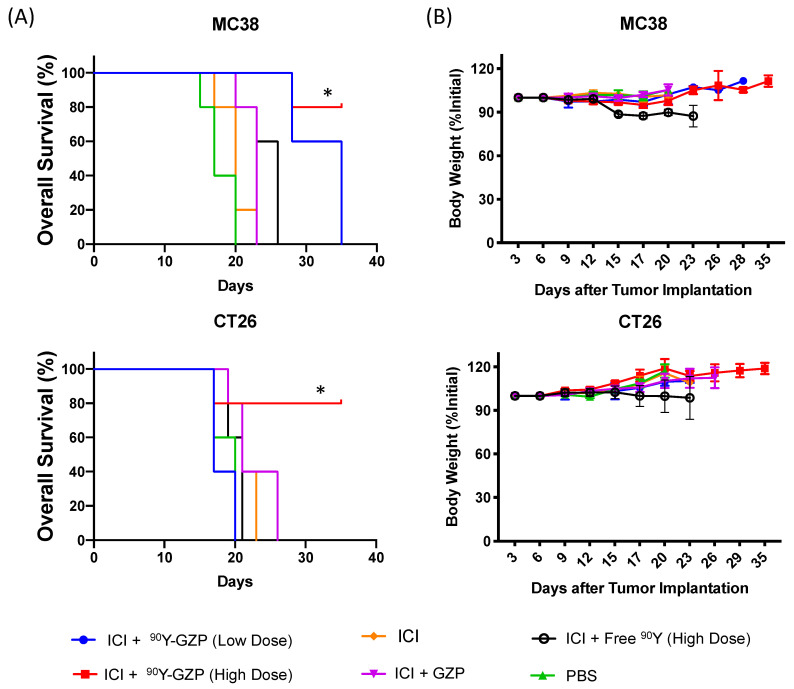
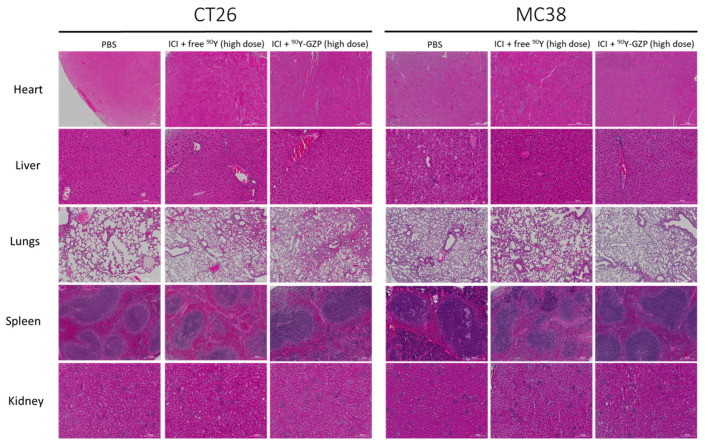
Although immune checkpoint inhibitors (ICI) have revolutionized cancer management, patient response can be heterogeneous, and the development of ICI resistance is increasingly reported. Novel treatment strategies are necessary not only to expand the use of ICI to previously unresponsive tumor types but also to overcome resistance. Targeted radionuclide therapy may synergize well with ICIs since it can promote a pro-inflammatory tumor microenvironment. We investigated the use of a granzyme B targeted peptide (GZP) as a cancer theranostic agent, radiolabeled with Ga (Ga-GZP) as a PET imaging agent and radiolabeled with Y (Y-GZP) as a targeted radionuclide therapy agent for combinational therapy with ICI in murine models of colon cancer. Our results demonstrate that GZP increasingly accumulates in tumor tissue after ICI and that the combination of ICI with Y-GZP promotes a dose-dependent response, achieving curative response in some settings and increased overall survival.
尽管免疫检查点抑制剂(ICI)彻底改变了癌症治疗模式,但患者的反应可能存在异质性,并且越来越多的报道称出现了ICI耐药性。不仅需要新的治疗策略来扩大ICI在以前无反应的肿瘤类型中的应用,还需要克服耐药性。靶向放射性核素治疗可能与ICI具有良好的协同作用,因为它可以促进促炎性肿瘤微环境。我们研究了使用颗粒酶B靶向肽(GZP)作为癌症诊疗剂,用镓(Ga-GZP)进行放射性标记作为PET成像剂,并用钇(Y-GZP)进行放射性标记作为靶向放射性核素治疗剂,用于在结肠癌小鼠模型中与ICI联合治疗。我们的结果表明,ICI治疗后GZP在肿瘤组织中的积累增加,并且ICI与Y-GZP的联合促进了剂量依赖性反应,在某些情况下实现了治愈性反应并延长了总生存期。