Li Tao, Zhan Meng, Chen Xiuyun, Xu Fan, Wang Sheliang, Liu Xinxin
College of Architecture Engineering, Huanghuai University, Zhumadian 463000, China.
College of Urban, Rural Planning and Architectural Engineering, Shangluo University, Shangluo 726000, China.
Polymers (Basel). 2022 Jul 6;14(14):2758. doi: 10.3390/polym14142758.
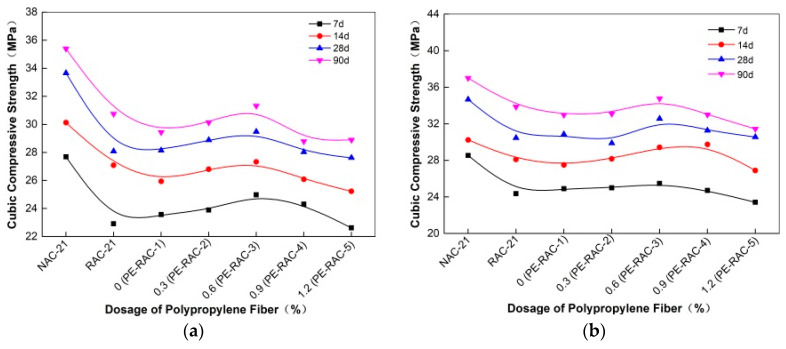
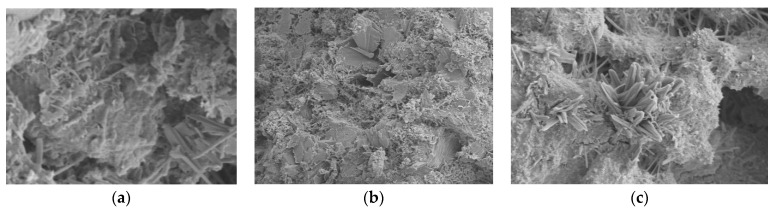
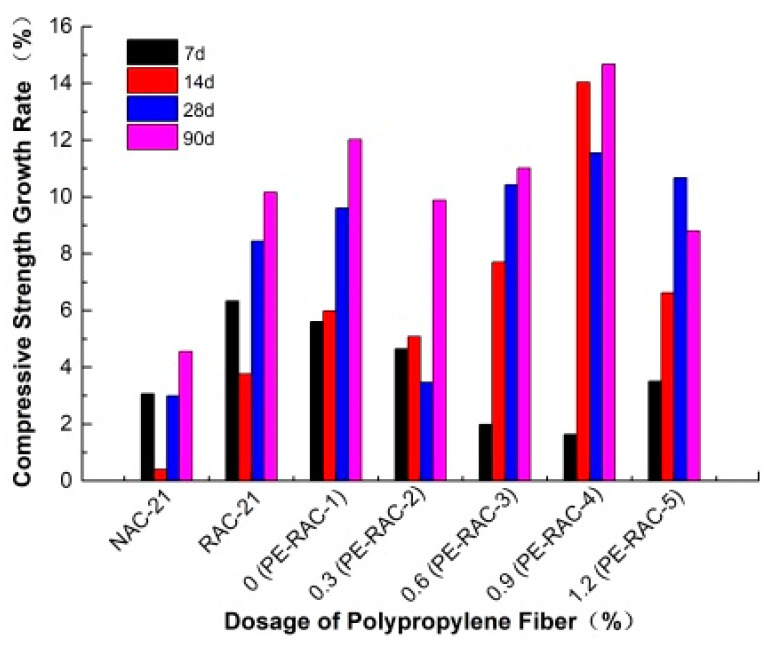
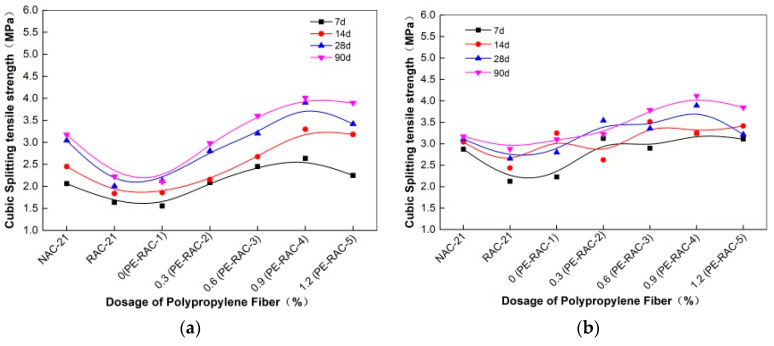
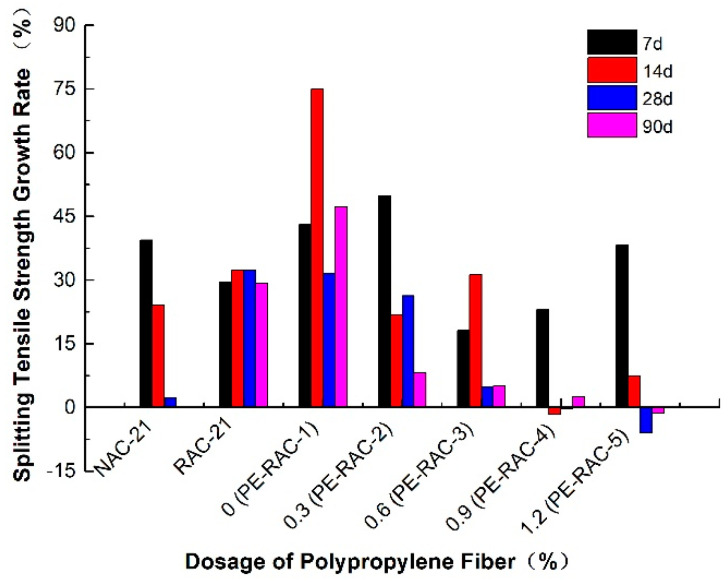
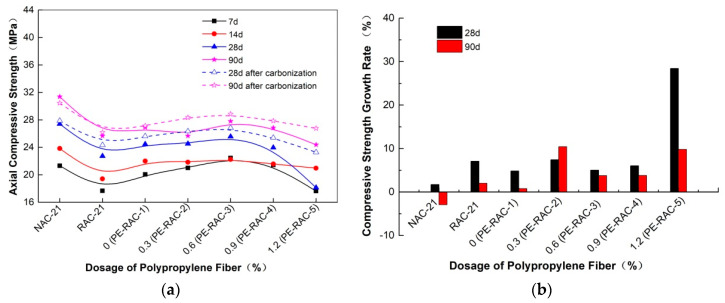
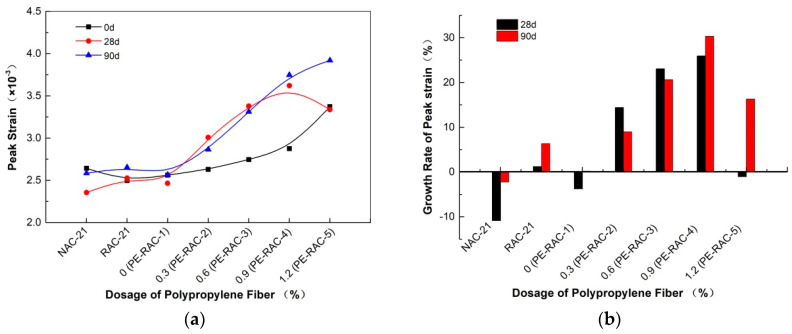
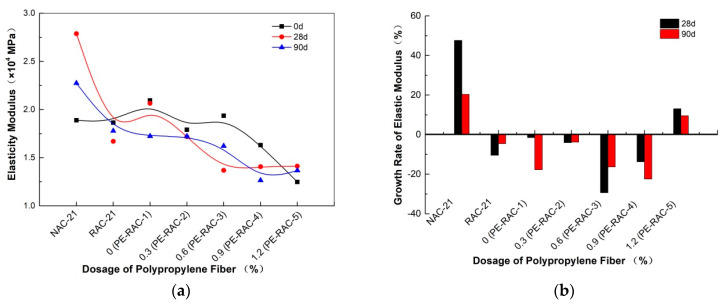
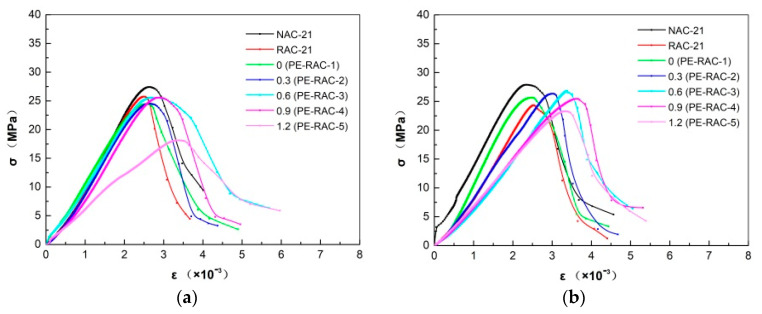
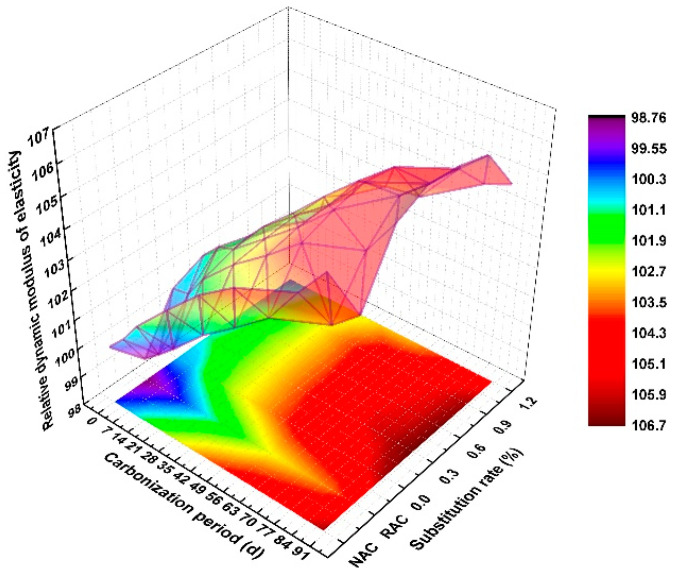
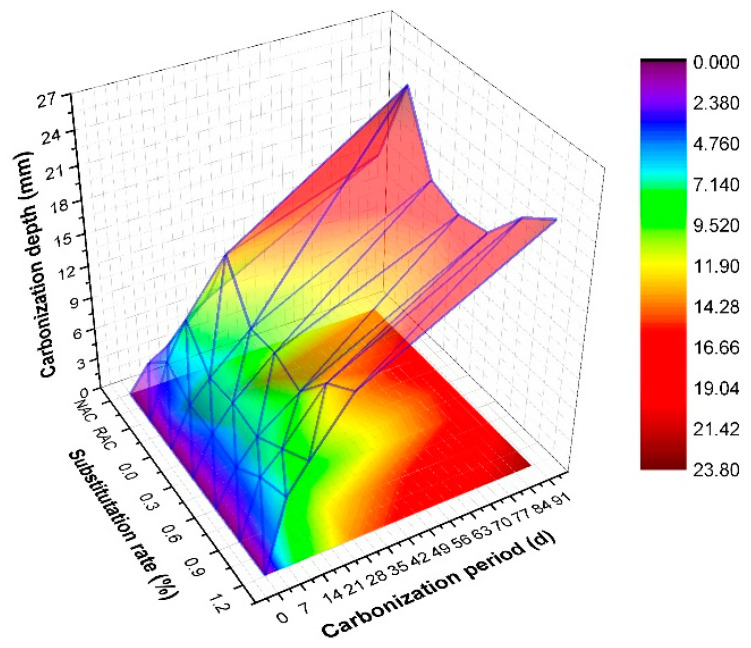
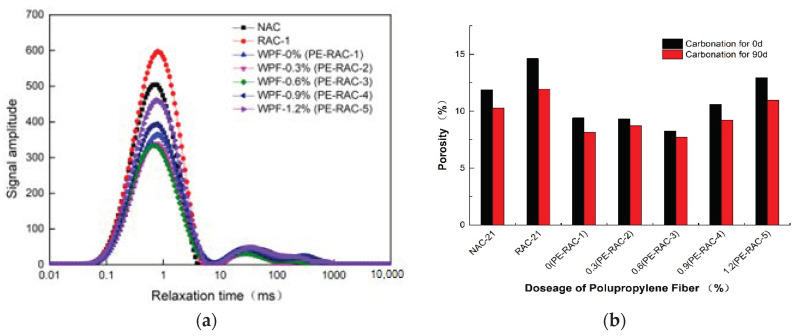
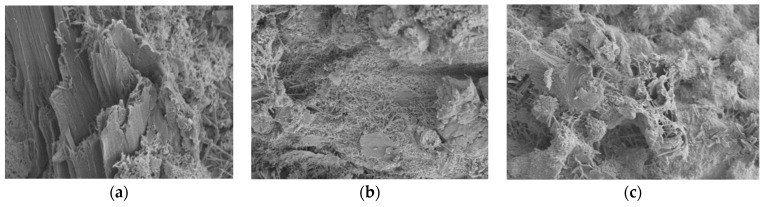
To improve the deformation performance of recycled concrete with tailings (TRC), its carbonization characteristics and deterioration mechanism with different polypropylene fiber content were analyzed macroscopically and microscopically. The results showed that the fiber had little effect on the compressive strength, which increased first and then decreased, with the optimum content being 0.6%. The splitting tensile strength first increased and then tended to be stable, with the optimum dosage ranging from 0.6% to 0.9%. The more the content, the higher the peak strain and the lower the elastic modulus. The rising section of its constitutive curve changed little, while the falling section became more gentle. Carbonization made the relative dynamic elastic modulus change small with a trend of first increasing and then decreasing, and the optimum content was 0.6-0.9%. When the fiber content was small, the influence on the carbonization depth did not remain significant, but when it was large, the depth increased obviously, and this critical content was about 0.6%. Microscopically, through nuclear-magnetic resonance (NMR) and scanning electron microscope (SEM) analysis, due to the strong tensioning effect of the fiber, when a small amount was added, the porosity and pore structure had not been significantly changed, so the impact on its resistance to carbonization was not obvious. However, after excessive addition, the interface transition zone (ITZ) between different materials became larger, resulting in a significant increase of its harmful cracks and a great impact on the anti-carbonization ability, with the optimal content being about 0.6%. This study provides a theoretical reference for the deformation performance improvement measure of TRC, which would be helpful for the rapid promotion and application of green concrete in engineering practice.
为提高尾矿再生混凝土(TRC)的变形性能,从宏观和微观角度分析了不同聚丙烯纤维掺量下其碳化特性及劣化机理。结果表明,纤维对抗压强度影响较小,抗压强度先增大后减小,最佳掺量为0.6%。劈裂抗拉强度先增大后趋于稳定,最佳掺量范围为0.6%至0.9%。掺量越多,峰值应变越高,弹性模量越低。其本构曲线的上升段变化不大,而下降段变得更平缓。碳化使相对动弹模量变化较小,呈先增大后减小趋势,最佳掺量为0.6 - 0.9%。当纤维掺量较小时,对碳化深度的影响不显著,但当掺量较大时,碳化深度明显增加,这一临界掺量约为0.6%。微观上,通过核磁共振(NMR)和扫描电子显微镜(SEM)分析可知,由于纤维的强张拉作用,少量添加时,孔隙率和孔结构未发生显著变化,因此对其抗碳化能力的影响不明显。然而,过量添加后,不同材料间的界面过渡区(ITZ)变大,导致其有害裂缝显著增加,对抗碳化能力产生很大影响,最佳掺量约为0.6%。本研究为TRC变形性能改善措施提供了理论参考,有助于绿色混凝土在工程实践中的快速推广应用。