Hu Huiying, Ma Rui, Tian Ziyang, Rong Zhidan, Sun Daosheng
College of Materials and Chemical Engineering, Anhui Jianzhu University Hefei 230601 China
College of Civil and Environmental Engineering, National University of Singapore 117578 Singapore.
RSC Adv. 2024 Dec 19;14(54):39927-39936. doi: 10.1039/d4ra06637e. eCollection 2024 Dec 17.
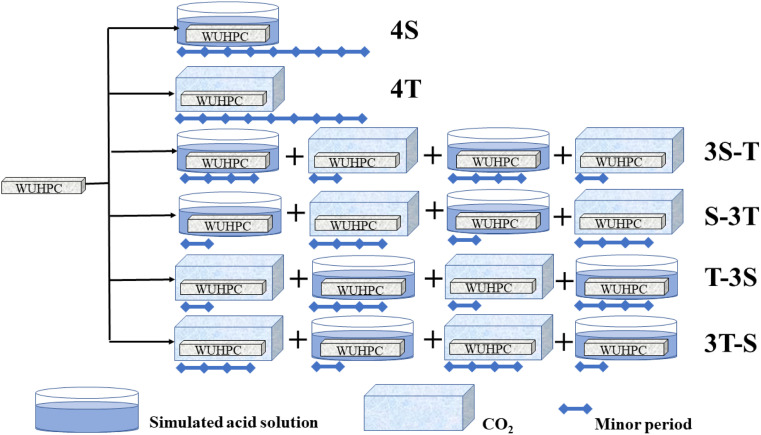
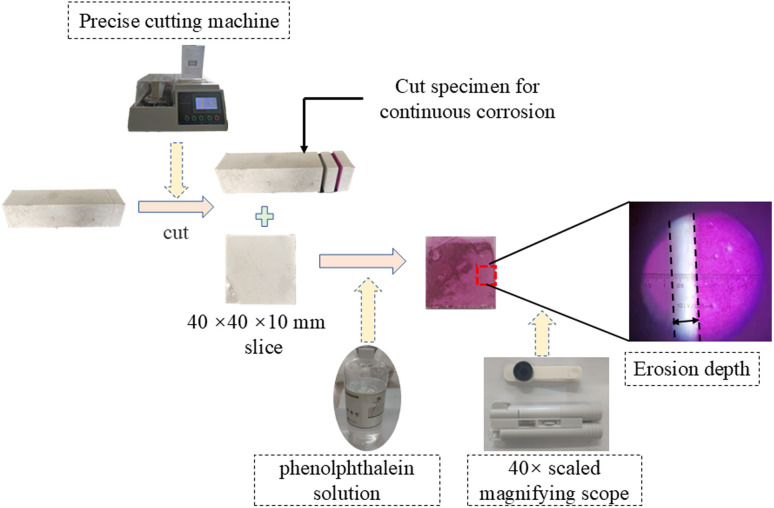
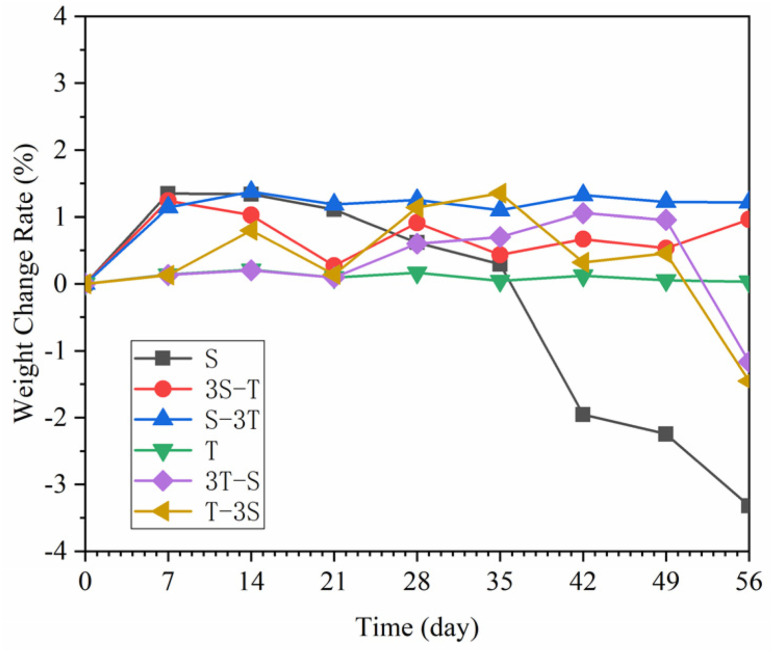
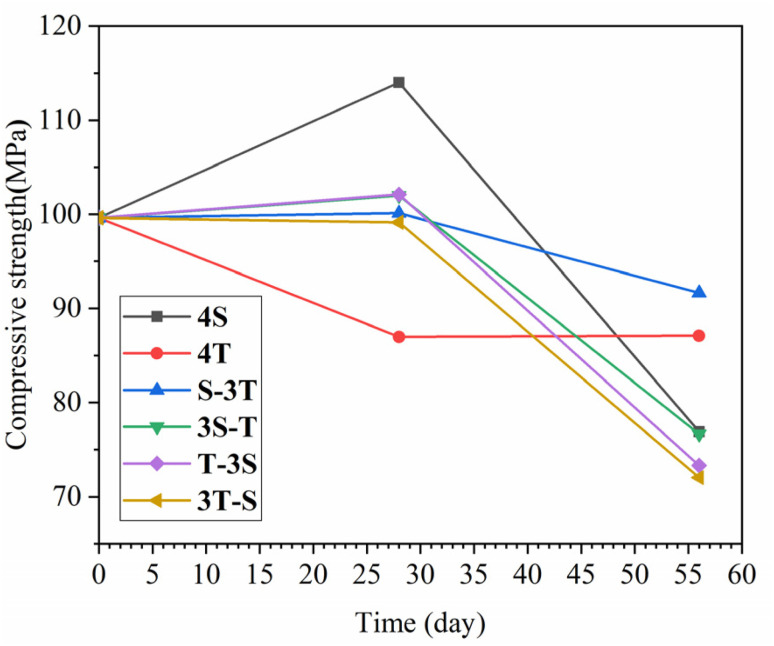
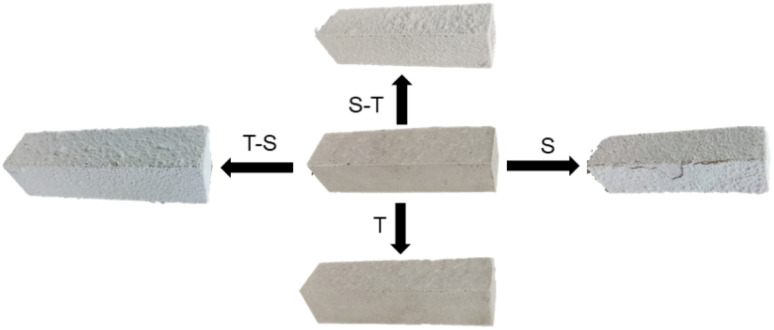
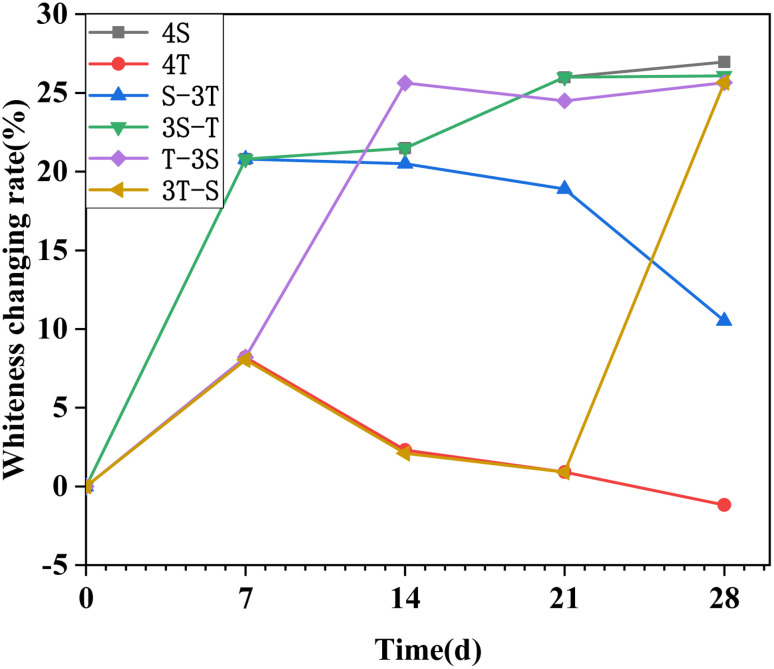
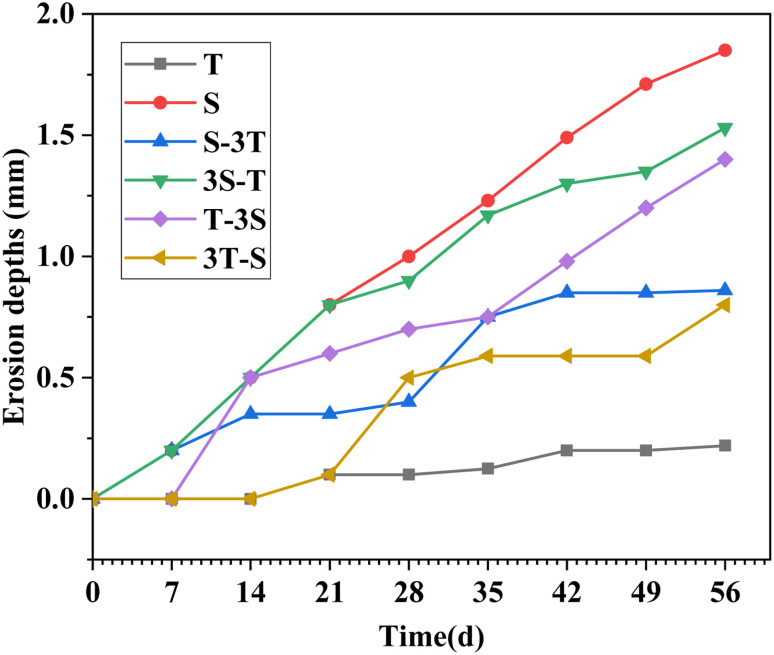
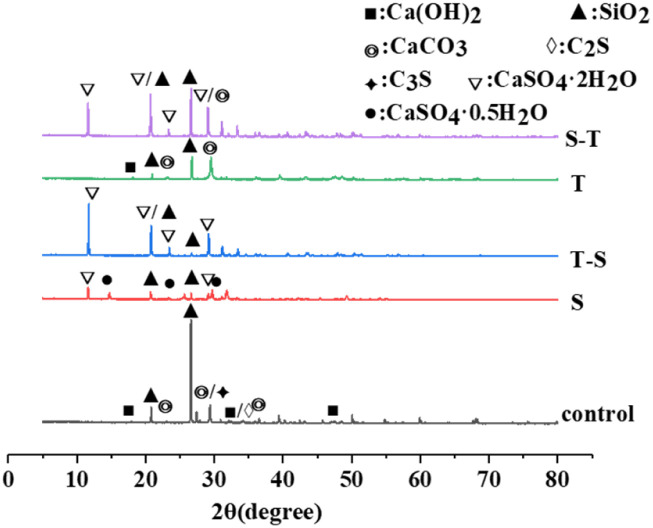
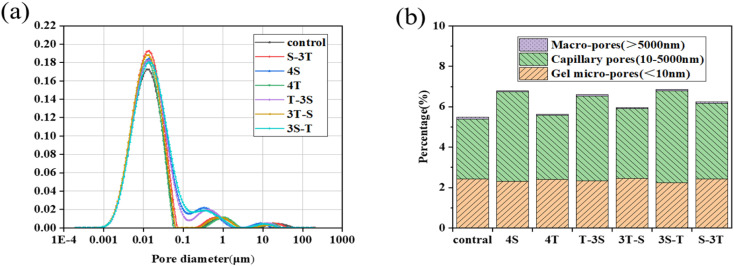
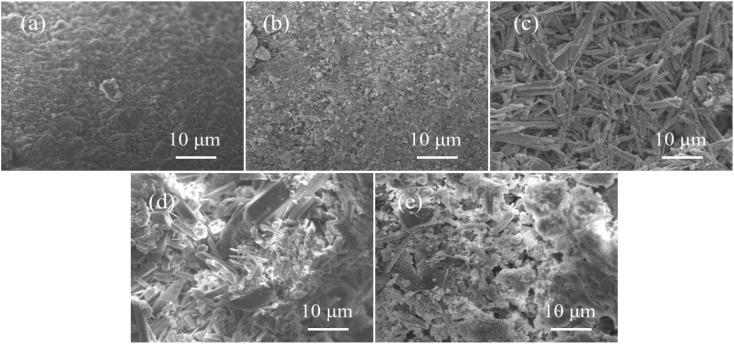
Acid rain and carbonization are two primary types of environmental corrosion that threaten the health of urban concrete structures over time. However, the coupling effects of acid rain and carbonization on concrete deterioration have been rarely reported. In this paper, four coupling regimes were designed using accelerated simulation experiments to investigate the deterioration properties of white ultra-high performance concrete (WUHPC). The results showed that under acid rain corrosion, the WUHPC surface was covered with white crystals before peeling off after 7 days, resulting first in an increase, followed by a rapid decrease in weight and strength, and the erosion depth linearly increased at a rate of 33.0 μm per day. Meanwhile, negligible changes occurred with only carbonization. However, under coupling corrosion, the deterioration worsened after environmental alternation. The strength of WUHPC with acid rain after carbonization decreased by 27.7%, reaching a minimum of 72.0 MPa. The erosion depth growth under acid rain followed by carbonization was 20.0 μm per day, which was much faster than that (3.9 μm per day) of single carbonization. The major corrosion products under acid rain were gypsum crystal, and the crystal shrank with time, leaving more voids and a weakened bonding strength. The calcium carbonate sediment generated during carbonization blocked the pores on the surface, hindered the diffusion of acid solution, and partly consumed acid ions dissolution, resulting in facilitated acid rain corrosion. Once carbonate was consumed in a short time, more capillary pores were unblocked to promote further acid rain corrosion.
酸雨和碳化是随着时间推移威胁城市混凝土结构健康的两种主要环境腐蚀类型。然而,酸雨和碳化对混凝土劣化的耦合效应鲜有报道。本文通过加速模拟试验设计了四种耦合工况,以研究白色超高性能混凝土(WUHPC)的劣化特性。结果表明,在酸雨腐蚀下,WUHPC表面在7天后剥落前覆盖有白色晶体,导致重量和强度先增加,随后迅速下降,侵蚀深度以每天33.0μm的速度线性增加。同时,仅碳化时变化可忽略不计。然而,在耦合腐蚀下,环境交替后劣化加剧。碳化后受酸雨作用的WUHPC强度下降了27.7%,最低达到72.0MPa。酸雨作用后再碳化的侵蚀深度增长为每天20.0μm,比单一碳化的侵蚀深度增长速度(每天3.9μm)快得多。酸雨作用下的主要腐蚀产物为石膏晶体,晶体随时间收缩,留下更多孔隙且粘结强度减弱。碳化过程中生成的碳酸钙沉积物堵塞了表面孔隙,阻碍了酸溶液的扩散,并部分消耗了酸离子溶解,从而促进了酸雨腐蚀。一旦碳酸盐在短时间内被消耗,更多的毛细孔隙被疏通,进而促进进一步的酸雨腐蚀。