
聚(3-甲基丙烯酰胺丙基三甲基氯化铵)溶液的水解性质及机理研究
Study on Hydrolysis Properties and Mechanism of Poly(3-Methacrylamido Propyl Trimethyl Ammonium Chloride) Solution.
作者信息
Wang Yongji, Jia Xu, Zhang Yuejun
机构信息
School of Chemistry and Chemical Engineering, Nanjing University of Science and Technology, Nanjing 210094, China.
出版信息
Polymers (Basel). 2022 Jul 10;14(14):2811. doi: 10.3390/polym14142811.
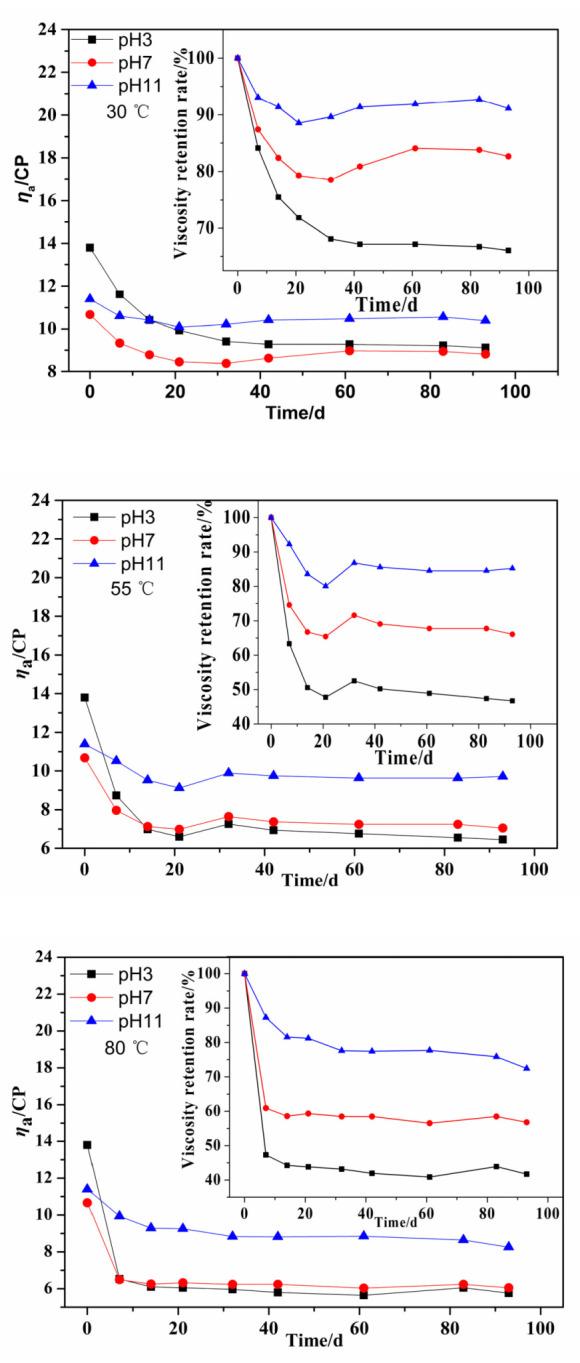
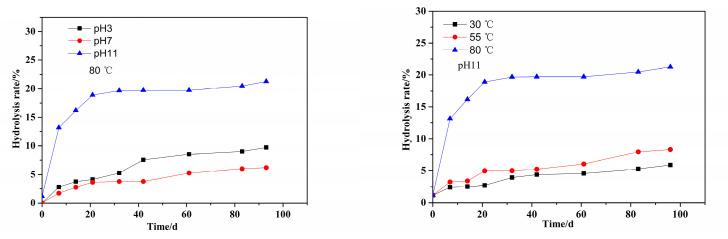
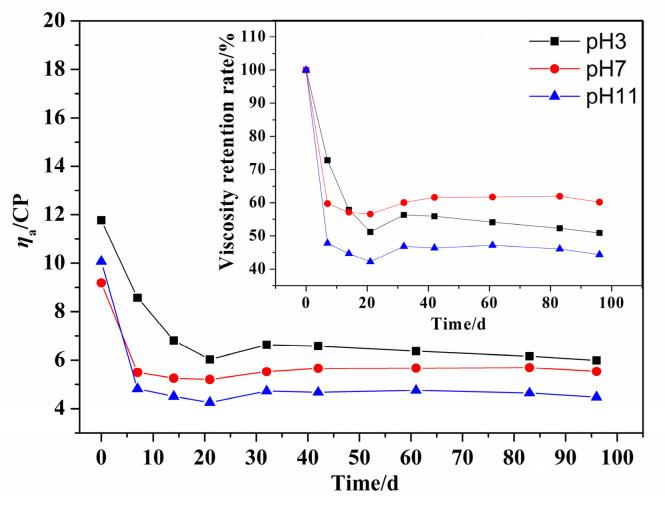
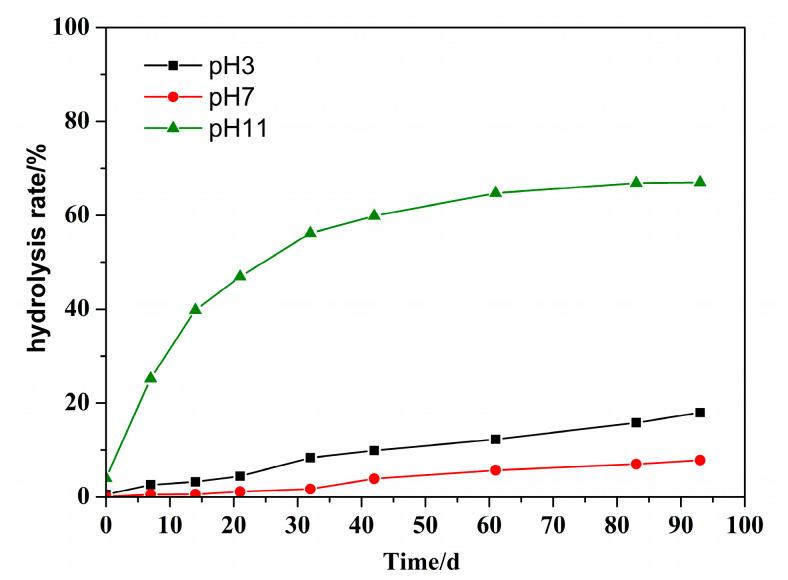
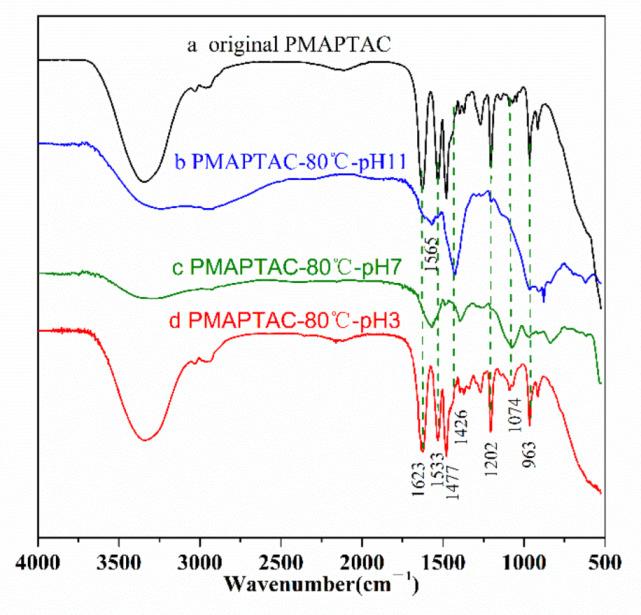
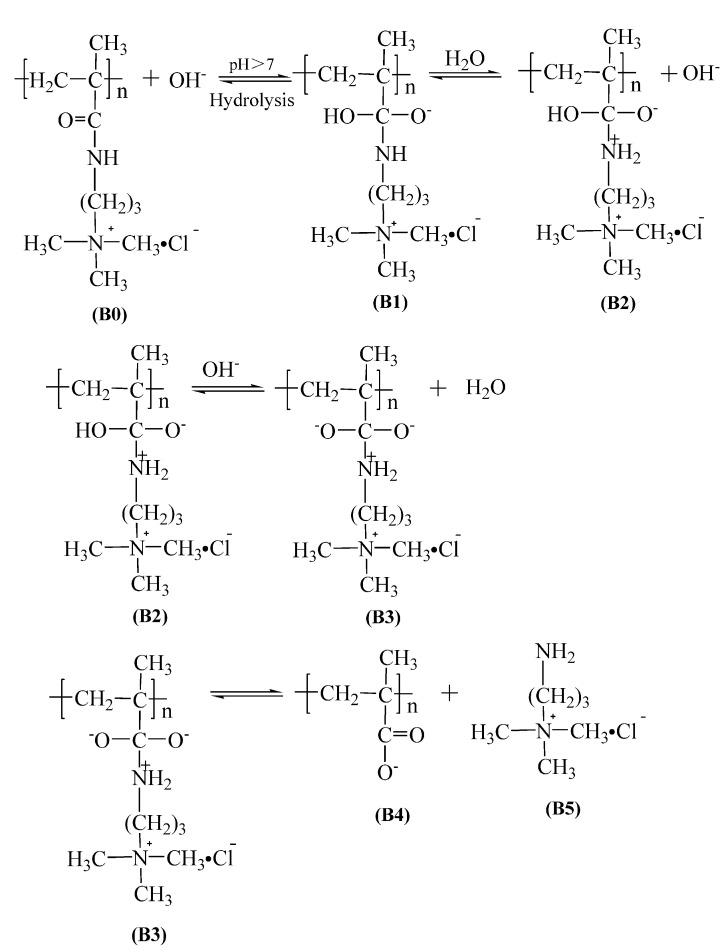
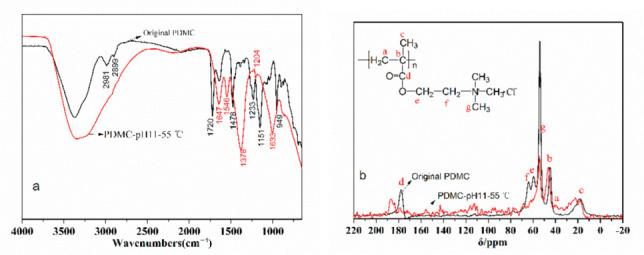
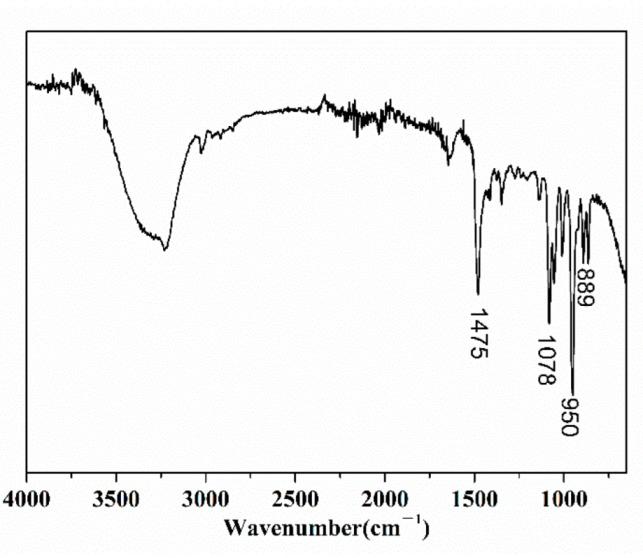
Poly(3-methacrylamido propyl trimethyl ammonium chloride) (PMAPTAC) is a typical cationic water-soluble polyelectrolyte, which has been widely used in petroleum, papermaking, daily cosmetics and other fields in the form of an aqueous solution. However, the acid-base and thermal stability of PMAPTAC in aqueous solution have not been reported yet, which hinders its further application in high-temperature and acid-base environments. To address these deficiencies, the effects of temperature and pH of PMAPTAC with different intrinsic viscosities on its hydrolysis stability were investigated qualitatively and quantitatively, and the hydrolysis mechanism was studied. Firstly, the qualitative analysis showed that the apparent viscosity of the PMAPTAC solution decreased with hydrolysis time at different temperatures and pH. The higher the temperature and the lower the pH, the greater the viscosity loss of PMAPTAC. The quantitative analysis showed that the hydrolysis rate of the PMAPTAC sample solution increased with the increase in temperature and pH. In addition, the intrinsic viscosity of PMAPTAC samples had little effect on the hydrolytic stability of PMAPTAC. Secondly, by analyzing the viscosity curves at different pH and temperatures by Arrhenius analysis, the Arrhenius equations were found to be 1/τ = 200.34e^((-25.04)/RT), 1/τ = 9127.07e^((-38.90)/RT) and 1/τ = 4683.03e^((-39.89)/RT) for pH 3, pH 7 and pH 11, respectively. Thirdly, the hydrolysis rate of PDMC was the fastest under alkaline conditions. In addition, compared with PDMC, PMAPTAC had better hydrolysis stability under the same conditions. Finally, the mechanism of the hydrolyzed polymer was studied by FTIR and CNMR, which showed that the carbonyl group of PMAPTAC was hydrolyzed into a carboxyl group, and the small molecule (3-aminopropyl) trimethylammonium chloride was generated, while the ester group of PDMC was hydrolyzed into a carboxyl group, and choline chloride was released. The above results can provide a theoretical basis for the application of PMAPTAC in some high-temperature and acid-base environments.
聚(3-甲基丙烯酰胺丙基三甲基氯化铵)(PMAPTAC)是一种典型的阳离子水溶性聚电解质,它以水溶液的形式被广泛应用于石油、造纸、日用化妆品等领域。然而,PMAPTAC在水溶液中的酸碱稳定性和热稳定性尚未见报道,这阻碍了其在高温和酸碱环境中的进一步应用。为了弥补这些不足,定性和定量地研究了不同特性粘度的PMAPTAC的温度和pH值对其水解稳定性的影响,并研究了水解机理。首先,定性分析表明,在不同温度和pH值下,PMAPTAC溶液的表观粘度随水解时间而降低。温度越高,pH值越低,PMAPTAC的粘度损失越大。定量分析表明,PMAPTAC样品溶液的水解速率随温度和pH值的升高而增加。此外,PMAPTAC样品的特性粘度对PMAPTAC的水解稳定性影响不大。其次,通过Arrhenius分析不同pH值和温度下的粘度曲线,发现pH值为3、7和11时的Arrhenius方程分别为1/τ = 200.34e^((-25.04)/RT)、1/τ = 9127.07e^((-38.90)/RT)和1/τ = 4683.03e^((-39.89)/RT)。第三,PDMC在碱性条件下水解速率最快。此外,与PDMC相比,PMAPTAC在相同条件下具有更好的水解稳定性。最后,通过FTIR和CNMR研究了水解聚合物的机理,结果表明PMAPTAC的羰基水解为羧基,并生成小分子(3-氨丙基)三甲基氯化铵,而PDMC的酯基水解为羧基并释放出氯化胆碱。上述结果可为PMAPTAC在一些高温和酸碱环境中的应用提供理论依据。








 Zotero 插件